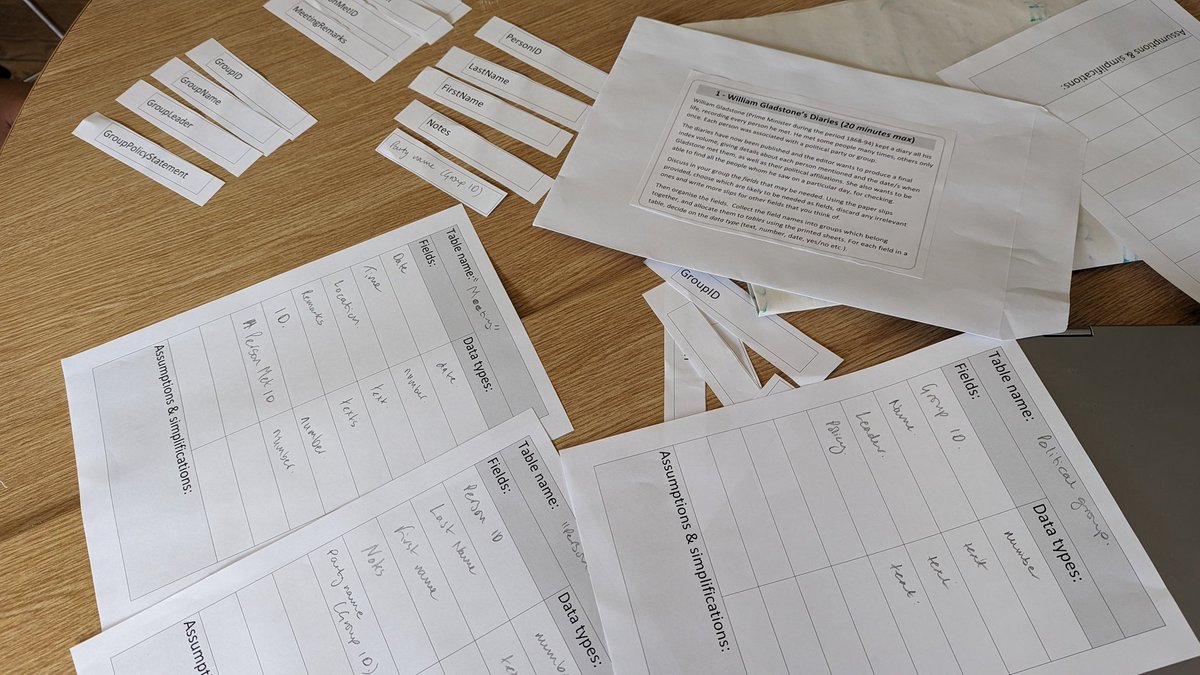
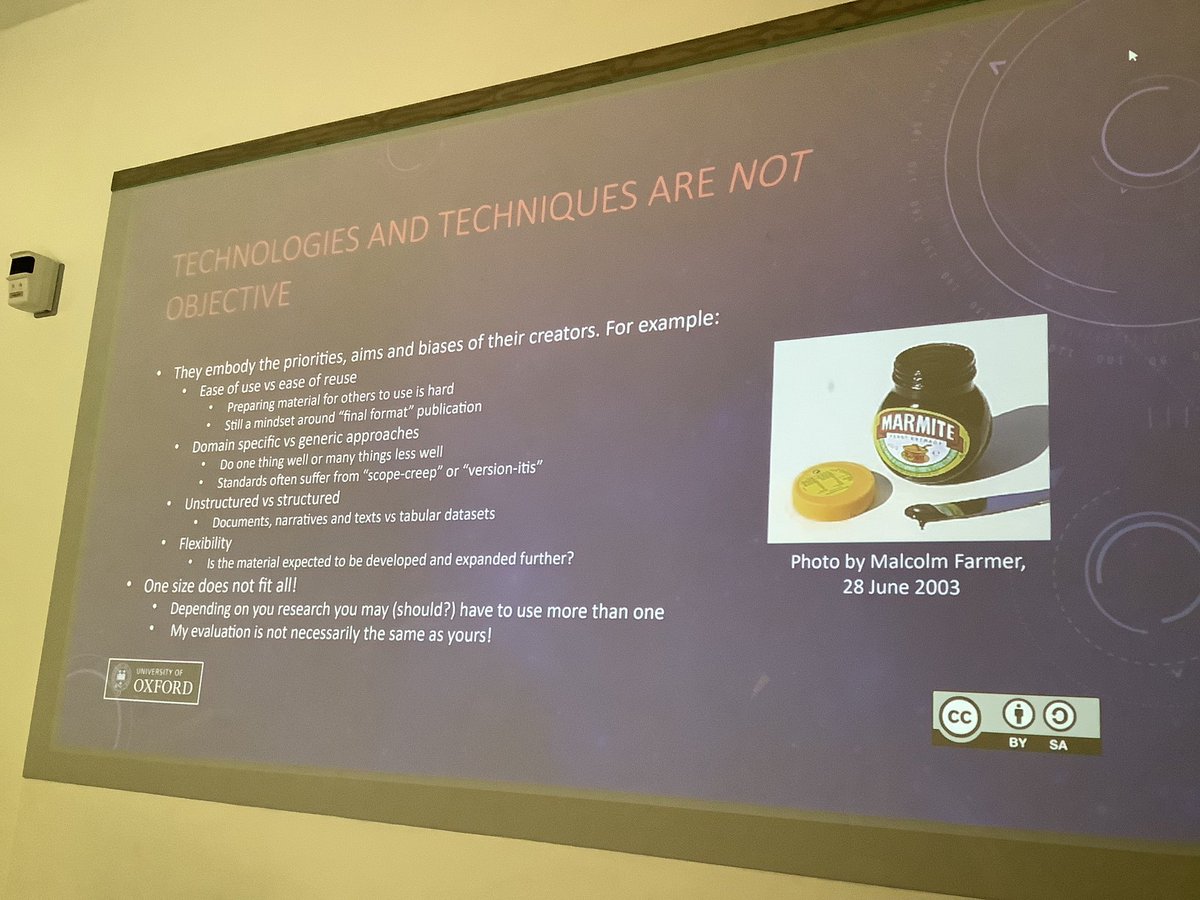
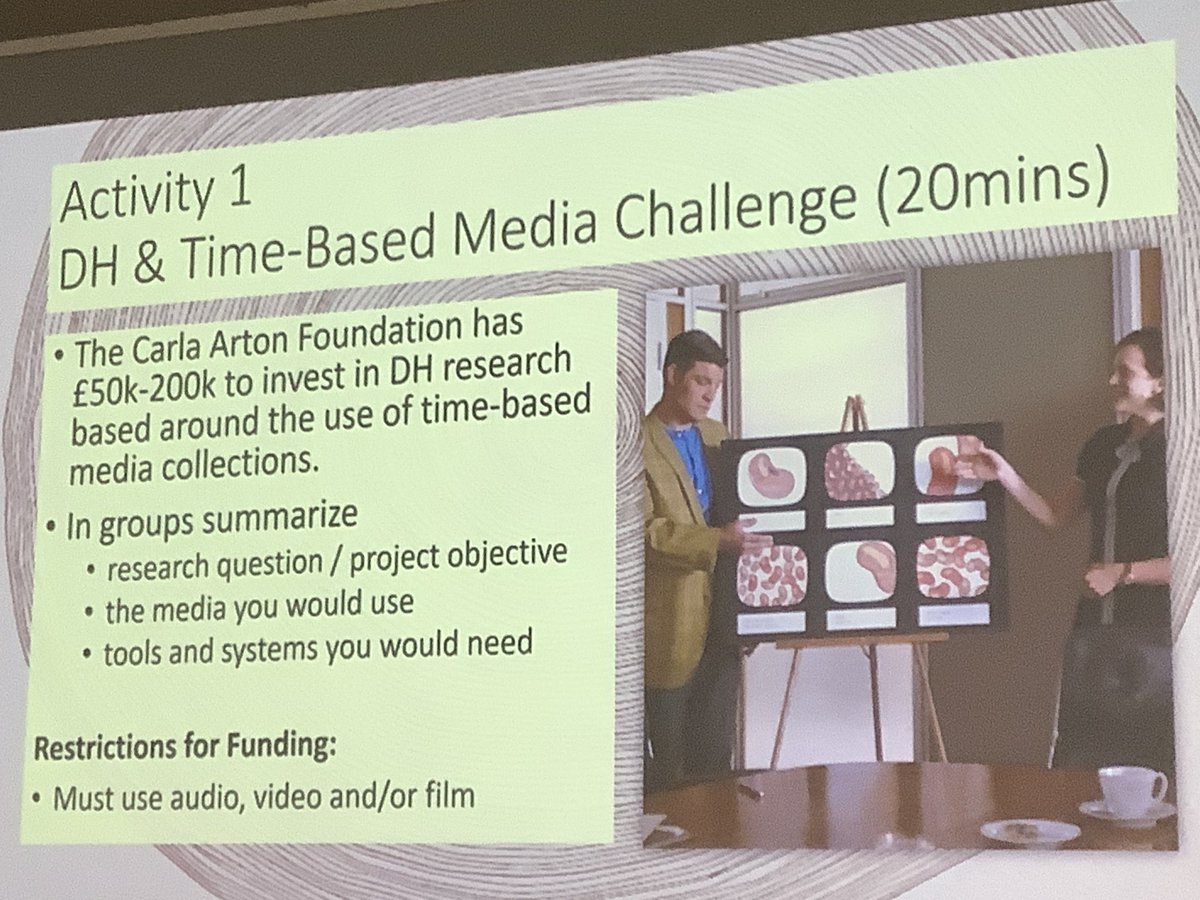
The Humanities Data strand of the Digital Humanities @ Oxford Summer School is underway! Neil Jefferies getting us off to a cracking start, talking about critically evaluating humanities data approaches. #DHOxSS2023#HumDat
@oxfordhacker With luck, we can spin out these debates for long enough to push the spectre of AIs stealing jobs from human philosophers at least several decades into the future.
@oxfordhacker To address this properly, we must first define what counts as philosophy. If it is literally the love of wisdom, can an AI truly have that, or does it require consciousness?
There seems to be some enthusiasm in the room for being able to retrace other people’s steps so we can build on their work or update their findings, rather than just reproduction for reproduction’s sake. #HumDat#DHOxSS2019
Rowan Wilson now injecting a note of controversy into the discussion about reproducibility in research. Do we need/want reproducibility in the humanities? What does it even mean in our context? #HumDat#DHOxSS2019
Maja Zaloznik giving us an overview of reproducible research, including an introduction to GitHub https://t.co/xeKjhWZWCa. “It’s like Facebook for coders.” #HumDat#DHOxSS2019
Emma Huber and Frank Egerton from the Taylorian Library are talking to us about Taylor Digital Editions. Trying hard not to get distracted from their talk by lovely animated manuscript gifs like this one: https://t.co/22wPp73y6Q #HumDat#DHOxSS2019
Emma Stanford giving a fascinating tour of all the things that can be done with images using the International Image Interoperability Framework (IIIF) https://t.co/AFFfEXS50a. Particularly like the look of https://t.co/nplWoUkDMW #HumDat#DHOxSS2019
Mike Popham from @bodleianlibs talking to us about preservation of digital data. Storage media are surprisingly fragile, and proprietary file formats can lock data in. Careful planning needed to protect the intellectual (and financial) investment involved. #HumDat#DHOxSS2019
David Tomkins is encouraging us to think about metadata for datasets deposited in repositories. One key message: detailed documentation that helps others to interpret the data is really useful. Data reuse = citations! #HumDat#DHOxSS2019
A second exercise led by Neil Jefferies is bringing home how few static attributes most entities (people, places, manuscripts, letters, digitised photos, companies, etc.) have. Places, which might seem static, have almost no static qualities at all! #HumDat
Some impressive lists emerging - 11 words generating at least several dozen implicit and explicit objects. No single definitive interpretation - it all depends on your research interests. A massive amount of implied context which it would be very hard for a computer to supply.
Neil Jefferies leading us in an exercise in data modelling: how many explicit and implicit objects (and relationships between them) can we find in the sentence “I watched a performance of Shakespeare’s ‘Romeo and Juliet’ in French”? #HumDat#DHOxSS2019