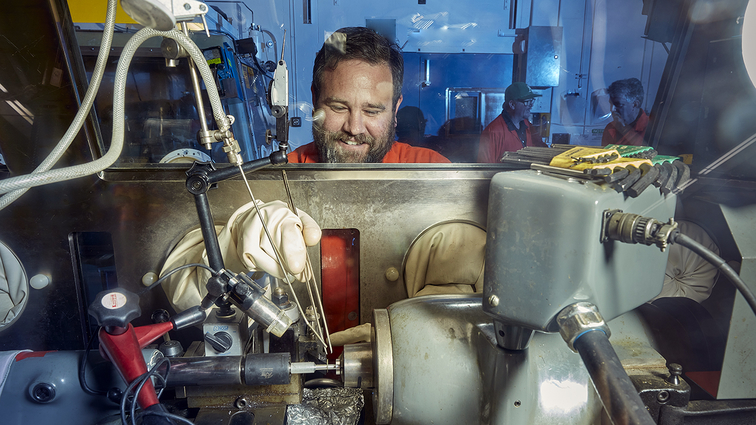
Considering graduate research with actinides, or a career in the National Laboratories? Join us for the DOE/NNSA Graduate Studies Workshop!
-Lectures from National Lab Researchers
-networking, grad school Q&As, lab tours, and more
- Apply by Feb.15th: https://t.co/aHd9kDB0v9
Keep up to date with new research like 'Isolation and characterization of a new polyoxometalate ligand, H3SbW14O5010−, and its interactions with f-elements'
By Ian Colliard & Gauthier J.-P. Deblonde
@Seaborg_LLNL@Livermore_Lab@NNSANews#openaccess
https://t.co/NLlwyGC0mc
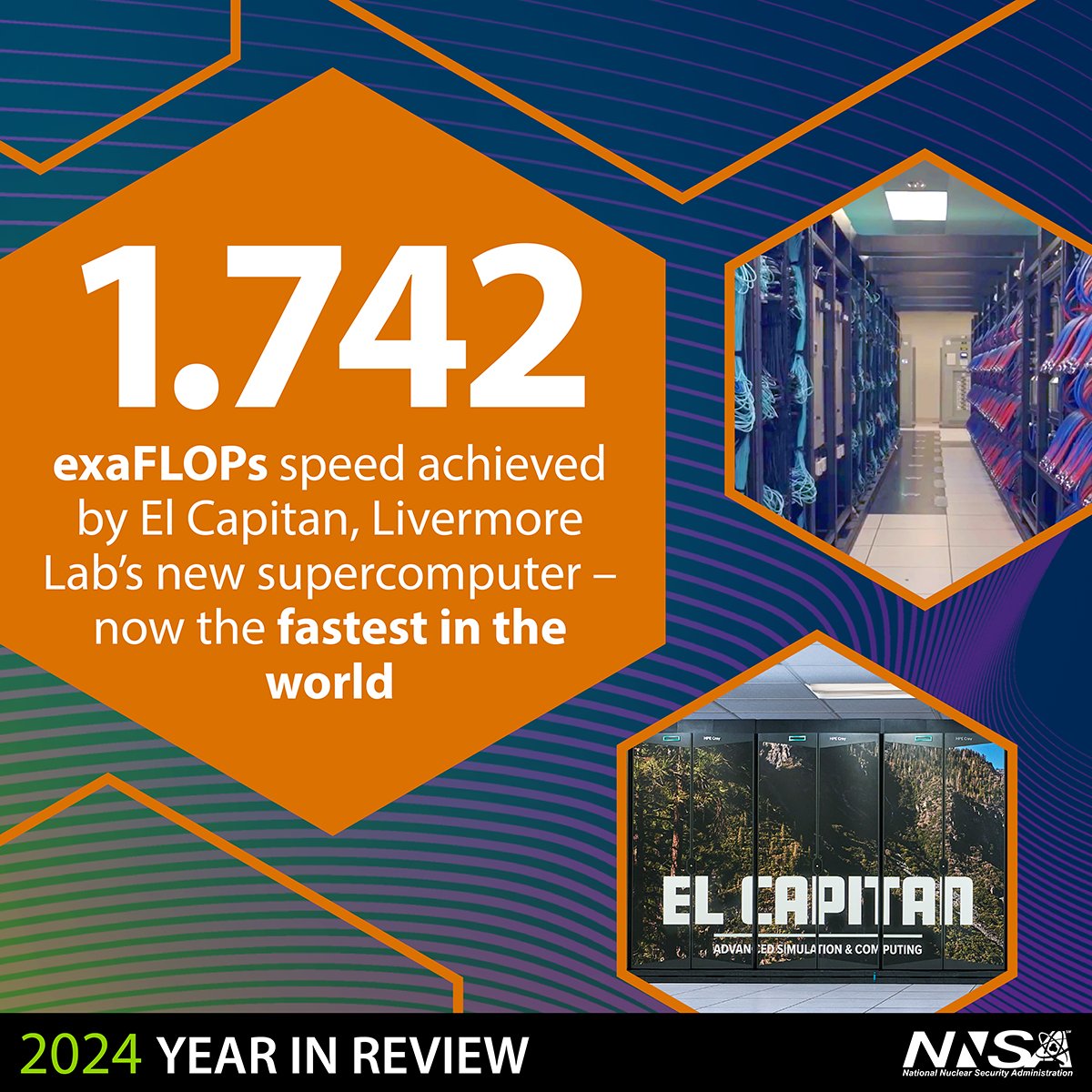
#DidYouKnow@Livermore_Lab’s new supercomputer, El Capitan, is now the fastest in the world? It achieved 1.742 exaFLOPs in 2024! Read about this and other amazing stats in #NNSA’s Year in Review: https://t.co/yP8G5YeObZ
The @WhiteHouse announced today that Former Director of #LLNL John Nuckolls has received the Enrico Fermi Award, one of the U.S. government’s most prestigious science and technology honors. Learn more: https://t.co/5K23FjjJRk
How did the world’s most energetic laser smash a nuclear fusion record? @Nature provides an inside look at @lasers_llnl, where in December 2022, the Lab reached the goal of achieving a nuclear fusion reaction that generated more energy than it consumed: https://t.co/zJ2BYgRgvr
The United States' nuclear deterrent isn't just about weapons—it's about responsibility. #NNSA ensures the safety, security, and reliability of the nuclear stockpile while advancing science and promoting global stability. https://t.co/blDz3jcCYL
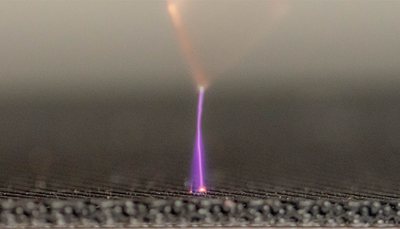
When you touch something and get a shock of static, it's annoying. But that can kill sensitive electronics. Through the innovation of 3D-printing, @Livermore_Lab scientists have figured out how to absorb the shock and protect valuable components. ⚡
https://t.co/LOUeNujm6S
From Chernobyl to Fukushima, scientists at the National Atmospheric Release Advisory Center have worked on some of the hardest problems of our time. In the #BigIdeasLab, dive into the origins of #NARAC and how it continues to prepare for the unthinkable: https://t.co/7RqirvYkqP
@top500supercomp Verified at a sustained 1.742 exaFLOPs on the High Performance Linpack — the standard benchmark used by the @top500supercomp — El Capitan is the fastest computing system ever benchmarked. The system's peak performance is 2.79 exaFLOPs.
LLNL has unveiled the most powerful supercomputer and first #Exascale machine dedicated to #NationalSecurity. With a sustained performance of 1.742 exaFLOPs on the @top500supercomp, El Capitan becomes the first HPC machine to surpass the 2 exaFlOP barrier! https://t.co/A5wStJn417
Want to work at Lawrence Livermore National Laboratory? We're hiring in Livermore, CA! Click for details: https://t.co/AGCMTSuxrO #NowHiring#NuclearJobs
Creating the first "diamond-stamped" plutonium pit for the W87-1 warhead required collaboration across #NNSA. For example, while the pit was manufactured at @LosAlamosNatLab, @Livermore_Lab was responsible for its design. https://t.co/htSD078LOf
Shout-out to our grad student Zach Murphy who was featured in Livermore news webpage on how his internship at @Seaborg_LLNL inspired him in his PhD and assisted him in getting the @NNSANews PATH scholarship in support of his uranium chemistry research! https://t.co/AZZhr66Hb6
The fentanyl crisis has killed more than 210,000 Americans during the past three years. Discover how a team of researchers at @Livermore_Lab is fighting the epidemic with a promising new treatment to counteract the effects of the drug and related opioids: https://t.co/aX0ZSA9tsj
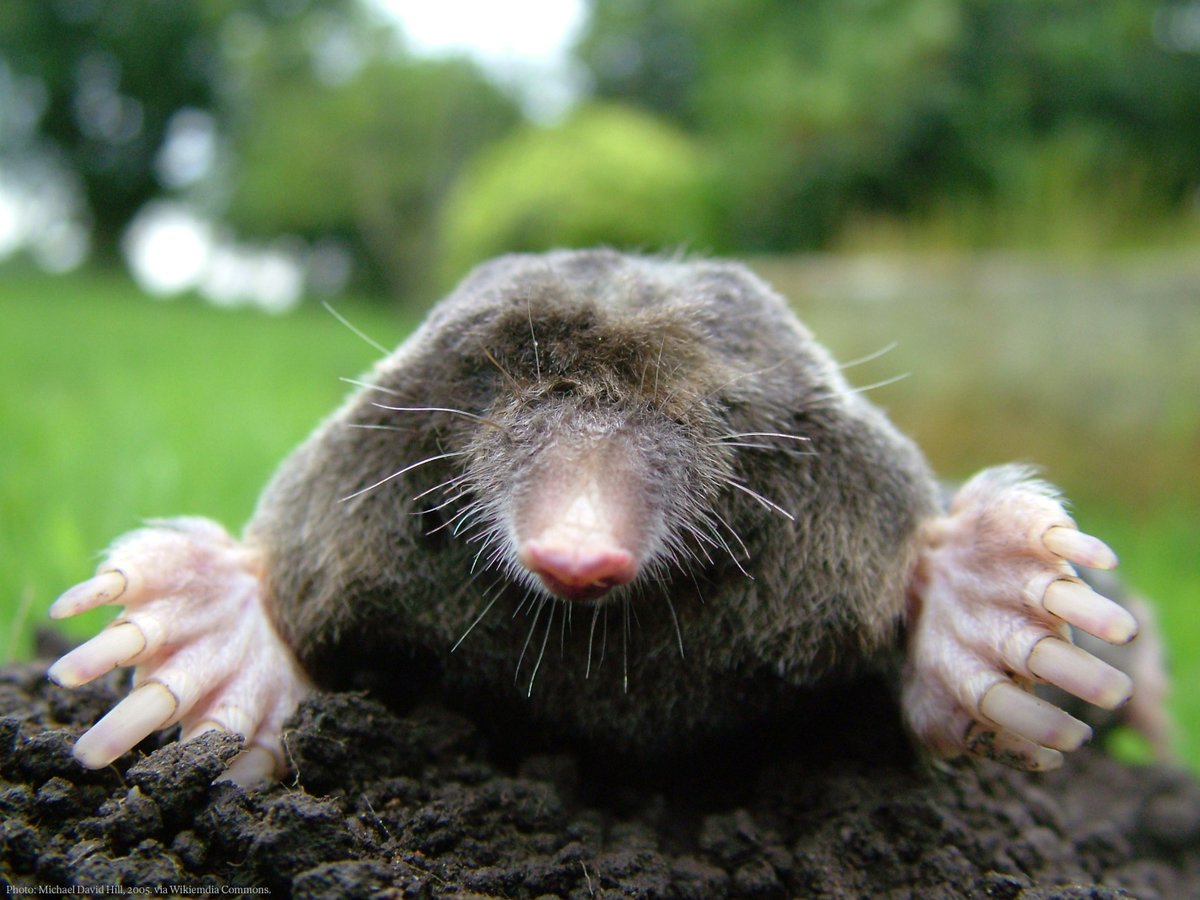
Happy #MoleDay! Right now, it's 6:02am on 23 October, aka 6:02 10/23 in the US date format. Chemists out there will notice this date and time resembles Avogadro's number, a basic measuring unit, which defines the number of particles in one mole of substance.
#Exascale supercomputers can perform over 1 quintillion calculations per second. #DidYouKnow, #LLNL's El Capitan is projected to be capable of performing more than twice amount that with the processing power equivalent to a million smartphones?https://t.co/NJr5hU8CNG
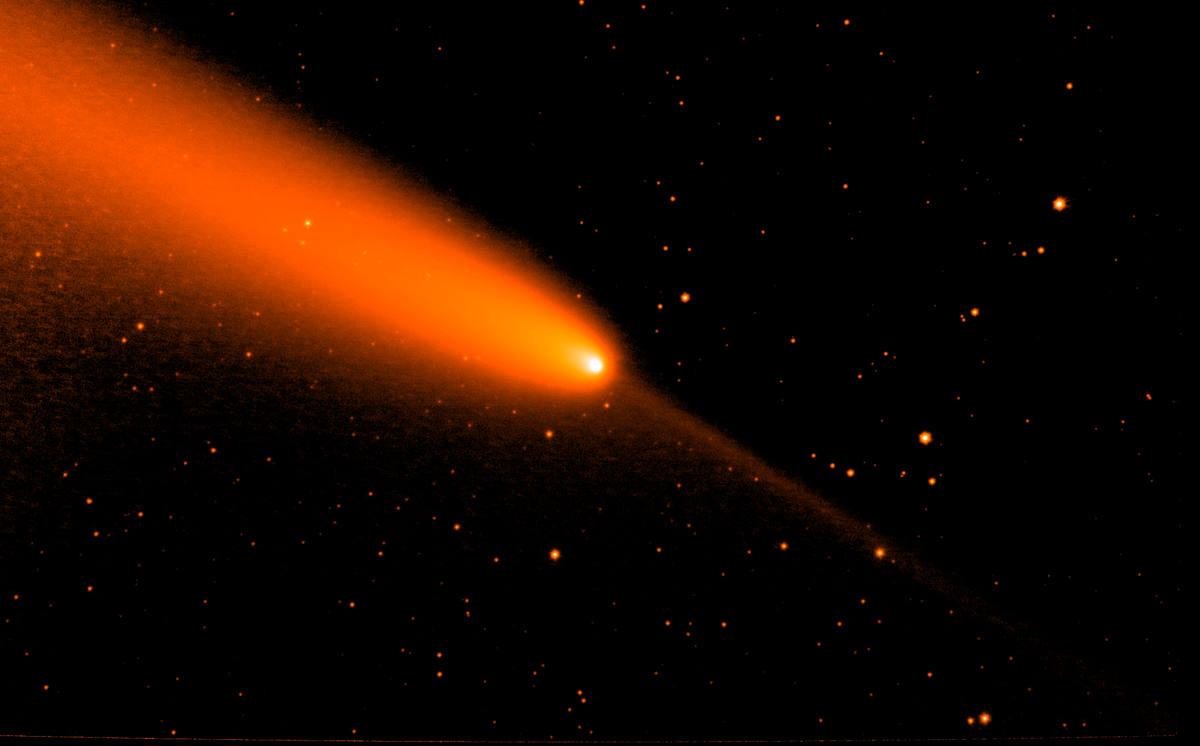
Orbiting hundreds of kilometers above Earth’s surface, #LLNL's GEOStare Space Vehicle 2 recently captured an image of the comet #TsuchinshanATLAS displaying a unique effect called an anti-tail, which is when dust left behind in the comet’s orbit appears to point toward the Sun!