IBM Commits More Than $10 Billion to Quantum Computing, Funding Its Roadmap from Today's Leading Systems to the World's First Fault-Tolerant Quantum Computers
https://t.co/vMHAebCr3V
While everyone celebrates breakthrough language models and AI capabilities, organizations with the most sensitive data (banks, hospitals, government agencies) face a fundamental dilemma […]
https://t.co/TE9v0NQK47
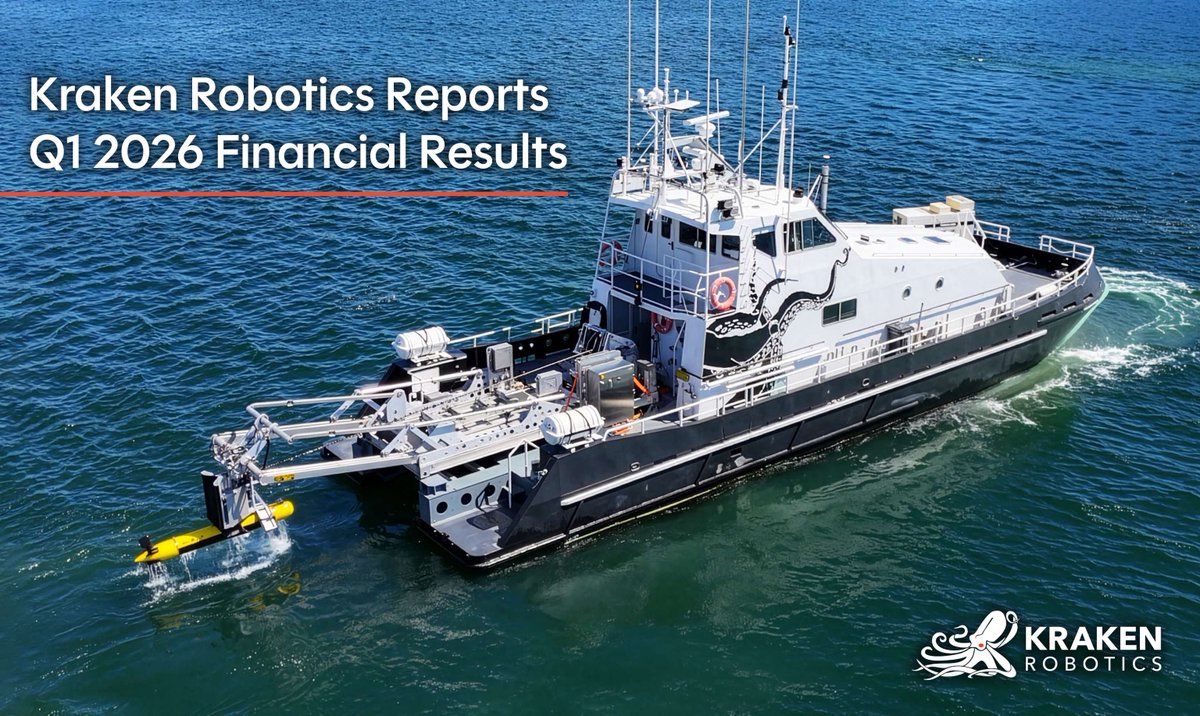
Kraken Robotics Reports Q1 2026 Financial Results with 35% Year-Over-Year Revenue Growth and Reiterates 2026 Guidance.
For the full announcement, read our news release: https://t.co/U7e3E68L6y
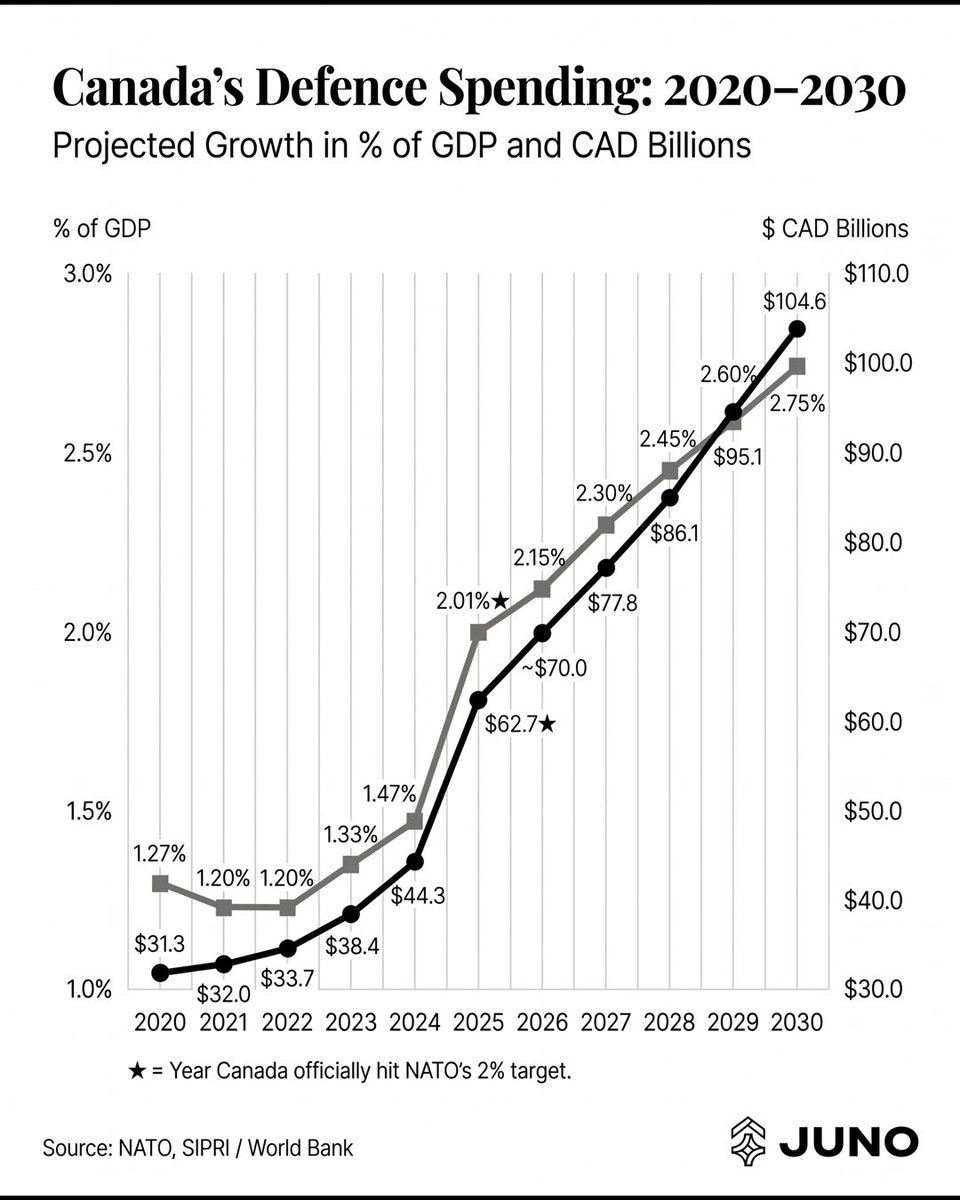
Canada is entering a period of sustained defence expenditure growth unparalleled in recent history.
In March 2026, Canada formally achieved NATO's 2% of GDP defence spending benchmark — the first time the country has met this threshold since 1989. According to data from NATO and the Office of the Parliamentary Budget Officer, defence expenditure is projected to rise from $31.3 billion in 2020 to approximately $104.6 billion by 2030, with the share of GDP nearly doubling over the same period.
Looking further forward, Canada has committed to the NATO Hague Pledge of 5% of GDP by 2035 — comprising 3.5% in core defence spending and 1.5% in security-related infrastructure. The PBO estimates this commitment will require additional defence expenditures averaging approximately $33.5 billion annually over the next decade.
The downstream implications are substantial. Capital allocations of this magnitude will flow into domestic prime contractors, supply chain partners, research and development programs, AI and cyber capabilities, dual-use technology platforms, and sovereign manufacturing capacity. For Canadian industry, this represents the most significant reindustrialization mandate in a generation.
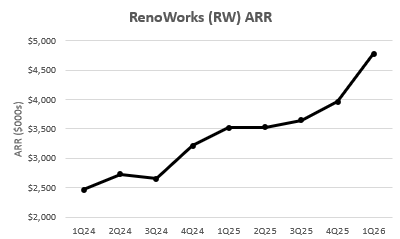
$RW.V 1Q26 financials showed a large increase in ARR, +21% Q-Q and +36% Y-Y. The stock is now trading at 1.8x EV/ARR 1Q26 run-rate, growing ARR >30% with an 80% gross margin, no debt, internally funding growth, and AI a potential tailwind.
Canada's challenge is not a shortage of talent — it is a shortage of infrastructure to support it.
In a recent conversation on the @BetaKit podcast, our Executive Chairman, The Honourable @HarjitSajjan, outlined a reality that has long shaped Canada's innovation economy: Canadian researchers, engineers, and entrepreneurs are among the most sought-after in the world, yet too many are recruited abroad because we lack the domestic innovation hubs required to scale their work at home.
The consequences extend well beyond individual careers. When that talent departs, so do the intellectual property, high-value employment, and long-term strategic capability that accompany it — assets that are increasingly central to national competitiveness and security.
Strengthening Canada's sovereign capability, in defence and across the broader economy, begins with building the ecosystems in which our best minds choose to stay and build. This will require sustained, coordinated commitment from government, industry, and capital alike.
At Juno Industries, we are proud to be contributing to that future from Vancouver.
Listen to the full episode: https://t.co/8BQI2wXr7m
$RW.V worth a look. High-growth vertical SaaS: +33% ARR in ’25, NRR +119%, FY25 profitable, net cash, 43% insider ownership. Trades at ~1.6x my est. ’26 ARR. Non-ARR service rev decline masks ARR growth. Priced for AI disruption; I think AI enhances/expands the offering. Illiquid
⚡️@LegendPower Announces $1.3 Million in Orders for 12 SmartGATE Systems as Enhanced Customer Value Strategy Gains Traction
Full PR ==> https://t.co/pHxv0LyQ2A
[TSXV: $LPS.V]
⚠️ Your proprietary AI models can be exfiltrated through API abuse. Your training data can be reconstructed by unauthorized parties. Your prompts are leaking sensitive IP. QAW neutralizes all three. https://t.co/5LmWqowU3w
SpaceX in IPO filing: "We believe we have identified the largest actionable total addressable market in human history. We estimate that our quantifiable TAM is $28.5 trillion, consisting of $370 billion in Space from space-enabled solutions; $1.6 trillion in Connectivity across $870 billion in Starlink Broadband and $740 billion in Starlink Mobile as well as additional opportunities in enterprise and government; $26.5 trillion in AI across $2.4 trillion in AI infrastructure, $760 billion in consumer subscriptions, $600 billion in digital advertising, and $22.7 trillion in enterprise applications. For illustrative purposes of sizing our addressable market opportunity, we exclude China and Russia from our global estimates."
Quantum risk is no longer theoretical. From harvest-now-decrypt-later to AI privacy, the security upgrade cycle is already underway.
Read our latest Sophic Insights Report on why the market is moving towards quantum-safe infrastructure ==> https://t.co/cvvjMzplWI
[TSXV: $ONE.V]
Weak End To The Week
Read this weeks edition of our Sunday Capital Markets Newsletter ==> https://t.co/ZfnDbmOmE2
Subscribe to receive Company Specific News, Industry Research, and The Cache direct to your inbox ==> https://t.co/aJBHFFsYjF
🔋@hybridps Announces Non-Brokered Private Placement for Gross Proceeds of up to CDN$1,500,000
Full PR ==> https://t.co/oXhrBGS52v
[CSE: $HPSS.CN ] [OTC: $HPSIF]




![01quantuminc's tweet photo. While everyone celebrates breakthrough language models and AI capabilities, organizations with the most sensitive data (banks, hospitals, government agencies) face a fundamental dilemma […]
https://t.co/TE9v0NQK47 https://t.co/OciBXSCrzP](https://pbs.twimg.com/media/HJw6FaLXgAA8oit.jpg)