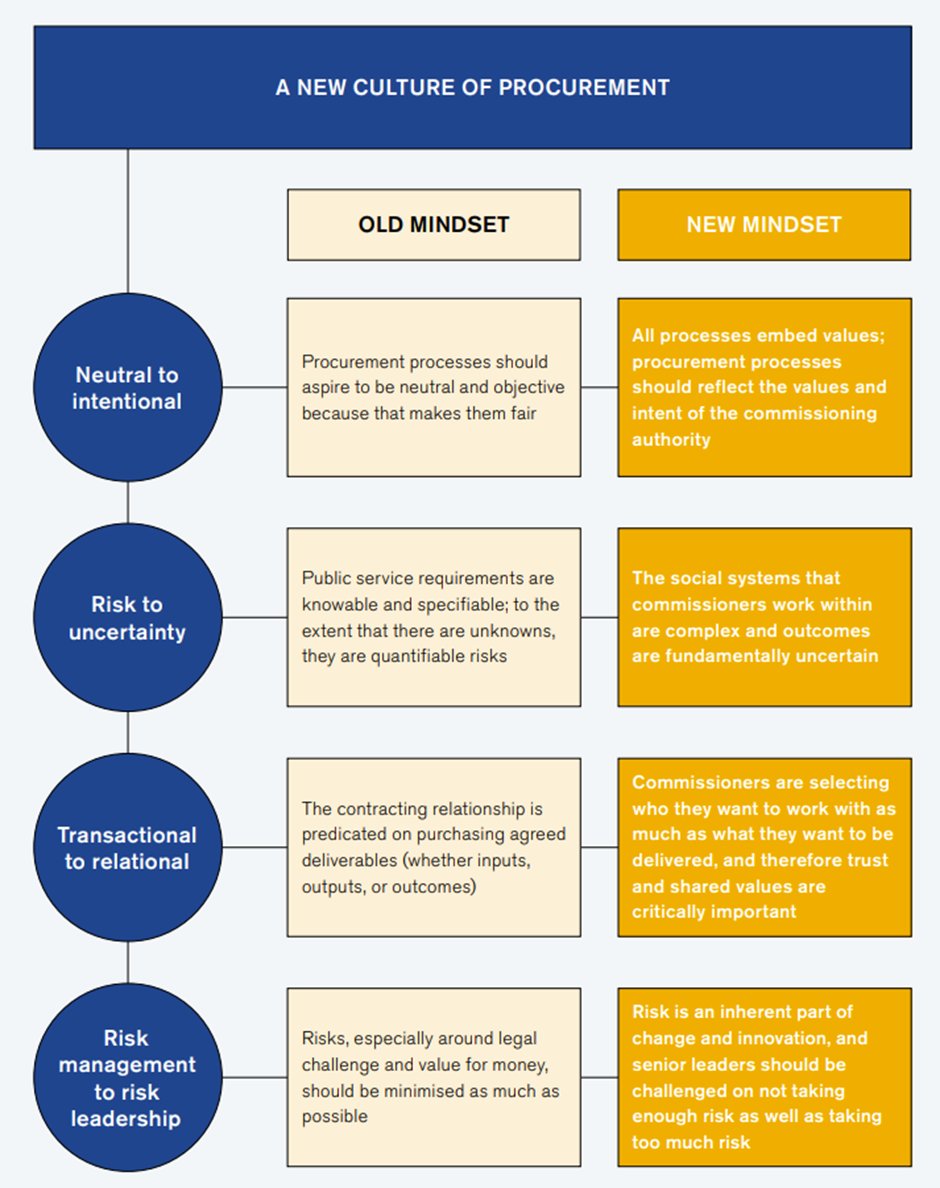
The UK Government spends £300bn annually with external suppliers. Buying those services more intelligently has the potential to be transformational for public services.
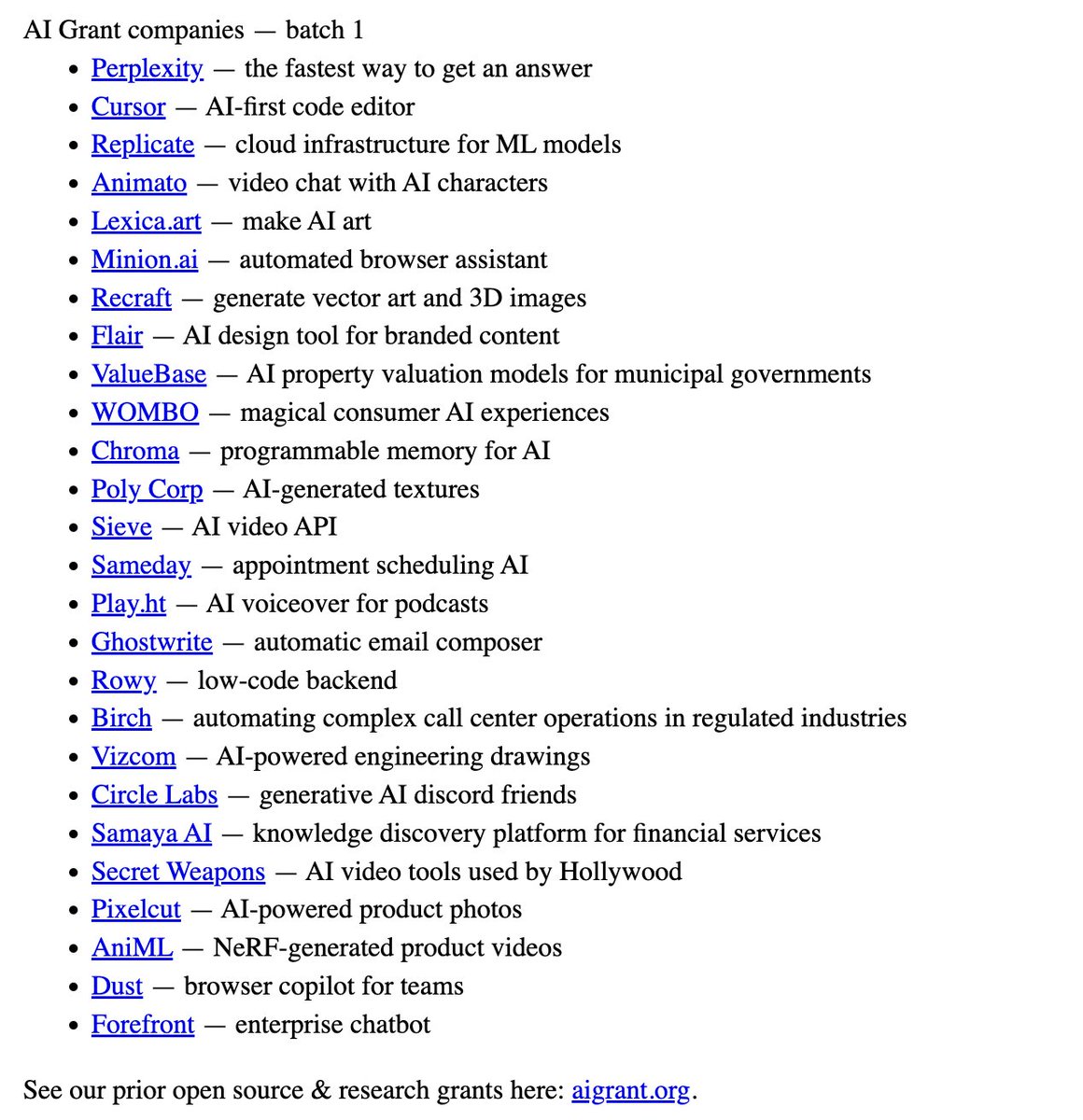
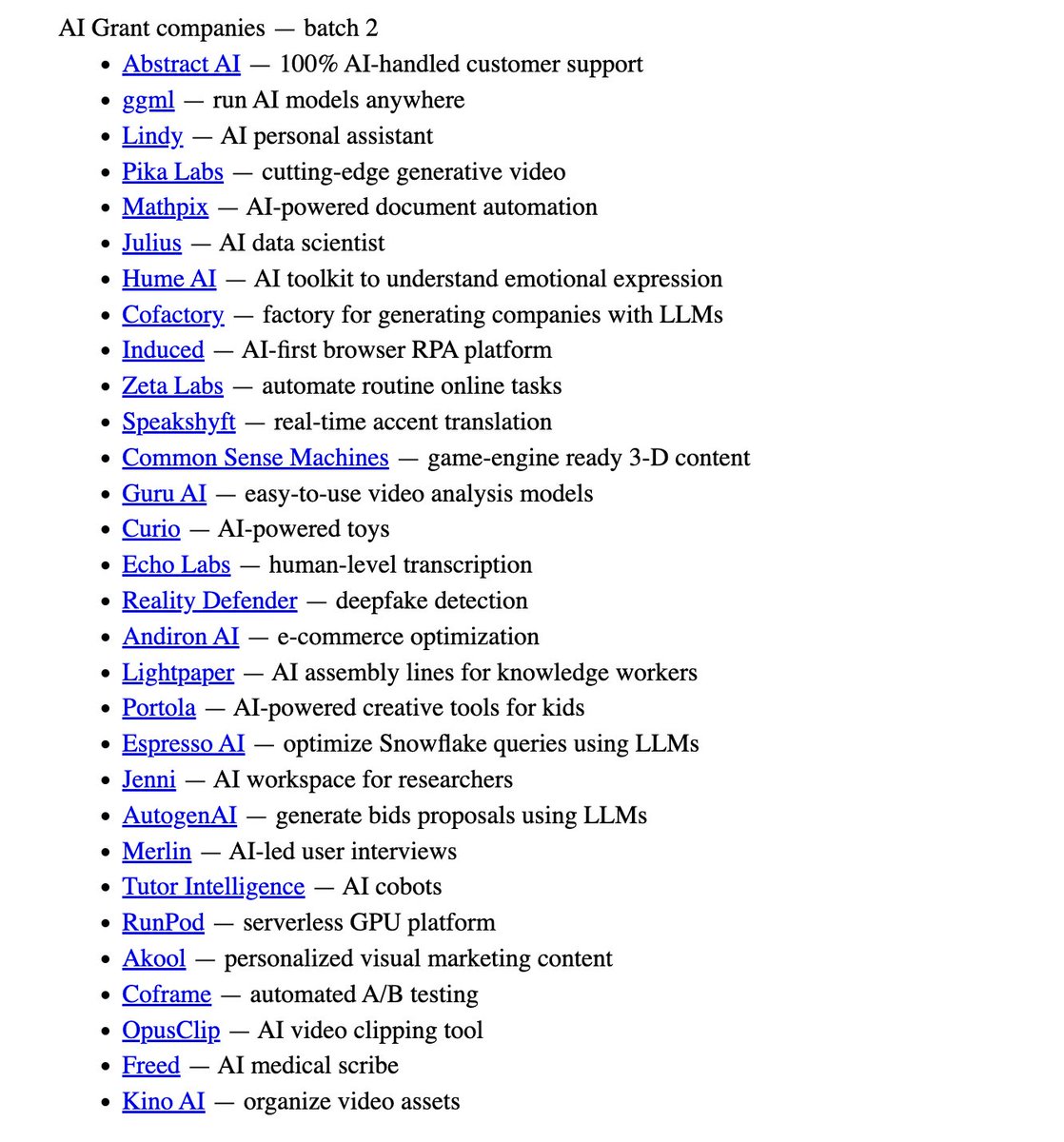
thrilled to partner with @SeanWilliamsTw1 + the team @AutogenAI (alongside @salesforcevc and @blossomcap) as they apply the latest advancements in AI to transform bid-writing + the broader procurement landscape globally
https://t.co/fIsARzBD0b
Our latest paper, in Perspectives on Psychological Science, with Eunice Yiu and Eliza Kosoy, articulating the idea of Large AI Models as cultural technologies at more length and comparing and contrasting with human children
https://t.co/X2y3HC6IVq
Our 2023 Euroscape report is now live. Head to https://t.co/QCu0YEHd0G to see:
- How the #cloud ecosystem has evolved over the last 12 months
- How #GenAI is powering the #SaaS market's recovery
- Tech predictions for the year ahead
And more…
What is Causal Inference?
Causal Inference is a new science of causation. This field is nothing less than a revolution in how scientists understand data. Read on to learn more.
This is the first post in a series based on the Book of Why by Judea Pearl. I will be reading the book and sharing the big insights with my followers.
When I first started learning causal inference, I didn't have a clear idea of the problems that casual inference was trying to solve. My misconceptions made it harder to understand the material than it would have been otherwise.
So, before we get into the ideas of the book, I want to help you avoid these common misconceptions.
1. Causal Inference is NOT just regular science
All sciences strive to infer causes within their domain of expertise. Therefore, it might not be obvious to you what makes casual inference any different. This is the reason why I sometimes call this new field mathematical causal inference. This term emphasizes that what sets causal inference apart is the mathematical framework it uses to describe causation.
2. Causal Inference is NOT directly about inferring causes
Based on the name, new learners often think causal inference is solving the following problem:
Given a list of candidate variables, how can we select the ones that have a real causal effect on our outcome of interest?
This is not what causal inference does. Causal inference is solving a different problem:
Assuming our beliefs about the causal relationships between all the variables is accurate, what is the best estimate of the causal relationship between a particular candidate variable and the outcome of interest?
Very roughly speaking, causal inference tells us whether based on our causal beliefs, the association between two variables is bigger or smaller than their true casual relationship.
3. The Example of Alice and Bob
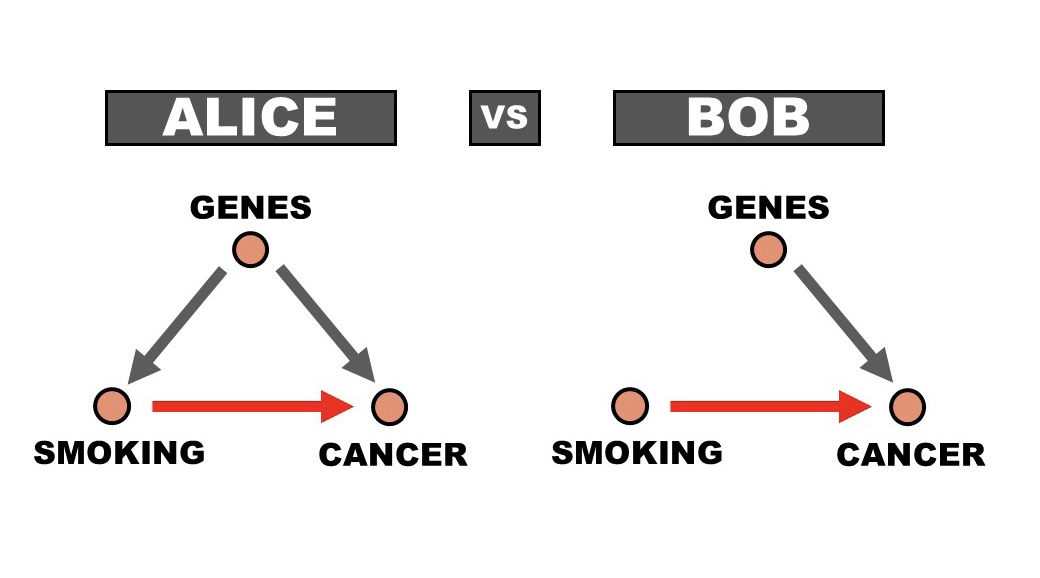
Alice thinks genes strongly affect addictive behaviors like smoking. She also thinks genes have an effect on who gets cancer. Bob agrees that genes very likely have an effect on cancer, but Bob thinks complicated social behaviors like addiction are completely due to social factors, not genes.
Causal inference allows us to evaluate the same data according to both Alice's and Bob's beliefs about the underlying causal relationships. This allows for various outcomes:
1. Avoiding unnecessary arguments. If Alice and Bob get very similar estimates for the causal relationship between genes and cancer, this implies that the disagreement about the relationship between genes and behavior is not that important. This allows scientists to move forward by focusing on the factors that really matter.
2. Agreeing to disagree. If the difference in estimates of the casual relationship between genes and cancer is large, causal inference allows both Alice and Bob to continue to explore the same data according to their very different assumptions about the causal relationships. This gives scientists and policy makers autonomy to pursue different interpretations of the same data.
4. Casual Inference builds doesn't replace statistics. It makes it more powerful.
Causal inference allows us to adjust our statistical estimates of the strength of particular casual relationships based on our beliefs about the casual relationships between the variables. This is why some experts in causal inference (like the epidemiologist @epiellie) prefer to use the term causal effect estimation to refer to the field causal inference.
That's it for now. My next post (coming soon!) will explore how causal inference creates a mathematical model of causation and what makes this approach so special. (You can find these posts using the hashtag #KareemReads)
Follow me (@kareem_carr) for more content like this. If you want to show support, like and retweet the thread.
#AutogenAI celebrated our recent success with a Thames boat trip! 🚤
What started as a small group has now become a team of 60+! Here's to more milestones as we drive transformation in procurement and bid writing! #augmentedintelligence#GenerativeAI#procurement#UKTech
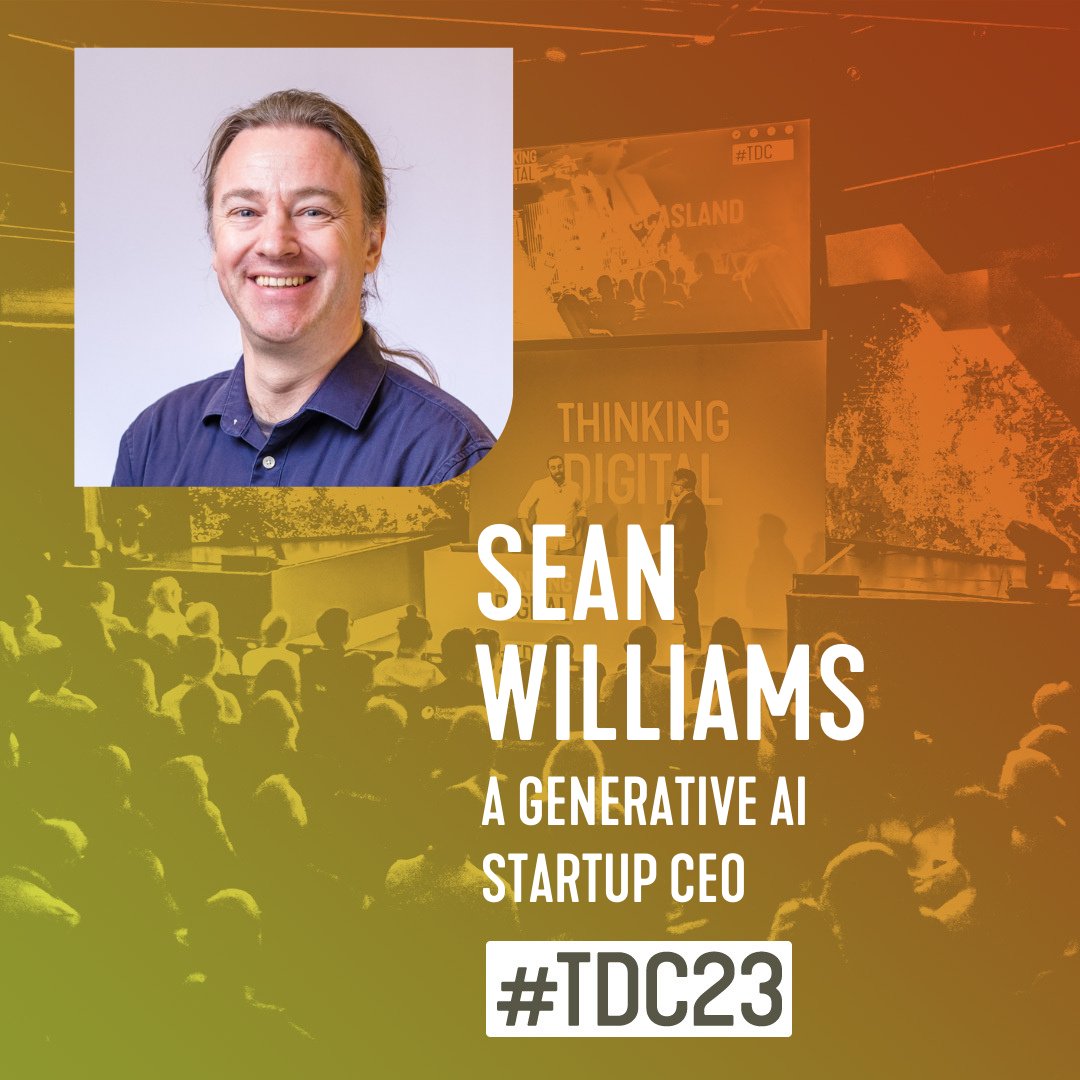
@SeanWilliamsTw1 will talk on why Generative AI is the most important new tech since the birth of the Internet. According to Sean, large language models are for real, they are getting more powerful, accurate & efficient & their impact will change life as we know it in many areas
1/ 🧠 Ever wondered how Transformer Models work and why they're such a big deal in machine learning? 🤖 @luis_likes_math breaks it down! 🧵
https://t.co/4yeF5gIfYn
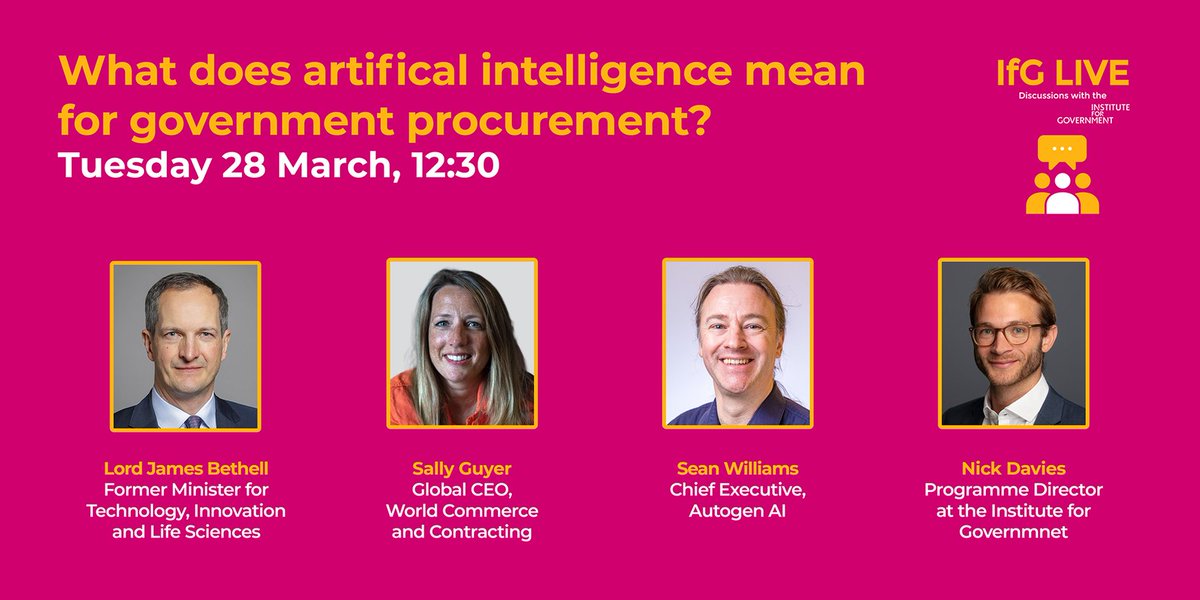
What does generative AI mean for government procurement?
ICYMI - watch or listen back to our event with Lord Allan of Hallam, Einav Ben-Yehuda @DefraGovUK, @sallyfguyer, Kate Steadman @SercoInstitute and Sean Williams @AutogenAI
https://t.co/pdiOIv7DlF
Intel co-founder Gordon Moore has died at the age of 94.
Some called him Silicon Valley’s quiet revolutionary.
Here’s more on the story behind Moore’s Law… 🧵
"The development of AI is as fundamental as the creation of the microprocessor, the personal computer, the Internet, and the mobile phone. It will change the way people work, learn, travel, get health care, and communicate." Great blog from Bill Gates.
https://t.co/FKY0VAP8RK
We are delighted to announce that @SeanWilliamsTw1, Founder & Chief Executive, @AutogenAI will speak at the UK Manufacturing & Supply Chain Conference & Exhibition on the 20th of April in Marshall Arena.
Register -> https://t.co/0W6LHcDWGS
#ManufacturingExpoUK
Really exicited to be chairing an event next month on the implications of AI developments for government procurement
There's a huge amount to discuss and we have a brilliant panel
Register here: https://t.co/hIgHNbmOgs