Kane Parsons, director of ‘BACKROOMS’ shares his thoughts on the Seated Scribe.
“Yeah, he’s pretty chill. I like how he’s sitting.”
He is 20 years old.
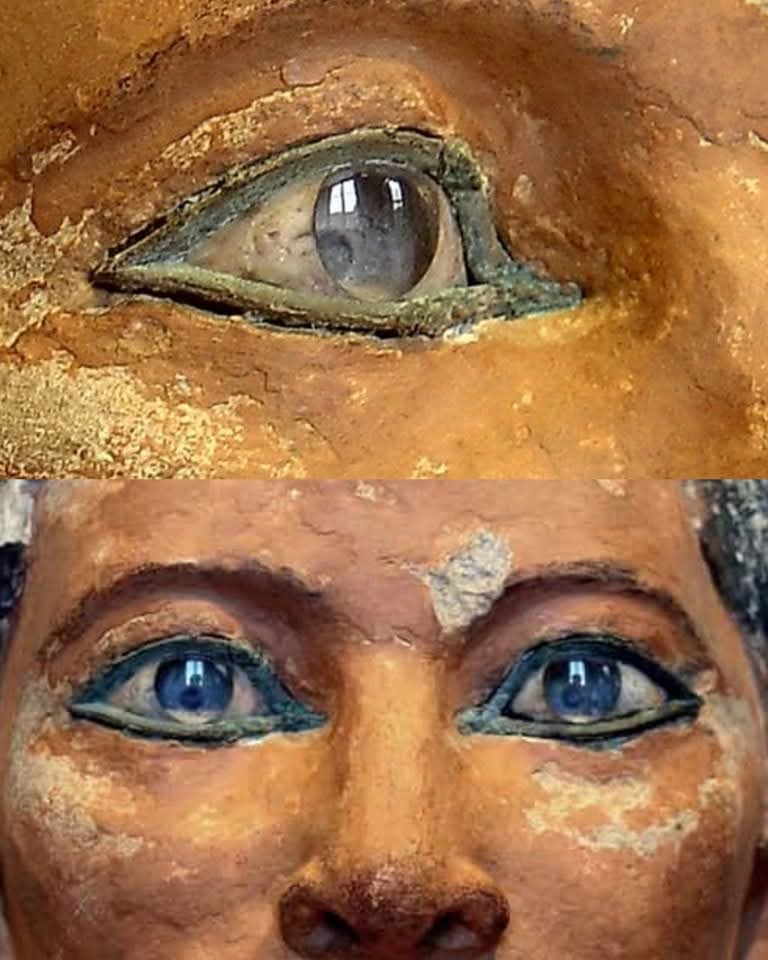
The 4,500-Year-Old Eyes That Still Seem Alive 👁
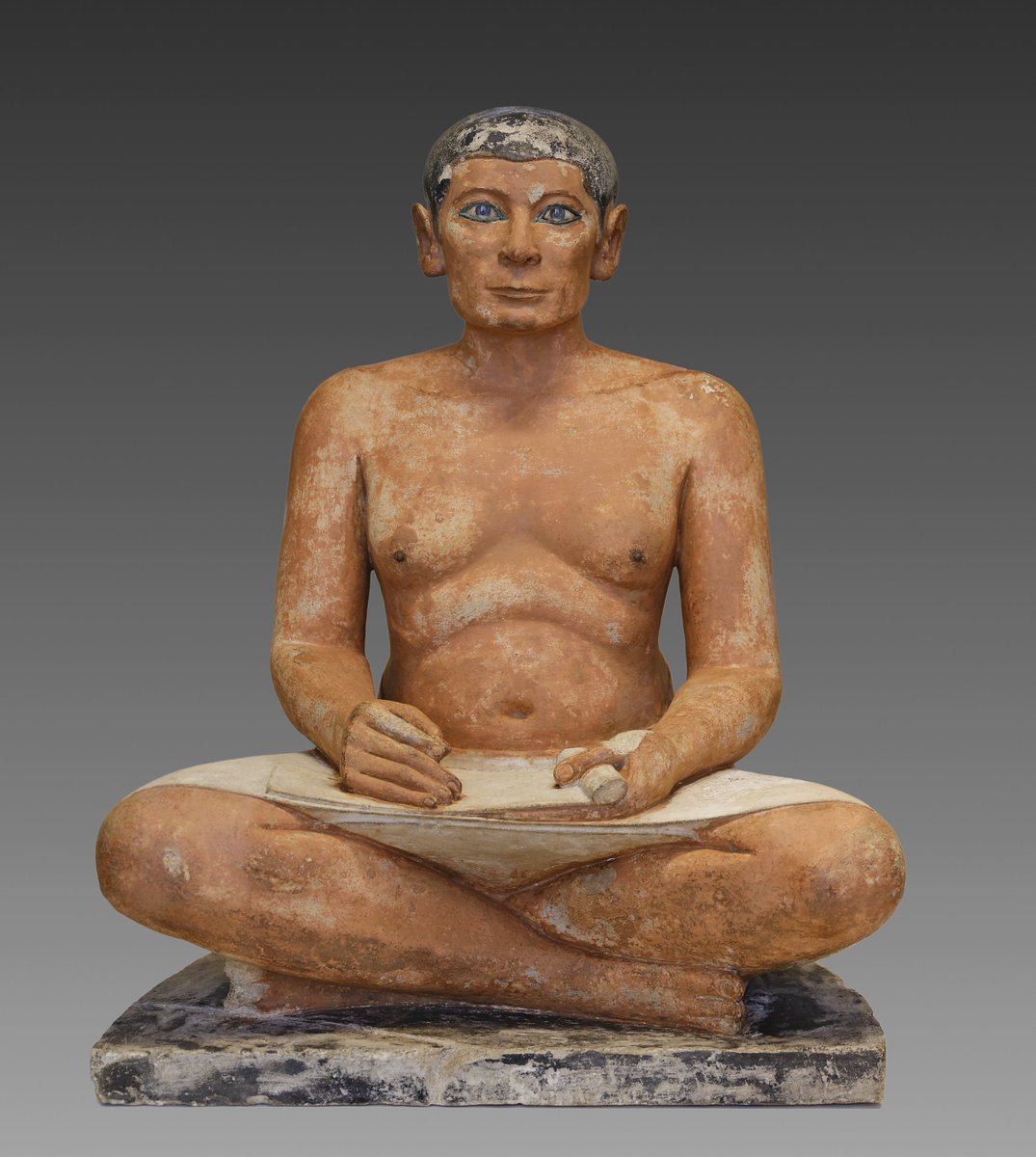
Hidden behind a calm face of carved limestone, the eyes of the ancient Egyptian “Seated Scribe” have stunned historians for generations. Even after more than 4,500 years, they still appear hauntingly lifelike — as if the figure is silently watching everyone who passes by.
Created during Egypt’s Old Kingdom period, around 2600–2350 BCE, the statue is believed to represent a high-ranking royal scribe, a man whose role was among the most respected in ancient Egyptian society. While pharaohs ruled the land, scribes controlled knowledge itself. They recorded taxes, laws, religious texts, and royal commands in a civilization where very few people could read or write. In many ways, they were the memory keepers of Egypt.
The statue was discovered in 1850 at Saqqara, near the tombs of ancient nobles. But what truly shocked archaeologists were the eyes.
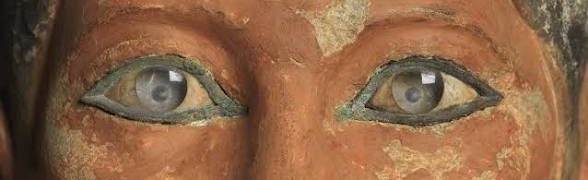
Unlike ordinary stone carvings, these eyes were crafted with astonishing detail using rock crystal, polished white magnesium carbonate, and copper framing. Ancient craftsmen carefully shaped each layer to imitate a real human eye. Light enters the crystal surface and reflects from inside, creating a moist, living appearance that still feels unsettling today. Standing before it, many people describe the strange feeling that the statue is somehow aware of their presence.
No one knows the exact artist who created this masterpiece. Ancient Egyptian artists rarely signed their work, yet their skill rivaled some of the finest sculptors in history. Every curve around the eyelids, every reflection in the pupils, was designed to preserve not just a face — but a presence.
The “Seated Scribe” was not made simply as decoration. Egyptians believed statues could serve as spiritual vessels for the soul in the afterlife. A realistic face allowed the spirit to recognize its earthly form. These eyes were meant to stay open forever… watching eternally between the worlds of the living and the dead.
And perhaps that is why, thousands of years later, people still stop and stare back into them — wondering if the ancient gaze staring out from the stone is truly lifeless at all.
The Seated Scribe Fixes his Gaze From the Limestone
Sand still clung to the folds of the robe when the first excavators at Saqqara cleared the entrance to the Mastaba in 1850. Inside they found the seated figure carved from a single block of limestone with eyes that had been inlaid using rock crystal for the whites and a dark backing to form the pupils. The scribe sat with legs crossed and a papyrus unrolled across his lap as if he had paused mid sentence to look up at whoever entered the chamber. Unlike the rigid idealized forms made for kings this one showed the slight softening of the body and the alert tilt of the head that belonged to a real man who had spent his life with ink and reed.
The crystal caught what little light reached the burial chamber and the eyes followed the movement of the workers as they cleared the space around the statue. Paint still clung to the surface in places showing the red brown skin and the white of the kilt. The hands rested one on the scroll and the other ready to take up the pen again. When the figure reached the Louvre in Paris the same gaze that had watched over the tomb for more than 4000 years now met visitors across the glass case and still holds the same direct attention.