This is such an important study and shows very well a finding that we should always keep in mind:
Gross efficiency is correlated with specific type of fibres: Type I, oxidative, slow twitch fibres.
https://t.co/n808vP8MhW
"Excelling over a long period of time requires a sense of what makes us who we are and what we stand for (ruggedness) and also the ability to adapt, keep an open mind, and update our views when presented with new evidence and realities (flexibility)." @BStulberg
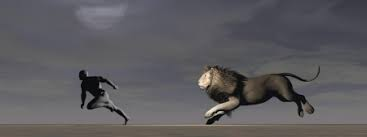
NO, nuestros antepasados NO SPRINTABAN para cazar ni para evitar ser cazados.
Si fuera, así, nos habríamos extinguido.
Esa no es la razón para entender las bondades del entrenamiento de fuerza y sprint.
We're very happy with our latest article "Case Study: Energetics of a world tour female road cyclist during a multi-stage race (Tour de France Femmes)" accepted for publication at @IJSNEMJournal, w/ @ghowe145, E. Meehan & @DrLeanneRedman. 1/2
A nice study showing how diet elicited insulin resistance and disruption of mitochondrial function and metabolic fluxes in the renal cortex of mice, as important aspect in the pathogenesis of kidney disease.
I know I will be hammered by keto and high fat diet fans…but guess what is the diet that elicited insulin resistance and metabolic disruption?…High-Fat diet…
…And in medical research, the classic way done in hundreds of studies to elicit insulin rapid resistance and type 2 diabetes in mice is high-fat diet…
https://t.co/WdHD4msI1D
A social media gratitude post...
I can't recall learning anything new from arguing on Twitter. I don't think the platform is built for productive debate.
However, certain posts and posters have changed my life in powerful ways.
Some features of life-changing tweets...
* Pulling ideas together into a single profound insight.
* Exposing me to new research/researchers from adjacent fields that I wouldn't ordinarily have been exposed to.
* People openly sharing their life experience.
Some examples of tweets that have changed my perspective and, not to put too fine a point on it, my life! ... 👇
Love this chart from @andrew_flatt showing long-term effects of multiple factors on #HRV
TLDR:
- Keep life stress in check
- Eat high quality nutrition & keep weight in a good spot.
- Get a dog!! 🐶
The Natural Distribution of Heart Rates is ~Lognormal (w/occasional extremes), which explains the recent claims about the benefits of Z2 training.
This is a sketch (not to scale, just to illustrate the problem; the scale vary with individual fitness).
But with fitness -> barbell.
Random observation:
The heart (perhaps like the mind) once stretched never returns to its previous size. 🫀
In many athletes with a long training history, even after a long time away from the sport, they still have very impressive ventricular diameters & stroke volumes, impressive engines 🚂
Their resting heart rate remains low and their heart rate v power relationship remains similar.
What changes is their blood lactate level at different outputs (& their subsequent maximal heart rate)
That is, much of the deconditioning is peripheral - at the level of the muscle. 💪
Good stuff from the G-man...
When monitoring training response, one thing becomes quickly apparent...
When athletes get too light, their training response goes to 💩
The reason is simple...
Growth requires an energy surplus.
All types of growth - muscle, mitochondria, capillaries, building anything new, requires energy.
If you're short-changing your body on energy, you're short-changing your body on growth!
An important question from Erin...
"How often should we do a lactate test 🩸during the training cycle?" 👇
Lactate testing is a valuable tool for monitoring an athlete's endurance capacity and the effectiveness of their training program....
Setting yourself up for a strong back-half with the "50 at 50 goals"...
* VO2max >50 ml/kg/min
* Resting heart rate: <50 bpm
* Heart Rate Variability (rMSSD): >50 ms
At age 50.
Who's with me?
¿Es justa la normativa del COI para las mujeres en lo relativo a la inclusión/no-discriminación en competición de los atletas transexuales? Un conjunto de expertos internacionales nos pronunciamos sobre ello: https://t.co/HUDUY3N94V
"I don't get it. Aren't I getting my metabolic work when I run?"
If we define metabolic fitness as high and broad fat oxidation, top cyclists have significantly better metabolic fitness than top runners. In my experience, often double the rates of fat oxidation! 🔥🚴
The reason is simple - top cyclists can do A LOT more volume. Often in the range of 25-30hrs/wk, double what top runners do.
This is true on both the weekly and session level. Fat oxidation increases significantly over long (multi-hour) sessions. So, a 6hr bike has a significantly different fat contribution when compared to a 3hr run.
In short, it takes volume to develop a high and broad fat burning base &, in running, that volume is limited by the eccentric loading of the muscles and tendons.
That's why I say, all runners should bike. 🚴🏃
"Wouldn't lactate be at its lowest at rest?" 🩸
Generally not.
Slow twitch fibers and cardiac muscle are quite good at using lactate as a fuel source. So, when you begin very low intensity exercise, because there is increased lactate uptake without increased lactate production (due to the fact that very low intensity exercise is generally powered by fat which doesn't increase lactate) lactate will generally dip below resting levels.
A typical scenario for someone new to lactate...
* Test resting lactate - 2.0mmol/L
* Go for 60 minute walk and retest - 1.3-1.5mmol/L
For a top athlete...
* Test resting lactate - 1.3 mmol/L
* Go for 60 minute easy run and retest - 0.7-0.8 mmol/L
The trick for the athlete beginning lactate testing is to experiment to find out what intensity leads to this drop (& spend a lot of training time there!)