Reaching a financial goal can feel like the end of the job.
But it can be the start of a harder question.
A goal like retiring at 60 only works if it leads somewhere that matters to you, whether that's a purpose, a set of values or something that makes life feel worthwhile.
His suggestion for couples is simple: sit down and talk about your core values. Most of us never get round to it.
👉 When did you last have that conversation, with a client or with your partner? 🤔
There's a link to the full-length video in the comments.
#FinancialPlanning #LifePlanning #Retirement
Before I discovered evidence-based investing, I regularly traded shares.. mostly acting on tips in investment magazines and quality newspapers.
Most did badly. Some were disasters. In one case, I lost my entire stake.
I never buy individual shares these days, because of the many studies like this one.
Researchers tracked more than 1,000 share tips posted by Instagram finfluencers in Germany, Austria and Switzerland. The early results looked fine. After three years, the tips were well behind the market, even before dealing costs.
And the finfluencers with big followings did no better than the rest.
My latest video on the TEBI YouTube channel goes further, including why a winning tip can be pure luck. The link is in the first comment.
I'm a journalist, not a financial adviser, so this isn't advice. If you think I've missed something, I'd like to hear it.
'There seems to be some perverse human characteristic," Warren Buffett once said, 'that likes to make easy things difficult.'
Buffett was specifically referring to investing and the way investors (wealth ones especially) are drawn to expensive, complex strategies instead of just regularly investing in a low-cost index fund.
But exactly the same applies to financial planning. Some people think they need a hugely detailed plan.
Advisers are not immune either. Some think complexity makes them look clever, and worth the fee.
But, as David Jones explains, simplicity trumps sophistication.
Life is complicated enough as it is. What you really need from your financial adviser is clarity and peace of mind.
#FinancialAdvice #FinancialPlanning #Investing
Is a global tracker fund too risky now that a handful of giant US companies dominate it? I hear that a lot.
It doesn't worry me much. Over the long run, a low-cost global tracker is still very likely to beat most active funds once you properly adjust for costs and risk.
But it probably isn't optimal.
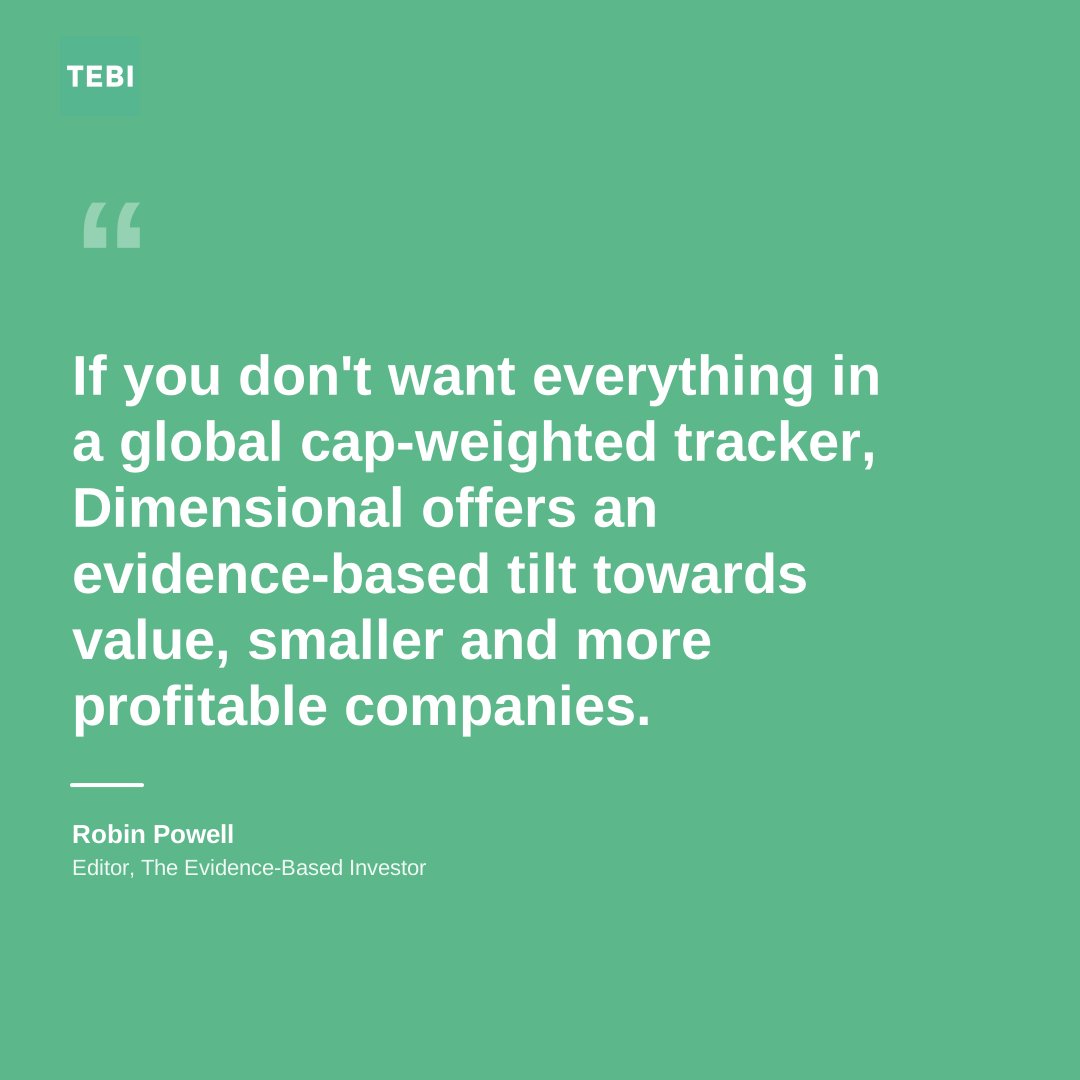
I split my own money between a cap-weighted index fund and low-cost systematic funds that tilt towards value, smaller and more profitable companies. Peer-reviewed research shows those companies have delivered higher returns in the past.
Want to do the same? I hold funds from Avantis. Another option is Dimensional.
For years, most people who held Dimensional funds did so through an adviser. If your portfolio is large or your finances are complex, a fixed-fee adviser is still the route I'd suggest.
If not, Dimensional funds are now listed on several mainstream UK DIY platforms, including in ISAs and SIPPs.
I'm a journalist, not a financial adviser, and this isn't a personal recommendation.
Full article in the reply 👉
SJP, the UK's largest wealth manager, has a new line on client transitions: faster is better.
As I point out in the FT, it's not that simple.
When an SJP adviser leaves, their clients get handed to someone else in the firm. SJP has just automated the business valuation behind that handover, cutting it from three weeks to almost real time.
The stated reason is continuity of service. But this comes the same year SJP has lost several large partner firms, including Prospera and Wellesley, to options outside its restricted model. A faster handover looks less like a client benefit and more like a way to protect SJP's revenue from walking out with the adviser.
Smoother for the firm and smoother for clients aren't the same thing.
If client interest were really the goal, clients would get to follow their adviser out, not just get reassigned faster inside SJP.
For FT subscribers, here's @EDunkley00's article 👉 https://t.co/2eQKSd7WjV
Most families have the same unspoken rule about inheritance: nobody wants to be the first to mention it.
I chaired a panel on this with Charlotte Ransom from @netwealth and financial psychotherapist Vicky Reynal at last week's @TheTimes Wealth Management Forum.
We discussed recent rule changes, including pensions coming into inheritance tax from April 2027. But most of the half-hour session was devoted to the psychological aspects of this topic.. particularly why families avoid these conversations, and how to start one.
A video of the full session is now available, free to view, on demand.. The link is in the comments.
👉 Please do share your thoughts.. Are you holding off having this conversation with your own family? And if you've had it already, what was it that got it started? 🤔
Hamptons says buy-to-let has narrowly beaten the S&P 500 over 30 years. In my latest piece for @thetimes, I explain why that's a poor guide to the next 30.
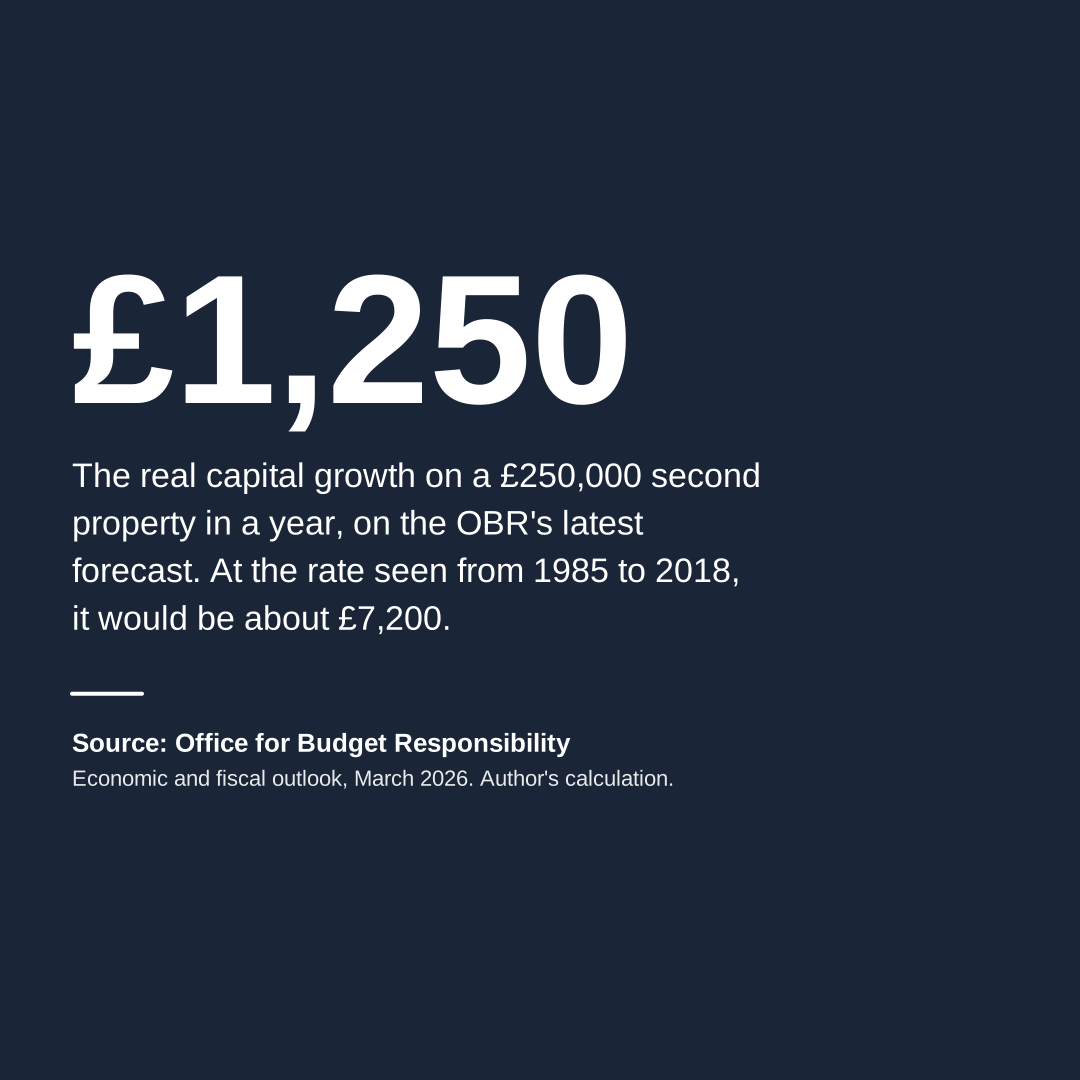
A Bank of England working paper found falling real interest rates more than explain UK house price growth relative to incomes from 1985 to 2018. About two-thirds of that fall has since reversed.
On £250,000, the old growth rate is worth about £7,200 a year after inflation. On the OBR's latest forecast, about £1,250.
👉 If you're thinking of investing in a buy-to-let, this is the question to ask: Would the rent alone still justify a second property? 🤔
#BuyToLet #UKproperty
Someone put this to me the other day:
'I hold one fund, a Vanguard LifeStrategy fund, 70 per cent shares and 30 per cent bonds. Is one fund enough, or should I pick another one to go with it?'
Its a fair question, but the instinct behind it is usually wrong. A second fund feels like spreading your risk. Often it does the opposite.
Take the shares side of it. More than 60 per cent of a global tracker is already invested in US companies. Put half your money into a US tracker alongside it and that rises to over 80 per cent. Two funds, one country, less spread than you started with.
As I explain in my latest TEBI video, I made that mistake for years. Fund after fund, each one meant to widen my net, most of them holding the same companies I already owned.
The part of the question that really does deserve careful thought is the 70/30 itself. How much of your money belongs in shares is a hugely important decision, and one I'll tackle in a future video.
#Investing #Funds #FinancialEducation
Ask a fund manager if active management is finished, and watch what happens to their language.
Professor Crawford Spence from King's Business School interviewed 28 of them for a new study.
The answers, he explains, start out measured. Push a little harder and they shift: talk of cycles, equilibriums, a return to form that's always just round the corner.
It sounds less like strategy. More like faith.
There are links to the full video and to Professor Spence's paper in the comments.
#FundManagement #ActiveManagement
𝗖𝗮𝘀𝗵 𝗽𝗮𝘆𝘀 𝟱%. 𝗦𝗼 𝘄𝗵𝘆 𝗵𝗼𝗹𝗱 𝘀𝗵𝗮𝗿𝗲𝘀 𝗮𝘁 𝗮𝗹𝗹? 🤔
It's an important question to ask, so what does the historical evidence tell us?
Barclays says UK shares beat cash in 91% of ten-year periods since 1899.
But a 2016 study by @paullewismoney found a FTSE tracker beat top savings rates only half the time.
For my latest article for @MoneyWeek, I reran the numbers on fresh data: MSCI indices against actual best-buy savings rates, not the headline Bank Rate.
The result: over rolling ten-year periods since December 2000, cash beat shares just 9% of the time.
Cash isn't a bad choice. I explain in the article why I myself hold more cash than I used to.
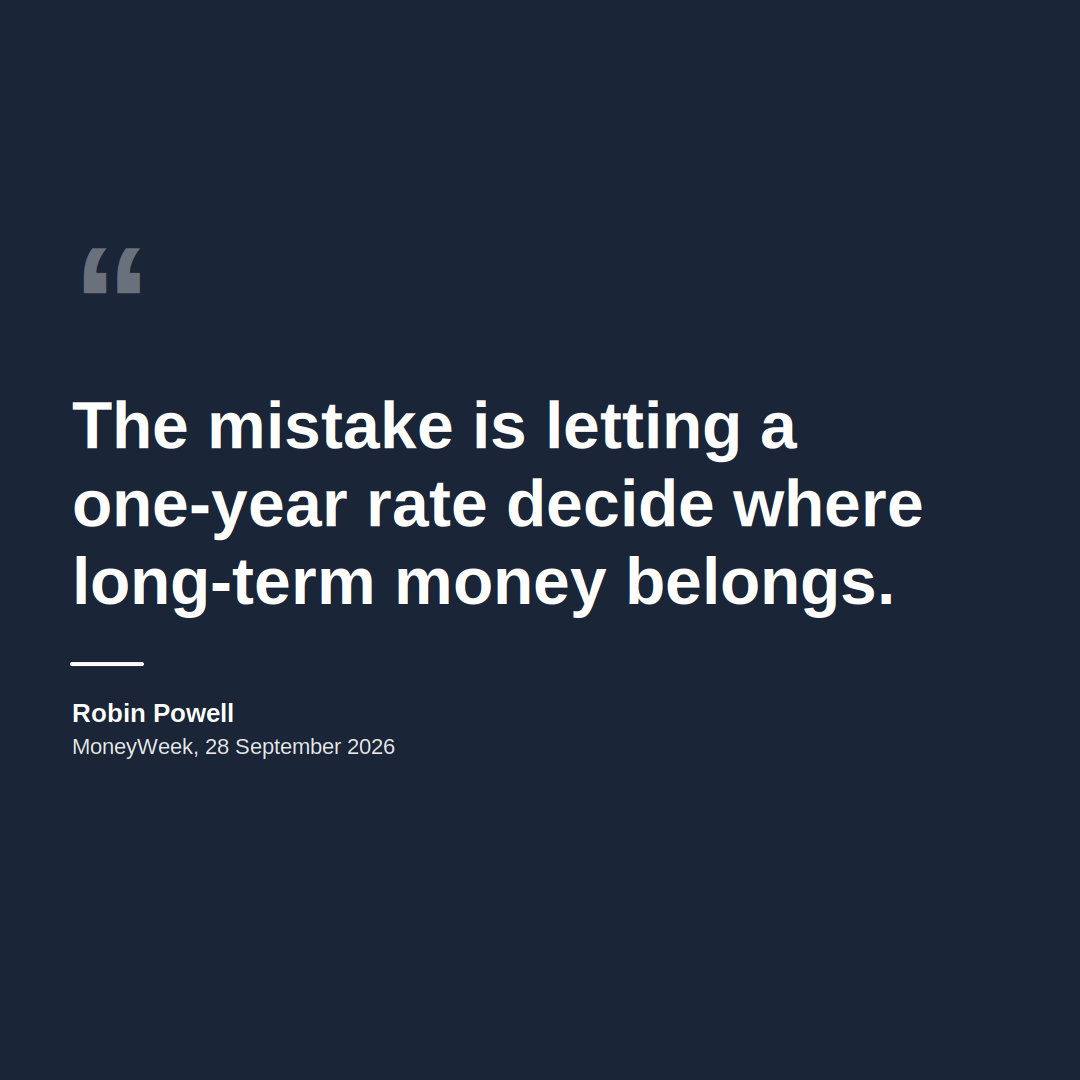
But the size of your cash pile should be a deliberate choice, not one today's rate decides for you.
#Savings #Investments
People like to read stock tips. And nowadays they're everywhere.
One in five UK investors uses social media to research investments. In an FCA survey of younger investors, 43 per cent said it was their main research tool.
But, as my latest article in @thetimes explains, the academic evidence shows they don't provide information you can actually profit from.. at least, not in the long run. And that includes stockpicking columns in national newspapers.
The latest study concludes that share tips on Instagram are little more than "digital financial entertainment".
I realise of course that, for many people, stock trading is a hobby, and that's absolutely fine.. as long as you can afford to take the risk and realise that it's just a bit of fun.
But if your goal is to maximise your net returns, you're much better off using low-cost index funds.
#EvidenceBasedInvesting #ShareTips #StockPicking #StockTrading
In most professions, average is fine. An average dentist can still fill a tooth. An average plumber can still fix a leak.
Craig Lazzara started out as an active manager. He wasn't bad at it. But he came to realise his results were little better than average.
Then he read an article by another active manager, Hal Arbit. It changed how Craig saw his industry, and eventually his career.
He went on to spend years at S&P Dow Jones Indices, home of the SPIVA scorecards.
In the full TEBI video (link in the comments), he explains how the industry keeps thriving when so few managers deliver, and what the most important skill in fund management REALLY is.
#EvidenceBasedInvesting #ActiveManagement
'The tax-free pension lump sum is about to be cut.'
You've probably read some version of that this month. You also read it before last year's Budget, and the year before. Both times, it didn't happen.
Yes, it could happen. Serious people have proposed reforming pension tax, and the case is a real one. But a proposal in a think tank paper is not a decision by a chancellor. Somewhere between the two, 'proposed' quietly becomes 'probably'.
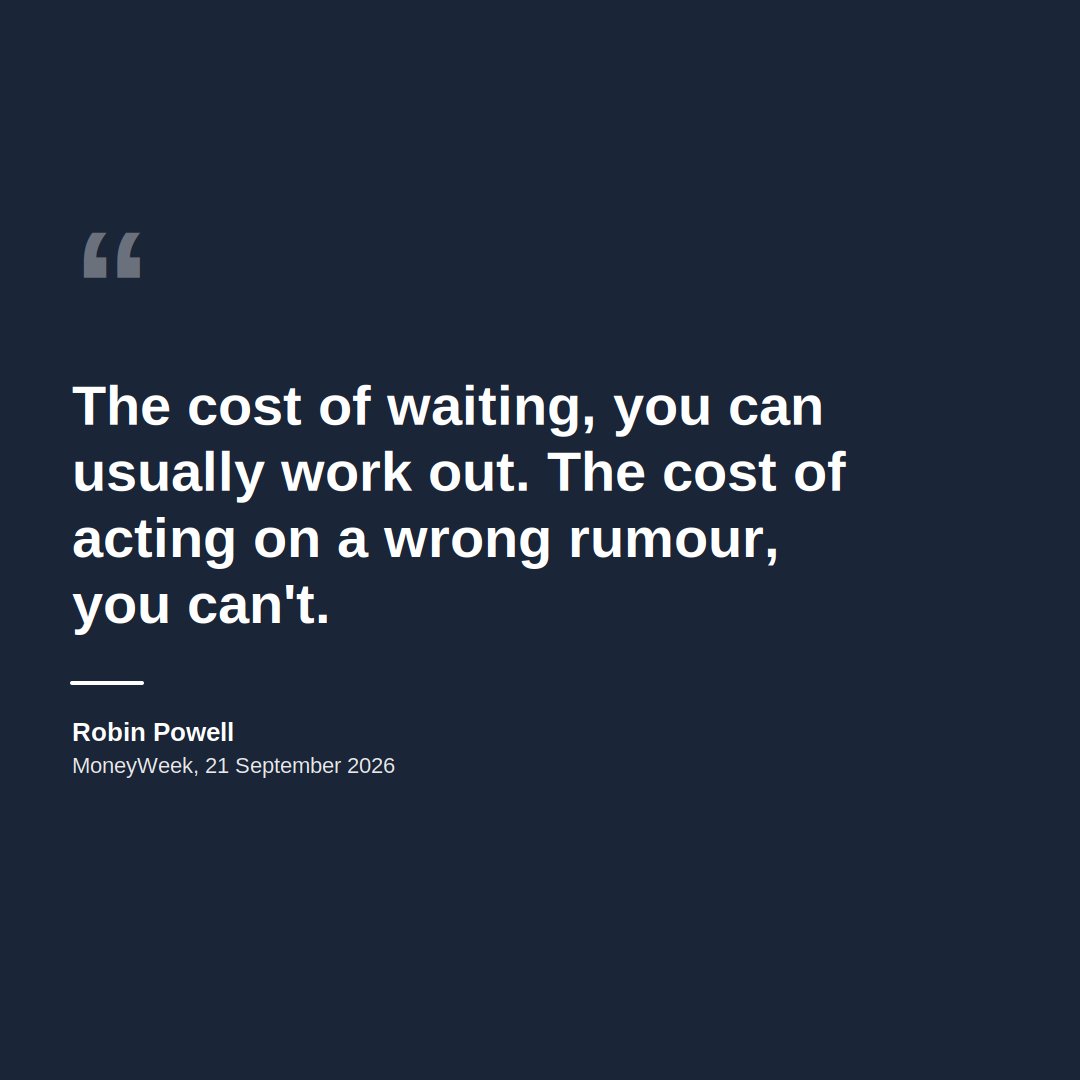
As may latest article for @MoneyWeek explains, that's the part that can cost you. Act on the wrong version, take your tax-free cash early to beat a cut that never comes, and you've spent part of an allowance that doesn't refill. There's no undo button.
Two things this autumn are genuinely settled: the cash ISA change and the pension inheritance tax change, both arriving in April 2027. You can plan around those, because they've been announced.
A cut to the lump sum allowance is different. It's been proposed. It's been reported. No government has said it's coming.
That distinction, announced versus predicted, is the whole game. One you can plan around. The other is a forecast, and nobody knows in advance which forecasts turn out to be right.
#Budget #Pensions #FinancialPlanning #RetirementPlanning
Buy-to-let has beaten an S&P 500 index fund over the past 30 years, according to new figures from the estate agent @Hamptons1869.
Every £1 put into a buy-to-let mortgage in 1996 has become £22.30, counting rent and rising prices.
That's no surprise when you look at what drove it: borrowed money, and three decades in which British house prices kept rising.
A mortgage magnifies whatever prices do. When they rise, landlords do very well. When they stall or fall, the same mortgage works in reverse.
And prices don't always rise. After inflation, German homes were cheaper in 2008 than in 1970. House prices also remained broadly flat in countries including France, Spain, Italy and Japan for decades.
In my latest video, I follow £80,000 into a rental flat and a tracker fund over ten years, with prices rising, flat and falling.
We all know what prices have done in the last 30 years. The key question is, what will happen to UK house prices over the NEXT 30? Nobody knows the answer to that.
#BuyToLet #HousePrices #Investing
I lost a friend a week ago today. She collapsed and died while we were out running.
She was a very special person who gave so much to our local community. She'll be greatly missed.
People have been so kind. Thank you, especially to my daughter Daisy, pictured here, who got me out this morning so I wouldn't dwell on it.
There was probably nothing anyone could have done to save my friend. But it's made me think about how the rest of us can be prepared. Here are a few suggestions.
• Know the signs of a cardiac arrest. The person collapses suddenly, doesn't respond and isn't breathing normally. If you see that, call 999 straight away. Put the phone on speaker and start CPR. The call handler will talk you through it.
• Better still, learn CPR before you need it. The British Heart Foundation's free RevivR course takes 15 minutes on your phone, with a cushion to practise on. If you employ people, get them first aid trained as well. ➡️ https://t.co/dtXgP11tDq
• Look up your nearest defibrillators on DefibFinder. If your workplace or club has one, check it's listed there too. If it isn't, 999 call handlers can't see it. In an emergency, the call handler can direct you to one and give you the code for a locked cabinet. You don't need training to use it. It tells you what to do and only gives a shock if needed. ➡️ https://t.co/PEbB0jecdy
• Runners, always take your phone and keep it switched on. A running belt stops it bouncing around. Set up emergency information on your lock screen, so a stranger can see who to call. And remember, you can call 999 from anyone's phone, even a locked one. Most smartphones have an Emergency option on the lock screen.
Life is precious. Be mindful. Stay alert. Always be ready to help when someone needs you.
A loose strap dragging from a rowing boat barely slows it on any one stroke. Across a 250-stroke race, the crew has a problem.
David Jones, formerly of Dimensional, is a part-time rowing coach. He sees investment fees the same way, with one difference. In a race, the drag simply adds up. Fees are worse, because they compound.
An extra half a per cent a year sounds trivial. On a lump sum invested for 30 years, it leaves you with around 13 per cent less than you'd otherwise have.
As David explains in this clip, most of us know roughly what a haircut should cost. With investing, most people don't have the information or experience to judge value for money.
There's a link to the full video below. 👇
Buying an annuity in stages is increasingly sold as the safe way in while rates move.
But, as my latest article for @MoneyWeek explains, Standard Life's modelling shows the staged buyer takes a fifth less income at 65, and doesn't catch up until age 88.
In other words, that safety you might be looking for has a price.
𝗣𝗶𝗰𝗸𝗶𝗻𝗴 𝗹𝗮𝘀𝘁 𝘆𝗲𝗮𝗿'𝘀 𝗯𝗲𝘀𝘁 𝗳𝘂𝗻𝗱 𝗳𝗲𝗲𝗹𝘀 𝗹𝗶𝗸𝗲 𝘁𝗵𝗲 𝗰𝗮𝗿𝗲𝗳𝘂𝗹 𝘁𝗵𝗶𝗻𝗴 𝘁𝗼 𝗱𝗼. 𝗜𝘁'𝘀 𝘁𝗵𝗲 𝗼𝗽𝗽𝗼𝘀𝗶𝘁𝗲.
Professor Ian Tonks of the University of Bristol explains the mechanism in this clip.
A strong record attracts money. The money makes the fund bigger. The size makes the original strategy harder to run. And when performance starts to slip, the temptation is to reach for something riskier to rescue it.
That, in a nutshell, is the Woodford story.
🧠 𝗧𝗵𝗲 𝗿𝗲𝗰𝗼𝗿𝗱 𝗱𝗼𝗲𝘀𝗻'𝘁 𝗷𝘂𝘀𝘁 𝗳𝗮𝗶𝗹 𝘁𝗼 𝗽𝗿𝗲𝗱𝗶𝗰𝘁 ��𝗵𝗮𝘁 𝗰𝗼𝗺𝗲𝘀 𝗻𝗲𝘅𝘁. 𝗜𝘁 𝗵𝗲𝗹𝗽𝘀 𝗰𝗮𝘂𝘀𝗲 𝗶𝘁.
#Investing #Funds #PortfolioSelection
I recently fired my financial adviser.
He was pleasant enough, but very old school. All he wanted to do was manage my portfolio. But I'm an index investor and perfectly capable of managing it myself.
What I really wanted was someone to help me see the bigger picture. To identify my priorities, build me a financial plan and make sure I stick to it.
My new adviser does all of those things. He understands instinctively what I need and want. He's given me a level of clarity and peace of mind I didn't have before. And, incidentally, he's 30 years younger than our last one.
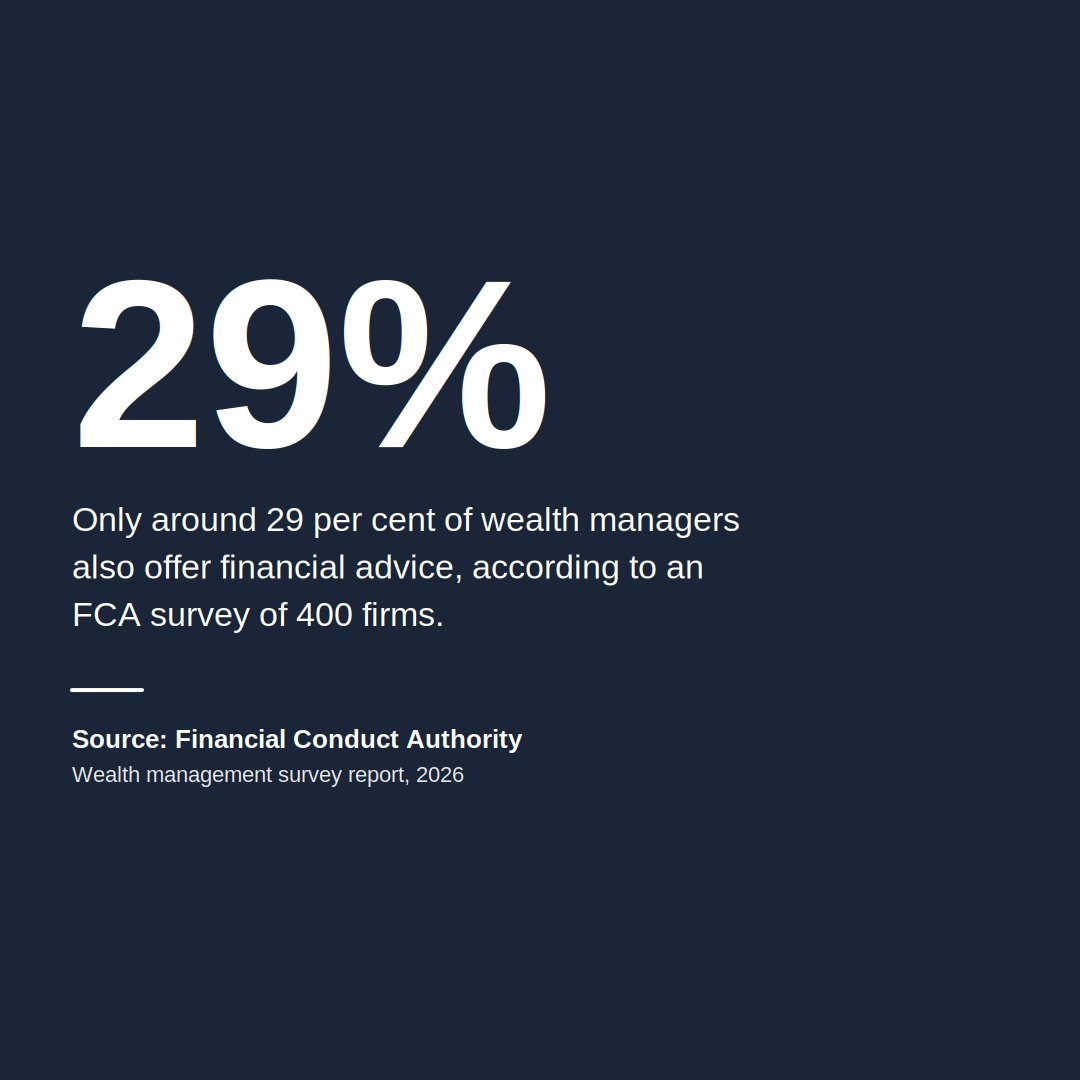
Unfortunately, for all the positive developments in the advice profession, and the talented young people entering it, a new report from @TheFCA shows the old school still very much predominates.
Only about 29 per cent of wealth managers also offer financial advice, let alone proper financial planning.
The irony is that most firms that only manage portfolios also believe in active management. In aggregate, that EXTRACTS value for clients, relative to a low-cost passive strategy.
That's right. The one service they do offer, they're mostly not very good at.
My latest article for Y TREE is partly for people choosing an adviser. But I mainly wrote it for those who already have one and, like me, have started to question the value they're getting.
#FinancialAdvice #FinancialPlanning