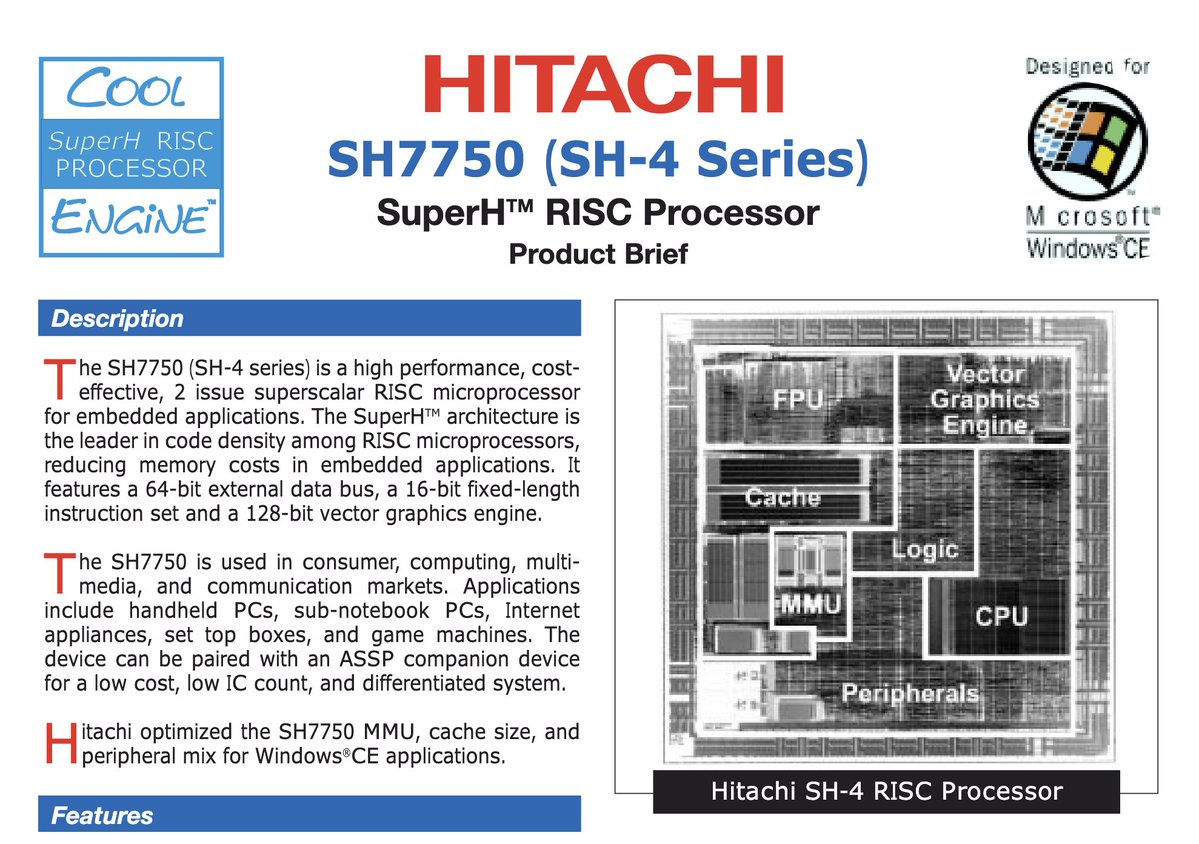
In the 90s, Hitachi came up with a bizarre way to conserve memory bandwidth.
Their SuperH architecture, intended to compete with ARM, was a 32-bit architecture that used…16 bit instructions.
The benefit was really high code density. If you can fit twice as many instructions into every cache line, the CPU pipeline stalls way, way less.
This was *really* important for embedded devices, which were often extremely bandwidth constrained in the era.
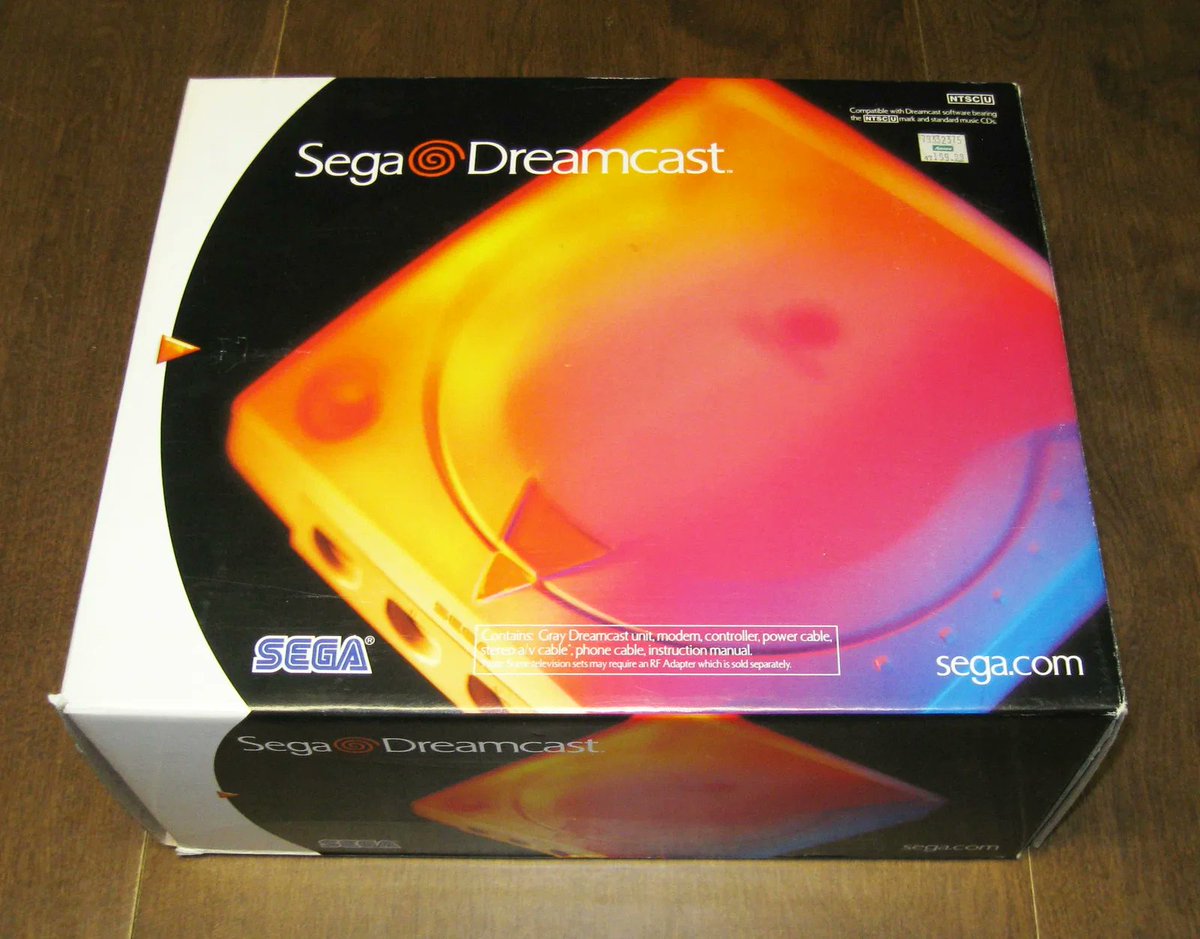
Sega famously used the processors for the Dreamcast, and ARM actually ended up licensing their patents for Thumb mode!
I think perhaps the weirdest thing about SuperH was its concept of “upwards compatibility”. The ISA itself is a microcode-less design, all future instructions were trapped and emulated by older chipsets.
It’d be slow…but you could run future code on very old chips! Very neat design, a massive success through the 90s and 2000s, that slowly faded.
Don't ever stay at @SheratonDallas or @sheratonhotels
These people double charge you for a hotel and make you go through hoops for a month for a possible refund, they also lie about adding points to your account for the inconvenience. Poor service
@LASHYBILLS@TyFromBrinks Thank you so much for sharing my story 🙏🏾 I truly appreciate the support. I’ve started a GoFundMe to help me continue my fight for justice. If you’re able, please follow me to stay updated on my journey. https://t.co/j3A9xamZa0
🚨 do you understand what $25 billion in Mississippi actually means..
the poorest state in America.. $44,966 median income.. 28% of children in poverty.. and Amazon just chose it for data centers..
$25 billion for 2,000 jobs.. that's $12.5 million per job..
they didn't pick Mississippi to help Mississippi.. they picked it for the cheapest land.. cheapest power.. and the most desperate politicians willing to sign whatever Amazon put in front of them..
cotton plantations came for the cheap labor.. factories moved south for the no unions.. now data centers are coming for the cheap electricity and the tax breaks..
the product changes every generation.. the extraction doesn't
Reworking old explorations of my diesel punk/cassette futurism world from a few years back.
Defense Contractor Suits mainly used as a deterrent for hostile intentions.
Continuing with my ethos of the mundane and utilitarian.
An average picture that you save on your phone or PC has a size of around 400 kilobytes. It doesn't do anything, it's just a static image.
Now divide that by the factor 10, so you drop to 40 kilobytes. That's the size of The Last Ninja, developed by System 3 and published in 1987.
I still struggle to comprehend, even in the slightest, how programmers back then did what they did - and the worlds they created with the limitations they had to work with.
I was simply blown away by the graphics (isometric on the C64 with such an amazing level of detail - simply gorgeous) and absolutely mesmerized by the kickass sound. What Ben Daglish and Anthony Lees conjured up musically will forever be part of gaming history - an iconic masterpiece.
40 kilobytes man...
100%. part of the problem is that most musicians/academic institutions both implicitly and explicitly view dance/popular music as being mutually exclusive from “art music”
i get the intention. i get why Nina Simone said it too. but i hate to see jazz reduced to the descriptor of art music. jazz—whatever you call blues that swings—was for the people. for the streets. for rent parties. for homegoing. not the elites. not the academy. not the patrons.