@UVASCPS Associate Professor. Director, NCJCC. Tweets about Security & Policing. Society for Terrorism Research Membership Chair. Tweets are my own views.
The more I think, read and write on the topic of #policing in England & Wales the more I am convinced that #community policing was the worst thing to ever happen!
Convince me I’m wrong!
"Other senior police sources say it is clear the Treasury will provide no more money for law enforcement"
Who will fund the reported £2bn transition costs of the proposed force mergers?
https://t.co/2BWAYyQEJQ
Partisan politics should have no place in the debate around this mega force plan…and it’s a complete oxymoron where ‘strong local policing’ is mentioned in the same breath as regionalisation which = centralisation
November 5, 1688. A Dutch fleet of over 400 ships put an army ashore in Devon, and within seven weeks the King of England had fled the country and a foreign prince was running it.
The English call it the Glorious Revolution. In almost any other context you would call it a successful foreign invasion.
And the landing date is not a coincidence. November 5 was already the national Protestant holiday, commemorating deliverance from the Gunpowder Plot. Whether the weather allowed it or William timed it, the propaganda value was enormous and nobody involved missed it.
Here is why it happened.
James II was a Catholic king of a Protestant country, which England had tolerated on one condition, which was that it was temporary. His heirs were his two Protestant daughters by his first marriage, Mary and Anne. The plan was to wait him out.
Then he started putting Catholics into the army and into government office, he suspended laws by royal prerogative, and in 1687 he dismissed Parliament rather than let it block him.
And in June 1688 his second wife gave birth to a son.
That changed everything. A Catholic male heir took precedence over Mary and Anne, and the temporary situation became permanent. A Catholic dynasty, indefinitely.
Thirty days later, seven men signed what is known as the Invitation of the Seven, written in code, telling William of Orange that their condition was worsening and they were less able to defend themselves.
It is worth being precise about that document, because it gets oversold. It did not invite William to take the throne. It was an assurance that if he came, people would rise. Seven signatories out of an entire political nation is not a national mandate, and historians have argued for three centuries about whether it conferred any legitimacy at all.
William's motives were Dutch, not English. France under Louis XIV was the existential threat to the Dutch Republic, and there was a real prospect of England being pulled into a Franco-English alliance against it. An England on his side instead was worth an invasion.
The force he assembled was not a token escort. Around 463 ships, roughly 10,700 regular infantry, 3,660 cavalry with their horses, artillery, about 5,000 volunteers, and over 9,000 crew, with thousands more men aboard. English and Scottish exiles, plus German, Swiss, Swedish and other mercenaries.
That is roughly twice the size of the Spanish Armada a hundred years earlier.
The plan was to land on the east coast. Easterly winds made that impossible, and the same winds that stopped him going east also pinned the Royal Navy in the Thames and let him run down the Channel unopposed. That wind became known as the Protestant Wind.
The fleet came into Torbay and the troops landed at Brixham in Devon on November 5. The infantry was ashore by midnight, the cavalry took two days, and the artillery went round by water to Exeter because the Devon roads were useless.
Then almost nothing happened for a fortnight.
William entered Exeter on November 9 and very few local gentry came in to join him, partly because Monmouth's rebellion in the same part of the country three years earlier had ended with the Bloody Assizes and a lot of executed West Countrymen. People were waiting to see.
Devon nobles came over on November 15. After that it accelerated.
James had around 19,000 men at Salisbury on November 19 and a Royal Army of about 30,000 in total, which on paper was more than enough. He never fought with it.
There was skirmishing, a clash at Wincanton and a fight at Reading on December 7 that left over fifty dead, and that is close to the whole military history of the revolution in England. Ireland and Scotland are a completely different and far bloodier story.
What destroyed James was desertion. His officers went over, his nobles went over, his own daughter Anne went over, and John Churchill, the future Duke of Marlborough, went over. An army whose commanders will not fight is not an army.
James lost his nerve, tried to flee, was caught in Kent, was brought back, and was then deliberately allowed to escape, because William very much did not want a captive anointed king on his hands. He went into exile on December 23.
Dutch troops occupied London until the spring of 1690.
The settlement is where it becomes constitutionally enormous. The Parliament elected in January 1689 decided that James had forfeited the throne by fleeing, which was a legal fiction everyone agreed to use because nobody wanted to say out loud that Parliament had deposed a king.
The Declaration of Right became the Bill of Rights, with royal assent in December 1689. No standing army in peacetime without Parliament's consent, no taxation without Parliament, no suspending laws, free elections, free speech in Parliament, frequent Parliaments.
Most of those claims were not new and had appeared in the Petition of Right in 1628. The genuinely new thing was that the succession itself had been negotiated with Parliament, which killed the divine right of kings in England as a working doctrine.
And then the bill arrived.
Britain got William's war. The Nine Years War started immediately and ran to 1697. Then the War of the Spanish Succession, which I posted about on the 1st, then the War of the Austrian Succession, the Seven Years War, the French Revolutionary Wars and the Napoleonic Wars. Between 1689 and 1815, Britain was at war with at least one major power in 86 of those 127 years.
Paying for that is what built the modern British state. England copied Dutch financial institutions, the Bank of England was founded in 1694 specifically to fund the war, and the national debt became a permanent instrument rather than an emergency measure. That financial machinery is a large part of why a middling island kingdom ended up running a quarter of the planet.
A Dutch prince landed in Devon on Gunpowder Treason day with 400 ships, and England got a constitution, a central bank and 127 years of war out of it.
November 5, 1605. Guy Fawkes did not plan the Gunpowder Plot, did not lead it, and was the most junior man in the room. He was the one caught with the matches because he was the explosives specialist, which is exactly the kind of job you give to the hired help.
The man who planned it was Robert Catesby, and almost nobody remembers his name.
Catesby was a Warwickshire gentleman from a Catholic family, charismatic, broke, and already a veteran of failed plots against the crown. He had been involved in the Essex rebellion in 1601. By 1604 he was in financial trouble and he recruited a group of wealthy Catholic landowners into a scheme to blow up the House of Lords at the state opening of Parliament.
The motive was real grievance, not fantasy. English Catholics had expected relief when James VI of Scotland became James I of England, because his mother was Mary Queen of Scots and he had made encouraging noises. Instead the recusancy fines for not attending Anglican services were enforced harder, and by 1605 Catholic gentry families were being financially ruined by them.
The plan was to kill the King, the Prince of Wales, the Lords and the Commons in one blast, then raise a rising in the Midlands and put James's nine-year-old daughter Elizabeth on the throne as a Catholic puppet.
Guy Fawkes came into it because he had spent a decade fighting for Spain in the Low Countries and knew how to handle gunpowder. He was Yorkshire-born, went by Guido, and was hired expertise.
The gunpowder went into an undercroft rented beneath the House of Lords. Thomas Percy, one of the conspirators, took the lease, and Fawkes posed as his servant under the name John Johnson to sit on it.
The usual figure is 36 barrels. Modern estimates suggest that if it had gone off it would have destroyed the Lords chamber and done serious damage for a considerable distance around it. There is also decent reason to think the powder had decayed in storage and might have failed, though nobody can prove that either way.
Then the letter.
On October 26, Lord Monteagle received an anonymous letter warning him to stay away from Parliament. He took it straight to the government.
The official line afterwards was that God had intervened to save the King. The much more likely explanation is Francis Tresham, a late recruit to the plot who was Monteagle's brother-in-law and who had no appetite for killing his own relatives.
And this is where the conspiracy theories start, because they have been running for 400 years.
The suspicion is that Robert Cecil, Earl of Salisbury, James's spymaster, knew about the plot well in advance and let it mature so he could crush English Catholicism with maximum public effect. The argument people make is that the search was oddly slow, that the lease on a vault under Parliament should never have been available to an unknown Northerner, and that the whole thing was politically far too convenient.
The honest answer is that there is no convincing evidence for it. Cecil ran a formidable intelligence service and may well have had an inkling, but a government that engineered the plot would not have waited until the night before to search the building. Treat the setup theory as a live suspicion that has never been proved.
Monteagle himself was not a clean figure either. He had been mixed up in plans for a Spanish invasion before Elizabeth died and had been reported calling James odious to all sorts.
The search happened on the night of November 4 into November 5. Fawkes was found in the undercroft with the powder, a lantern, slow matches and touchwood, booted and spurred to run. He gave his name as John Johnson and held that story for two days under interrogation.
James personally authorised torture. Fawkes's signature on his confession of November 9 is a faint scrawl, barely formed, which is what a hand looks like after the rack.
The rest of the conspirators rode for the Midlands and the rising that never came. Catesby and several others were cornered at Holbeche House in Staffordshire on November 8. Some of their own gunpowder, drying in front of a fire, went off and injured them before the fight even started.
Catesby was shot dead there, along with Percy, reportedly by the same ball. Others were taken.
The survivors were tried in January 1606 and hanged, drawn and quartered at the end of that month. Fawkes went last of his group and was weak enough from torture that he needed help up the ladder. He is supposed to have jumped, to break his own neck and avoid the disembowelling.
For English Catholics the consequences lasted centuries. The Popish Recusants Act of 1606 required an oath of allegiance denying papal authority over the King, and Catholics were barred from the professions, from the universities, from the army and from public office. Full civil rights did not come until the Catholic Relief Act of 1829.
And the bonfires started immediately. People lit fires in London on the night of November 5, 1605, within hours of the news. A letter from John Chamberlain describes great ringing of bells and great store of bonfires that same Tuesday night.
An Act of Parliament then made November 5 an annual day of thanksgiving, compulsory church attendance included, and it stayed on the statute book until 1859.
So Britain has an annual festival of fireworks commemorating a terrorist plot that failed, named after the hired technician rather than the man who planned it, and it was originally an enforced celebration of Protestant deliverance.
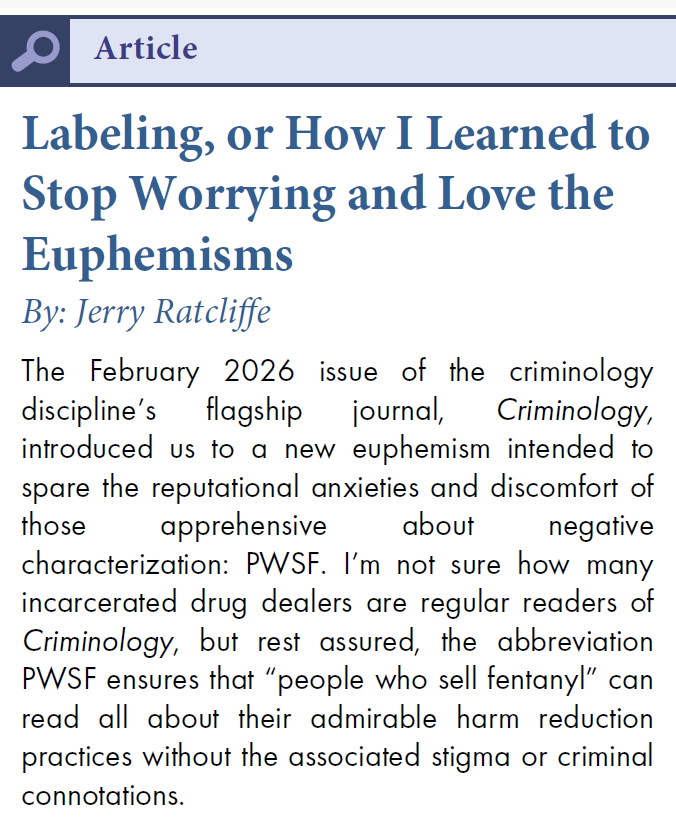
Get thee to a current copy of @ACJS_Today. @Jerry_Ratcliffe has a delicious take on the duplicitous application of language policing over at Criminology. If this pilot thing doesn't work out, he's got a real future with satire.
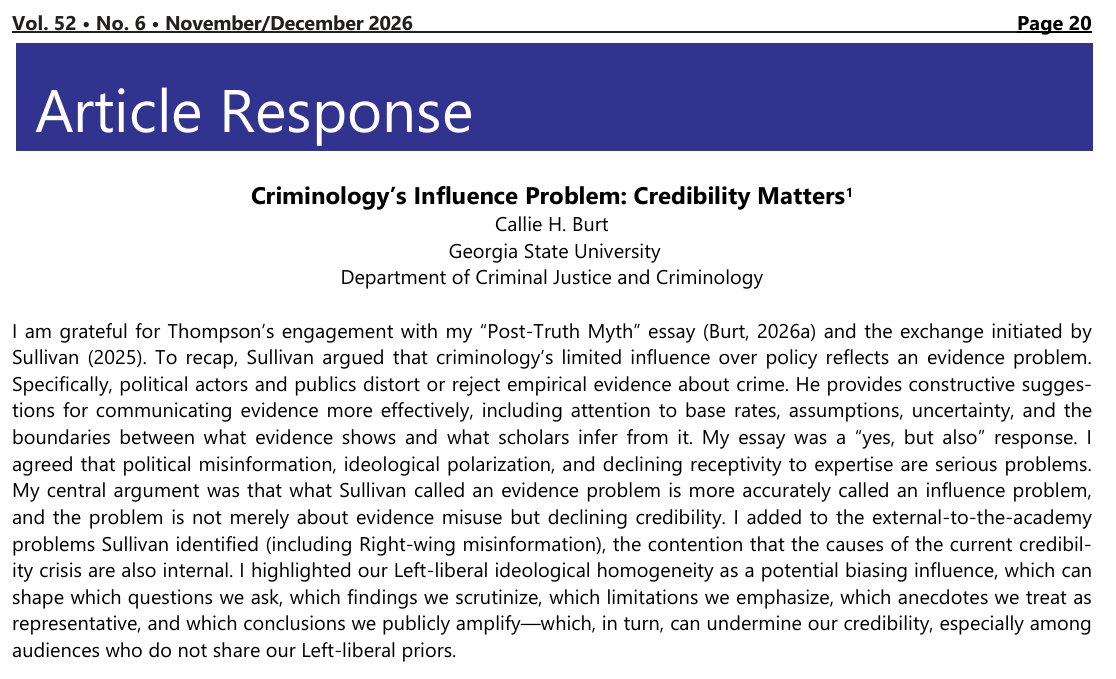
The Criminologist once again leading the discussion on our science. @calliehburt second rebuttal to a discussion originally begun by @UMSL_CCJ Chris Sullivan. I share her view that we're in a legitimacy crisis but it's a minority view at this point.
https://t.co/GZKtlce2gO
A little trigger warning; that if you are or ever have been under investigation this will feel very, very familiar.
But unless we talk about it, nothing will change.
Police Misconduct processes are a mess and need sorting out, now.
#ThinBlueLine 🚨
Criminology has a serious credibility problem. Of 9,705 articles published in 15 leading journals over 10yrs, just 3.4% used a credible causal research design. We claim to inform criminal justice policy while barely testing what works. And...
1/2
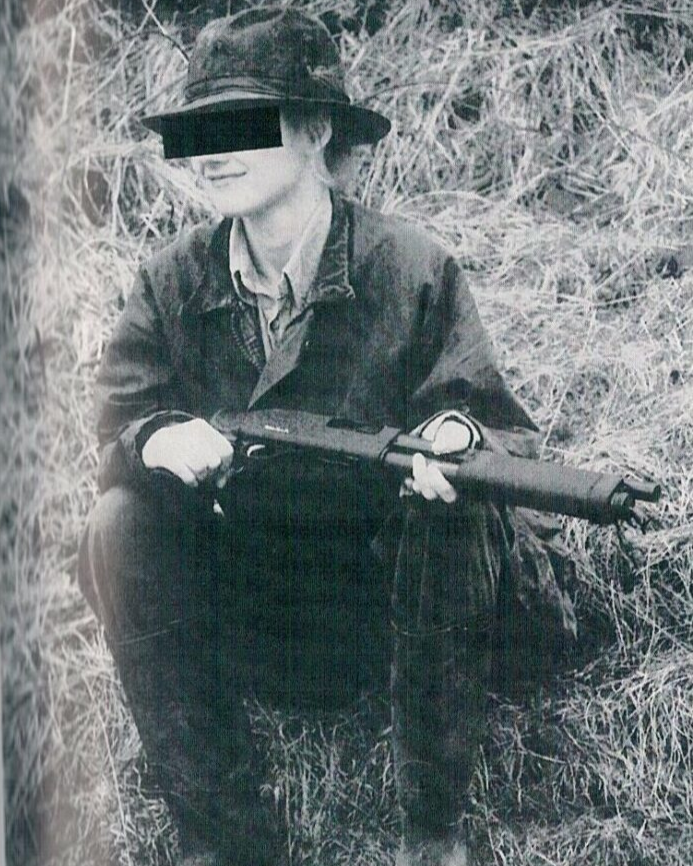
Lance Corporal Sarah Jane Warke was assigned to the Military Reaction Force, a special unit which operated in Northern Ireland in small teams of plainclothes personnel.
Jane was originally from Derry in Northern Ireland, before joining the British Army, where she served in the Women’s Royal Army Corps.
Jane used the alias ‘Kate’ while working for the Four Square Laundry, a front company targeting the homes of suspected IRA members in the Twinbrook estate in West Belfast. When the dirty clothing was picked up, it was forensically examined for gunpowder and explosive residue before being washed, folded, and returned. Jane was friendly, attractive, and her local accent allowed her to easily blend in.
In the fall of 1972, the IRA discovered two double agents named Kevin McKee and Séamus Wright in their ranks who gave up details of the laundry van and other front companies run by the Military Reaction Force. The IRA executed the two double agents and buried them in unmarked graves.
On October 2nd, 1972, the IRA conducted two attacks against known MRF personnel. Jane was speaking to a housewife at her front door while the MRF driver, a Sapper from the Royal Engineers named Corporal Ted Stuart stayed in the delivery van. Four IRA gunmen pulled up near the van and opened fire.
Corporal Stuart was shot at least five times and died on the scene. The IRA claimed they also killed two more intelligence officers conducting surveillance from a hidden space inside the roof of the van, although British forces denied this.
There are varying accounts of Jane’s actions during the attack. Some reports indicate she survived by hiding inside a house until the danger had passed. Others say she was wounded but managed to draw her concealed Browning Hi-Power and shoot back. The IRA gunmen fled the scene in the face of her determined fire and Jane survived. An hour later, they attacked the Gemini Massage Parlour on Antrim Road, injuring one man inside.
In September 1973 Jane was awarded the Military Medal for this and other covert operations in Northern Ireland.
#northernireland #covert #clandestine #troubles #britisharmy
Can the UK honestly promise NATO a Strategic Reserve Company, let alone a Corps?
The collapse of UK military power is genuinely fascinating. A country of 70mn - with the world’s 5th biggest economy - collectively opted to just give up on meaningfully defending itself.
1/7
I’ve heard Journal of Quantitative Criminology will soon require opens data/code…which will make it the only journal in the entire field to do so. In late 2026.
We should be embarrassed! Complete abrogation of basic scientific responsibility for decades. And seemingly no urgency from the editors of Criminology, Justice Quarterly, Criminology & Public Policy, or Journal of Experimental Criminology.
There was an effort to get there from the last two editors of criminology, but the new editors haven’t followed through.
Meanwhile, what year do you think the first preregistered RCT was published in the fields flagship journal Criminology? If you guessed 2026 then you win (proud to have authored that one 😁).
Introduction: Boxer as Symptom of a Deeper Problem
Views my own, comments and corrections welcome.
1/25 The British Army’s Boxer programme is not simply another delayed armoured vehicle project. It is the clearest contemporary illustration of a service that has spent more than three decades searching for a coherent role after the end of the Cold War and has repeatedly failed to hold a single vision long enough for equipment to match doctrine. What began in the late 1990s as a collaborative multinational effort has, as of this month (October 2026), produced a contracted fleet of 623 vehicles whose planned specialist variants have been cancelled and whose second tranche has been abandoned.
The platform that was once expected to form the spine of the Army’s mechanised infantry and to contribute to NATO’s two-division commitment now occupies a narrower supporting role while the Army continues to operate an ageing tracked inventory whose principal replacements remain late, incomplete or subject to residual safety concerns.
This is not primarily a political story. It is an Army story.
In 2006 I was working in CT surveillance. I remember SRR sgt telling me his team were expected to write RIPA directed surveillance applications in *Iraq*. An SIS officer told me same story on another occasion. New Labour civilianised the battlefield. As ever, 'human rights.'