If Google locked your account tomorrow, you could lose your:
- Gmail
- Google Drive
- Photos
- YouTube
- Calendar
- Every "Sign in with Google" login
One account controls your entire internet life.
Here's the backup system nobody sets up until it's too late ↓
@hbgnostic I want to not comment but I know indifference makes the vibe worst...
The greatest harm towards BSV came from within.
You need a market - you can't expect a "network" to be battle tested without an actual market.
Sadly, it's still merely an idea...
10 GITHUB REPOS THAT SCRAPE THE ENTIRE INTERNET FOR YOU
Bookmark every single one. Each one pulls clean data off any website on earth, the kind of access companies sell behind a sales call and a contract.
1. https://t.co/yjhB8qsY2r
Point it at any website and it crawls every page, renders the JavaScript, and hands back clean structured data an AI can read instantly. It crossed 130K stars and landed in GitHub's top 100 repos. The scraping backbone half the AI startups quietly run on, open for anyone.
2. https://t.co/H8tTZjwd7O
The #1 trending crawler on GitHub. Turns any site into clean, LLM-ready markdown, faster than the paid services and with no API key, no account, no per-page fee. A dev built it in days after getting fed up paying $16 for a gated scraper. 51K stars. Apache 2.0.
3. https://t.co/xgLQDLB4HL
An AI agent that drives a real browser like a human, clicking, scrolling, logging in, filling forms, and pulling data off sites it has never seen before. Two ETH Zurich researchers built it and it hit 95K stars in about a year. The thing that scrapes pages no simple crawler can reach. MIT.
4. https://t.co/bBDy50sR9R
The full professional scraping framework, with rotating proxies, automatic retries, browser fingerprint spoofing, and queue management, all the machinery that keeps you from getting blocked. The exact stack scraping companies charge thousands to operate, handed to you for free.
5. https://t.co/nKhjeJxe1F
The original industrial-strength scraper that has quietly powered data teams for over a decade. Crawl millions of pages, extract anything, export it clean. Battle-tested at a scale most paid tools never reach, and free the entire time.
6. https://t.co/0NeYEdAWDt
Microsoft's own tool that converts any file or web page, PDFs, Office docs, HTML, images, into clean markdown an AI can actually use. The messy-data-to-clean-data step companies build whole pipelines around, open-sourced by Microsoft itself.
7. https://t.co/vyKqqy18Pi
A stealth scraper built to stay invisible, adapting automatically when a site changes its layout and slipping past the bot detection that stops everything else. The cat-and-mouse layer that anti-scraping vendors sell as a premium feature, free and open.
8. https://t.co/o9TuMdEQ1l
Mirror and control any Android phone from your computer to pull data and automate apps that have no website at all. The bridge into mobile-only platforms that most scrapers can't touch. 130K+ stars. Apache 2.0.
9. https://t.co/24FQISv92x
Show it one example of what you want and it figures out the pattern and scrapes the rest of the site automatically. No selectors, no code to maintain. The "just get me this data" button, in a few lines of Python.
10. https://t.co/BgL79bWL89
A version of curl that perfectly mimics a real browser's fingerprint, so the requests sneaking past every defense look exactly like a human with Chrome open. The lowest-level trick the expensive scraping APIs are quietly built on top of.
Companies sell this access for $2,000 a month. The source code is right here.
@cryptorebel_SV@Hekto100 Bitcoin is an interesting theoretical idea. Tether could run on BSV. Tether on BSV would be a great use case. Unfortunately we were fed the crap that tEtHeR iS bAd.
10 TOOLS ON GITHUB THAT FEEL ILLEGAL TO BE FREE
Bookmark every single one. Each one does something that looks like it should cost money, require a login, or get someone sued. All free.
1. https://t.co/PKb3pEQw5n
Download video or audio from YouTube and 1,800+ other sites straight to your drive, full quality, with subtitles and metadata. 171K stars and a new release every two weeks because YouTube keeps trying to break it and it keeps winning. The Unlicense, which means it's freer than free.
2. https://t.co/j7Qed5Kzq2
Every Adobe Acrobat feature, merge, split, sign, OCR, compress, redact, convert, running on your own machine so no file ever uploads anywhere. A UK dev built it in a day because he refused to pay Adobe just to sign a PDF. 78K stars, 25 million downloads. MIT.
3. https://t.co/RE1H55WHIF
A gorgeous dashboard that pulls live status from every service and app you run into one screen, the kind of control panel companies pay for. Free, self-hosted, and it makes your setup look like a NASA console. The thing that ties your whole stack together.
4. https://t.co/8gWTZZIXyM
AirDrop for every device. Send files between Windows, Mac, Linux, Android, and iOS over your own network with no account, no cloud, no size limit. Apple locked their best version inside their ecosystem. This one works on everything and costs nothing.
5. https://t.co/1RBMSQu38m
The entire Notion, rebuilt open-source and offline-first, so your notes, docs, and databases live on your machine instead of a company's server. Notion is valued at $10 billion. This does the core of it for free and never sells your data. 60K+ stars.
6. https://t.co/Qm55OR5YI1
Google Photos on hardware you own. Phone auto-backup, face recognition, AI search, shared albums, all of it, while Google stops mining your family photos to train its models. The single most satisfying thing to self-host, and people who try it never go back.
7. https://t.co/B57eBygDK6
Build unlimited professional resumes, host them, track them, all free and private, while every resume site online charges you the moment you hit download. 30K+ stars. The paywall that wastes job seekers' money, deleted.
8. https://t.co/zajmBsDn9M
OpenAI's own speech-to-text model, free to run, transcribing 99 languages at the accuracy that Otter, Rev, and Descript literally charge per minute for. The exact engine inside the paid apps, sitting on your laptop for $0. MIT.
9. https://t.co/13hzF0PW7N
Connect any app to any other app and automate entire workflows, the thing Zapier charges by the task for. Hundreds of integrations, self-hosted, running on your own server with no per-action fee. The automation tax, gone. 100K+ stars.
10. https://t.co/TyOTBGduto
Turn any website into clean, structured data an AI can read, in one call. The kind of scraping infrastructure companies sell for hundreds a month, open-sourced. Point it at a site, get back exactly what you need. The frontier devs are already building on it.
Free was always the default. Someone just had to build it.
🚨 “WOW!” Joe Rogan Was Absolutely Mind-Blown By This iPhone/iPad Addiction Hack 🔥
His guest, Chase Hughes, dropped the ultimate parental (and personal) life hack:
“I did it on my 2-year-old’s iPad… and nothing is addictive anymore. She won’t sit there and stare at it for more than 3 or 4 minutes anymore.”
Joe’s reaction? A shocked “Whoaa!”
The trick? A simple red color tint filter in your device’s Accessibility settings. It strips away the bright, colorful, dopamine-spiking visuals that keep us (and kids) glued to screens, while also cutting blue light for better sleep.
One quick change. Massive difference in screen time and focus.
Try it yourself:
1Settings → Accessibility → Display & Text Size → Color Filters
2Turn on Color Filters → Color Tint
3Slide Hue all the way to red + max Intensity
Works on iPhone and iPad. You can even set a triple-click shortcut to toggle it instantly.
A Japanese immunologist spent 20 years proving that the chemicals trees release into the air walk into your bloodstream, hunt down your stress hormones, and arm your immune system in ways no therapist or pharmaceutical has ever matched, and most of the data has been sitting in Japanese medical journals for two decades waiting to be translated.
His name is Qing Li.
He is a clinical professor at Nippon Medical School in Tokyo and the president of the Japanese Society of Forest Medicine. The Japanese government has been funding his research since 2004, and the body of work he has produced is the reason forest bathing is now an officially prescribed clinical therapy in Japan and Korea.
The story actually starts in 1982, when the Japanese Ministry of Agriculture, Forestry and Fisheries coined the term shinrin-yoku to describe the practice of slow, mindful walking in a forest. They did it for a practical reason.
Japan was urbanizing fast, stress-related illness was climbing, and the country had thousands of square kilometers of forest sitting unused. The idea was to give people a reason to walk into the trees... They had no idea what was actually happening to the human body during those walks until Qing Li ran the first proper experiment in 2005.
He took twelve healthy adult men on a three-day, two-night trip to a forest park. They walked for a few hours each day. Nothing strenuous. No prescribed routes or breathing exercises. They simply walked slowly through the trees, breathing the air, looking at the forest.
Li drew blood and urine samples before the trip, on the second day, on the third day, on day seven after returning home, and again on day thirty.
The numbers that came back from the lab were not what anyone expected.
The activity of a specific type of immune cell called the natural killer cell, which is the cell your body uses to hunt down cancer cells and virus-infected cells before they can spread, had jumped by roughly 50 percent during the forest trip. The actual number of natural killer cells circulating in the bloodstream had increased significantly.
Three different anti-cancer proteins that those cells produce, called perforin, granzymes, and granulysin, had all risen sharply. And the effect did not disappear when the men went home. The immune boost was still measurable on day seven and was still partially present on day thirty.
Two hours a day in a forest had upgraded the immune system for a full month.
Li ran the same experiment with women a year later and found nearly identical results. Then he ran it with a control group who took a three-day trip through an urban area with the same amount of walking, the same hotel quality, and the same diet.
The urban group showed no measurable change in natural killer cell activity at all. The forest was doing the work, not the vacation.
The mechanism turned out to be a class of airborne molecules called phytoncides. Trees produce these compounds to defend themselves against insects, bacteria, and fungi. Pine, cedar, oak, and cypress trees release them in particularly large amounts, especially in warmer weather and after rainfall.
When you walk through a forest, you are inhaling those molecules into your lungs and absorbing them through your skin, and once inside your body they appear to directly stimulate the production and activity of the very immune cells Li was measuring in his lab.
Roughly 50 percent of the health benefit of a forest walk, according to Li's data, comes from the chemistry of the air itself. The other half comes from what the forest is doing to your nervous system.
This is where it stops being only about the immune system and starts being about stress.
A separate Japanese research team measured cortisol, the body's main stress hormone, in 84 participants across 35 different forest sites. They drew samples before and after a 30-minute walk in each forest and compared them to control walks in matched urban environments. The cortisol levels of the people who walked in the forest were lower than the cortisol levels of the people who walked in the city by a significant margin. Their heart rates were lower. Their blood pressure was lower.
The activity of their parasympathetic nervous system, which is the part responsible for rest and recovery, had gone up. The activity of their sympathetic nervous system, which is the part that drives fight or flight, had gone down.
Then a researcher at the University of Michigan named MaryCarol Hunter ran the cleanest version of this experiment ever done. She recruited participants from a city and told them to take a nature pill three times a week for eight weeks.
They were free to choose the time, the place, and the duration of the nature experience, as long as it was outside, in daylight, and free of phones, conversations, and aerobic exercise. They sent her saliva samples before and after each session so she could measure cortisol changes accurately and rule out the normal daily drop in stress hormones that happens to everyone.
The result was that participants experienced a 21.3 percent drop in cortisol per hour spent in nature, with the biggest payoff happening between minutes 20 and 30 of the walk.
After that, the cortisol kept dropping, but more slowly. The threshold dose for measurable stress relief was just 20 minutes outside in something that looked and felt like nature.
What none of this means is that nature is a substitute for therapy or for medication when someone genuinely needs them. Therapy treats different things than a walk does, and Li himself has been careful in interviews to call forest bathing a complementary intervention rather than a replacement for clinical care.
But what the research has settled is that the human body has a physiological response to being among trees that operates on the same biological systems modern medicine is trying to reach with drugs and clinical protocols, and that response is fast, measurable, and free.
The strangest part of Li's work is the implication he keeps repeating in interviews. The average person now spends more than 90 percent of their life indoors. Their cortisol stays elevated. Their natural killer cells stay sluggish.
Their parasympathetic nervous system rarely gets a chance to take over. The system that was tuned by millions of years of life under a canopy of trees is being asked to run permanently inside a box made of drywall and screens.
Your body has not forgotten what it is supposed to do in a forest. It is waiting for you to walk into one.
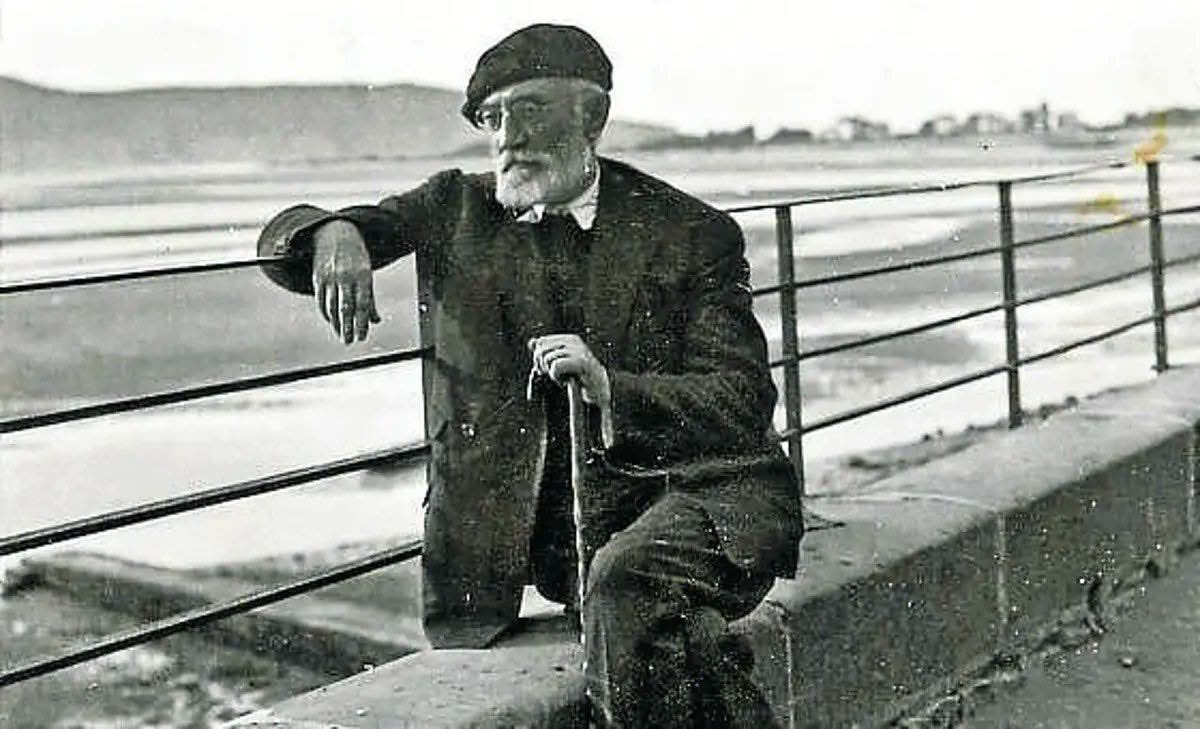
"There is no point in taking opium; it is better to put salt and vinegar in the soul's wound ; for if you fall asleep and no longer feel the pain, then you no longer exist. And the point is to exist."
—Miguel de Unamuno
The tragic sense of life
Today, on my final day as Director of National Intelligence, I’m releasing never-before-seen communications and documents exposing how Dr. Fauci provided millions in US taxpayer dollars to fund dangerous gain-of-function research at the Wuhan lab, worked with politicized elements within the Intelligence Community to suppress the truth about his actions and hide the virus’ lab-leak origins, and lied to Congress while under oath in 2024. It’s time you know the truth.
https://t.co/3YJSstB7d4
@iang_fc@EvanWritesOnX Temporarily from Israel perhaps, but he now wants Syria (essentially Al Qaeda) to fight Hezbollah now. I think it will be very difficult to abandon the current plan, and the US role in the region, as no other plan exists. https://t.co/UomeT6aWFs