There is an increasing awareness among practitioners that data drift poses a challenge to the robust deployment of machine learning models.
But what precisely is meant by “drift” and how can we protect ourselves against it? 👇📽️ 🧵
https://t.co/Bru4FaCcGe
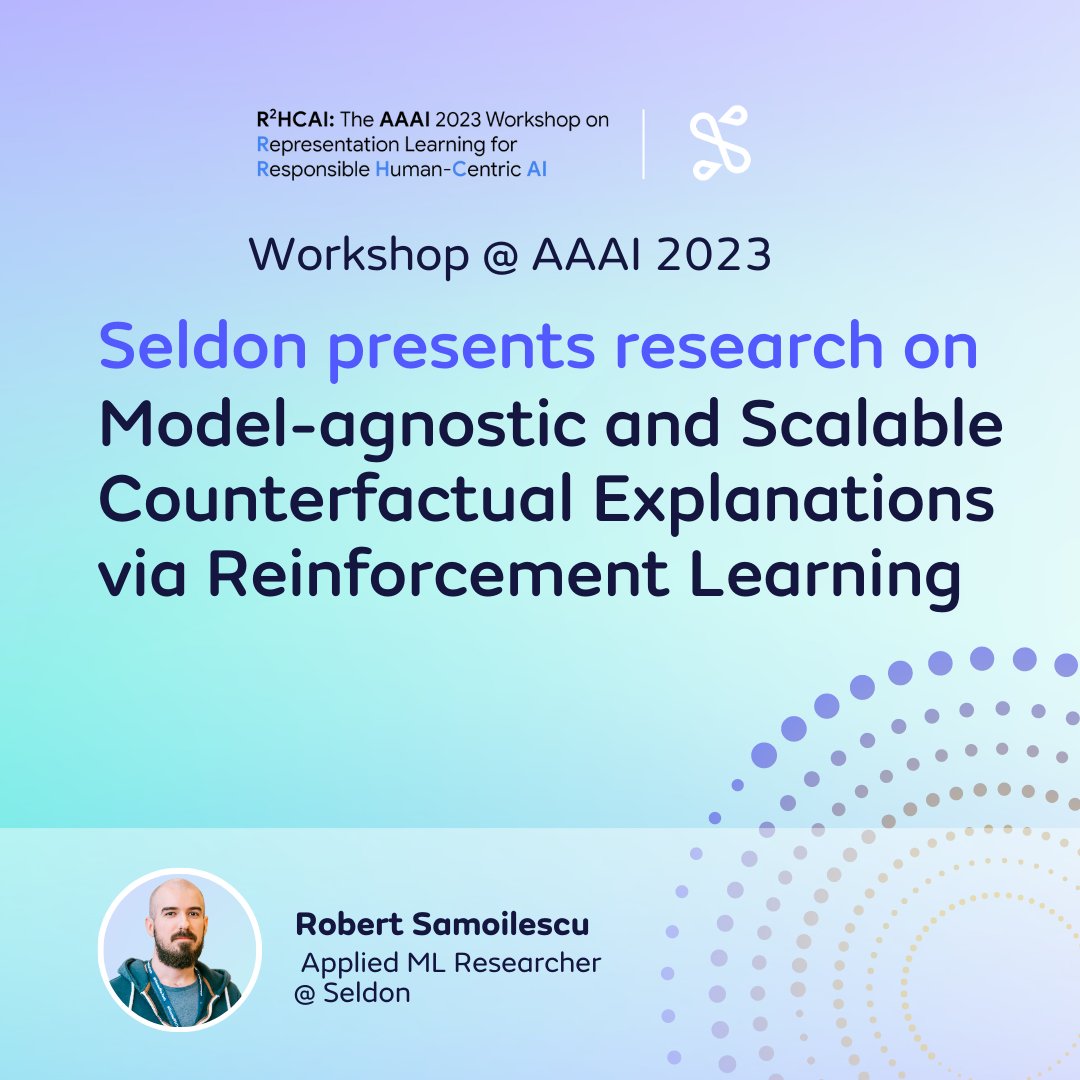
We have a paper accepted into the R2HCAI workshop titled, Model-agnostic and Scalable Counterfactual Explanations via Reinforcement Learning. 🙌
Very excited to be a part of the conversation around the advances of responsible AI. 💪
Learn more: https://t.co/GiG9pjA6Hx
#AAAI
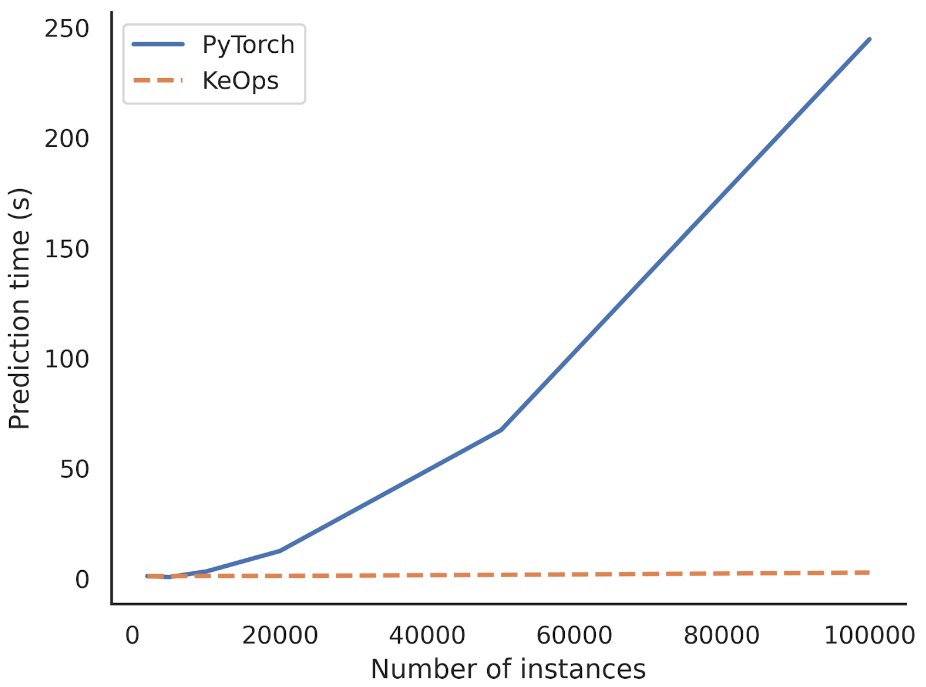
We are excited to announce the release of Alibi Detect v0.11.0, featuring widened serialisation support and a new backend that allows drift detection to be rapidly performed on large datasets. https://t.co/q8lp8MaZZY
This drastically speeds and scales up the detectors to large dataset sizes, with dataset sizes in the order of 100,000’s easily achievable on a single consumer grade GPU.
Much more information on Permutation Importance and Partial Dependence Variance, including worked examples, can be found on our documentation pages: https://t.co/ZYgYz76vum
https://t.co/d1NUeK8yQ6
We are pleased to announce the release of Alibi Explain v0.9.0 with support for calculating global feature importance via Permutation Importance or Partial Dependence Variance. https://t.co/W9kNoM0D4c
Both of these insights are complementary as PI captures not only main feature effects but also interactions, and we recommend considering both, when possible, for a thorough analysis of model behaviour.
We are delighted to announce the release of Alibi Explain https://t.co/W9kNoMhG6c v0.8.0 featuring support for Partial Dependence plots, enabling global explainability of any model.
Our PD implementation in Alibi v0.8.0 has the following advantages over other implementations:
- Applies to any black-box model
- Full support for 1-way, 2-way and higher order PD for numerical and categorical variables
- Flexible plotting functionality for 1-way and 2-way PD