Thrilled to share CAP: The Creativity Assessment Platform. CAP is a free web-app with creativity tests and automated scoring.
App: https://t.co/vg8SSSFaQY
Paper: https://t.co/lLsCX2gBOB
We built CAP to make creativity testing easier and more reliable. Here's a quick tour.🧵
Key European researchers in the field of creative cognition come together this week at the Lorentz Center to build a collaborative network. https://t.co/4nhauF7kDZ
@wendyamross@SergioAgnoli@TheSonophilian
Study by @SelinaWeiss14 & @BenjaminGoecke found the ability to generate lots of ideas (fluency) has little relation to generating original ideas, controlling for intelligence. This raises questions about the validity of fluency in creativity assessment.
https://t.co/BsqXSxsxBS
#SfNC2024 has begun!! We're starting the day with Keynote 1 by Kosa Goucher Lambert, who's talking about how he and his lab study what makes designers effective, what design looks like in the brain, and how to enhance the design process using research-driven interventions.
SfNC2024 kicks off in less than 12 hours! Be sure to register to follow along virtually if you can't make it to Toronto, and follow along with the #SfNC2024 hashtag. We'll be tweeting (x'ing???) insights and highlights throughout the day!
🏆 We are glad to announce that the winner of the 2023 Best PhD Thesis Award is @BenjaminGoecke from @uni_tue. He received his PhD at @uni_ulm and the supervisor was Oliver Wilhelm. Congratulations!
https://t.co/jkWUUSVBea
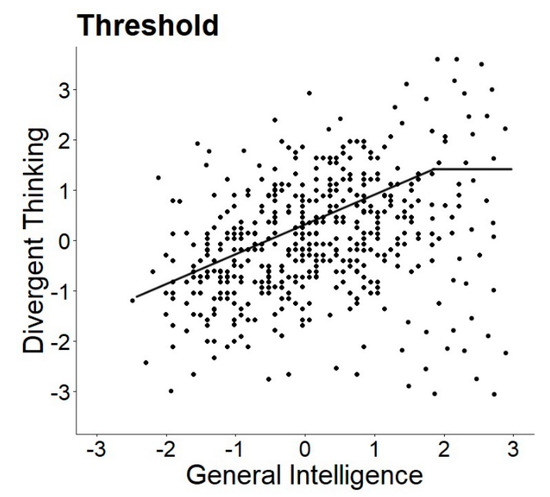
Intelligence has been declared as a necessary but not sufficient condition for #creativity (threshold hypothesis). @SelinaWeiss14 and colleagues applied three methods and found no evidence for the threshold hypothesis of creativity.
https://t.co/bm7ycLi0XJ
Boris Forthmann, @BenjaminGoecke and I wrote a paper on planned missing designs for creativity ratings, including a simulation and a practical guide to maximize rater reliability and minimize time burden/budget
1/Very happy to share our paper in Behavior Research Methods!
Divergent Semantic Integration (DSI): automatic scoring of creativity in text (short stories) using BERT
DSI strongly predicts human ratings of stories
Code + paper = open access
🧵
https://t.co/VLj3RVgUjQ
Does flexibility on divergent thinking tasks measure anything distinct beyond fluency/originality?
New evidence from @SelinaWeiss14 suggests it may not
@Jintelligence1
https://t.co/698HCKOkmq
Here is our new preprint on a comparison between three response formats for fact knowledge questions. Thank you to my co-authors, Marlena Staab, Catherine Schittenhelm, and Oliver Wilhelm.
https://t.co/THXHPsQ1C8
Excited to be presenting at #apschi22 in two hours! Join the symposium on ‚Measuring and Understanding Aspects of Convergent and Divergent Thinking‘ in Randolph 3 to hear talks from @SelinaWeiss14, @jrafner, Todd Lubart, and myself, and a concluding discussion by @jacobsherson.
Yet another preprint? Sure! We (together with @SelinaWeiss14 and Oliver Wilhelm) constructed a short measure of creative activities, which is freely available and ready to use:
https://t.co/zV2eBZuzwi
Für eine Studie zur Gedächtnisleistung, zum Abruf von Wissen und zur Kreativität sucht die Abt. für Differentielle Psychologie und Psychologische Diagnostik Proband/innen (18 - 40 Jahre, Muttersprache deutsch). Bei Interesse: [email protected] *stg/Abb.: Pixabay #uulm
You are a student and have to perform well on your next exam; which response format would you prefer for showing your knowledge about certain topics of a lecture?
I thought students preference was obvious, but apparently it is not.
@AcademicChatter