New white paper from @SemanticHub and @BeOneMedicines on shared decision-making in #CLL.
Based on patient and caregiver narratives from 5 European countries, it highlights treatment impacts on quality of life and the importance of #PatientVoice.
https://t.co/yVZRlve9J5
Yesterday, Semantic Hub turned 11! 🎉
We've grown into a Patient Intelligence company working with #healthcare leaders worldwide - exploring hundreds of questions across 100+ therapeutic areas and 80+ countries.
Thank you to everyone who's been part of our journey! ❤️
Everyone says that #AI has solved the task of text processing, and #NLP has become a commodity.
Not in #healthcare. It is not that simple 😉
Read more: https://t.co/PikDydO9zw
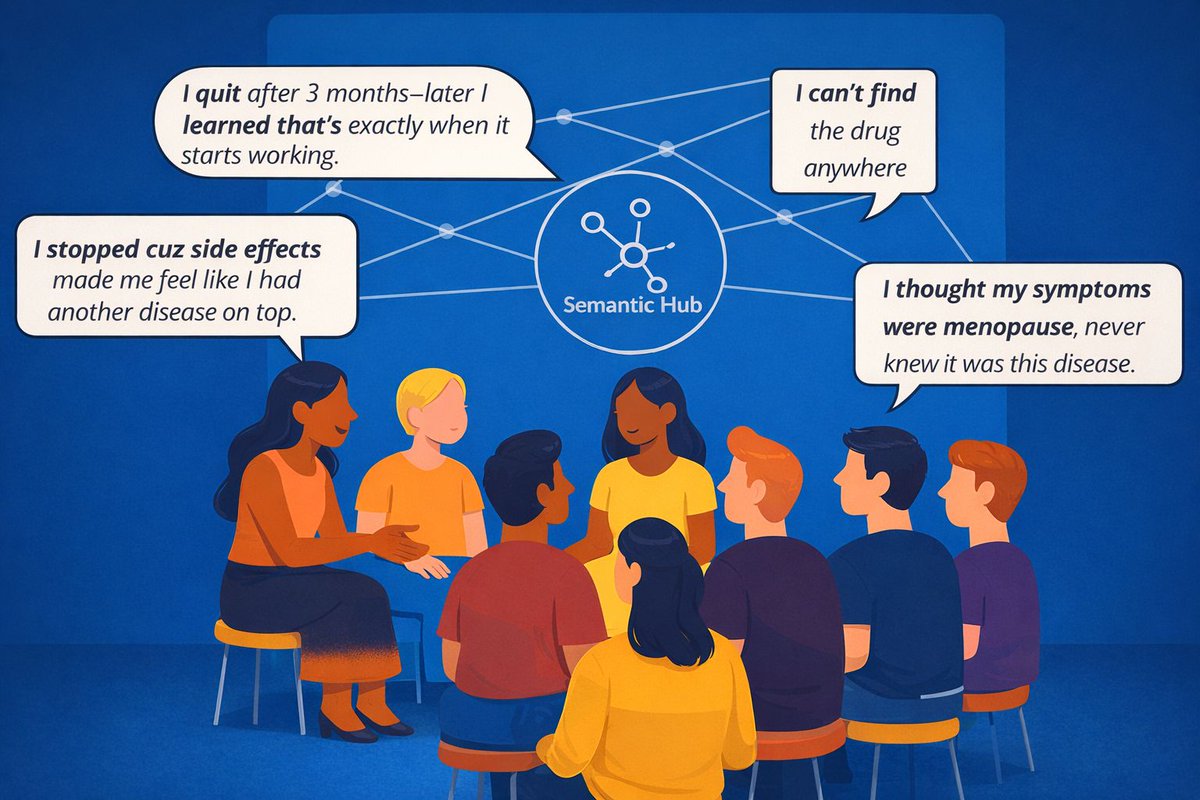
Context, ambiguity, timelines, emotions, coping strategies, treatment journeys and social factors are often intertwined within a few sentences.
But this is also where some of the most valuable insights are hiding...
💰What is the most valuable asset in healthcare AI?
We believe this question will become more and more important over the next few years. Nowadays, many would probably answer: better models, larger models, faster models, more cost effective models (the latter is esp. important).
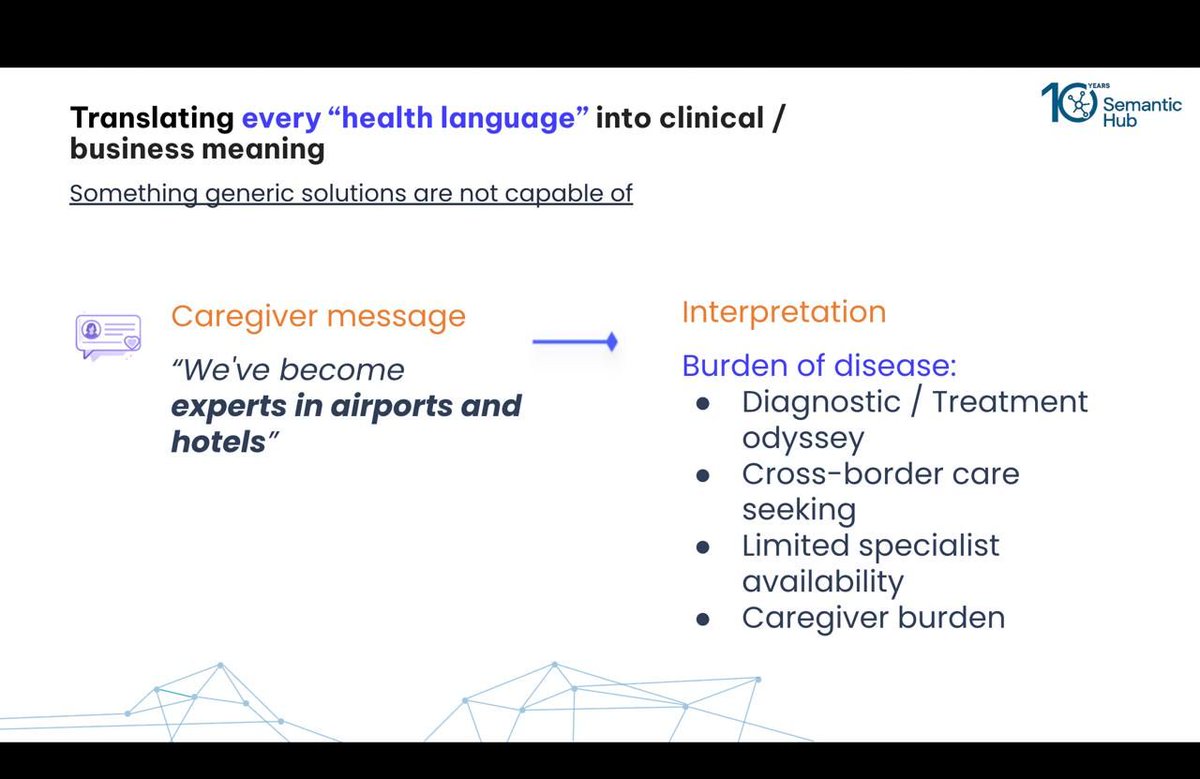
👊 Understanding healthcare conversations is much more difficult than understanding general text. Medical language is only one part of the challenge. Human language is the other.
The report highlights a critical but often under-recognized aspect of rare disease care: #psychological support is not an optional addition to #healthcare, it is an essential component of helping people live well.
4/4
💔 Living with a #rare condition often means navigating far more than medical challenges alone.
For many people living with a rare disease - and for their families and #caregivers - the #psychological burden can be profound.
1/4
That is why we are pleased to see the publication of the @eurordis report "The Importance of Psychological Support for Living Well with a Rare Condition," co-authored by our CEO, Irina Efimenko: https://t.co/d7r5ZtFLgl
3/4
However, when the goal is to generate publication-ready real-world evidence (#RWE) from #patient discourse, the gap quickly becomes substantial...
Read more: https://t.co/obMBgvdBBZ
2/2
“Why not just use #ChatGPT?”
We do hear this question from time to time, and it’s a completely reasonable one. General-purpose #LLMs like ChatGPT are remarkably capable assistants.
1/2
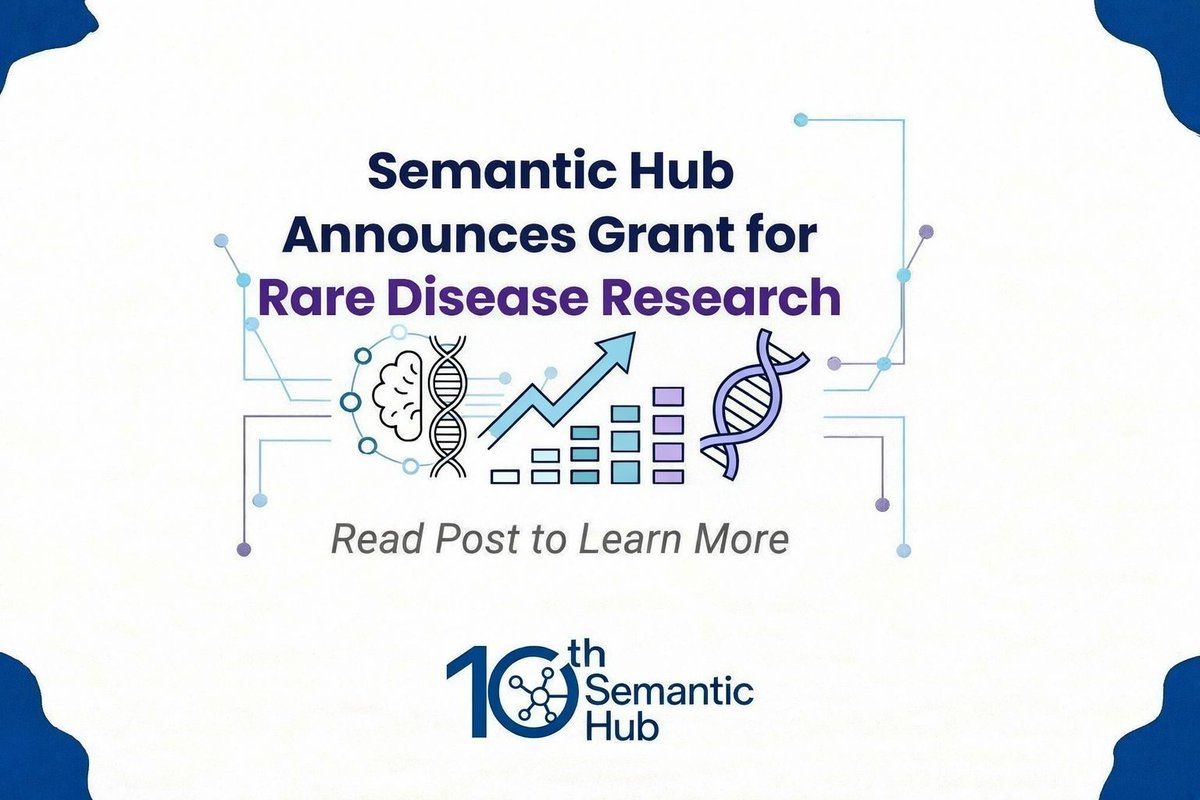
If every day is #RareDiseaseDay, action shouldn’t wait. This March we’re launching our #RareDiseaseResearchGrant, covering 30% of eligible evidence/insight projects for biopharma with 2025 revenue < €3B. Apply in March!
Details: https://t.co/LpjQaj7NiQ
#Patient voice isn’t a “nice to have” anymore - it’s the standard.
We are happy to partner with Gradus V to blend strategy/launch/access experience with patient-level semantic #AI, helping teams spot hidden opportunities and reduce execution risk. #Biotech#HealthcareAI
Our team coordinates directly with your stakeholders and selected KOLs, ensuring all #regulatory and #scientific benchmarks are met. All in a very budget-friendly manner.
#nlp#patientvoice#ai#rwd
4/4
While listening to #Patient Voice with #semantic analysis is renowned for uncovering the "why" behind patient behaviors and unmet needs, its value extends far beyond internal strategy.
1/4
Beyond providing evidence that carries weight in the scientific community, we offer comprehensive, end-to-end support for publication goals. We manage the entire cycle of the study from Protocol development and IRB approval to medical writing and submission.
3/4