Senator Blanche Bruce of Mississippi, the first Black American elected to a full Senate term, forcefully advocated on the Senate floor for Louisiana politician PBS Pinchback to be seated. Read our latest Blog post for the full story https://t.co/cP08ywcdt3
PBS Pinchback became active in Louisiana politics on the heels of the 1866 Mechanics Institute Massacre, when a white mob disrupted the state constitutional convention taking place at the Institute https://t.co/cP08ywcdt3 #SenateStories
On the Blog! The story PBS Pinchback of Louisiana offers a window into an era of political upheaval in the US, when Black Americans fought to exercise their newly won political and civil rights in the South https://t.co/cP08ywbFDv
New Blog post! Learn about Pinckney Benton Stewart Pinchback of Louisiana, a pioneering Black American politician who was elected to the Senate in 1873 but was never allowed to take his seat https://t.co/cP08ywcdt3 #SenateStories
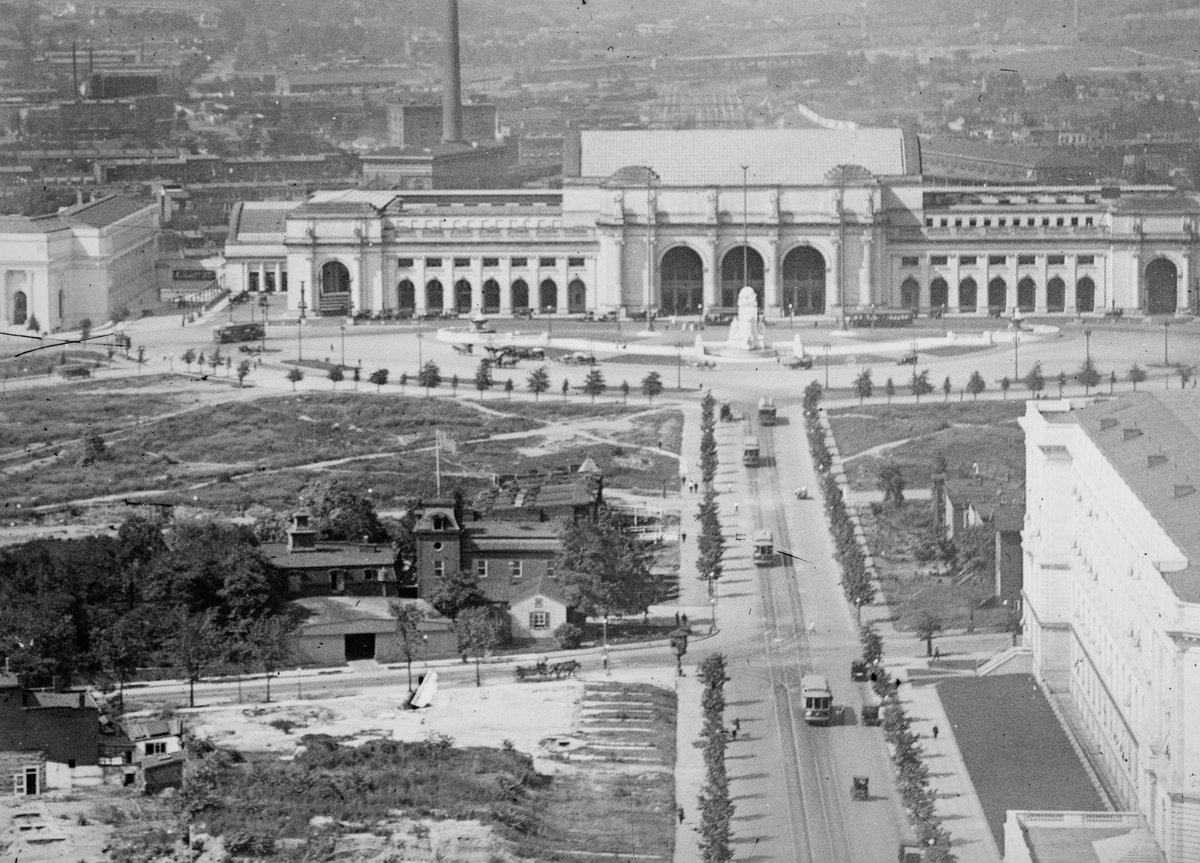
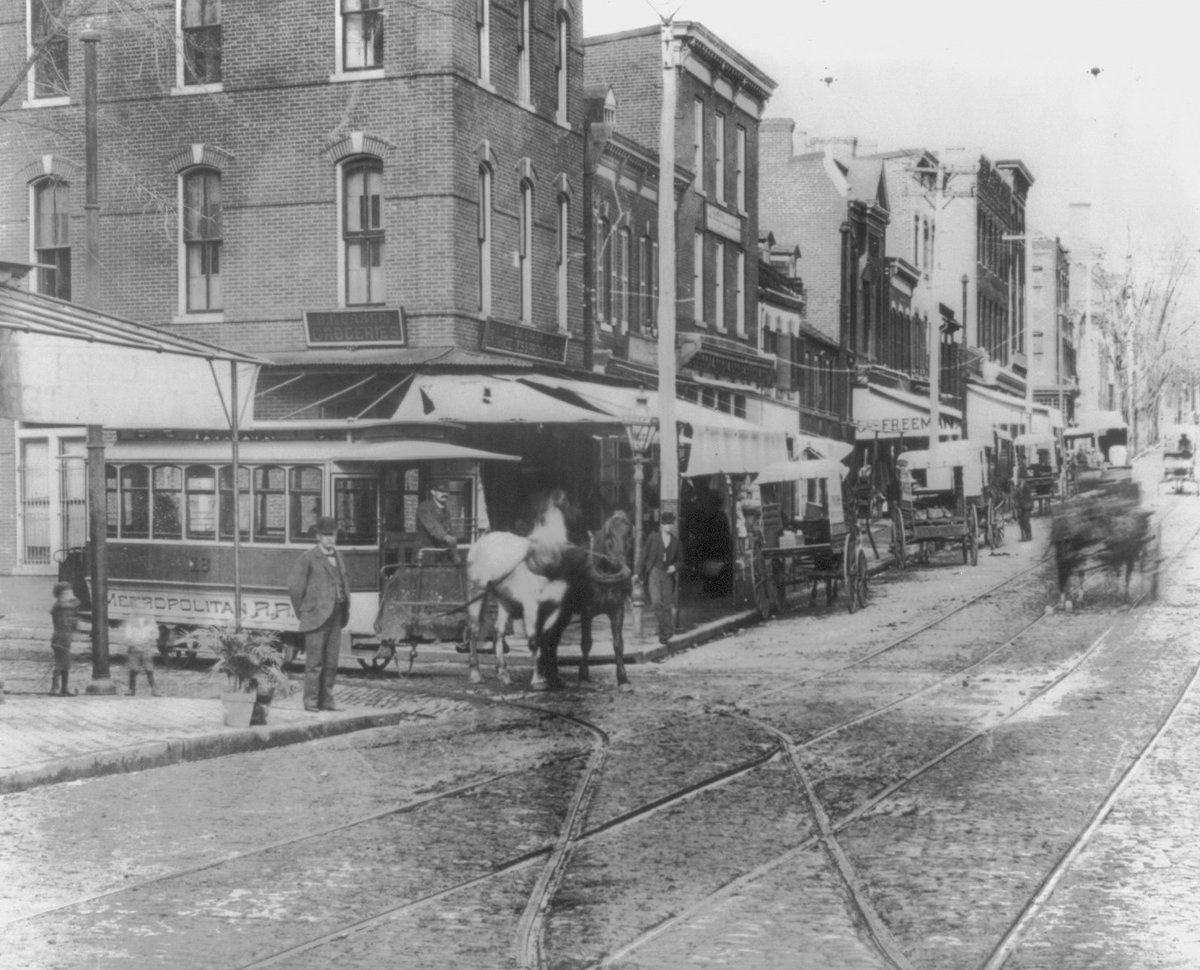
The barn-like structure in the left foreground served as the #Senate stables for decades, where horses were boarded for the use of riding pages, including the Senate’s first female pages, and other members of the Senate community https://t.co/xzVTM9zqYF #SenateStories
On the Blog! Senate Riding pages, which included females in the early 20th century, briefly used Washington, DC’s, “horse car” system to carry their messages throughout the city but found the cars too slow to be practical https://t.co/xzVTM9yT97 #SenateStories
New Blog post! In May 1971, newspapers heralded the end of a “boys-only” #Senate page tradition with the appointment of three female pages. Senate historians have recently learned, however, that the Senate employed female pages at least as early as 1907 https://t.co/xzVTM9zqYF
On the Blog for Constitution Day! Through its power of advice and consent on nominations, the Senate serves a pivotal role in the complex system of check and balances established by the framers of the Constitution in 1787 https://t.co/pGDLriqf0M #SenateStories#ConstitutionDay
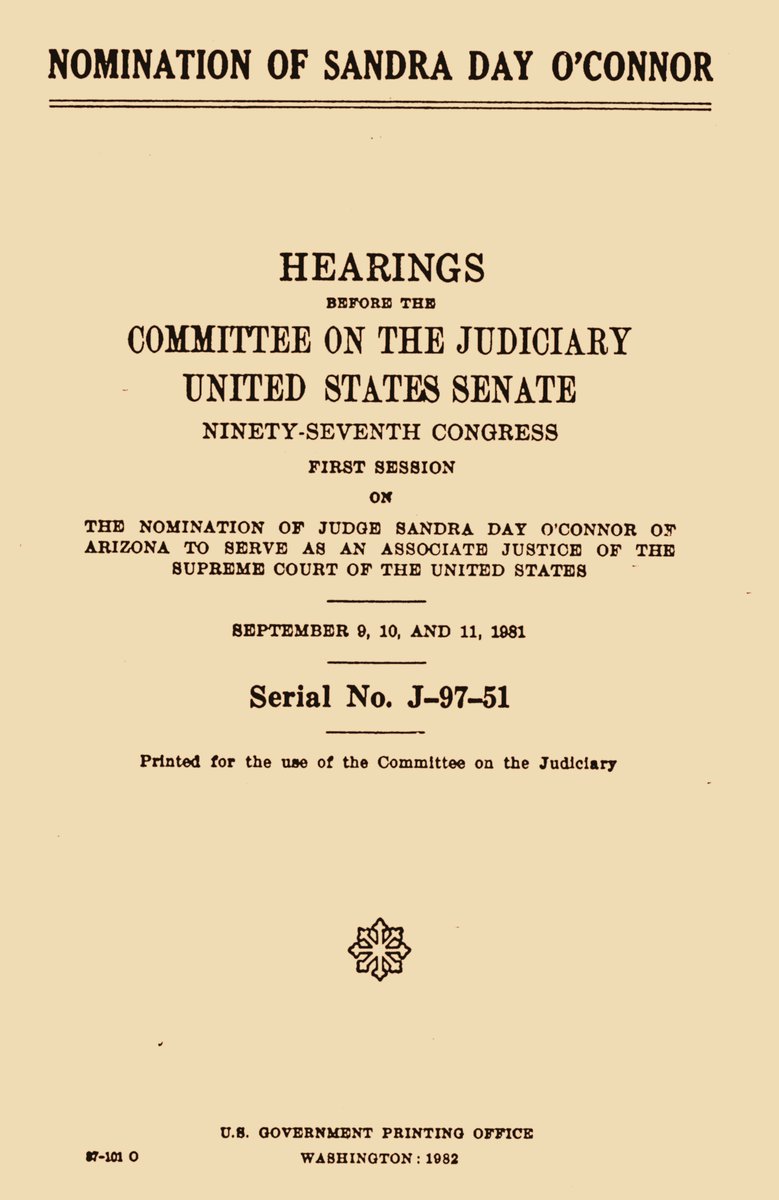
Public hearings had been a standard part of the Senate’s nomination process for several decades by 1981, when Sandra Day O’Connor, the 1st woman nominated to the serve on the SCOTUS, appeared before the Judiciary Committee https://t.co/pGDLripHbe #ConstitutionDay#SenateStories
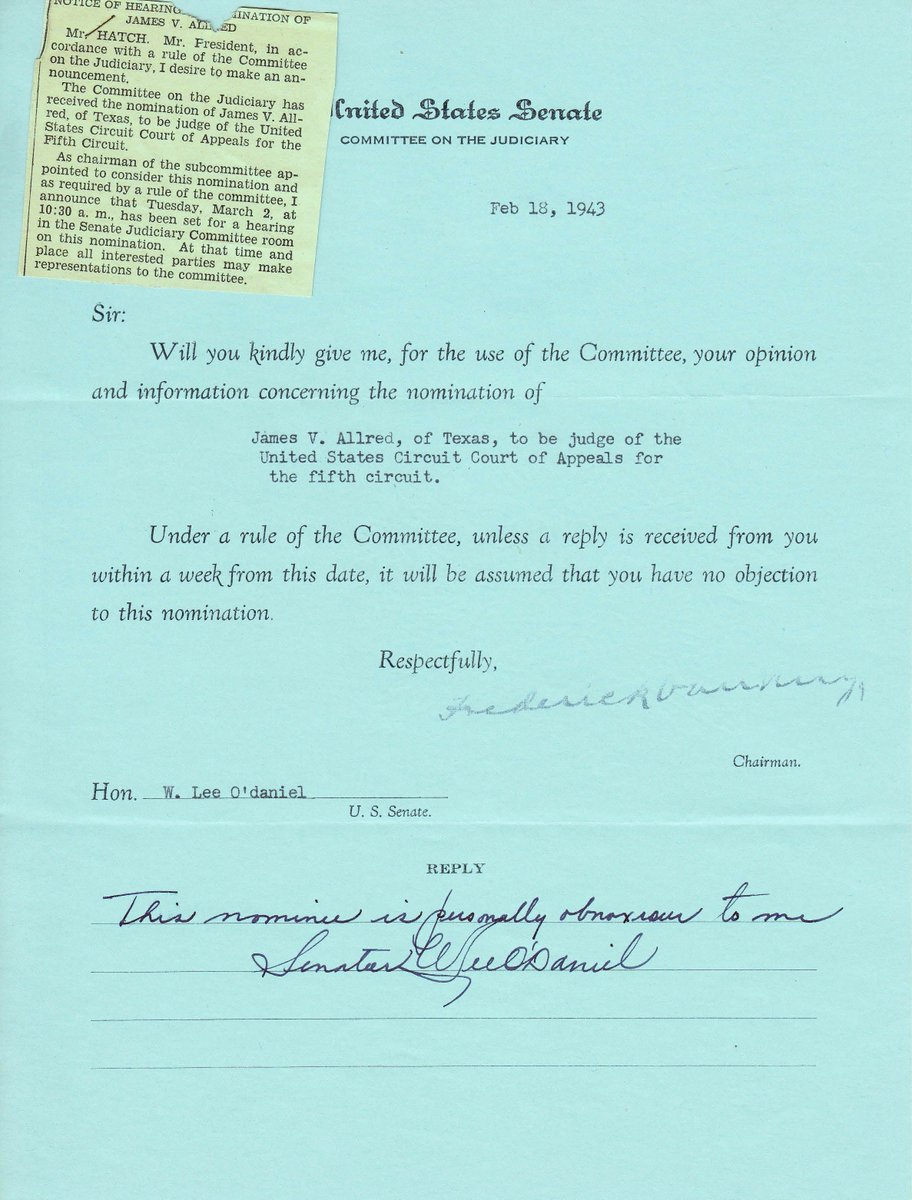
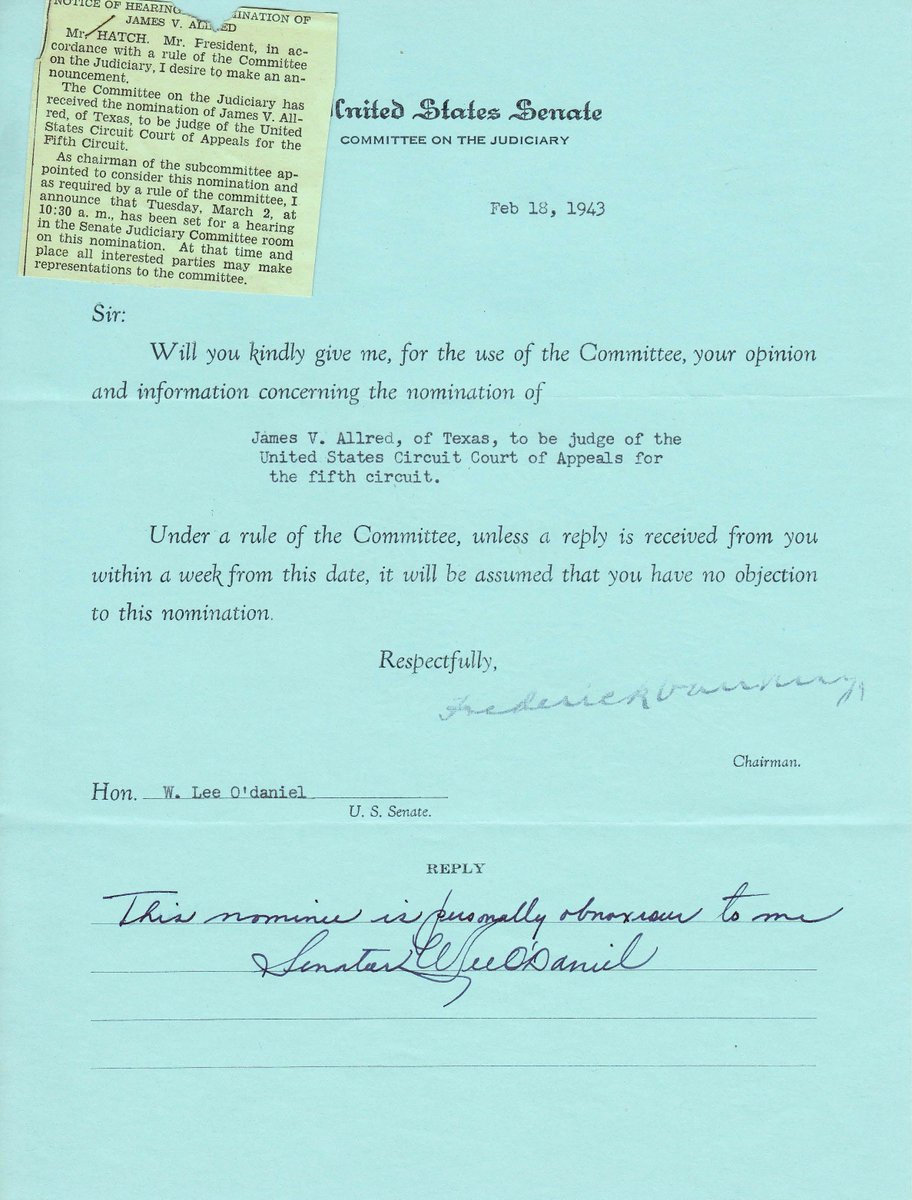
Around 1917 the Senate Judiciary Committee formalized the use of the “blue slip” on which a senator could register support for or opposition to a judicial nominee to serve in his or her state https://t.co/pGDLripHbe #SenateStories#ConstitutionDay
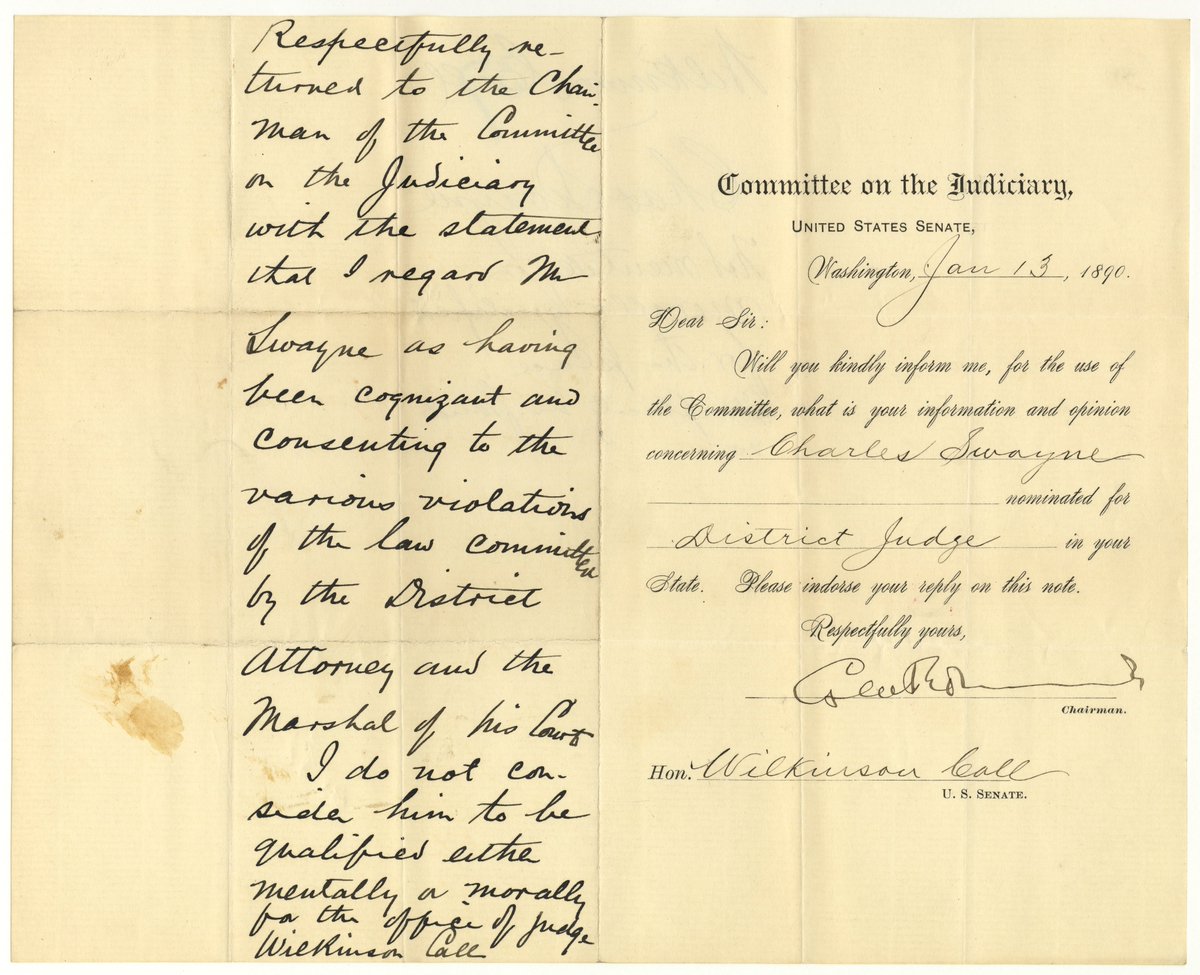
The Senate’s long-held practice of senatorial courtesy, whereby senators expected to be consulted on all nominees to federal posts within their states, is demonstrated in this 1890 Judiciary Committee form letter https://t.co/pGDLriqf0M #SenateStories#ConstitutionDay
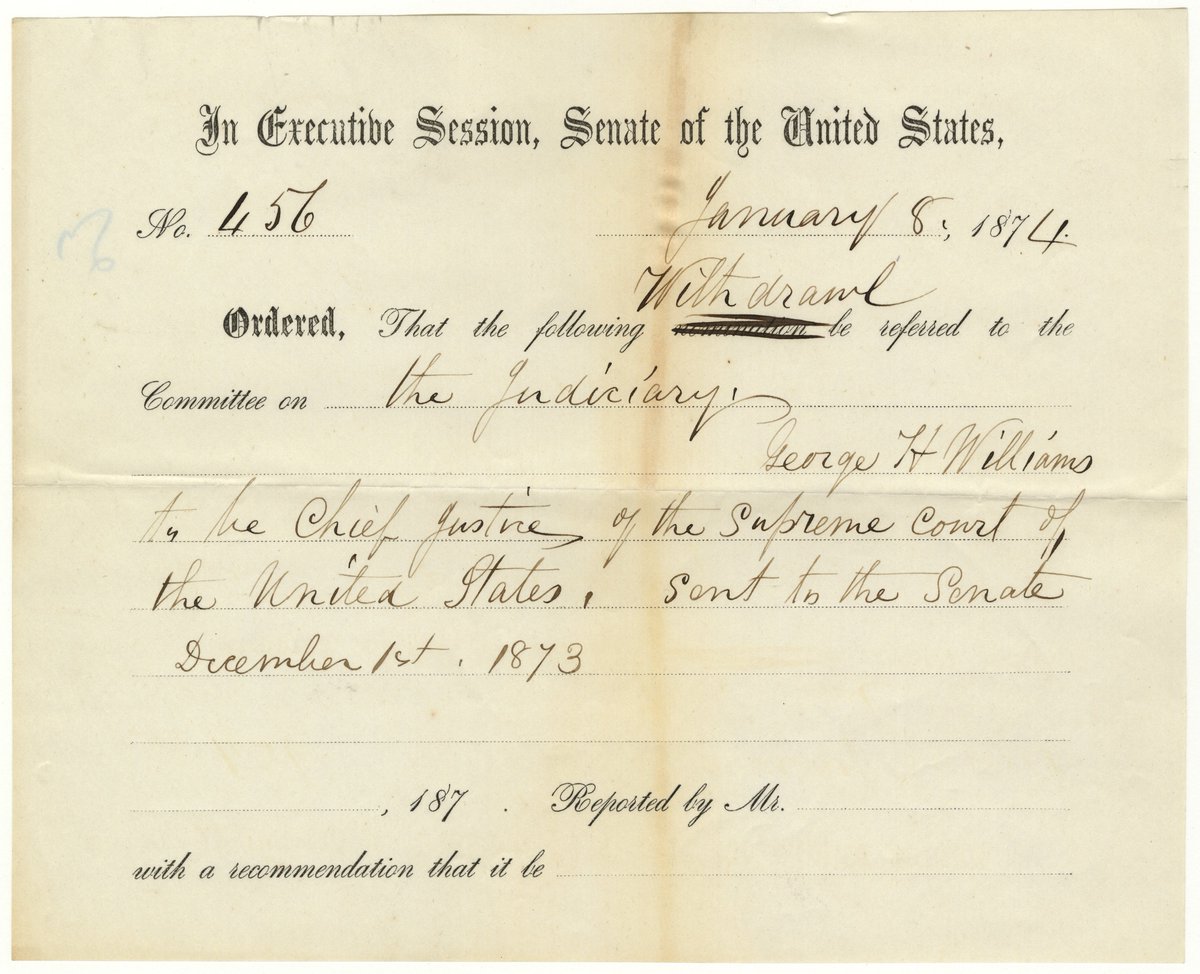
Although investigations of judicial nominees were still rare after 1868, they did occur, as in 1874 when a controversial SCOTUS nominee was withdrawn https://t.co/pGDLriqf0M #SenateStories#ConstitutionDay
Before the 1860s, nominations were rarely sent to Senate committees for review; one exception occurred in 1822 when the Judiciary Committee investigated claims against judicial nominee Joseph L. Smith https://t.co/pGDLriqf0M #SenateStories#ConstitutionDay
On September 11, 1789, the Senate swiftly and unanimously confirmed George Washington’s first cabinet nomination—Alexander Hamilton to be secretary of the treasury https://t.co/pGDLriqf0M #SenateStories#ConstitutionDay
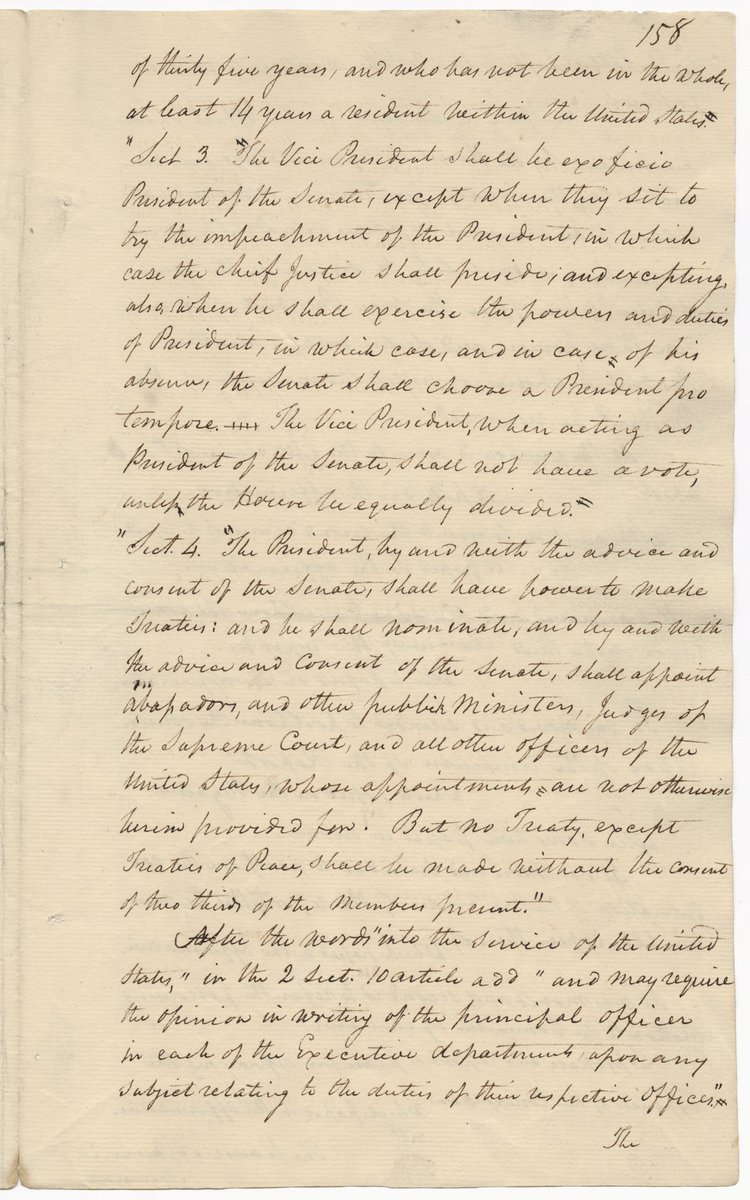
After debating the appointment clause over several weeks during the Constitutional Convention of 1787, the framers eventually settled on the concept of a shared power for judicial and executive appointments https://t.co/pGDLriqf0M #SenateStories#ConstitutionDay
In 1776 John Adams shared his "Thoughts on Government," which included the idea of a shared appointment power between the executive and legislative branches; that idea was eventually incorporated into the #Constitution https://t.co/pGDLripHbe #SenateStories#ConstitutionDay
New Blog post! In honor of Constitution Day, learn about the Senate's constitutional power of “advice and consent” on nominations through a selection of historical documents https://t.co/pGDLripHbe #SenateStories#ConstitutionDay
On the Blog: St. Louis Cardinals outfielder Curt Flood unsuccessfully challenged baseball’s antitrust exemption in the 1960s and was effectively blackballed from the sport; the #Senate bill to limit the exemption was named the Curt Flood Act as a tribute https://t.co/kPtjaabIKe
Senators Strom Thurmond, Orrin Hatch, and Patrick Leahy (seen here), along with Senator Daniel Patrick Moynihan, cosponsored the Curt Flood Act that partially ended professional baseball’s antitrust exemption in 1998. Read our latest #SenateStories Blog https://t.co/kPtjaabaUG
During a 1995 hearing on ending MLB's antitrust exemption, future baseball Hall of Famer Eddie Murray testified before the Senate Subcommittee on Antitrust, Monopolies, and Business Rights on his rights as a professional baseball player https://t.co/kPtjaabIKe #SenateStories