REPORT: Eritrea, which sits strategically along the Red Sea, is using Sudan’s war to expand its influence across the border.
The Eritrean government is training fighters and building ties with armed Islamist groups in eastern Sudan, creating a friendly security buffer beyond its territory.
Those networks could outlast the war, giving Eritrea lasting influence inside its much larger neighbor.
#Sudanese protesters block highway to #Egypt over power cuts
Dozens of protesters demonstrated in the town of #Abri on Wednesday, blocking the main highway linking Sudan to Egypt to protest against persistent power outages.
The demonstrators set tyres on fire and blocked the vital road connecting #Dongola to #Wadi_Halfa, a primary artery for trade and travel between Sudan and Egypt.
A member of the Wadi Halfa emergency room, speaking on condition of anonymity for security reasons, said residents are protesting the inclusion of Abri in a recent electricity rationing schedule.
“Protesters refuse to be part of the power cuts because the transmission line from Egypt is sufficient to cover the city’s needs entirely without the need for scheduling,” the source told Sudan Tribune.
Egypt provides electricity to several towns in northern Sudan under a long-standing agreement. These areas have historically remained outside the Sudanese national grid’s load-shedding cycles, which the government uses to manage fuel shortages and network failures.
In a statement issued Wednesday, protesters criticized local officials for citing global instability and tensions in the Strait of Hormuz as reasons for the 12-hour daily blackouts.
“Linking the stability of citizens’ daily lives to political analysis or maritime tensions is an unacceptable approach,” the statement said, noting that the crisis has paralyzed local markets and public services.
The protesters warned they would escalate their movement in public squares and maintain the highway blockade until authorities provide an administrative solution and end the rationing immediately. (Sudan Tribune)
@business the Sudanese Armed Forces (SAF) provided varying degrees of support to TPLF/Tigray Defense Forces (TDF) fighters during and after the Tigray conflict. Where were you that time?
Hundreds of thousands of Christians celebrating Easter in Ethiopia 🇪🇹
Ethiopia has practised Christianity for over 1,600 years.
Ethiopia (Abyssinia) was mentioned in the Holy Bible.
The country has never been colonised.
🔥🚨DEVELOPING: Here is footage that shows the full scale of the hundreds of thousands of Christians in Ethiopia gather to honor Christ during the road to Easter.
@umutcagrisariii The Sudanese government has sold itself as a pawn for foreign interests, acting against Ethiopia while betraying its own people. Ethiopia has every absolute right to defend itself against this aggression and against a regime that survives by serving outside masters.
@Jawar_Mohammed Congratulations, brother. Your persistent conflation of personal opposition to the Prime Minister with a coherent critique of Ethiopia’s long-term strategic interests is remarkable. Disliking the ruling party does not free you from having to distinguish between regime politics and state/national interests.
Over the past few days, you — once an ally of the Prime Minister but now a vocal critic — have repeatedly attacked Ethiopia for seeking to protect its strategic interests in the context of the Sudanese conflict. Some of the reports you circulate or the ideas you share may be factually accurate in isolation. Yet, you present them without reference to the broader strategic context shaping Ethiopia’s calculations. Facts, detached from structure and strategy, can easily be marshaled into a misleading narrative.
Do you genuinely believe Ethiopia should behave as a passive bystander in a region defined by intense geopolitical competition? The tragedy unfolding in Sudan is indeed exacerbated by foreign intervention. But Ethiopia is hardly unique in pursuing its interests. In fact, Ethiopia, more than any other country in the region and beyond, stands to lose more as a result of Sudan’s instability. It has a real skin in the game, as it were. Egypt and other regional actors are not neutral mediators; they are actively shaping the trajectory of the conflict to favor their preferred belligerents.
You position yourself as a politician–activist, but your posture suggests an aversion to the very language of national security and strategic interest. In a region marked by proxy competition, transboundary security threats, and zero-sum maneuvering among rival states, such discomfort is not a virtue. It is a liability. States do not have the luxury of moral abstraction when core national interests are at stake.
Moral posturing in such an environment may be emotionally satisfying, but it is not strategy. Critiquing policy is legitimate. However, presenting every move as evidence of strategic folly simply because it originates from Prime Minister Abiy’s government risks substituting partisan grievance for analysis.
More importantly, anyone with aspirations for higher office should be cautious about adopting a scorched-earth posture toward the state itself. While governments change, strategic geography is stubborn. Ethiopia’s long-term national interests are distinct from — and larger than — the party temporarily in power. A credible alternative must demonstrate an ability to separate those two. Thus far, however, you have shown a near-pathological inability to make that distinction.
@SudanTribune_EN The Sudanese government has sold itself as a pawn for foreign interests, acting against Ethiopia while betraying its own people. Ethiopia has every absolute right to defend itself against this aggression and against a regime that survives by serving outside masters.
@gdrarr With the exception of the UAE and Morocco, several radical governments in predominantly Muslim countries are spreading hostility against Ethiopia.
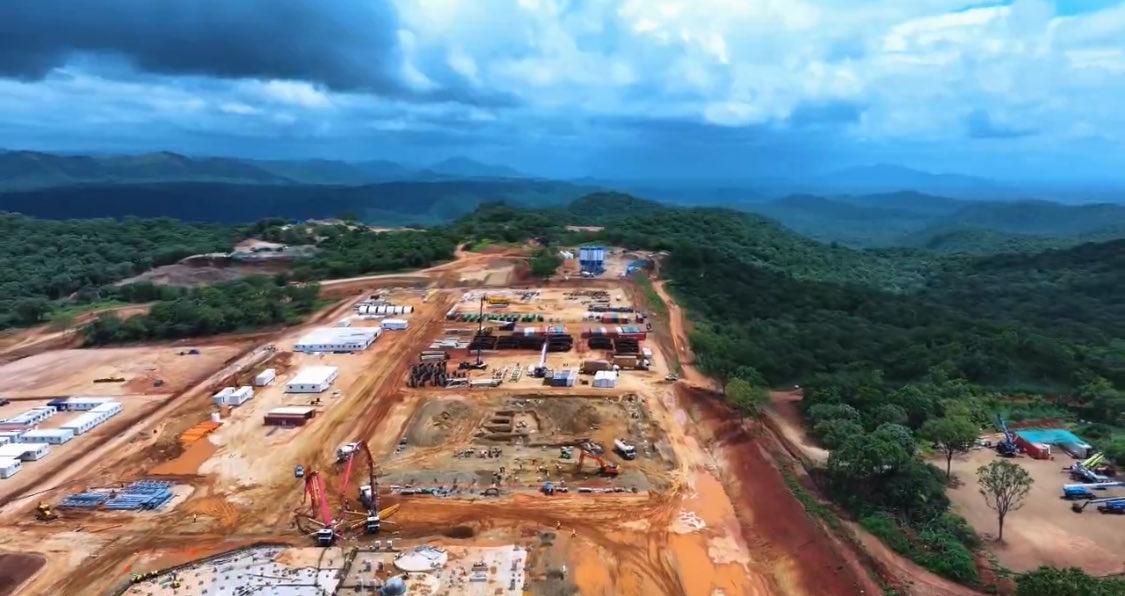
Alert ⚠️ this picture taken from gold mining company!!!
🚨🚨
5, There is additional visual documentation showing TPLF fighters displaying their flag while positioned on armored vehicles belonging to the Sudanese Armed Forces (SAF). Furthermore, satellite imagery has identified what appears to be armored vehicles inside the TPLF Gedaref-based training compound.
Note: satellite imagery from @Dinlas3
@_hudsonc With the exception of the UAE and Morocco, several radical governments in predominantly Muslim countries are spreading hostility against Ethiopia.