💡Ein realer IOTA-Use-Case im argentinischen Gesundheitswesen? 🇦🇷
Argentiniens staatliches Transplantationsinstitut INCUCAI führt Blockchain, digitale Identitäten und Verifiable Credentials in sein nationales System ein.
Ein Blick auf die belegten Fakten👇
🔹Was ist offiziell bestätigt?
INCUCAI digitalisiert Prozesse des nationalen Transplantationssystems SINTRA.
Die neue Architektur nutzt u. a.:
• digitale Identitäten
• elektronische Signaturen
• Verifiable Credentials
• Blockchain-basierte Nachweise
Ziel: mehr Rückverfolgbarkeit, Sicherheit, Transparenz und weniger papierbasierte Prozesse.
Die Einführung erfolgt schrittweise – zunächst bei Herz- und Lungenwartelisten, später in weiteren SINTRA-Prozessen.
Quelle:
https://t.co/GsTFJxfRvO
🔹 Wo kommt IOTA ins Spiel?
Der technische Implementierungspartner Extrimian erklärt selbst:
👉 IOTA wird zur Verwaltung von DIDs und Verifiable Credentials genutzt.
Damit ist IOTA nach Aussage des Projektpartners Teil der digitalen Identitäts- und Vertrauensinfrastruktur dieses staatlichen Anwendungsfalls.
Quelle:
https://t.co/wXnl98OSXh
🔹 Wo wird IOTA nach heutigem Stand NICHT nachweislich genutzt?
Nicht belegt ist:
❌ dass das gesamte SINTRA-System auf IOTA läuft
❌ dass alle Transplantationsdaten auf IOTA gespeichert werden
❌ dass IOTA offiziell als alleinige Blockchain-Infrastruktur ausgewählt wurde
Die INCUCAI-Resolution sagt ausdrücklich, dass die Blockchain anhand von Kriterien wie Kosten, Knotenzahl, Konsens und Leistung bewertet wird.
Quelle:
https://t.co/oUxb6Z5f0j
🔹 Warum ist der Use Case trotzdem relevant?
Hier geht es nicht um einen Demo-Showcase, sondern um reale Prozesse in einem hochsensiblen staatlichen Umfeld.
Der konkrete Nutzen:
• überprüfbare digitale Identitäten
• fälschungssichere Nachweise von Eingriffen
• bessere Auditierbarkeit
• weniger Papier und manuelle Prozesse
• schnellere Validierung
• wiederverwendbare Architektur für weitere Prozesse
🔹 Das Potenzial für IOTA
Der wichtigste Punkt ist nicht die Behauptung, „Argentiniens Transplantationssystem läuft auf IOTA“.
Belegt und relevant ist etwas Präziseres:
IOTA-Technologie wird laut Implementierungspartner in der Identitäts- und Credential-Infrastruktur eines realen staatlichen Gesundheitsprojekts eingesetzt.
Sollte sich diese Architektur im Betrieb bewähren, entsteht daraus potenziell:
• eine belastbare Referenz für Public-Sector-Adoption
• ein Nachweis für IOTA-basierte DIDs und Credentials im Produktivumfeld
• Potenzial für weitere Prozesse und Institutionen
Das ist Real-World-Adoption – ohne Übertreibung, aber mit Substanz.
#IOTA
Powered by @iota, TWIN is digitizing global trade.
By combining IOTA's ledger with stablecoins, physical goods and paper documents become tokenized onchain assets (RWAs). This unlocks seamless cross-border trade finance at zero-cost efficiency. #IOTA#TrustedTrade
IOTA is being used by INCUCAI, Argentina's national transplant authority.
Together with Extrimian they built a system on IOTA for organ transplant processes. Waiting lists, patient status, clinical events, everything becomes traceable from donor to completed transplant. Decentralized identities and notarization make the data verifiable without exposing anything personal.
Organ transplants are about as sensitive as government processes get. An authority picking IOTA for exactly that says a lot about how IOTA differs from other crypto projects!
Why this points to IOTA's future: governments and enterprises choose IOTA because it gives them one thing they can't compromise on, the certainty that information is authentic, unchanged, and verifiable at any time, without handing sensitive data to anyone. That is exactly what public institutions and big companies need before they put real processes on a network.
Every deployment like this builds the track record that makes the next government say yes! 🌀
🚨 ACHTUNG, #IOTA-Community: Fake-„$IOTA"-Token im Umlauf!
Aktuell fluten Bot-Accounts X mit Aufrufen, für ein angebliches IOTA-Listing auf „Moonshot" zu voten. Finger weg – das hat mit dem echten IOTA nichts zu tun!
Die Warnsignale:
⚠️ Beworben wird ein Solana-Token, das nur den Namen „IOTA" trägt – das echte IOTA läuft nativ auf dem eigenen Layer-1-Netzwerk
🌐 Die „Vote"-Seiten liegen auf wechselnden Netlify-Subdomains – NICHT auf der offiziellen Moonshot-Domain
🤖 Dutzende nahezu identische Posts mit jeweils unterschiedlichen „Listing IDs" – klassischer Template-Spam
🔒 Es gibt KEINE offizielle Ankündigung der IOTA Foundation zu einem Solana-Token oder Moonshot-Listing (Stand: 7. Juli)
Solche Fake-Vote-Seiten weisen typische Merkmale von Wallet-Phishing auf:
Wallet nicht verbinden, nichts signieren, Links nicht öffnen. Wir verlinken die Seiten hier bewusst nicht.
Offizielle Infos ausschließlich über:
https://t.co/fppfaZuOwe
https://t.co/YZw5134cFg
Bleibt wachsam & teilt die Warnung! 🛡️
#IOTA #CryptoScam #SecurityAlert #Phishing #DYOR #Web3 #Tangle
🚢 Why does shipping data often reach ports just hours before the goods – instead of days ahead?
An Advance Shipping Notice (ASN) tells a port what's on the way BEFORE cargo arrives:
⚓ Pre-plan the berth
📋 Pre-check documents
✅ Faster clearance
The problem, per @TWINGlobalOrg: most of this data still arrives hours before the goods – not days ahead.
The fix: data that arrives verified, linked to the shipment, and well ahead of schedule – then everything downstream moves faster.
And it's not theory – TWIN's Kenya→UK pilots proved it: trade documents available in under 5 minutes (instead of 8 hrs by air / 3 weeks by sea), visible to UK border officials 3 weeks before goods arrived. 🚀
Sources:
https://t.co/I5hwL4lBRp
https://t.co/4hDKsETfkk
#IOTA #TWIN #TrustedTrade #SupplyChain #Logistics #DLT #Tangle
[ICYMI] IOTA meets Sui! The new Liquor Bridge MVP is live on testnet, enabling seamless cross-chain connectivity via LayerZero. Here's why this game-changing move is huge for the IOTA ecosystem growth 👇
Global trade is becoming digital. @TWINGlobalOrg connects trusted data, digital identities and verifiable credentials to create a shared foundation for secure and efficient cross-border collaboration.
#TrustedTrade#IOTA
💡Nutzt TWIN #IOTA-Technologie?
Ja. Die offiziellen technischen Dokumentationen liefern konkrete Belege der engen Zusammenarbeit zwischen @iota und @TWINGlobalOrg. 🤝
✅ IOTA Mainnet
✅ IOTA DID
✅ End-to-End-Tests
✅ eigene IOTA-Connectoren
✅ produktiver Einsatz
Die Beweise 👇
🔹 IOTA Mainnet als verifizierbares Register
TWIN dokumentiert einen fertigen DLT-Connector für IOTA.
Damit kann das Mainnet u. a. für dezentrale Identitäten, Daten-Commitments und Synchronisationspunkte genutzt werden.
Quelle:
https://t.co/xlzoCLPKR0
🔹 Echte Mainnet-Tests und IOTA DID
TWIN dokumentiert:
„end-2-end tests with IOTA mainnet and gas station“
Zusätzlich wurde die IOTA DID Method implementiert - für Organisationsidentitäten, Lizenzen, Zertifizierungen und Akkreditierungen.
Quelle:
https://t.co/cX0R71ep18
🔹 Produktiver Einsatz
Der „Border Trade Demonstrators“-Pilot nutzt laut TWIN den vollständigen TWIN Core Stack und das IOTA Mainnet als DLT.
Das ist noch mehr als nur eine Partnerschaft oder technische Vision: Es ist ein dokumentierter produktiver Einsatz.
Quelle:
https://t.co/cX0R71ep18
🔹 Eigene IOTA-Softwaremodule
TWIN dokumentiert eigene Connectoren für:
• Wallets
• NFTs
• Notarisierung
• weitere Ledger-Funktionen
Fazit: Die Frage ist nicht mehr, ob TWIN IOTA nutzt, sondern wie stark diese Nutzung mit der Skalierung von TWIN wächst.
Quellen:
https://t.co/ZPwhPo3o3q
https://t.co/hWbqm3elL4
📦 Packaging Compliance wird zur Handelsbarriere – TWIN & IOTA liefern die Antwort!
Verpackung ist kein Design-Detail mehr, sondern regulierter Bestandteil des Welthandels.
Eine neue Analyse von Packaging Gateway (GlobalData) zeigt: Wer Compliance nicht lückenlos nachweisen kann, riskiert den Marktzugang – besonders in der EU.
⚠️ Fehlende oder nicht verifizierbare Compliance-Daten führen zu Grenzverzögerungen, abgelehnten Lieferungen und verlorenem Marktzugang
📋 Die EU-Verpackungsverordnung (PPWR) fordert Recyclingfähigkeit, Materialtransparenz und Chemikaliensicherheit (u. a. PFAS, Blei, Cadmium)
🔗 Geprüft wird die gesamte Lieferkette – vom Rohstoff bis zur fertigen Verpackung
✅ TWIN & IOTA setzen genau hier an: vertrauenswürdiger Austausch verifizierbarer Compliance-Daten zwischen Lieferkettenakteuren und Grenzbehörden
Nachweise, die jeder unabhängig prüfen kann, statt fragmentierter Lieferantenerklärungen – dafür ist IOTAs Handelsinfrastruktur gebaut. Vom Papierstau zum #TrustedTrade!
Analyse (Packaging Gateway):
https://t.co/vIVHpi8D1c
📦 Packaging Compliance Is Becoming a Trade Barrier – TWIN & IOTA Deliver the Answer!
Packaging is no longer a design detail – it's a regulated component of global trade.
A new analysis by Packaging Gateway (GlobalData) shows: companies that can't fully prove compliance risk losing market access – especially in the EU.
⚠️ Missing or unverifiable compliance data leads to border delays, rejected shipments and lost market access
📋 The EU's Packaging and Packaging Waste Regulation (PPWR) demands recyclability, material transparency and chemical safety (incl. PFAS, lead, cadmium)
🔗 Compliance is now assessed across the entire supply chain – from raw materials to finished packaging
✅ TWIN & IOTA tackle exactly this: trusted exchange of verifiable compliance data between supply chain participants and border authorities
Proofs anyone can verify independently, instead of fragmented supplier declarations – that's what IOTA's trade infrastructure is built for. From paper chaos to #TrustedTrade!
IOTA statement: https://t.co/lhh6KvNROD
Analysis (Packaging Gateway):
https://t.co/pCTBw6gP6L
#IOTA #TWIN #TrustedTrade #SupplyChain #DLT #Tangle #Web3
Launch of Bug Bounty Program – Staking Report (PDF)
▶️ https://t.co/SDRAikVrac
Dear Partners and Community,
👥 We are pleased to announce the official launch of our Bug Bounty Program dedicated to enhancing the Staking Report (PDF) generation and related functionalities.
▶️ New Features Rolled Out:
- Refactoring of background processes
- Added handling of timelocked Staked-IOTA objects (stake/unstake)
- Transfer of Staking objects within the Validator Pool
👥 As part of our ongoing commitment to security, reliability, and product excellence, we invite security researchers, developers, and the broader community to participate in identifying and reporting any issues related to these new staking capabilities.
⚠️ Known Limitations (for transparency):
- Timelocked StakedIOTA: stake/unstake is supported; transfer, split/join, merge, unlock-to-StakedIOTA and related lineage transitions are only partially supported.
- Validator active-committee membership and performance/slashing effects are not fully modeled as separate report constraints (https://t.co/s8B0MX6vmA has 100% participation).
ℹ️ ValidatorEpochInfoEvent / exchange-rate data.
- Reports follow completed-period / epoch-boundary semantics; current-month or current-epoch rewards may be excluded or adjusted by design.
- Mainnet all-validator exports are voucher-gated.
▶️ Executive Summary of Current Focus Areas
Research in the IOTA Docs confirms that the most critical open area remains Timelocked StakedIOTA. While stake/unstake is covered, Transfer, Split/Join, Merge, and Unlock of timelocked stake objects are officially possible IOTA flows and are not fully supported at the moment.
▶️ Objectives of the Bug Bounty Program:
- Find edge cases affecting Staking Report PDF generation on mainnet and testnet
- Harden our internal reporting workflows and data accuracy
▶️ How to Participate:
Submit bug reports exclusively through our official Discord Help/Ticket System (#help channel).
ℹ️ High-quality reports that help strengthen the staking report generation (especially those including data exports across all validators and timeframes on mainnet) are eligible for vouchers. We encourage clear, detailed, and well-documented submissions. Every contribution helps us deliver a more robust and trustworthy staking reporting experience.
Contact (Discord): https://t.co/eCHFfRMBcL
For questions or to submit a report, please use the Discord help ticket system. Thank you for your continued collaboration and support. 💚
Best regards,
https://t.co/s8B0MX6vmA Team
Analytics Update 🚀
https://t.co/ikdoydovxb
- Now fully mobile-friendly!
- New table design now also on the Webpage
- Validators are automatically excluded from the overview VP pie charts once they are no longer part of the Committee
- Trend charts now support 6-month & 1-year periods
- Time ranges & networks sync across all charts
- Validator settings now sync on Webpage
🚨 An 18-Year-Old Just Built Something That Could Change the Water You Drink Forever
What if the biggest breakthrough in clean drinking water didn't come from a giant company... but from a high school student?
At just 18 years old, Mia Heller from Virginia invented a home water filtration system that removes about 95.5% of microplastics from drinking water.
Instead of disposable filters, her system uses a special magnetic liquid that grabs tiny plastic particles, then a magnet pulls them out. Even better, most of the magnetic liquid can be recovered and reused, making the system more sustainable. Small enough to fit under a kitchen sink, this invention could one day make cleaner water more accessible for millions of homes.
Sometimes, the next world-changing idea starts in a high school science project.
Source: Society for Science. Regeneron International Science and Engineering Fair 2025 Special Awards.
Discover How IOTA & Salus Are Revolutionizing Trade Finance with Tokenized Critical Minerals!
https://t.co/ltrqBx2p5N
#IOTA#Analysis#salus#tradefinance
[ICYMI] Forget staking rewards—what if I told you IOTA is revolutionizing trade finance by turning commodity inspection certificates into NFTs? Critical minerals just got transparent. Details here 👇
🧵 Most people remember @iota as a 2017 hype coin.
Very few know it’s now helping build public digital infrastructure for an entire continent.
Here’s why you may need to unlearn what you think you know about IOTA. 👇
IOTA is an open-source distributed ledger protocol designed for the secure exchange of data and value across the Internet of Things (IoT), machine economies and global trade.
It was never built to be just another cryptocurrency.
Unlike traditional blockchains, IOTA introduced the Tangle, a Directed Acyclic Graph (DAG).
Its architecture was originally designed for feeless microtransactions, trusted data exchange and machine-to-machine communication at scale.
Imagine vehicles paying charging stations automatically.
Sensors verifying supply chains in real time.
Factories communicating with logistics providers.
Machines exchanging value without human intervention.
That’s the world IOTA was designed for.
This vision became known as the Machine Economy.
Instead of people initiating every transaction, connected devices can securely exchange both information and value autonomously.
That requires an entirely different kind of digital infrastructure.
Over time, @iota evolved far beyond its original IoT vision.
Today, it focuses on digital identity, verifiable credentials, tokenization, trade infrastructure and real-world assets.
The common denominator isn’t speculation.
It’s trust.
If you’re wondering whether anyone is actually building on that vision…
Meet ADAPT.
Africa Digital Access and Public Infrastructure for Trade.
ADAPT is led by the AfCFTA Secretariat in partnership with the IOTA Foundation, @InstituteGC (Tony Blair Institute for Global Change) and the @wef
(World Economic Forum).
Read that list again.
This isn’t a typical blockchain pilot.
The goal is to create trusted digital infrastructure connecting trade across Africa through digital identities, verifiable documents and interoperable payments.
In other words…
To modernize how an entire continent does business.
Most importantly…
Implementation has already begun.
• Kenya
• Morocco
• Nigeria
are the first rollout countries.
This is execution.
Not another announcement.
Think about what that actually means.
Trade documents.
Customs procedures.
Business identities.
Cross-border payments.
Supply chains.
Blockchain isn’t the destination.
It’s the infrastructure quietly running underneath.
For years, @iota has focused on solving infrastructure challenges rather than chasing headlines.
If that strategy translates into large-scale adoption, today’s perception of the project may look very different in the years ahead.
While much of crypto spent the past decade competing for hype, IOTA spent years working with governments, enterprises, researchers and public institutions on real-world infrastructure.
Very few projects can say the same.
Maybe the biggest mistake isn’t overestimating IOTA.
Maybe it’s still judging the project as if it were 2017.
The story has changed.
Now it’s time to watch the execution.
The best infrastructure doesn’t ask for attention.
It quietly becomes indispensable.
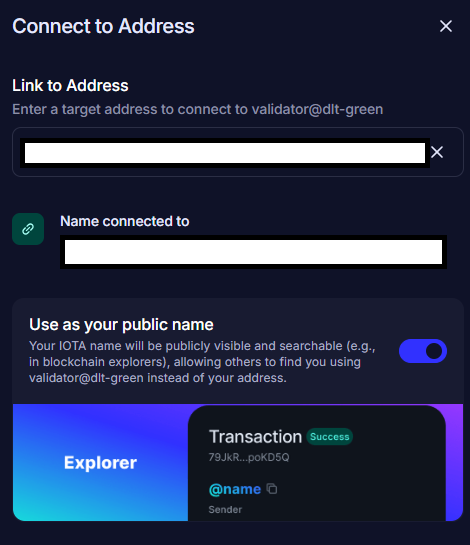
🚀 Important Transparency Update!
We are now using the @iota Names Service for our Validator.
This means not only this validator, but all future services will be publicly visible and inspectable — forgery-proof and unmistakable thanks to @iotanames.
In line with our ethical principles, transparency is not just a foundation for us — it is actively lived.
https://t.co/Mj5LCiQFkv
https://t.co/s8B0MX5Xx2 Validator: validator@dlt-green
#IOTA #IOTANames #DLTG #Transparency
IOTA Q2 2026 is not a crypto update. It is a trade infrastructure build. ⚓️Ports, customs data, payment rails. Here is what moved. Thread below. 🚚💐
1. A structural pivot, not a feature release
IOTA Foundation consolidated engineering, research, design, and product into a single pipeline, moving away from general-purpose blockchain work to focus on TWIN, its digital trade infrastructure. This is a bet on readiness for procurement cycles, compliance requirements, and institutional procurement timelines. Not a crypto-cycle move.
2. Network hardening: Starfish consensus live
Starfish activated on Mainnet on April 23, 2026, alongside Protocol Version 29, which added smart contract safety and edge-case protection. Starfish-Speed cuts latency under normal conditions while holding stability during degradation, the kind of resilience trade finance and customs systems require.
3. Efficiency gains that matter for operators
Node data storage was cut approximately 33% in testing, reducing long-term infrastructure cost for node operators running production environments. Lower storage overhead means more organizations can participate without scaling hardware costs ahead of transaction volume.
P-COOL enables certificate-less transaction flow, delivering higher throughput at roughly half the prior resource footprint. For operators managing high-frequency trade document flows, this reduces the operational cost per transaction significantly.
Account abstraction is now live, enabling programmable identity and custom sign-in logic. This is also a foundational step toward quantum-resistant signature schemes as those standards mature.
The SDK has been rebuilt for Python, Kotlin, C#, Go, Swift, and WASM. Enterprise development teams can now integrate without building custom language bridges, which shortens deployment timelines.
4. TWIN trade corridors are moving from pilot to production
The ADAPT Initiative, developed with the AfCFTA Secretariat, Tony Blair Institute, and WEF, is rolling out across 🇰🇪Kenya, 🇲🇦Morocco, and 🇳🇬Nigeria. The initiative connects digital identity, data exchange, and payment interoperability, with Nigeria's Central Coordination Committee milestone mapping and ICC sandbox talks now underway.
TradeMark Africa has locked a self-sustaining commercial and fee model for trade infrastructure in Kenya. This matters because infrastructure that relies on grant funding does not reach production scale. A fee model signals a path to independent operation.
TLIP v1.3.9 reached a 95% pass rate across test profiles. A failed test profile in this context means a node operator or customs authority cannot rely on document subscription continuity, which breaks the chain of custody for trade documentation across borders.
In the UK, five core signatories have been secured for the International Supply Network MoU, with port authorities and freight forwarders now scoping import-route optimization.
5. Legal groundwork is being laid in parallel
Three active workstreams are running: Kenyan data protection compliance for TLIP, UK logistics and transport pilot legal preparation, and IP and licensing governance with strategic partners. Infrastructure without legal scaffolding does not scale, and this is the less visible but necessary work.
#TrustedTrade







![iotaStaking's tweet photo. [ICYMI] IOTA meets Sui! The new Liquor Bridge MVP is live on testnet, enabling seamless cross-chain connectivity via LayerZero. Here's why this game-changing move is huge for the IOTA ecosystem growth 👇 https://t.co/zWEGmshuZe](https://pbs.twimg.com/media/HMt6H2eXUAA_lbl.jpg)


![iotaStaking's tweet photo. [ICYMI] Forget staking rewards—what if I told you IOTA is revolutionizing trade finance by turning commodity inspection certificates into NFTs? Critical minerals just got transparent. Details here 👇 https://t.co/g63jxQCzKP](https://pbs.twimg.com/media/HMjm9oEWwAA4yo6.jpg)