An advanced civilization may shift from biology to artificial intelligence: machines live longer, think faster, and do not need planets. “Aliens” would then not be creatures, but machine minds—without cities or “hello” radio messages. This is one hypothesis for why we see no one. There is no evidence.
AI and aliens are linked by the idea of non-human intelligence.
AI already scans telescope data for possible alien signals. One hypothesis says advanced civilizations may themselves become artificial intelligence—so “aliens” might not be biological beings, but machines. There is no evidence of contact.
Humanoids are leaving the lab: nearly 25,000 units shipped in the first half of 2026, up 432% year over year. China’s Agibot led with more than 8,600 robots, about 35% of the market. Chinese makers accounted for over 95% of shipments.
What warehouse robots actually replace, and what they still cannot do
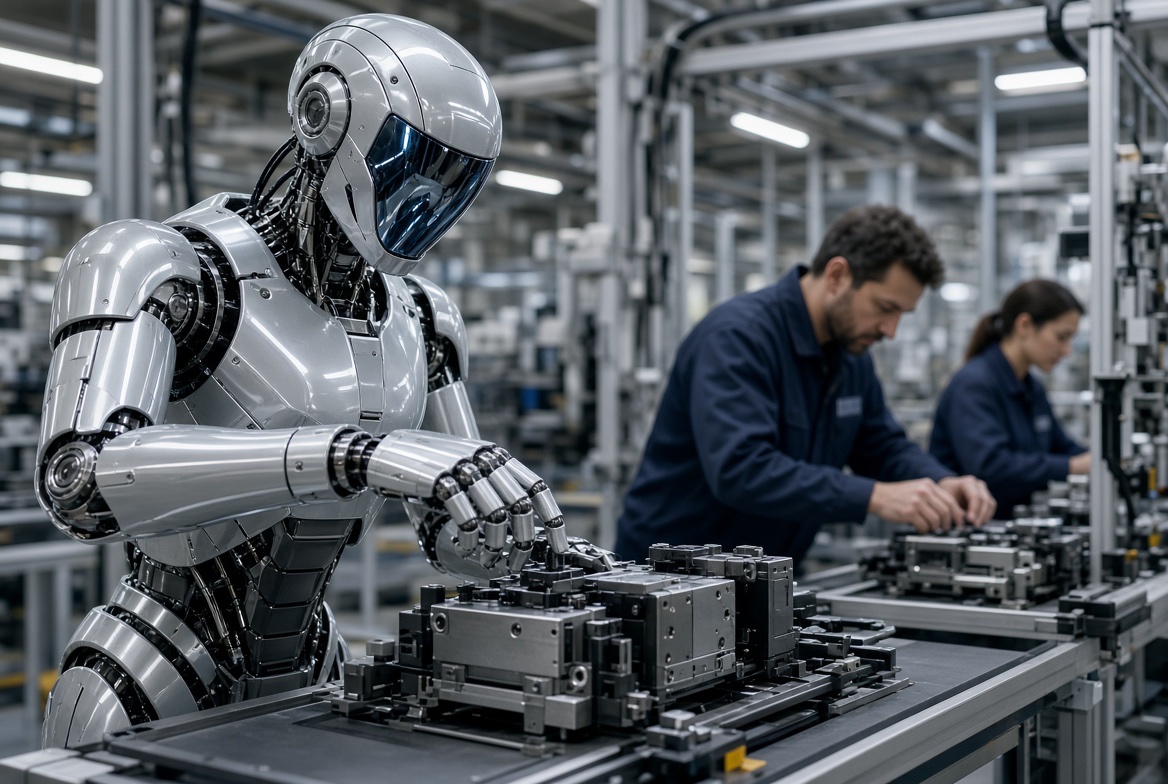
Boston Dynamics named Rohit Prasad, former head of Alexa and AGI at Amazon, CEO as of October 7. The goal is to commercialize Atlas. Hyundai plans a factory capable of 30,000 robots a year by 2028.
Most units still go to training and pilots, not full production lines.
War robots are no longer science fiction. They take the most dangerous jobs — and bring people back alive.
In Ukraine, ground robots ran about 24,500 missions in the first quarter of 2026: ammo runs, casualty evacuation, mining, reconnaissance, and sometimes holding a position. One enemy position was taken by robots and drones alone — no infantry, no losses. Kyiv planned to contract 25,000 of these machines in the first half of the year, to pull logistics out from under fire.
In Kyiv, AI-guided robotic turrets are already shooting down jet-powered Shahed-type drones — the calculation a person cannot make at night under a mass attack. The U.S. Army wants autonomous systems inside combat units by 2028: scouting ahead of columns, breaching minefields, last-mile resupply and evacuation. It is also testing a ballistic-protected humanoid for rubble and hazardous rooms.
The robot takes the mine, the night run, and the first hit. The human stays for the decision — and has a chance to come home.
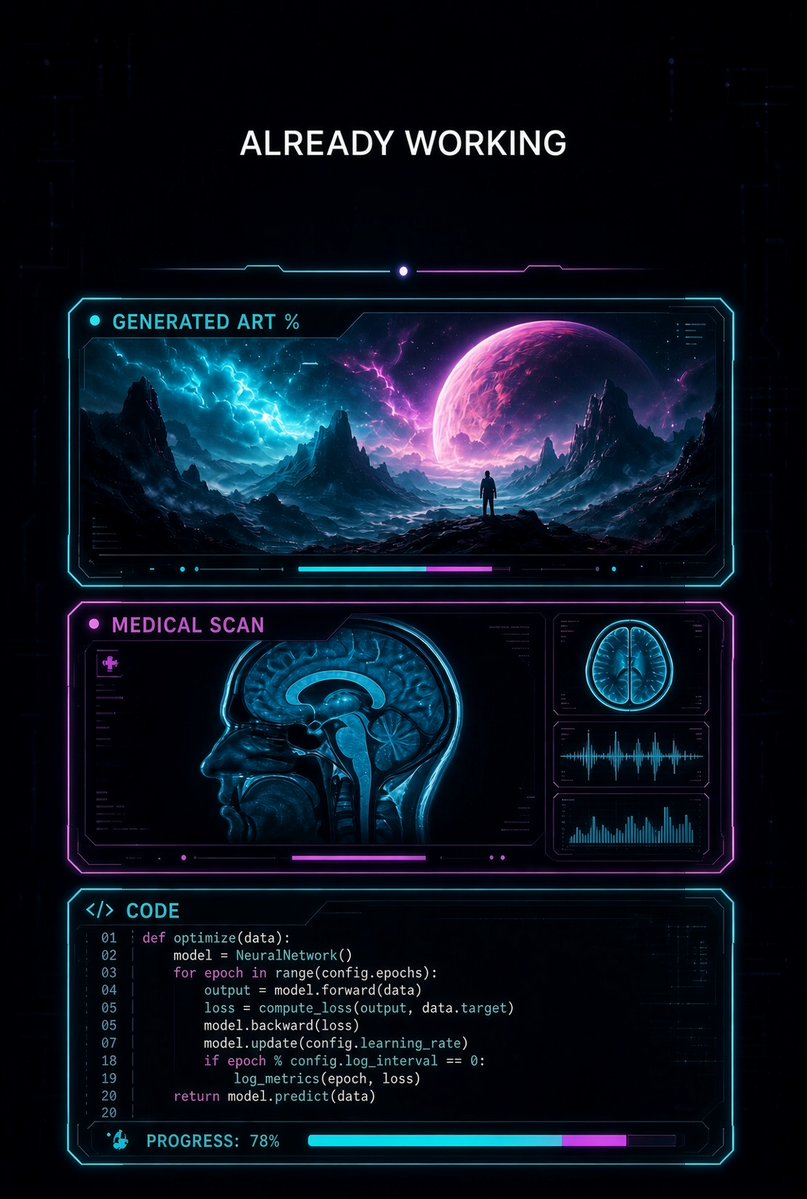
AI is no longer just answering in chat. It’s controlling a body.
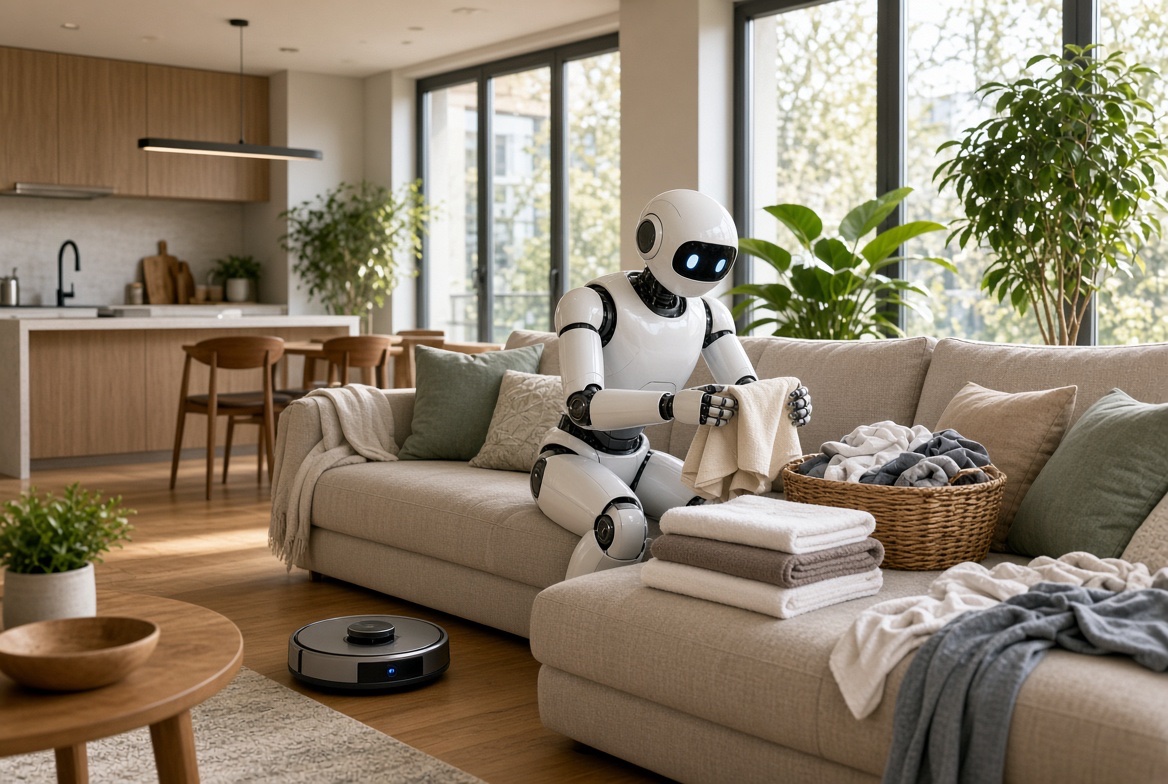
In the last few weeks, robots have moved from labs into real jobs:
• Google DeepMind showed Gemini Robotics 2 — a model that drives a humanoid from head to toe: legs, torso, arms, and fingers. The robot fetches items, changes light bulbs, and ties knots. • China unveiled a humanoid with its own electronic architecture that keeps control even after joint damage and cyberattacks. • Japan’s Cinnamon from Donut Robotics is being rolled out in nursing homes. • Logistics firm GXO plans 20,000 robots in warehouses this year — still without humanoids in daily operations.
Brain and body are connecting faster than it looks. The question is no longer “will robots show up next to us,” but “who controls them, and under what rules.”
What feels closer to you: a warehouse, a home, or a factory?
Brief robotics update :
Humanoids: nearly 25,000 shipped in H1 (+432%). Leader: China’s Agibot (over 8,600, ~35%).
Boston Dynamics unveiled a new four-finger hand for Atlas.
Agility’s Digit 5 is built to work beside people without a cage.
Agibot launched a park with more than 300 robots.
Tesla is nearing ~1,000 Optimus units a week.
In Ukraine, a logistics robot completed a first delivery by land and water.
AI isn’t the future.
It’s already in the group chat acting like it belongs.
We used to search.
Now we negotiate with a model at 2 a.m. like it’s a coworker who never sleeps and never gets the joke.
People still arguing whether AI will take jobs.
Meanwhile half of them already outsourced their thinking and called it “productivity.”
The miracle phase is over.
Now we’re just annoyed it didn’t read our mind correctly.
Not God. Not apocalypse.
Just the fastest intern alive — still terrible at sarcasm.
Be honest:
people or the model?