A token can pass every "is it a honeypot" check and still be a trap. The catch is in the liquidity.
Three liquidity traps to check before you buy:
- Unlocked LP: the deployer can pull liquidity any second. Your exit disappears, not your balance.
- Mint-to-LP: a hidden mint lets the owner print tokens and drain the pool from the inside.
- Sell throttle: max-sell or cooldown caps that let you buy freely but never exit size.
None of these need a rug pull transaction to hurt you. They are permissions and parameters sitting in the contract before launch, readable in advance.
A scan is not an audit. But it reads who can touch the liquidity and tells you in plain language.
Most 'rug' tokens don't need a bug.
They ship the exit in plain sight: an owner function.
Watch for these behind onlyOwner:
- setBlacklist / setBots: freeze a wallet from selling
- mint: print new supply after you buy
- setFee near 100%: a sell tax that eats the trade
- pause / setMaxTx: quietly disable transfers
Renounced ownership? Check it wasn't renounced after a second owner or proxy admin was set. Renounce theater is common.
A pre-deploy scan reads the bytecode and flags who can touch your balance, before you approve.
A scan is not an audit. It's the 5-second check before you touch a contract.
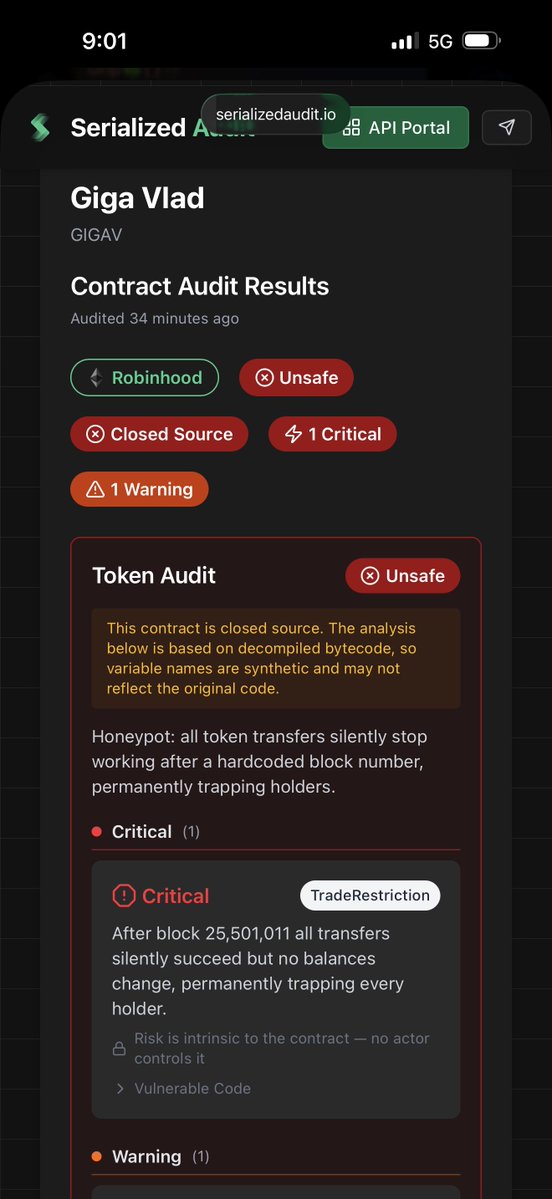
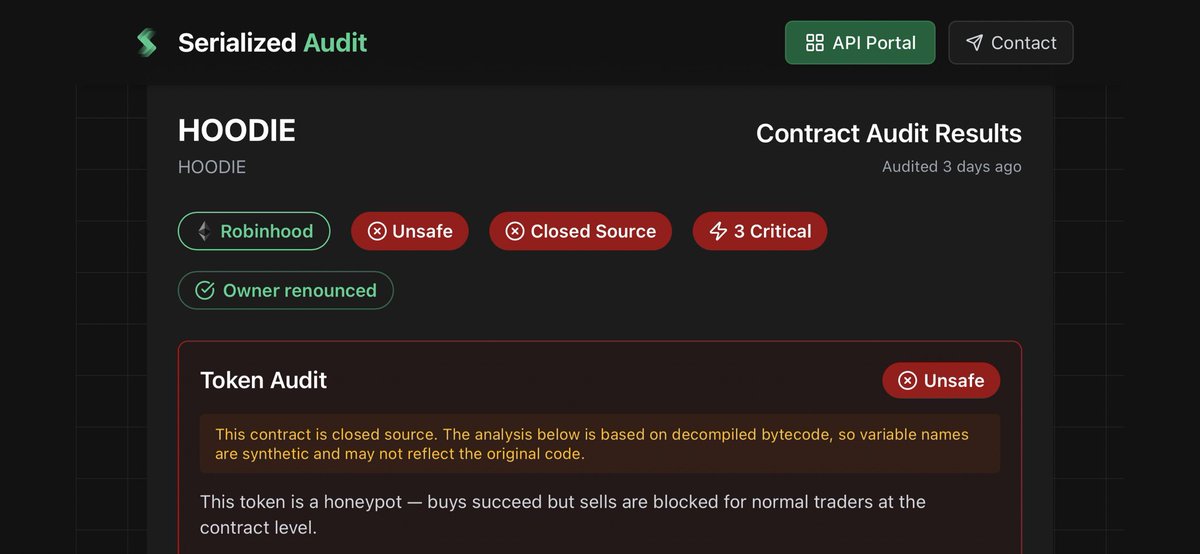
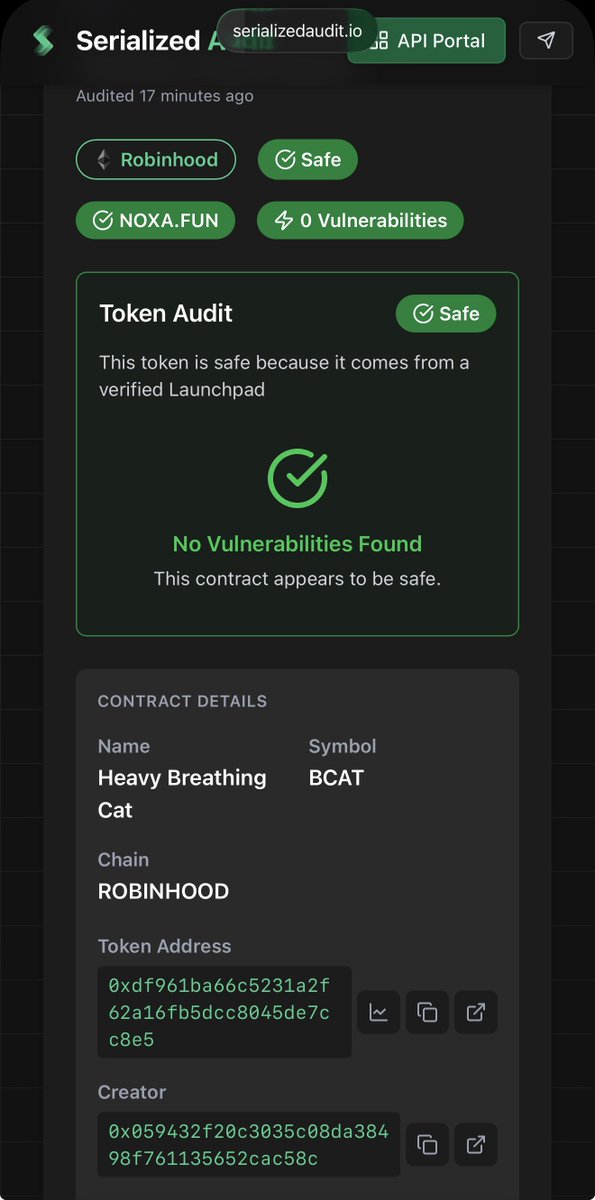
To avoid getting rekt on rob the hood chain , you can make use of @SerializedAudit , just paste the contract address and it will show you all necessary info.
Below is a picture of an unsafe contract and safe one.
You can also use https://t.co/PacvlNRLNv
A honeypot token is one you can buy but cannot sell.
The contract permits incoming trades while quietly restricting outgoing ones, often through a hidden allowlist, a transfer hook that reverts for ordinary holders, or a maximum sale amount set to zero for everyone outside a privileged set.
The mechanism is rarely visible from the token page. It lives in the transfer logic, and by the time a holder attempts to exit, the liquidity is usually gone.
SerializedAudit screens for these patterns before a contract is trusted: asymmetric buy and sell paths, conditional reverts on transfer, and addresses exempt from the rules everyone else follows.
Each finding is returned with the reason it was flagged, not only a score.
A scan is not an audit. It is the automated first check that should come before one.
You don't need to read Solidity to spot a scam token.
Paste the contract, get Safe or Unsafe, and see the exact malicious function behind the verdict.
No wallet, no signup.
Here's how it works👇🏼
Buying honey pots on Robinhood chain ?
Use @SerializedAudit to scan for scam CAs and honeypot
First image is scan contract , when you buy a token you can’t sell and the deployer transfers all your tokens out
You want to see the second image before you buy
@bananagun@RobinhoodCrypto Maybe you need some help with flagging tokens safe or unsafe with automated audits?
DM if interested, we’re already powering BasedBot, GMGN and other prominent Telegram bots
Another well detected exploit detected by Serial!
Ticker: $SIC
CA: 0xcaEe7c1559E9a888cea7eFE41E9EC7A84e9E62D4
Vulnerabilities: UnauthorizedTokenTransfer
➡️https://t.co/LtL0cbqso8
⚠️ Beware scam detected on @base ⚠️
Name:dj vonce
Ticker: $VONCE
Type: ApprovalExploitation – logic in the ERC20 allowance function creates a loophole for unlimited token transfers without consent.
⚠️ Beware scam detected on @BNBCHAIN ⚠️
Name: Ronaldinho Coin
Ticker: $STAR10
Type: Unauthorized token transfer – owner can burn tokens from any account without the holder’s explicit permission.
Audit by Serial Audit: https://t.co/AF81oeyFyo