Defund the BBC
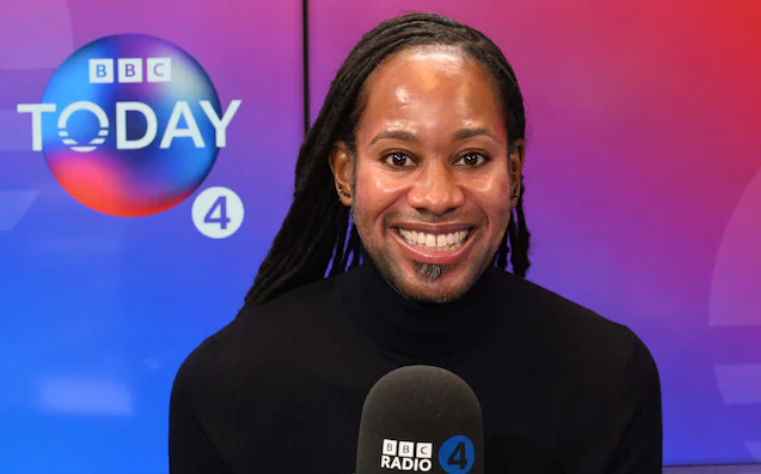
Although much more is to come out of the woodwork with the Arday affair, the role of the BBC in reporting the emerging controversy should not be forgotten.
The contrast between how newspapers like The Telegraph or The Times, and journals such as The Spectator, meticulously dismantled his claims and the passivity of the BBC in handling the story points to several systemic failures in the broadcaster’s objectivity.
The BBC possesses an elite investigative arm, yet it fundamentally failed to use Verify or any of its other fact-checking resources independently to audit Arday's work during the height of the controversy.
While print journalists were calling up charities, mapping out impossible marathon times (such as his claim of running 600 miles in six days), and running software on his academic papers, the BBC largely limited its coverage to reporting on other people's reporting.
It limited is coverage of the controversy, effectively treating the crisis as a mere “row” or a clash of opinions between opposing camps, rather than a verifiable case of fraud. In so doing, it seems to have been attempting to protect a narrative it had spent years building.
The BBC itself was a primary driver of the Arday phenomenon. They presented him as the definitive symbol of progressive triumph over institutional barriers: a man diagnosed with global development delay who could not speak until 11 but became Cambridge’s youngest Black professor at 37.
Because the BBC’s senior editors used its platform to champion this specific biography, critically examining his thesis would require the broadcaster to admit that its own editorial vetting had failed.
Thus, to preserve institutional face, the BBC consistently framed the accusations not as an issue of basic academic integrity, but as a “highly politicised” debate surrounding diversity, equity, and inclusion (DEI).
The broadcaster’s limited coverage heavily repeated Arday’s defensive framing. In his statements - broadcast extensively by the BBC - Arday claimed that the identical passages in his thesis were merely “errors” caused by his autism and a reliance on “mimicry” to learn.
This was despite independent fact-checking and analysis of his 2015 PhD thesis at Liverpool John Moores University, which exposed 188 sentences that were identical or near-identical to a 2009 Brunel University thesis, a statistical impossibility to achieve by accident.
Any experienced academic (in fact, any academic) knows that copying entire blocks of text from a previous student’s dissertation is plagiarism, not a symptom of "neurodivergence".
By uncritically broadcasting his defence without explicitly pointing out that the scale of text duplication breached standard UK university regulations, the BBC chose to prioritise editorial sympathy over strict factual analysis.
But the most significant indicator of a lack of objectivity was the BBC's initial silence on how the story was suppressed.
The public now knows that journalists trying to investigate Arday were met with legal threats from elite law firms, and that the Metropolitan Police actually launched a four-month harassment investigation into an independent reporter just for emailing Arday standard journalistic questions.
The BBC’s failure to investigate why a university professor was using the Met Police to silence legitimate journalistic scrutiny reveals what appears to be a deep-seated reluctance to challenge the establishment figures they admire.
Yet, as a universally tax-funded broadcaster supported by the UK licence fee, the BBC is bound by a strict Royal Charter that legally requires it to maintain absolute impartiality and objectivity.
When the broadcaster prioritises protecting a celebrated narrative over conducting basic, rigorous fact-checking, it represents a profound systemic failure that directly violates those foundational public duties.
By contrast, the BBC routinely deploys its “Verify” unit to fact-check minor internet rumours or political claims, yet it consciously chose not to apply those same data-journalism tools to a high-profile academic scandal that was emerging.
By framing massive text duplication as “errors” and focusing heavily on Arday's defence, the broadcaster allowed its own editorial sympathy to obscure the objective reality of the plagiarism.
This demonstrates that the BBC had created for itself a clear conflict of interest where a public broadcaster was protecting its own historical reporting at the expense of the truth.
In aligning its coverage with a specific progressive worldview – in this case uncritically championing a high-profile appointment to support a diversity narrative – it has succumbed to institutional capture.
It has ceased to be an objective observer (not that it has been for some time) and instead has become an active participant in a cultural conflict, using public money to validate its own institutional preferences.
Prior to the current Charter running out on 31 December 2027, the BBC’s reporting of the Arday controversy should feature prominently in the funding review. It should be taken as additional evidence that the current public service broadcasting model has outlived its usefulness.
If the BBC wants to be the propaganda arm for the progressives, it should be so on its own dime. It is wholly unacceptable that the public should be forced to pay for it.
Ursula von der Leyen has confirmed that everyone in the EU will need to use the EU's app for identity authentication before being able to access or post on social media websites.
🇪🇺 As an expert in online child safety, I am here to expose the misinformation and misdirection in von der Leyen's statements.
Today von der Leyen said:
"This is not about whether children can access social media, it is about whether social media can access our children".
💡The first part is true. This isn't about children. It's about surveillance and combating political dissent. A state that can't control its own citizens is more dangerous than a state rife with criminals. The second part is a PR soundbite that politicians are using like a campaign slogan straight out of 1984.
🇪🇺"The question is no longer if children face risks online, but what can we do to give children a safer start online".
💡No. You can't give children a "safer start" online any more than you can offline. In the offline world, the government doesn't enforce curfews or ban children from entering liquor stores, bars or restaurants. That's a parent's responsibility. The digital world should be no different.
🇪🇺"The age verification app is one of the tools to get it done".
💡This is a contradiction because she also said "It won't be foolproof".
🇪🇺"It's easy to use, it is privacy preserving and it is open source".
💡The app was compromised as soon as it was released. "Privacy-preserving" age verification is an oxymoron. You can't verify a person's age without verifying their identity. Where or how that age is shared afterwards is irrelevant.
🇪🇺"This is basically about putting back the power into the hands of parents".
💡More from 1984. The EU is doing the opposite. Parents are having their authority stripped by politicians who think they know better. Many parents are capable and unaffected by peer pressure, and they know how to use parental controls to block any app classified as 13+. Some teens are safe, their parents trust them, and the state has no business overruling that trust.
🇪🇺"We don't give our children keys to the car before they have their licence"
💡Comparing an app to a car is a false equivalence used to justify mass surveillance. Governments don't decide when a young person is ready for car keys, guardians do.
💡Forcing every adult and child into a biometric checkpoint just to use an app or website is not licensing drivers. It's the state seizing everyone's keys, locking the garage, and forcing every driver to ask a private company for permission to take a drive.
💡 This is a gross, unethical overreach that strips authority from parents while imposing state sanctioned identity verification on every adult who doesn't even have a child.
💡Additionally, people who pass a test, obtain a licence and drive a car aren't forced to use an app to constantly authenticate their suitability to drive.
🇪🇺"We do not let them buy alcohol until they are legally allowed"
💡False equivalence. We don't force every person to show ID at a shopping mall entrance just because a few people might buy alcohol with a meal at a restaurant. Some parents are okay with their 12 year-old going to the mall with friends while others aren't. Either way, it's their choice. Whatever irresponsible decisions some parents might make, every adult in the country shouldn't be forced to pay the price.
🇪🇺"It won't be foolproof"
💡This is all the proof we need to show that the EU and every government know that banning social media for teens won't protect them. When pressed by journalists about VPNs being used to circumvent a ban, politicians always state the ban isn't a silver bullet and will take time. The Mayor of London, Sadiq Khan went as far as to say "we know it's not the solution".
💡Either age verification works, or it doesn't. As a technical expert in this space, I can tell you there are no additional steps to take and no progress to be made. Either the approach does what it is supposed to do, or it's not fit for purpose. If they claim a bulletproof solution is coming, it can only mean one thing. They intend to ban or restrict VPNs to people who verify their identity.
🇪🇺"It will take time to invite the cultural change that is already taking shape in our society, just as it took time to outlaw drink driving, just as it took time to use seatbelts in the cars. Great change never happens overnight, but when it comes to our safety it is always worth it".
💡Comparing a social media ban and age verification to seatbelts is a completely broken analogy. Seatbelts are a safety feature that protects children while allowing them to travel in a car. A ban doesn't give kids a seatbelt. It kicks them out of the car entirely.
💡Instead of supporting parents who want to guide their own children through the digital world, this heavy-handed law strips away parental authority by banning the apps and websites that many parents are perfectly fine with and actively monitor.
💡Furthermore, enforcing these bans requires biometric age verification, which means forcing millions of adult citizens to scan their IDs, faces or credit cards just to browse the internet. That isn't a common-sense traffic law.
💡It's a digital checkpoint on every street. True safety means teaching kids how to navigate the digital world safely with real guardrails and parental guidance, not burning down digital spaces for everyone under the guise of protection.
🇪🇺☠️ The EU wants to ban teens from social media so every person is forced to verify their identity before they can read, share or post anything online. In their words, this is to protect children from dangerous content.
🇪🇺☠️ The EU wants to enforce "Chat Control" so every app has to monitor everything people say privately inside it, including apps with end-to-end encryption. In their words, this is to protect children from dangerous criminals.
💡Where this ends
🇪🇺 "If you want a picture of the future, imagine a boot stamping on a human face - forever".
George Orwell, 1984.
@ariaradnia Wall Street hates it, retail capitulated. And yet, revenue and ARR are still growing. The bear thesis is basically the CEO retiring and the CFO leaving.
Pushing frictionless freemium is not bearish. Adobe has the FCF to support this, while competitors don't.