If left alone, mold can grow and release more fungal spores in the air.
If you have mold in your home or business, contact SERVPRO for quick remediation.
You might say we got into a sticky situation with this extreme clean. 100 gallons of tapioca syrup were cleaned up by the local SERVPRO crew after two barrels tipped over on the warehouse floor.
What song is he listening to? SERVPRO Test Director Rick performs a lot of over-the-top tests so that we're prepared for anything. Like other pro athletes, he hypes himself up before each launch.
Day 6 of Hurricane Prep Week is about reviewing your insurance policy. Make sure you have enough coverage to repair or replace your home and personal items. Remember, flooding isn't covered in home and renters insurance so you’ll need a separate policy for it.
When preparing for hurricanes, having supplies to make it through the hurricane isn’t enough. Ensure you have supplies for the recovery period, which could be very long depending on the damage. For more tips on hurricane prep, visit https://t.co/74oy0xigLq.
Day 2 Hurricane Preparedness Week is about making an evacuation plan. Visit https://t.co/x4gHSGjnNd to determine if you live in a hurricane evacuation zone & need to leave your home. Flood prone areas or a mobile home outside of an evacuation zone may also be reasons leave.
To kick off Hurricane Preparedness Week, the first part of preparation is determining your risk. The NOAA can help you with its Historical Hurricane Tracks tool that uses your zip code to display paths of past storms related to your location.
Your nose knows. One of the first indicators that mold or water damage is present is a musty or stale smell.
Contact SERVPRO for water damage restoration and mold remediation.
The quicker that materials are dried, the faster water damage stops. SERVPRO knows how to adjust temperature and humidity levels to produce the fastest drying conditions to get your life back to normal.
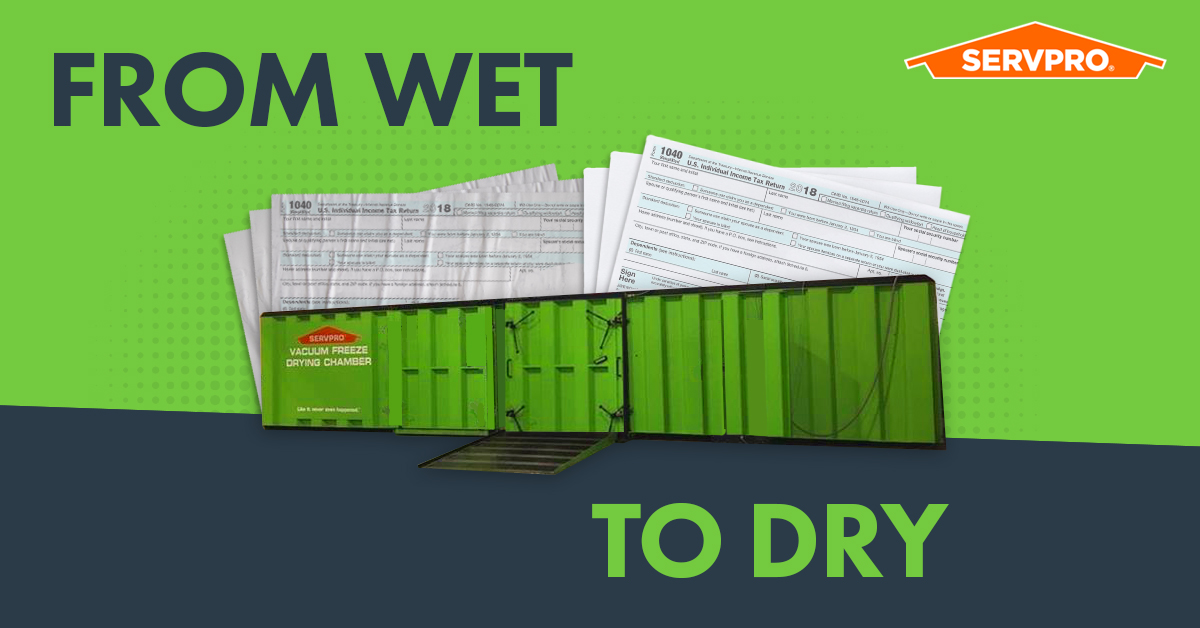
Tax documents ruined by water damage? SERVPRO can dry and restore them, including family photos, inside our drying chamber.
Hopefully, you thought of it before today's deadline.
Those webs aren't from spiders, they're from smoke.
"Soot webs" form when long chains of ionized soot particles gather in the corners of walls and ceilings.