Just published in @ChemicalScience
EWG-substituted adamantyl 1,2-dioxetanes with faster chemiexcitation while preserving stability.
⚡ Flash-type chemiluminescence
🔬Up to 190× higher signal-to-noise in bacterial assays
https://t.co/Az9RVQ26bi
Congratulations to Scripps Research professor Jin-Quan Yu, who has been elected to @theNASciences, one of the highest honors a scientist can achieve. Recognized for his pioneering work in C-H bond activation, his methodologies simplified the construction and modification of complex molecules, with potential applications in medicine, agriculture and materials science. More: https://t.co/Kj7iu4sdkf
Just introduced: Phenylamine-1,2-Dioxetanes - a powerful revived class of chemiluminescent luminophores with high quantum yield and exceptional performance in aqueous bioassays. No enhancers needed.
Today in @ChemRxiv (https://t.co/wee1DFvlVw)
Just introduced: Phenylamine-1,2-Dioxetanes - a powerful revived class of chemiluminescent luminophores with high quantum yield and exceptional performance in aqueous bioassays. No enhancers needed.
Today in @ChemRxiv (https://t.co/wee1DFvlVw)
“Structure-Activity Optimization of Phenoxy-1,2-Dioxetane Precursors as Probes for Singlet Oxygen Yields Unprecedented Detection Sensitivity”, Appearing now in @ChemRxiv: https://t.co/Ig4v84HF0y
Our latest paper is now out in @J_A_C_S !
We unveil a new strategy to access elusive free oxoboranes—highly reactive species—via bridged boranoanthracenes and aromatization-driven extrusion. Congratulations to the team!
https://t.co/9QolAtxnaE
🚨RADICAL RETHINK: STEREORETENTIVE CROSS COUPLING UNLOCKED🚨 Today in @ChemRxiv (https://t.co/zGZFCsK7aK) the first method for stereoretentive radical cross-coupling is disclosed. No fancy ligands or redox needed—just a Ni-diazene twist. 120 years after Gomberg, a new chapter begins.
Quick summary:
Since Gomberg discovered free radicals over 120 years ago and Kochi pioneered radical cross-coupling in the 1970s, this field has surged with interest for linking C(sp3) fragments. Unlike traditional polar methods (e.g., Suzuki), radical cross-coupling excels with saturated systems, offering mild conditions and chemoselectivity to build complex molecules from common fragments. Until now, enantiospecific radical cross-coupling was deemed impossible due to rapid racemization, but today that changes with readily available sulfonylhydrazides and a simple Ni-catalyst. This stereoretentive approach, enabled by a unique Ni-diazene transition state and driven by loss of N2, skips chiral ligands and redox steps, opening new possibilities for synthesis.
Big thanks to Derek Lowe for the thoughtful commentary on our manuscript! Your insights on antifungal research and the challenges we face in drug discovery are invaluable.
What the Antifungals Are Really Doing | Science | AAAS https://t.co/X1n6ALHDEd
The final version of this manuscript was published in @BioconjChem: https://t.co/hXLK8d4Vma. Many thanks to @BaranLabReads and @RSFLab for this fruitful collaboration.
“Structure-Activity Optimization of Phenoxy-1,2-Dioxetane Precursors as Probes for Singlet Oxygen Yields Unprecedented Detection Sensitivity”, Appearing now in @ChemRxiv: https://t.co/Ig4v84HF0y
Finally, RADICAL CROSS COUPLING without the exogenous REDOX. We disclose in @ChemRxiv (https://t.co/FYy6i1J7p9) a broadly general platform for achieving transformations that normally required excess metallic or chemical reducing agents or photochemical setups (and their requisite catalysts) or potentiostats for electrochemistry. Now, such transformations can be accomplished with the same ease that one conducts a Suzuki coupling. You can scale up (its homogeneous) or scale down (use cheap parallel screening plates). Moisture is tolerated and base metal catalysis is used. As the best engineers like to say, "The best part is no part". Now, chemists have the option to remove the redox part from radical couplings.
Quick Summary: Sulfonyl hydrazides are disclosed as versatile radical precursors as exemplified with seven new C–C bond forming, redox-neutral cross-couplings with: (1) activated olefins, (2) alkyl halides, (3) redox active esters, (4) aryl halides, (5) alkenyl halides, (6) alkynyl halides, and (7) a trifluoromethylating reagent to forge C(sp3)-C(sp3), C(sp3)-C(sp2), and C(sp3)-C(sp) bonds. Sulfonyl hydrazides are stable and usually crystalline substances that can be accessed in a variety of ways including transiently from hydrazones to achieve a net reductive arylation of carbonyl compounds. Exogenous redox (chemical, photo/electrochemical) additives are not necessary as these functional groups serve the dual role of radical precursor and electron donor. The operational simplicity (homogeneous, water tolerant, dump-and-stir) and practicality of the method are demonstrated as well as applications to streamlining synthesis and mild late-stage functionalization.
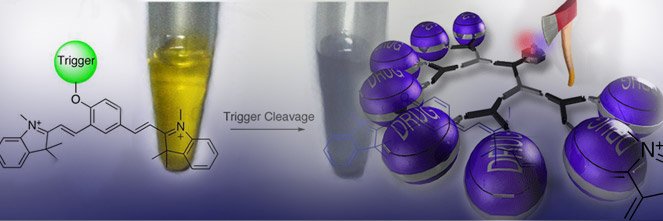
The FIRST chemiluminescent probe with a Turn-ON mechanism, utilizing a PeT mode-of-action. Insightful collaboration with @JbaraM90: Appearing today in @ChemRxiv: https://t.co/AyoMmQvTn9
“Thymidine Phosphodiester Chemiluminescent Probe for Sensitive and Selective Detection of Ectonucleotide Pyrophosphatase 1”.
Inspiring collaboration with @BaranLabReads, Appearing today in @ChemRxiv: https://t.co/g2sPwcbeJj
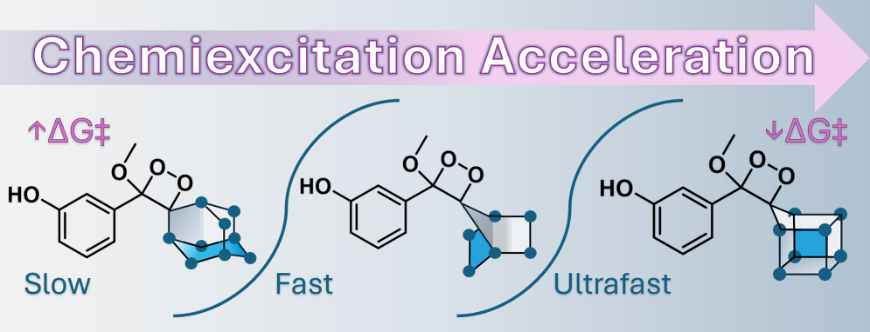
Chemiexcitation Acceleration of 1,2-Dioxetanes by Spiro-Fused Six-Member Rings with Electron-Withdrawing Motifs (Doron Shabat and co-workers) @ShabatGroup#openaccess#AngewandteVIP https://t.co/ulz8qXOsj4
The FIRST chemiluminescent probe with a Turn-ON mechanism, utilizing a PeT mode-of-action. Insightful collaboration with @JbaraM90: Appearing today in @ChemRxiv: https://t.co/AyoMmQvTn9
In memory of Prof. Philip E. Eaton, a pioneer in the study of the Cubane molecular system:
Boosting Chemiexcitation of Phenoxy-1,2-Dioxetanes through 7-Norbornyl and Homocubanyl Spirofusion
Appearing now in @ChemRxiv: https://t.co/UUXKfPkzpo
A spiro-fused 6-member ring with inductive electron-withdrawing units yields stable phenoxy 1,2-dioxetanes with super-accelerated chemiexcitation:
Continuing collaboration with @houk1000.
Appearing today in @ChemRxiv: https://t.co/A4PQvQgox9