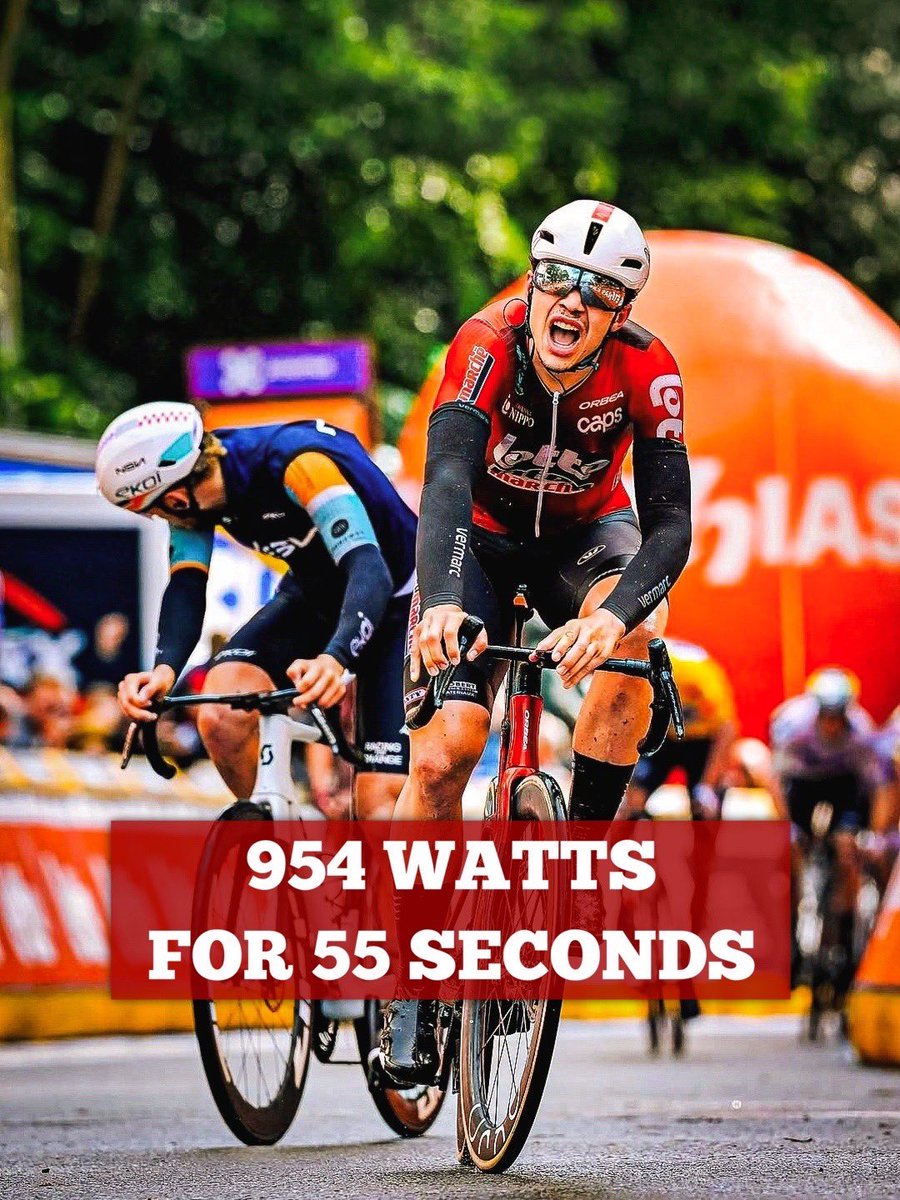
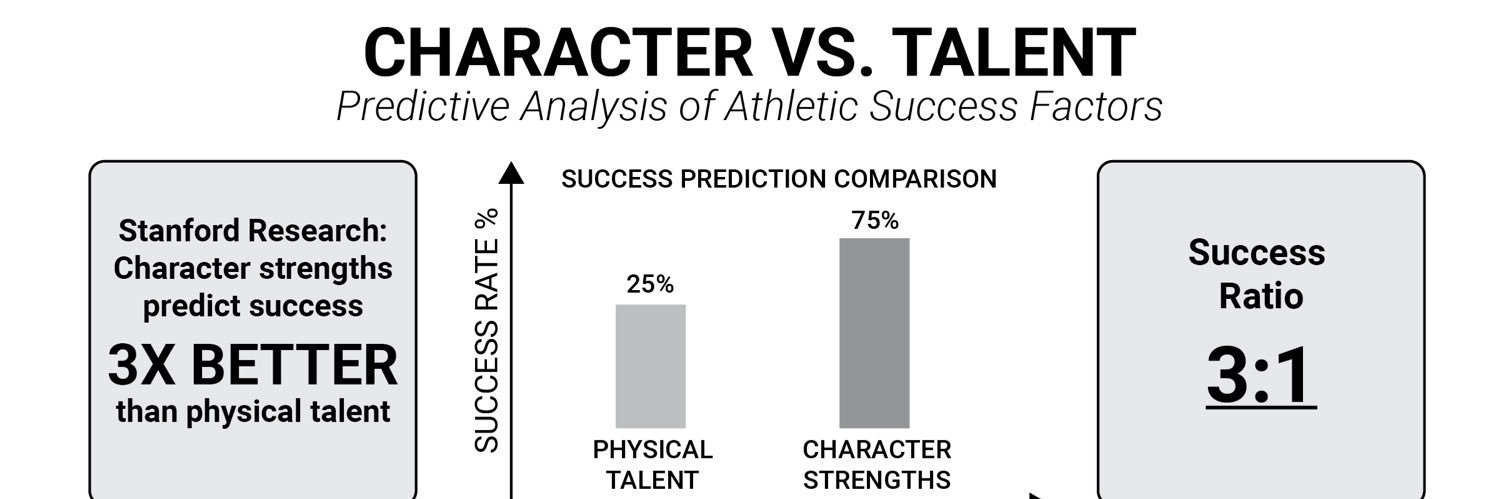
DM for private consultation.
I DO NOT sell coaching courses.
I work "1-on-1" with teams, athletes, coaches, and parents of HP juniors.
I’ve coached Grand Slam champions, 15 pro wins, world No. 7s, and elite performers across multiple sports.
I’ve held managerial and head coaching roles at two international governing bodies and spent 8 years on the Dunlop International Advisory Board.
I know what it takes; not because I studied it, but because I lived it, led it, and delivered real results on the world stage.
You can train harder. Work longer. Have the best coach, the best gear, the best environment. But if your mind is working against you, none of it matters.
If you don’t do the inner Shadowwork, you will never reach your full potential. #sportsperformance #sports #HighPerformance #cycling #afl #nbl #coaching #shadowwork #mentorshipmatters #LeadershipMatters #LeadershipDevelopment #GoalSetting #Motivation #SelfImprovement #MentalHealthMatters #stayhard
Maja Chwalinska has changed her life at this year’s Roland Garros.
Her total career earnings before Roland Garros:
$864,030.
What she’s earned at this tournament:
$1,624,000.
Because the players don’t get the money til after the tournament, she was worried she wouldn’t be able to cover her costs for a hotel as she went further and further in the draw.
Polish company OSHEE had to step in and pay for the rest of her hotel fees.
It’s nothing short of heartwarming to see this happening to such a humble person who has overcome her share of struggles.
She overcame a battle with depression and stopped playing tennis entirely for a period to take care of her mental health.
She wasn’t sure if she’d ever come back to this sport.
Absolutely unreal story. 🥹
🇵🇱❤️
Over the past week, discussion surrounding Essendon's coaching vacancy has largely centred around one question: who should coach the Essendon Football Club? As someone who has spent more than twenty-five years coaching athletes, building teams, leading organisations and operating within high-performance environments across multiple countries and sports, I believe the discussion is missing a far more important question. Not who should coach Essendon, but what does Essendon actually need right now? These are not the same thing.
One of the mistakes organisations make during periods of instability is assuming that leadership appointments are primarily about technical expertise. They begin comparing résumés, analysing tactical systems, counting premierships and debating who possesses the strongest technical credentials. While those factors matter, leadership appointments are rarely won or lost on technical competence alone, particularly in organisations experiencing prolonged underperformance.
The reality is that every organisation moves through different phases of development. What is required from leadership during a period of growth is often very different from what is required during a period of crisis, renewal or reconstruction. In my experience, there are times when an organisation needs a strategist, times when it needs an innovator, times when it needs an operational expert, and times when it needs a unifier. From the outside looking in, Essendon appears to fall firmly into the latter category.
The club has spent two decades searching for sustained success. Coaches have come and gone. Administrators have come and gone. Players have come and gone. Yet the underlying challenges remain remarkably consistent. When performance problems persist across multiple leadership groups over extended periods, it is often evidence that the issue is no longer purely tactical. It becomes cultural, relational and organisational. These problems are rarely solved through game plans alone.
This brings me to the debate surrounding James Hird. The most common criticism I hear is that Hird has not coached at @AFL level for a decade. I understand the argument. I simply don't find it persuasive.
The assumption underpinning this criticism appears to be that stepping away from a formal coaching role somehow results in a significant loss of leadership capability, football IQ or performance expertise. My experience suggests otherwise. Throughout my own career, I have stepped away from specific sports and environments for extended periods before returning with success. What I discovered was that the fundamental principles of leadership, coaching and performance remain constant. People still require trust. Teams still require alignment. Cultures still require standards. Performance still requires accountability. The tools may evolve, tech may advance and methodologies may improve, but the core principles remain largely unchanged.
The suggestion that a 250-game champion, Brownlow Medallist, former captain, former senior coach, and lifelong student of football has somehow become disconnected from the game simply because he has not occupied an AFL coaching position for ten years strikes me as a simplistic interpretation of expertise. Guys like Hird do not suddenly become novices, particularly those who have spent their entire lives immersed in a particular industry.
That does not mean Hird is automatically the best candidate, nor does it guarantee success. No leadership appointment comes with such guarantees. However, I believe it is reasonable to argue that his candidacy should be evaluated through a broader lens than simply asking how many AFL games he has coached recently. The more interesting question is whether he possesses the specific leadership qualities Essendon currently requires.
My view is that he does. Not because he is a former champion player, not because of nostalgia, and not because supporters may feel emotionally connected to him. Rather, there appears to be a strong alignment between his profile and the club's current needs. It just happens to be that he's an Essendon legend.
Leadership is contextual. The best leader for one organisation may be entirely wrong for another. The best leader for an organisation today may not be the best leader for the same organisation five years from now. The challenge facing Essendon is not simply winning more games. The challenge is rebuilding belief, rebuilding trust, rebuilding alignment, and rebuilding identity. Those are fundamentally leadership challenges before they become performance challenges.
This brings me to another interesting aspect of the discussion. Recent commentary has suggested that some experienced coaches may be reluctant to enter the process because the outcome is effectively predetermined. If that is true, I find the observation fascinating.
One characteristic I have consistently observed among elite performers is an unwavering belief in their ability to compete. The best coaches I have encountered throughout my career have never feared selection processes, scrutiny or competition. They back their capability. This is not a criticism of any individual coach. I do not know Adam Simpson or Ken Hinkley personally, nor do I pretend to understand their circumstances. Both have earned enormous respect through their achievements within the game.
However, speaking generally, leadership requires conviction. If an individual genuinely believes they are the right person for a role, then entering a competitive process should not be viewed as a threat. It should be viewed as an opportunity. More broadly, if a club is searching for a leader capable of driving significant organisational change, confidence and conviction are hardly undesirable traits.
Ultimately, the decision facing Essendon is less complicated than many make it out to be. The board must first decide what problem it is attempting to solve. If the problem is purely tactical, there are numerous qualified candidates. If the problem is organisational, cultural and relational, then the field narrows considerably.
From my perspective, James Hird deserves serious consideration because he may represent more than a coaching appointment. He may represent an opportunity to reconnect a fractured organisation with its identity. Whether Essendon ultimately appoints him remains to be seen. Whether he would succeed remains unknown. What I do know is that leadership appointments should never be assessed solely through the lens of recent job titles.
The role of leadership is not merely to direct performance. The role of leadership is to create the conditions in which performance becomes possible. That, more than tactics or résumés, is the question Essendon should be asking itself right now.
@Thomo_Grant@MrJohnnyRainman@Andrew12Welsh@gregpeartpolish@essendonfc@davidking34@GerardWhateley@SENBreakfast #Essendon #BombersFC #jameshird #afl
Over the past week, discussion surrounding Essendon's coaching vacancy has largely centred around one question: who should coach the Essendon Football Club? As someone who has spent more than twenty-five years coaching athletes, building teams, leading organisations and operating within high-performance environments across multiple countries and sports, I believe the discussion is missing a far more important question. Not who should coach Essendon, but what does Essendon actually need right now? These are not the same thing.
One of the mistakes organisations make during periods of instability is assuming that leadership appointments are primarily about technical expertise. They begin comparing résumés, analysing tactical systems, counting premierships and debating who possesses the strongest technical credentials. While those factors matter, leadership appointments are rarely won or lost on technical competence alone, particularly in organisations experiencing prolonged underperformance.
The reality is that every organisation moves through different phases of development. What is required from leadership during a period of growth is often very different from what is required during a period of crisis, renewal or reconstruction. In my experience, there are times when an organisation needs a strategist, times when it needs an innovator, times when it needs an operational expert, and times when it needs a unifier. From the outside looking in, Essendon appears to fall firmly into the latter category.
The club has spent two decades searching for sustained success. Coaches have come and gone. Administrators have come and gone. Players have come and gone. Yet the underlying challenges remain remarkably consistent. When performance problems persist across multiple leadership groups over extended periods, it is often evidence that the issue is no longer purely tactical. It becomes cultural, relational and organisational. These problems are rarely solved through game plans alone.
This brings me to the debate surrounding James Hird. The most common criticism I hear is that Hird has not coached at @AFL level for a decade. I understand the argument. I simply don't find it persuasive.
The assumption underpinning this criticism appears to be that stepping away from a formal coaching role somehow results in a significant loss of leadership capability, football IQ or performance expertise. My experience suggests otherwise. Throughout my own career, I have stepped away from specific sports and environments for extended periods before returning with success. What I discovered was that the fundamental principles of leadership, coaching and performance remain constant. People still require trust. Teams still require alignment. Cultures still require standards. Performance still requires accountability. The tools may evolve, tech may advance and methodologies may improve, but the core principles remain largely unchanged.
The suggestion that a 250-game champion, Brownlow Medallist, former captain, former senior coach, and lifelong student of football has somehow become disconnected from the game simply because he has not occupied an AFL coaching position for ten years strikes me as a simplistic interpretation of expertise. Guys like Hird do not suddenly become novices, particularly those who have spent their entire lives immersed in a particular industry.
That does not mean Hird is automatically the best candidate, nor does it guarantee success. No leadership appointment comes with such guarantees. However, I believe it is reasonable to argue that his candidacy should be evaluated through a broader lens than simply asking how many AFL games he has coached recently. The more interesting question is whether he possesses the specific leadership qualities Essendon currently requires.
My view is that he does. Not because he is a former champion player, not because of nostalgia, and not because supporters may feel emotionally connected to him. Rather, there appears to be a strong alignment between his profile and the club's current needs. It just happens to be that he's an Essendon legend.
Leadership is contextual. The best leader for one organisation may be entirely wrong for another. The best leader for an organisation today may not be the best leader for the same organisation five years from now. The challenge facing Essendon is not simply winning more games. The challenge is rebuilding belief, rebuilding trust, rebuilding alignment, and rebuilding identity. Those are fundamentally leadership challenges before they become performance challenges.
This brings me to another interesting aspect of the discussion. Recent commentary has suggested that some experienced coaches may be reluctant to enter the process because the outcome is effectively predetermined. If that is true, I find the observation fascinating.
One characteristic I have consistently observed among elite performers is an unwavering belief in their ability to compete. The best coaches I have encountered throughout my career have never feared selection processes, scrutiny or competition. They back their capability. This is not a criticism of any individual coach. I do not know Adam Simpson or Ken Hinkley personally, nor do I pretend to understand their circumstances. Both have earned enormous respect through their achievements within the game.
However, speaking generally, leadership requires conviction. If an individual genuinely believes they are the right person for a role, then entering a competitive process should not be viewed as a threat. It should be viewed as an opportunity. More broadly, if a club is searching for a leader capable of driving significant organisational change, confidence and conviction are hardly undesirable traits.
Ultimately, the decision facing Essendon is less complicated than many make it out to be. The board must first decide what problem it is attempting to solve. If the problem is purely tactical, there are numerous qualified candidates. If the problem is organisational, cultural and relational, then the field narrows considerably.
From my perspective, James Hird deserves serious consideration because he may represent more than a coaching appointment. He may represent an opportunity to reconnect a fractured organisation with its identity. Whether Essendon ultimately appoints him remains to be seen. Whether he would succeed remains unknown. What I do know is that leadership appointments should never be assessed solely through the lens of recent job titles.
The role of leadership is not merely to direct performance. The role of leadership is to create the conditions in which performance becomes possible. That, more than tactics or résumés, is the question Essendon should be asking itself right now.
@Thomo_Grant@MrJohnnyRainman@Andrew12Welsh@gregpeartpolish@essendonfc@davidking34@GerardWhateley@SENBreakfast #Essendon #BombersFC #jameshird #afl
Multitasking is BS.
After more than 25 years coaching athletes, leading organisations, and working in HP environments globally, I’ve never met a true elite performer who could genuinely focus on multiple things at once. What most people call “multitasking” is actually rapid task-switching, and every switch carries a cost.
Attention is finite. Each notification, email, or wandering thought fragments our focus and reduces our capacity to deliver at the highest level. Yet modern culture celebrates being “busy,” juggling projects, and doing it all. In reality, many chronic multi-taskers are also chronic underachievers.
Elite performers do the opposite. They focus deeply on one thing at a time. When they train, they train. When they compete, they compete. When they recover, they recover. When they’re with family, they’re fully present. Their secret isn’t doing more; it’s directing their full attention with intention.
This is why presence is one of the most powerful (and misunderstood) performance skills today. It’s not a wellness buzzword. It’s a genuine competitive advantage: the ability to bring your complete attention, energy, and awareness to the task at hand; to become fully absorbed in what you’re doing.
People who pride themselves on multitasking often achieve less, make more errors, and experience higher stress. The path to sustained HP is rarely about doing more. It’s about doing fewer things with greater focus and discipline.
You can only ever be in one place at one time. The real question is whether you have the discipline to bring all of yourself there.
My work sits at the intersection of leadership, culture, and performance. I regularly advise on:
✅ Coaching effectiveness and leadership performance
✅ Organisational culture and accountability
✅ Athlete motivation, autonomy, and psychological resilience
✅ High-performance system design
✅ Talent pathways and long-term athlete development
✅ Professional athlete mentoring and performance coaching
✅ Parent education for emerging athletes
📩 If you’re a board, governing body, club, athlete, or family seeking independent guidance, I’d be happy to connect. Feel free to reach out. 📩
#HighPerformance #Leadership #Focus #Presence #ElitePerformance
I generally post on LinkedIn, but will post here a bit more moving forward.
One of the most fascinating phenomena in professional sport occurs immediately after a coach is replaced. A team that looked flat, disorganised and incapable of competing suddenly wins three or four games in a row, as in the case of @CarltonFC
Energy returns. Effort increases. Players appear more engaged. The media inevitably credits the coaching change and, in fairness, the new coach often deserves some of that credit.
However, after more than 25 years working in high-performance sport, coaching athletes, building teams and leading organisations, I have come to believe that these situations reveal something far more interesting than the impact of the new coach. They reveal the motivational profile of the athletes.
The reality is that many athletes are driven predominantly by external motivators. Selection pressure, contract negotiations, public scrutiny, media criticism, the desire to impress a new coach, or the fear of being traded, delisted or overlooked. When a coaching change occurs, these motivators suddenly intensify. Players understand that every training session is being evaluated, every performance is being judged, and every decision may influence their future. Unsurprisingly, effort levels often increase.
While this short-term uplift is often referred to as a "dead cat bounce," I believe that description misses the deeper lesson. The more important question is not why the team improved but why the improvement only occurred after the coaching change.
If a team is suddenly capable of running harder, competing more fiercely, preparing more professionally, and executing more consistently, then leaders should be asking whether the issue was capability in the first place. More often than not, it is a question of motivation.
The challenge with external motivation is that it has a limited shelf life. Once the novelty fades, the pressure normalises and the new coach becomes the established coach, performance often drifts back toward previous levels. This is why so many organisations experience an immediate uplift before eventually settling into a pattern that closely resembles what came before.
The athletes who have always fascinated me are the ones who remain largely unchanged throughout the entire process; Zach Merrett of the @essendonfc comes to mind.
Their standards do not lift because a coach arrives, nor do they fall because a coach departs. They train with intent, prepare professionally, and compete relentlessly regardless of who occupies the head coach's office. Their commitment is not dependent on circumstance.
These athletes are driven primarily by intrinsic motivation. They pursue mastery rather than approval. They chase excellence rather than recognition. Their standards are self-imposed rather than externally enforced. In my experience, they are also the athletes most likely to sustain HP over long periods of time because their motivation is not tied to events around them.
This is not to suggest that external motivation is inherently bad. Every athlete is influenced by external factors to some degree. The best performers often harness both intrinsic and extrinsic motivators. The critical distinction is which source of motivation dominates when nobody is watching and when there is no immediate reward or consequence attached to the effort.
Ultimately, coaching changes do not simply reveal the quality of a coach. They reveal the quality of a team's motivational culture. When a team suddenly discovers another gear after a coach leaves, leaders should resist the temptation to focus solely on the incoming coach and instead ask a more confronting question.
Did the coach change the performance, or did the players simply reveal that they had more to give all along?
@Pivotonian1838@SENBreakfast@1629senSA@MrJohnnyRainman@Thomo_Grant@gregpeartpolish@1KingZ4@davidking34@CoachJoshKing@ncb_cfc #AFL #NBL #sports
Over the past week, discussion surrounding Essendon's coaching vacancy has largely centred around one question: who should coach the Essendon Football Club? As someone who has spent more than twenty-five years coaching athletes, building teams, leading organisations and operating within high-performance environments across multiple countries and sports, I believe the discussion is missing a far more important question. Not who should coach Essendon, but what does Essendon actually need right now? These are not the same thing.
One of the mistakes organisations make during periods of instability is assuming that leadership appointments are primarily about technical expertise. They begin comparing résumés, analysing tactical systems, counting premierships and debating who possesses the strongest technical credentials. While those factors matter, leadership appointments are rarely won or lost on technical competence alone, particularly in organisations experiencing prolonged underperformance.
The reality is that every organisation moves through different phases of development. What is required from leadership during a period of growth is often very different from what is required during a period of crisis, renewal or reconstruction. In my experience, there are times when an organisation needs a strategist, times when it needs an innovator, times when it needs an operational expert, and times when it needs a unifier. From the outside looking in, Essendon appears to fall firmly into the latter category.
The club has spent two decades searching for sustained success. Coaches have come and gone. Administrators have come and gone. Players have come and gone. Yet the underlying challenges remain remarkably consistent. When performance problems persist across multiple leadership groups over extended periods, it is often evidence that the issue is no longer purely tactical. It becomes cultural, relational and organisational. These problems are rarely solved through game plans alone.
This brings me to the debate surrounding James Hird. The most common criticism I hear is that Hird has not coached at @AFL level for a decade. I understand the argument. I simply don't find it persuasive.
The assumption underpinning this criticism appears to be that stepping away from a formal coaching role somehow results in a significant loss of leadership capability, football IQ or performance expertise. My experience suggests otherwise. Throughout my own career, I have stepped away from specific sports and environments for extended periods before returning with success. What I discovered was that the fundamental principles of leadership, coaching and performance remain constant. People still require trust. Teams still require alignment. Cultures still require standards. Performance still requires accountability. The tools may evolve, tech may advance and methodologies may improve, but the core principles remain largely unchanged.
The suggestion that a 250-game champion, Brownlow Medallist, former captain, former senior coach, and lifelong student of football has somehow become disconnected from the game simply because he has not occupied an AFL coaching position for ten years strikes me as a simplistic interpretation of expertise. Guys like Hird do not suddenly become novices, particularly those who have spent their entire lives immersed in a particular industry.
That does not mean Hird is automatically the best candidate, nor does it guarantee success. No leadership appointment comes with such guarantees. However, I believe it is reasonable to argue that his candidacy should be evaluated through a broader lens than simply asking how many AFL games he has coached recently. The more interesting question is whether he possesses the specific leadership qualities Essendon currently requires.
My view is that he does. Not because he is a former champion player, not because of nostalgia, and not because supporters may feel emotionally connected to him. Rather, there appears to be a strong alignment between his profile and the club's current needs. It just happens to be that he's an Essendon legend.
Leadership is contextual. The best leader for one organisation may be entirely wrong for another. The best leader for an organisation today may not be the best leader for the same organisation five years from now. The challenge facing Essendon is not simply winning more games. The challenge is rebuilding belief, rebuilding trust, rebuilding alignment, and rebuilding identity. Those are fundamentally leadership challenges before they become performance challenges.
This brings me to another interesting aspect of the discussion. Recent commentary has suggested that some experienced coaches may be reluctant to enter the process because the outcome is effectively predetermined. If that is true, I find the observation fascinating.
One characteristic I have consistently observed among elite performers is an unwavering belief in their ability to compete. The best coaches I have encountered throughout my career have never feared selection processes, scrutiny or competition. They back their capability. This is not a criticism of any individual coach. I do not know Adam Simpson or Ken Hinkley personally, nor do I pretend to understand their circumstances. Both have earned enormous respect through their achievements within the game.
However, speaking generally, leadership requires conviction. If an individual genuinely believes they are the right person for a role, then entering a competitive process should not be viewed as a threat. It should be viewed as an opportunity. More broadly, if a club is searching for a leader capable of driving significant organisational change, confidence and conviction are hardly undesirable traits.
Ultimately, the decision facing Essendon is less complicated than many make it out to be. The board must first decide what problem it is attempting to solve. If the problem is purely tactical, there are numerous qualified candidates. If the problem is organisational, cultural and relational, then the field narrows considerably.
From my perspective, James Hird deserves serious consideration because he may represent more than a coaching appointment. He may represent an opportunity to reconnect a fractured organisation with its identity. Whether Essendon ultimately appoints him remains to be seen. Whether he would succeed remains unknown. What I do know is that leadership appointments should never be assessed solely through the lens of recent job titles.
The role of leadership is not merely to direct performance. The role of leadership is to create the conditions in which performance becomes possible. That, more than tactics or résumés, is the question Essendon should be asking itself right now.
@Thomo_Grant@MrJohnnyRainman@Andrew12Welsh@gregpeartpolish@essendonfc@davidking34@GerardWhateley@SENBreakfast #Essendon #BombersFC #jameshird #afl
Over the past week, discussion surrounding Essendon's coaching vacancy has largely centred around one question: who should coach the Essendon Football Club? As someone who has spent more than twenty-five years coaching athletes, building teams, leading organisations and operating within high-performance environments across multiple countries and sports, I believe the discussion is missing a far more important question. Not who should coach Essendon, but what does Essendon actually need right now? These are not the same thing.
One of the mistakes organisations make during periods of instability is assuming that leadership appointments are primarily about technical expertise. They begin comparing résumés, analysing tactical systems, counting premierships and debating who possesses the strongest technical credentials. While those factors matter, leadership appointments are rarely won or lost on technical competence alone, particularly in organisations experiencing prolonged underperformance.
The reality is that every organisation moves through different phases of development. What is required from leadership during a period of growth is often very different from what is required during a period of crisis, renewal or reconstruction. In my experience, there are times when an organisation needs a strategist, times when it needs an innovator, times when it needs an operational expert, and times when it needs a unifier. From the outside looking in, Essendon appears to fall firmly into the latter category.
The club has spent two decades searching for sustained success. Coaches have come and gone. Administrators have come and gone. Players have come and gone. Yet the underlying challenges remain remarkably consistent. When performance problems persist across multiple leadership groups over extended periods, it is often evidence that the issue is no longer purely tactical. It becomes cultural, relational and organisational. These problems are rarely solved through game plans alone.
This brings me to the debate surrounding James Hird. The most common criticism I hear is that Hird has not coached at @AFL level for a decade. I understand the argument. I simply don't find it persuasive.
The assumption underpinning this criticism appears to be that stepping away from a formal coaching role somehow results in a significant loss of leadership capability, football IQ or performance expertise. My experience suggests otherwise. Throughout my own career, I have stepped away from specific sports and environments for extended periods before returning with success. What I discovered was that the fundamental principles of leadership, coaching and performance remain constant. People still require trust. Teams still require alignment. Cultures still require standards. Performance still requires accountability. The tools may evolve, tech may advance and methodologies may improve, but the core principles remain largely unchanged.
The suggestion that a 250-game champion, Brownlow Medallist, former captain, former senior coach, and lifelong student of football has somehow become disconnected from the game simply because he has not occupied an AFL coaching position for ten years strikes me as a simplistic interpretation of expertise. Guys like Hird do not suddenly become novices, particularly those who have spent their entire lives immersed in a particular industry.
That does not mean Hird is automatically the best candidate, nor does it guarantee success. No leadership appointment comes with such guarantees. However, I believe it is reasonable to argue that his candidacy should be evaluated through a broader lens than simply asking how many AFL games he has coached recently. The more interesting question is whether he possesses the specific leadership qualities Essendon currently requires.
My view is that he does. Not because he is a former champion player, not because of nostalgia, and not because supporters may feel emotionally connected to him. Rather, there appears to be a strong alignment between his profile and the club's current needs. It just happens to be that he's an Essendon legend.
Leadership is contextual. The best leader for one organisation may be entirely wrong for another. The best leader for an organisation today may not be the best leader for the same organisation five years from now. The challenge facing Essendon is not simply winning more games. The challenge is rebuilding belief, rebuilding trust, rebuilding alignment, and rebuilding identity. Those are fundamentally leadership challenges before they become performance challenges.
This brings me to another interesting aspect of the discussion. Recent commentary has suggested that some experienced coaches may be reluctant to enter the process because the outcome is effectively predetermined. If that is true, I find the observation fascinating.
One characteristic I have consistently observed among elite performers is an unwavering belief in their ability to compete. The best coaches I have encountered throughout my career have never feared selection processes, scrutiny or competition. They back their capability. This is not a criticism of any individual coach. I do not know Adam Simpson or Ken Hinkley personally, nor do I pretend to understand their circumstances. Both have earned enormous respect through their achievements within the game.
However, speaking generally, leadership requires conviction. If an individual genuinely believes they are the right person for a role, then entering a competitive process should not be viewed as a threat. It should be viewed as an opportunity. More broadly, if a club is searching for a leader capable of driving significant organisational change, confidence and conviction are hardly undesirable traits.
Ultimately, the decision facing Essendon is less complicated than many make it out to be. The board must first decide what problem it is attempting to solve. If the problem is purely tactical, there are numerous qualified candidates. If the problem is organisational, cultural and relational, then the field narrows considerably.
From my perspective, James Hird deserves serious consideration because he may represent more than a coaching appointment. He may represent an opportunity to reconnect a fractured organisation with its identity. Whether Essendon ultimately appoints him remains to be seen. Whether he would succeed remains unknown. What I do know is that leadership appointments should never be assessed solely through the lens of recent job titles.
The role of leadership is not merely to direct performance. The role of leadership is to create the conditions in which performance becomes possible. That, more than tactics or résumés, is the question Essendon should be asking itself right now.
@Thomo_Grant@MrJohnnyRainman@Andrew12Welsh@gregpeartpolish@essendonfc@davidking34@GerardWhateley@SENBreakfast #Essendon #BombersFC #jameshird #afl
Multitasking is BS.
After more than 25 years coaching athletes, leading organisations, and working in HP environments globally, I’ve never met a true elite performer who could genuinely focus on multiple things at once. What most people call “multitasking” is actually rapid task-switching, and every switch carries a cost.
Attention is finite. Each notification, email, or wandering thought fragments our focus and reduces our capacity to deliver at the highest level. Yet modern culture celebrates being “busy,” juggling projects, and doing it all. In reality, many chronic multi-taskers are also chronic underachievers.
Elite performers do the opposite. They focus deeply on one thing at a time. When they train, they train. When they compete, they compete. When they recover, they recover. When they’re with family, they’re fully present. Their secret isn’t doing more; it’s directing their full attention with intention.
This is why presence is one of the most powerful (and misunderstood) performance skills today. It’s not a wellness buzzword. It’s a genuine competitive advantage: the ability to bring your complete attention, energy, and awareness to the task at hand; to become fully absorbed in what you’re doing.
People who pride themselves on multitasking often achieve less, make more errors, and experience higher stress. The path to sustained HP is rarely about doing more. It’s about doing fewer things with greater focus and discipline.
You can only ever be in one place at one time. The real question is whether you have the discipline to bring all of yourself there.
My work sits at the intersection of leadership, culture, and performance. I regularly advise on:
✅ Coaching effectiveness and leadership performance
✅ Organisational culture and accountability
✅ Athlete motivation, autonomy, and psychological resilience
✅ High-performance system design
✅ Talent pathways and long-term athlete development
✅ Professional athlete mentoring and performance coaching
✅ Parent education for emerging athletes
📩 If you’re a board, governing body, club, athlete, or family seeking independent guidance, I’d be happy to connect. Feel free to reach out. 📩
#HighPerformance #Leadership #Focus #Presence #ElitePerformance
I generally post on LinkedIn, but will post here a bit more moving forward.
One of the most fascinating phenomena in professional sport occurs immediately after a coach is replaced. A team that looked flat, disorganised and incapable of competing suddenly wins three or four games in a row, as in the case of @CarltonFC
Energy returns. Effort increases. Players appear more engaged. The media inevitably credits the coaching change and, in fairness, the new coach often deserves some of that credit.
However, after more than 25 years working in high-performance sport, coaching athletes, building teams and leading organisations, I have come to believe that these situations reveal something far more interesting than the impact of the new coach. They reveal the motivational profile of the athletes.
The reality is that many athletes are driven predominantly by external motivators. Selection pressure, contract negotiations, public scrutiny, media criticism, the desire to impress a new coach, or the fear of being traded, delisted or overlooked. When a coaching change occurs, these motivators suddenly intensify. Players understand that every training session is being evaluated, every performance is being judged, and every decision may influence their future. Unsurprisingly, effort levels often increase.
While this short-term uplift is often referred to as a "dead cat bounce," I believe that description misses the deeper lesson. The more important question is not why the team improved but why the improvement only occurred after the coaching change.
If a team is suddenly capable of running harder, competing more fiercely, preparing more professionally, and executing more consistently, then leaders should be asking whether the issue was capability in the first place. More often than not, it is a question of motivation.
The challenge with external motivation is that it has a limited shelf life. Once the novelty fades, the pressure normalises and the new coach becomes the established coach, performance often drifts back toward previous levels. This is why so many organisations experience an immediate uplift before eventually settling into a pattern that closely resembles what came before.
The athletes who have always fascinated me are the ones who remain largely unchanged throughout the entire process; Zach Merrett of the @essendonfc comes to mind.
Their standards do not lift because a coach arrives, nor do they fall because a coach departs. They train with intent, prepare professionally, and compete relentlessly regardless of who occupies the head coach's office. Their commitment is not dependent on circumstance.
These athletes are driven primarily by intrinsic motivation. They pursue mastery rather than approval. They chase excellence rather than recognition. Their standards are self-imposed rather than externally enforced. In my experience, they are also the athletes most likely to sustain HP over long periods of time because their motivation is not tied to events around them.
This is not to suggest that external motivation is inherently bad. Every athlete is influenced by external factors to some degree. The best performers often harness both intrinsic and extrinsic motivators. The critical distinction is which source of motivation dominates when nobody is watching and when there is no immediate reward or consequence attached to the effort.
Ultimately, coaching changes do not simply reveal the quality of a coach. They reveal the quality of a team's motivational culture. When a team suddenly discovers another gear after a coach leaves, leaders should resist the temptation to focus solely on the incoming coach and instead ask a more confronting question.
Did the coach change the performance, or did the players simply reveal that they had more to give all along?
@Pivotonian1838@SENBreakfast@1629senSA@MrJohnnyRainman@Thomo_Grant@gregpeartpolish@1KingZ4@davidking34@CoachJoshKing@ncb_cfc #AFL #NBL #sports
Over the past week, discussion surrounding Essendon's coaching vacancy has largely centred around one question: who should coach the Essendon Football Club? As someone who has spent more than twenty-five years coaching athletes, building teams, leading organisations and operating within high-performance environments across multiple countries and sports, I believe the discussion is missing a far more important question. Not who should coach Essendon, but what does Essendon actually need right now? These are not the same thing.
One of the mistakes organisations make during periods of instability is assuming that leadership appointments are primarily about technical expertise. They begin comparing résumés, analysing tactical systems, counting premierships and debating who possesses the strongest technical credentials. While those factors matter, leadership appointments are rarely won or lost on technical competence alone, particularly in organisations experiencing prolonged underperformance.
The reality is that every organisation moves through different phases of development. What is required from leadership during a period of growth is often very different from what is required during a period of crisis, renewal or reconstruction. In my experience, there are times when an organisation needs a strategist, times when it needs an innovator, times when it needs an operational expert, and times when it needs a unifier. From the outside looking in, Essendon appears to fall firmly into the latter category.
The club has spent two decades searching for sustained success. Coaches have come and gone. Administrators have come and gone. Players have come and gone. Yet the underlying challenges remain remarkably consistent. When performance problems persist across multiple leadership groups over extended periods, it is often evidence that the issue is no longer purely tactical. It becomes cultural, relational and organisational. These problems are rarely solved through game plans alone.
This brings me to the debate surrounding James Hird. The most common criticism I hear is that Hird has not coached at @AFL level for a decade. I understand the argument. I simply don't find it persuasive.
The assumption underpinning this criticism appears to be that stepping away from a formal coaching role somehow results in a significant loss of leadership capability, football IQ or performance expertise. My experience suggests otherwise. Throughout my own career, I have stepped away from specific sports and environments for extended periods before returning with success. What I discovered was that the fundamental principles of leadership, coaching and performance remain constant. People still require trust. Teams still require alignment. Cultures still require standards. Performance still requires accountability. The tools may evolve, tech may advance and methodologies may improve, but the core principles remain largely unchanged.
The suggestion that a 250-game champion, Brownlow Medallist, former captain, former senior coach, and lifelong student of football has somehow become disconnected from the game simply because he has not occupied an AFL coaching position for ten years strikes me as a simplistic interpretation of expertise. Guys like Hird do not suddenly become novices, particularly those who have spent their entire lives immersed in a particular industry.
That does not mean Hird is automatically the best candidate, nor does it guarantee success. No leadership appointment comes with such guarantees. However, I believe it is reasonable to argue that his candidacy should be evaluated through a broader lens than simply asking how many AFL games he has coached recently. The more interesting question is whether he possesses the specific leadership qualities Essendon currently requires.
My view is that he does. Not because he is a former champion player, not because of nostalgia, and not because supporters may feel emotionally connected to him. Rather, there appears to be a strong alignment between his profile and the club's current needs. It just happens to be that he's an Essendon legend.
Leadership is contextual. The best leader for one organisation may be entirely wrong for another. The best leader for an organisation today may not be the best leader for the same organisation five years from now. The challenge facing Essendon is not simply winning more games. The challenge is rebuilding belief, rebuilding trust, rebuilding alignment, and rebuilding identity. Those are fundamentally leadership challenges before they become performance challenges.
This brings me to another interesting aspect of the discussion. Recent commentary has suggested that some experienced coaches may be reluctant to enter the process because the outcome is effectively predetermined. If that is true, I find the observation fascinating.
One characteristic I have consistently observed among elite performers is an unwavering belief in their ability to compete. The best coaches I have encountered throughout my career have never feared selection processes, scrutiny or competition. They back their capability. This is not a criticism of any individual coach. I do not know Adam Simpson or Ken Hinkley personally, nor do I pretend to understand their circumstances. Both have earned enormous respect through their achievements within the game.
However, speaking generally, leadership requires conviction. If an individual genuinely believes they are the right person for a role, then entering a competitive process should not be viewed as a threat. It should be viewed as an opportunity. More broadly, if a club is searching for a leader capable of driving significant organisational change, confidence and conviction are hardly undesirable traits.
Ultimately, the decision facing Essendon is less complicated than many make it out to be. The board must first decide what problem it is attempting to solve. If the problem is purely tactical, there are numerous qualified candidates. If the problem is organisational, cultural and relational, then the field narrows considerably.
From my perspective, James Hird deserves serious consideration because he may represent more than a coaching appointment. He may represent an opportunity to reconnect a fractured organisation with its identity. Whether Essendon ultimately appoints him remains to be seen. Whether he would succeed remains unknown. What I do know is that leadership appointments should never be assessed solely through the lens of recent job titles.
The role of leadership is not merely to direct performance. The role of leadership is to create the conditions in which performance becomes possible. That, more than tactics or résumés, is the question Essendon should be asking itself right now.
@Thomo_Grant@MrJohnnyRainman@Andrew12Welsh@gregpeartpolish@essendonfc@davidking34@GerardWhateley@SENBreakfast #Essendon #BombersFC #jameshird #afl