Shaga Arcade just hit 1 month.
The first GAMENET REWARDS are going out.
To every host who kept their rig running.
Every gamer who showed up.
This is what you're building. ↓
GAMENET just hit the one-month mark.
To everyone Hosting and Playing - you've been stress-testing the world's first decentralized cloud gaming network. Every session strengthens the ecosystem.
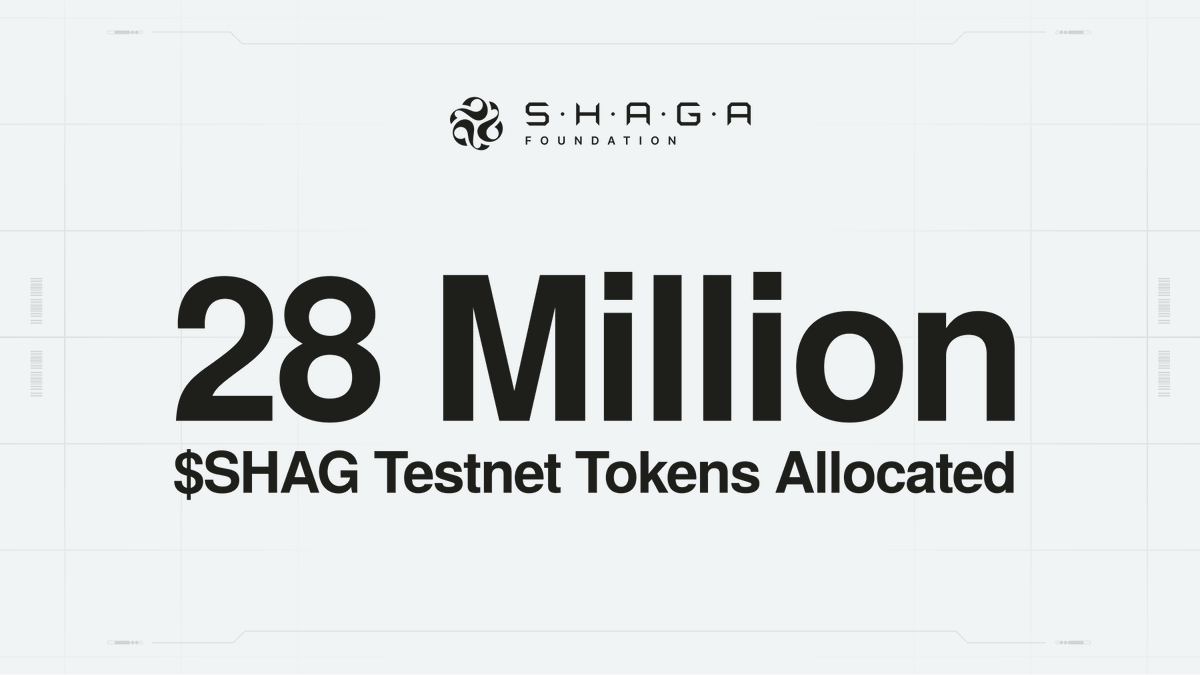
We're allocating 28 million $SHAG testnet tokens
This covers all activity from November 6th - November 30th.
Hosts earn $SHAG testnet tokens, and both Hosts and Players earn GLOB for their participation.
Earnings dashboard coming soon
What you see today is not your full allocation.
We're refining systems, validating data, improving proof-of-gameplay, and tightening our tracking.
Everything from this period is securely recorded and fully accounted for.
Early activity counts in your favor
Reward criteria is generous right now.
As the network matures, requirements will become more precise to ensure fairness and long-term integrity.
Weekly updates on Discord
We'll continue sharing weekly earnings updates as GAMENET evolves.
The activity this month has been incredible. You're helping build Shared Gaming.
Not on GAMENET yet?
Hosts power sessions and help strengthen the network.
Players get free, low-latency cloud gaming across the community.
Get started:
https://t.co/22CDIrkoiW
Gamenet is live.
If your GPU is powered on but not hosting Node… that’s a skill issue.
Every idle hour = rewards you’re letting someone else game.
Fix it before someone else claims your GLOB.
The Explorer makes it clear what Shaga is aiming at:
turning a scattered world of PCs and gamers into one coordinated network.
Once you’ve seen the Explorer light up, it’s hard to unsee how far this network could go.
An FPS player landing back-to-back headshots is fun on its own.
It hits different when it’s running on a DePIN network of community hosts.
On Shaga, the machines behind this aren’t in a centralized data center, they’re in gamers’ homes.
Compound interest:
Einstein called it the 8th wonder of the world.
Glob Season 3 calls it a Streak.
Your session today is worth more than yesterday's because you didn't break the chain.
Keep the multiplier alive.
The question is simple:
Are you stacking your Glob Points?
Season 3 is moving fast.
🎮 Play
🖥️ Host
🎬 Create Moments
Don't get left behind.
Check the leaderboard: https://t.co/B6L6mC6bj2
Why does input synchronization matter for world model training?
Human decisions are temporal, not just visual: when they moved, why they waited, what led to each choice.
World models won’t be built on pixels alone, but on this layer of timed, human decisions.
Gaming infrastructure shouldn't be owned by corporations extracting value from the top.
It should be governed by the community building it from the ground up.
Shaga Foundation exists to make that structure real. The network belongs to those who run it.
The future of gaming infrastructure is a flywheel, not a feature.
Nodes host → Gamers generate data → Data trains models → Value cycles back to the network
That data trains the next generation of world models.
That’s the flywheel we’re building at Shaga.
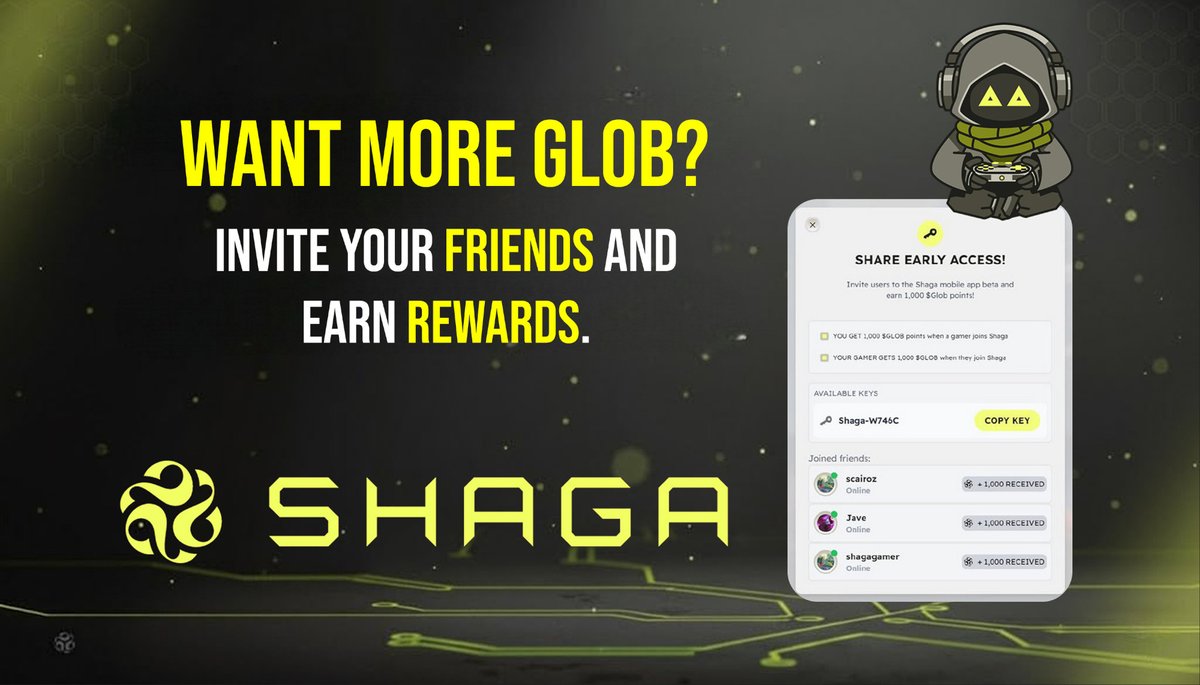
Want to earn more Glob this season?
Invite your friends to earn more Glob!
When they join, you earn GLOB points and they can too.
Join the fun → https://t.co/B6L6mC6bj2
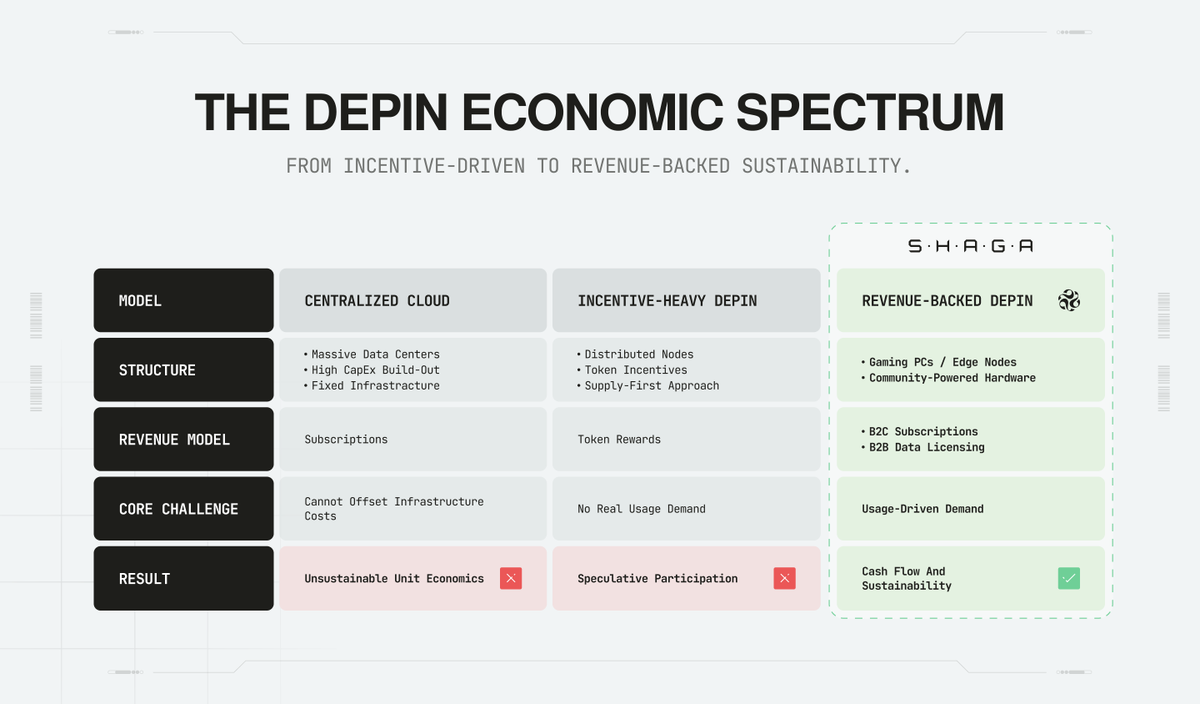
Here's what separates sustainable infrastructure from speculation:
Centralized cloud
Built billion-dollar data centers.
Subscriptions couldn't cover the costs.
Economics broke.
Incentive-heavy DePIN
Deployed nodes with token rewards.
No real usage demand.
Speculative participation, no customers.
Revenue-backed DePIN
Usage-driven demand creates cash flow.
Community hardware eliminates CapEx.
Customers pay because they need it, not because tokens incentivize them.
One model bets on speculation. The other builds on actual usage.
Which survives when incentives dry up?
AI labs train on trillions of words and billions of images.
But authenticated gameplay data? Virtually none exists at enterprise scale.
That's a market waiting to be unlocked.
Read why companies are paying millions for what almost nobody can supply ⬇️
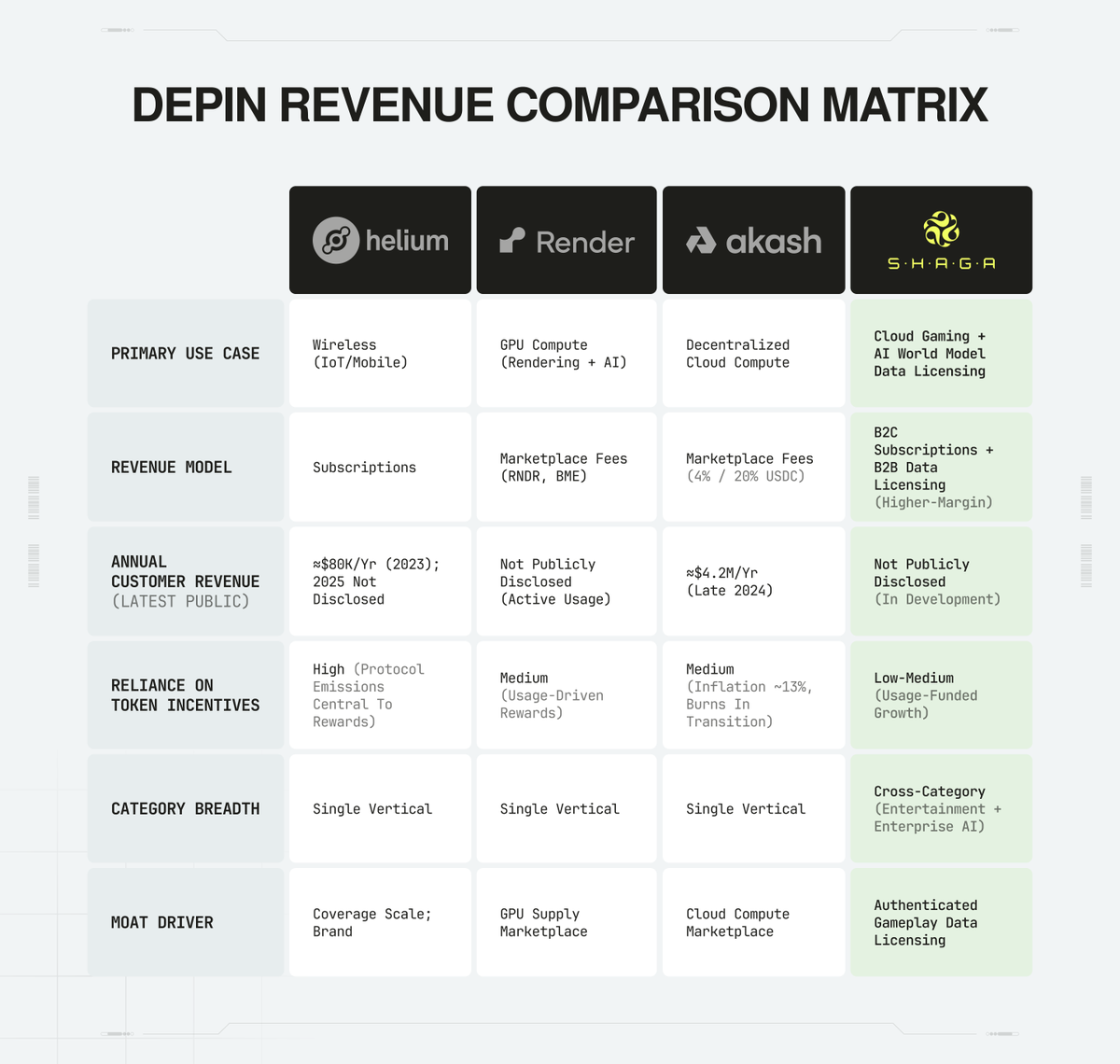
Here's the DePIN revenue gap:
Most networks serve one customer type in one category.
Helium: Wireless. Render: GPU compute. Akash: Cloud compute.
Shaga's architecture crosses categories: entertainment customers AND enterprise AI customers.
Season 3 achievements pay the biggest one-time rewards in GLOB history.
Top-tier payouts:
• 100k Glob: Streaks, games played, unique lobbies, hosting consistency
• 250k Glob: Watch streams + join streamer sessions
• 3M Glob: Hours played (joined lobbies)
• 5M Glob: Hours hosted + peak viewers
These are durable milestones that persist across seasons.
Which achievement tier are you targeting first?
Network development update: Infrastructure built over the past months now provides operational transparency.
Proof of Gameplay validation went live.
The network can now verify authentic participation and ensure data integrity across distributed nodes.
Shaga Explorer launched for real-time visibility into network activity and future token emissions.
Dynamic optimization system adapts gameplay to hardware capabilities, ensuring broader participation while maintaining quality standards.
Check it out now ⬇️
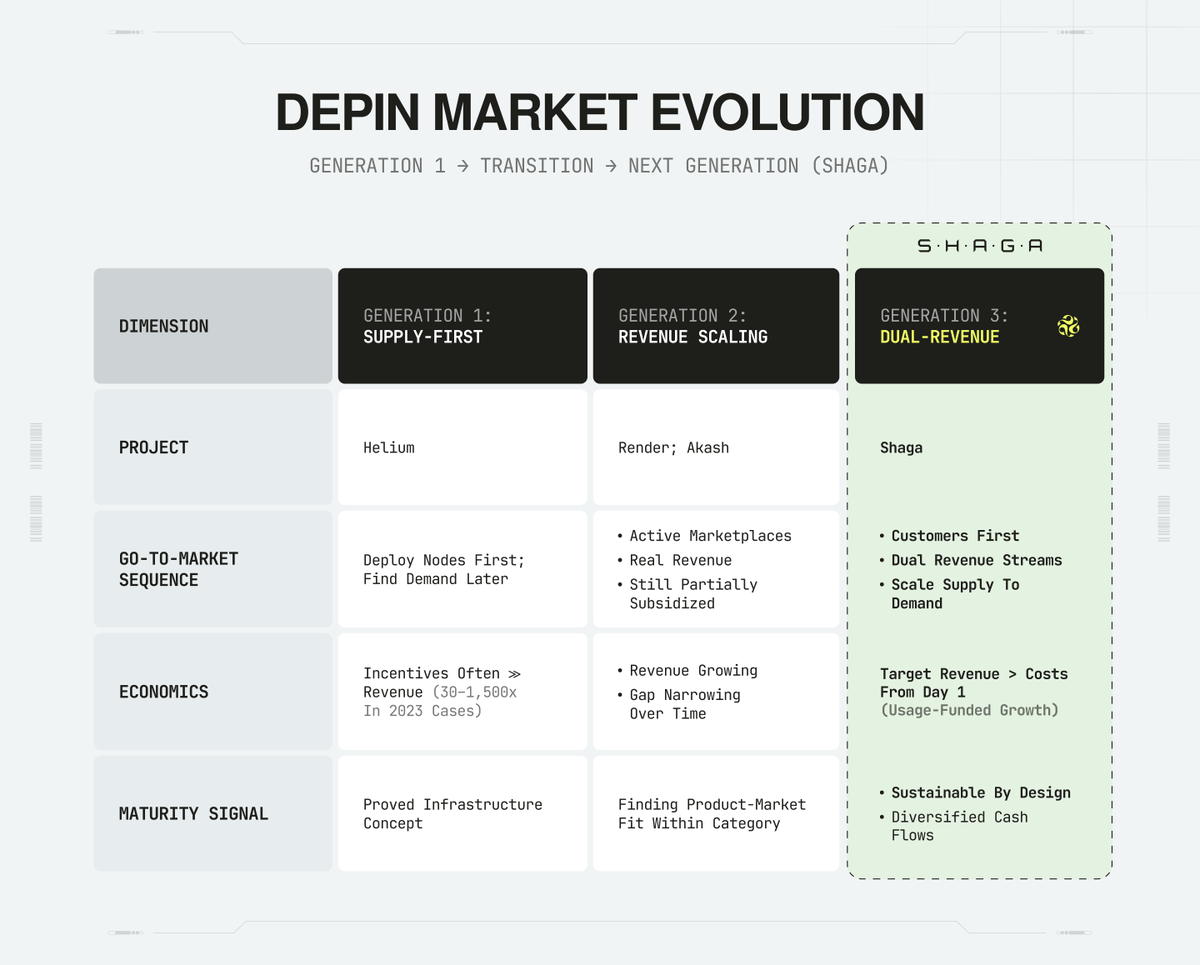
DePIN networks learned the hard way:
Gen 1: Build nodes first, hope customers come later
Gen 2: Customers arrived, but revenue stays in one category
Gen 3: Designed for customers in multiple markets
What pattern do you see here?
The DePIN learning curve:
Generation 1 (Helium):
Deployed 1M+ nodes globally. Proved the model works. Customer revenue took years to develop.
Generation 2 (Render, Akash):
Built active marketplaces first. $4.2M/year from paying customers. Still relies on one infrastructure type.
Generation 3 (Shaga):
Architected to serve two different customer bases - gamers paying for cloud gaming, AI labs paying for training data.
Which approach scales better long-term?