Growing up I was told that in order to stay relevant in business, it is best not discuss religion, politics & sex. I grew up in Gujarat; business meant life and same rules applied. So its rather striking to me that now apparently that's all that people talk about.
Nobody talks about the late 30s to 40s personality shift where you no longer want to be remarkable, you just want to be rested, unbothered and completely unavailable to anything that's exhausting. And it hits you without warning.
One day you are chasing goals, chasing people, chasing validation, and the next day you wake up and something inside you has completely rewired itself.
The hunger to impress disappears. The need to be seen vanishes. The desire to be everywhere, know everyone, and prove yourself to the world just quietly packs its bags and leaves. And in its place is a woman who wants nothing more than peace, quiet, and the freedom to say no without explaining herself.
And the most liberating part is you stop feeling guilty about it.
You cancel plans without anxiety. You ignore calls without remorse. You let friendships fade that no longer feed your soul without chasing after people who never chased you. Your circle shrinks and your peace expands, and for the first time in your life, that does not scare you, it excites you. You are no longer interested in being the most impressive woman in the room, you are interested in being the most rested, most protected, most intentional version of yourself you have ever been.
The late 30s to 40s shift is not you losing yourself, it is you finally finding yourself after decades of performing for a world that was never going to be satisfied anyway.
Welcome to the era where your energy is expensive, your time is sacred, and your peace is no longer up for negotiation.
This is one of the hardest decisions for any parent; it will be the biggest fight of their lives, but a necessary one if you happen to be in this unfortunate situation. Timing matters. Too many girls are lost to indecision & futile hope before they can be saved. -End-
A divorced daughter is *not* better than a dead daughter to most parent. They *still* see leaving as a radical choice, or not a choice at all. They wait it out; negotiate, freeze, & weigh what they believe are two terrible options. They hope things will magically get better.
"Ye sab log bahut nirdayi hain, mummy. Mera dum ghut raha hai yahan."
"Maa, aap mujhe yahan se le jao, please."
"Mera jeevan narak ho gaya hai, mummy."
What will you do as a parent if your married daughter sends you such messages about harassment from her in-laws repeatedly every now and then? I'm sure all of you with daughters won't waste a second after receiving the first SOS message or call, and rescue her, but sadly, it doesn't happen so often in the offline world. Why?
These messages were sent by Twisha Sharma to her mother, a woman who allegedly died by suicide in Bhopal due to alleged harassment by her husband and in-laws. The girl was well-educated and from an accomplished family. Why didn't the parents act after the first call for help?
And mind you, I'm not blaming them for the outcome. The sole criminal responsibility for this alleged suicide lies only with the alleged harassers. I'm just pointing out the helpless social reality that many parents hesitate, delay, or keep hoping things will improve on their own, even families as well-educated and accomplished as Twisha's.
Just sad. High time parents realise that a divorced daughter is always better than a dead daughter.
The long and short of it is that unless a woman has strong family support, internal clarity, the willingness & ability to fight a long, uneven battle on multiple fronts, this is not an easy decision for anyone.
Please do yourselves a favour & the moment something feels off, bring the girls back home. Too many of us have lost their lives trying to adjust, give it another chance, or wait it out. Our instincts are warnings, not overreactions. We are trained to ignore them. We shouldn’t.
@WokePandemic Just heartbreaking. Whatever is happening to the moral fabric of our society… it is dark, cowardly, & so deeply unsettling. ❤️🩹 Forget responsibility… is there not even a fear of karma left?!
We really need Pakistan to decide soon upon their participation in the T20 WC.
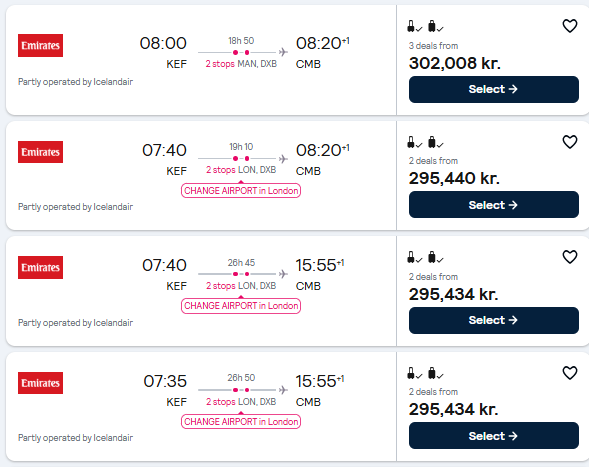
We are ready to take off as soon as they pull out on 2nd Feb, but the flight schedule is a logistical nightmare to get us to Colombo in good time for 7th Feb.
Our opening bat is an insomniac!
@ShiroBarks True. Though self perception as a defence market is not the same as being publicly framed as a tool or a market to offset Russia. Framing matters for optics & long-term autonomous partnership.
They refuse to learn. India cannot be viewed as a market to replace Russia. Such public positioning constrains India’s strategic manoeuvrability. Beyond shallow Euro-centric politicking, it does them no favour. Why not develop a relationship with India independent of Russia?
"Germany wants to deepen defence industry cooperation with India. This will strengthen both of us. It will also lead India to become less dependent on Russia," says German Chancellor Merz in a press conference with PM Modi
Front foot, like a good captain.
Facts. Composure. No hedging.
Public courage comes from ethical, profitable businesses. One hopes it stays so. #leadershipandall
Last one on this topic, and I have been holding this in myself for a while.
For centuries, class divides kept the labor of the poor invisible to the rich. Factory workers toiled behind walls, farmers in distant fields, domestic help in backrooms. The wealthy consumed the fruits of that labor without ever seeing the faces or the fatigue behind it. No direct encounter, no personal guilt.
The gig economy shattered that invisibility, at unprecedented scale.
Suddenly, the poor aren't hidden away. They're at your doorstep: the delivery partner handing over your ₹1000+ biryani, late-night groceries, or quick-commerce essentials. You see them in the rain, heat, traffic, often on borrowed bikes, working 8–10 hours for earnings that give them sustenance. You see their exhaustion, their polite smile masking frustration with life in general.
This is the first time in history at this scale that the working class and consuming class interact face-to-face, transaction after transaction. And that discomfort with our own selves is why we are uncomfortable about the gig economy. We want these people to look our part, so that the guilt we feel while taking orders from them feels less.
We aren't just debating economics. We are confronting guilt. That ₹800 order might equal their entire day's earnings after fuel, bike rent, and app cuts. We tip awkwardly, or avoid eye contact, because the inequality is no longer abstract. It's personal.
Pre-gig era, the rich could enjoy luxury without moral discomfort. Labor was out of sight. Now, every doorbell ring is a reminder of systemic inequality. That's why debates explode. It's not just policy. It's emotional reckoning. Some defend the system (“they choose it”), others demand change (“this isn't progress, its exploitation”).
And here’s the uncomfortable twist: the unsaid ask of clumsy ‘solutions’ isn’t dignity. It is about returning to invisibility.
Ban gig work and you don’t solve inequality. You remove livelihoods. These jobs don’t magically reappear as formal, protected employment the next day. They disappear, or they get pushed back into the informal economy where there are even fewer protections and even less accountability. Over-regulate it until the model breaks, and you achieve the same outcome through paperwork instead of slogans: the work evaporates, prices rise, demand collapses, and the people we claim to protect are the first to lose income.
And then what happens?
The rich get their old comfort back. Convenience returns without faces. Guilt dissolves. We go back to clean abstractions and moral posturing from a distance. The poor don’t become safer, they become invisible again: back in cash economies, back in backrooms, back in shadows where regulation rarely reaches and dignity isn’t even debated.
The gig economy just exposed the reality of inequality to the people who previously had the luxury of not seeing it. The doorbell is not the problem. The question is what we do after opening the door.
Visibility is the price of progress. We can either use this discomfort to build something better (which we keep doing continuously as delivery partners are our backbone), or we can ban and over-regulate our way back into ignorance. One of those choices improves lives. The other simply helps the consuming class feel virtuous in the dark.
Van Gogh died broke because nobody wanted his paintings. He sold maybe one during his entire life. The art world thought his style was too immature. His brother Theo, an art dealer, kept him alive by sending money constantly.
When Van Gogh passed in 1890, his brother, Theo died just six months later. That left Theo's wife Jo as a 28 year old widow with a baby and about 900 paintings nobody wanted, plus hundreds of letters.
Here's what actually mattered. Van Gogh had written hundred of letters letters to Theo and Jo explaining individual paintings and his life as an artist. He told them the stories behind each work, what he was trying to express, what each one meant to him.
After both brothers died, Jo remembered these letters and published them.
That's what made him famous. People could read Van Gogh's own words about each painting. The works stopped being random art and became stories he had experienced. The paintings got context directly from him explaining what he was doing. Jo gave the world Van Gogh's voice attached to his work.
By the time she died in 1925, he had gone from total unknown to art historical icon.