1/10
I finished reading David McDowall’s A Modern History of the Kurds, and the biggest thing it changed for me is how far back the Kurdish political story really goes.
Not as one continuous state, but as centuries of Kurdish rulers, emirates, dynasties, rivalries and survival. 🧵 #Kurdistan
From the heart of the Iranian plateau rose Cyrus the Great conqueror, liberator and founder of an empire that reshaped the ancient world. Dr. Roy Casagranda tells the story of one of the defining figures of Iranic history. 🏛️🔥
#CyrusTheGreat#Iranic
A first for Kurdish cinema. 🎬☀️
This is the first animated Kurdish movie in History.
It tells the story of the Anfal genocide the horror, loss and survival of the Kurdish people.
A piece of Kurdish history brought to life.
Watch below. 👇
#Kurds#Anfal
Last time, we told the story of Jafar Agha the “Kurdish Robin Hood.”
But his death wasn’t the end of the story.
His younger brother would rise from his shadow and leave his own mark on Kurdish history.
His name was Simko Shikak.
Here’s his story.
#Simko
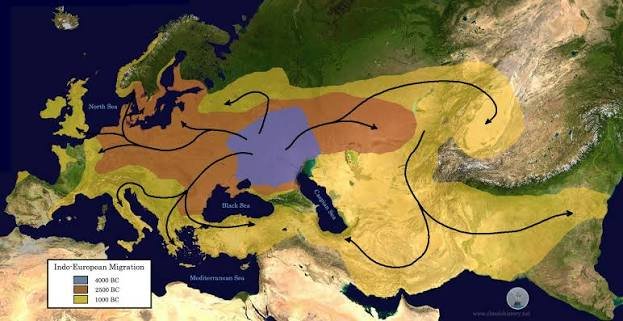
A language of the mountains. A voice carried over stone, snow and valley. Kurdish belongs to the ancient Indo-European family, but no family tree can capture its sound: generations speaking across a landscape where every echo seems older than the borders below.
#Kurds#Kurdish
@fiyonca Kurds like many other groups desend from multiple ancient people which makes the modern Kurd. Medes are ancestors of NW Iranic people, so yes. I'm Iranian (Rojhalati) Kurd myself, the areas im from were the Medes homeland which they expanded out from.
@fiyonca Why do Turks hate Indians so much? I love Indians & their culture & indo-european doesn't mean white European its a languge family. The Bhagavad Gita for example is truly a enlightening book.
Visa and asylum outcomes depend on the circumstances a community faces conflict, persecution and displacement. The same applies to Syrians and Ukrainians. We’re not European. Maybe question your relationship with Europeans if they want you fighting for NATO but not living amongst them?
@KurdiNaghl Sorry, the google translate seems a bit off. However I can assure you, we are middle eastners from the highlands of the mid east. We are genetically related to Persians not Europeans.
Syria is going through what happened across parts of former Yugoslavia:
First, the state is weakened.
Its institutions are hollowed out, its productive capacity is destroyed, its economy becomes dependent, and its ability to protect ordinary people gradually disappears.
Then comes the second stage: "reform."
Privatization. Foreign investment. Liberalization. Reconstruction. Integration into the international economy.
These words sound positive. Sometimes they can be.
But Syrians should be asking a much more important question:
Who benefits from this integration, and who pays for it?
There is a widespread assumption that once Syria opens itself to foreign companies and international capital, prices will fall, investment will pour in and ordinary people will become richer.
I think there is a very real possibility that the opposite happens.
Syria today is an extremely poor country surrounded by economies where prices, wages, property values and business costs are often dramatically higher.
As Syria is pulled back into regional and global markets, Syrian prices will increasingly be exposed to those external price levels.
But Syrian salaries will not suddenly become Gulf salaries.
That is where the danger begins.
Foreign capital is not charity.
A Turkish, Gulf, European or multinational company entering Syria is not going to invest billions simply to preserve artificially cheap electricity, housing, transport or public services for Syrians.
It will calculate costs.
It will calculate risk.
And above all, it will calculate profit.
Eventually, investors will demand returns that justify operating in Syria.
So imagine what happens next.
Electricity prices rise.
Fuel prices rise.
Transport rises.
Property rises.
Rents rise.
Private healthcare expands.
Education becomes increasingly commercialized.
Subsidies are cut in the name of fiscal reform.
State industries and public assets are privatized in the name of efficiency.
Meanwhile, wages struggle to catch up.
This is how you can create one of the worst possible economic combinations:
Global prices with Syrian salaries.
And this is why simply shouting "foreign investment" or "economic opening" tells us almost nothing about whether ordinary Syrians will actually become better off.
A country can attract billions in investment while large parts of its population become poorer.
GDP can rise while purchasing power collapses.
Luxury developments can appear while ordinary families struggle to afford electricity.
Property prices can explode while locals are priced out of their own cities.
Foreign investors, politically connected businessmen and whoever controls the privatization process can become extremely wealthy while workers are told to wait patiently for prosperity to eventually "trickle down."
This is not an argument against investment.
Syria desperately needs reconstruction, capital, infrastructure and trade.
But there is a huge difference between investment that rebuilds productive capacity and raises Syrian incomes, and an economic model that simply turns Syria into a cheap labour market and a collection of assets waiting to be bought.
That distinction matters.
Because once essential infrastructure, land, industries and services are sold, those decisions can shape the country for generations.
The biggest mistake Syrians could make is believing that integration into the international economy automatically means prosperity.
It doesn't.
The real battle will be over who owns the rebuilt Syria, who captures its wealth, and whether Syrian wages rise alongside Syrian prices.
Otherwise the final economic model may be brutally simple:
Global prices.
Syrian salaries.
Foreign profits.
And a population becoming poorer and poorer until there is almost nothing left to eat except the officials.
#Syria #Syrianprotests