1/7 I’m incredibly proud to share the results of my latest study on seizure detection using the Apple Watch. In this study, our algorithm detects tonic-clonic seizures with 100% sensitivity while drastically lowering false alarms—setting a new benchmark in the field.
THREAD🧵👇
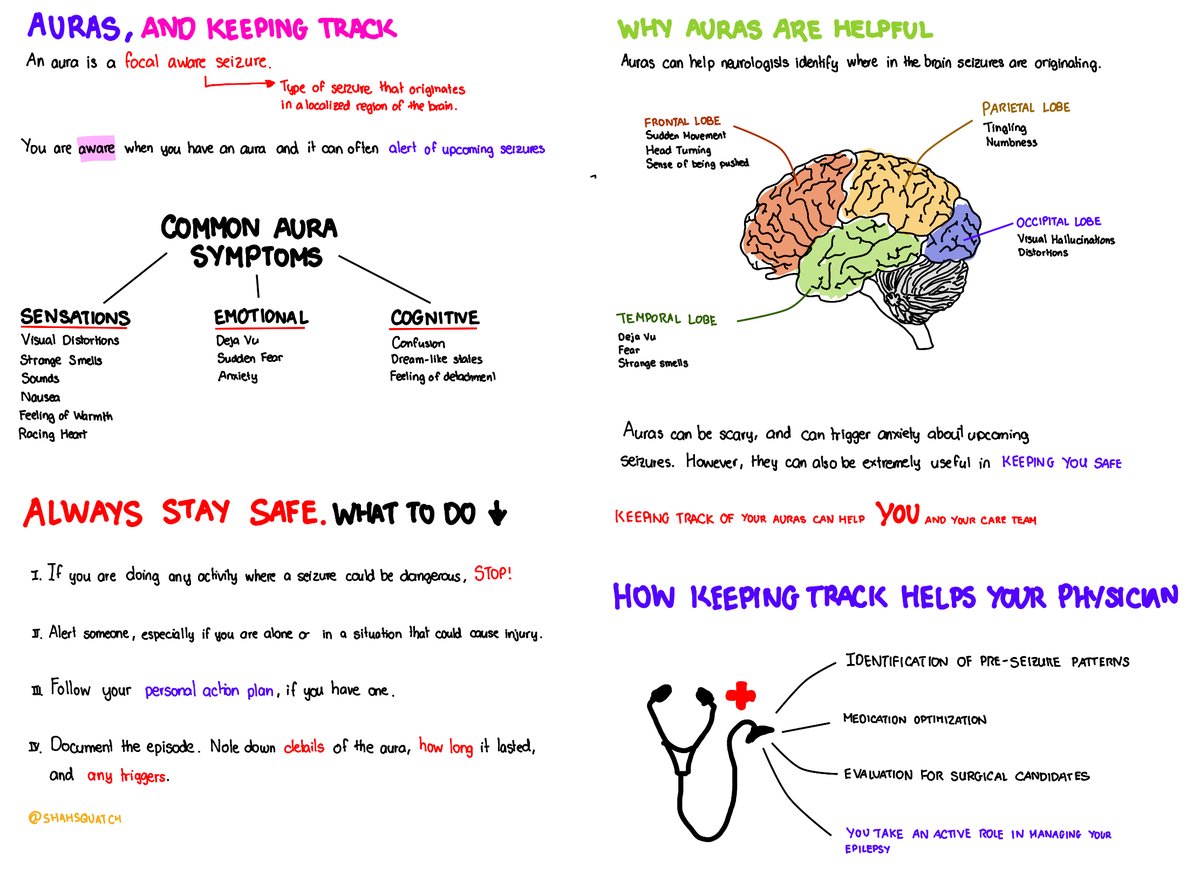
Imagine suddenly getting a feeling you can't quite describe.
A weird smell.
Deja vu.
A feeling of dread.
You know what comes next.
These sensations are known as Auras, and keeping track can make a real difference to your epilepsy management.
#epilepsy
7/7 I’m looking forward to seeing how this innovation will be received by the broader medical community and how it will impact the lives of those living with epilepsy.
A big thank you to all my co-authors who made this study possible!
Paper Link:
🔗 https://t.co/B7ApMC3Zhg
1/7 I’m incredibly proud to share the results of my latest study on seizure detection using the Apple Watch. In this study, our algorithm detects tonic-clonic seizures with 100% sensitivity while drastically lowering false alarms—setting a new benchmark in the field.
THREAD🧵👇
6/7 I believe this is a big step towards a future where epilepsy monitoring is accurate, discreet, and accessible. Our work is far from over, but the progress made here is something I’m deeply proud of.
10\ I write threads like this to raise awareness about advancements in epilepsy, neurology, and general science.
Follow me at @Shahsquatch so you don't miss the latest news in the field and please help me raise awareness by retweeting and spread the value!
1\ Explore how epilepsy monitoring practices vary in the Gulf Cooperation Council's EMUs.
Different safety standards can greatly influence outcomes and patient care.
🧵👇
10\ I write threads like this to raise awareness about advancements in epilepsy, neurology, and general science.
Follow me at @Shahsquatch so you don't miss the latest news in the field and please help me raise awareness by retweeting and spread the value!
8\ Consider the broader impacts: If this precise and efficient imaging can be used in epilepsy, what other neurological conditions could benefit from similar advancements? How might this change the overall approach to neurological care?