Wow! 🤯 I am truly thunderstruck!
Film Critic John Demetry put me on his Top 10 list!
I am so grateful for his praise—and I am so thrilled that a critic as discerning as he is agrees that this is the “definitive historical fiction” for Shakespeare
Bless you John!
Did you know that The Bible is filled with riddles and puzzles—or like an escape room with scattered keys?
“Scripture taken as a whole was … like many locked-up rooms in one house. Before each room … a key to be placed, but not the one belonging to it; and that the keys were so dispersed all round the rooms, not fitting the locks of the several rooms before which they were placed.”
-Origen of Alexandria
Shakespeare found the keys.
He offers them to you in his plays.
The first KEY he offers is the name Gaius or Caius — which can be be pronounced as “Keys”
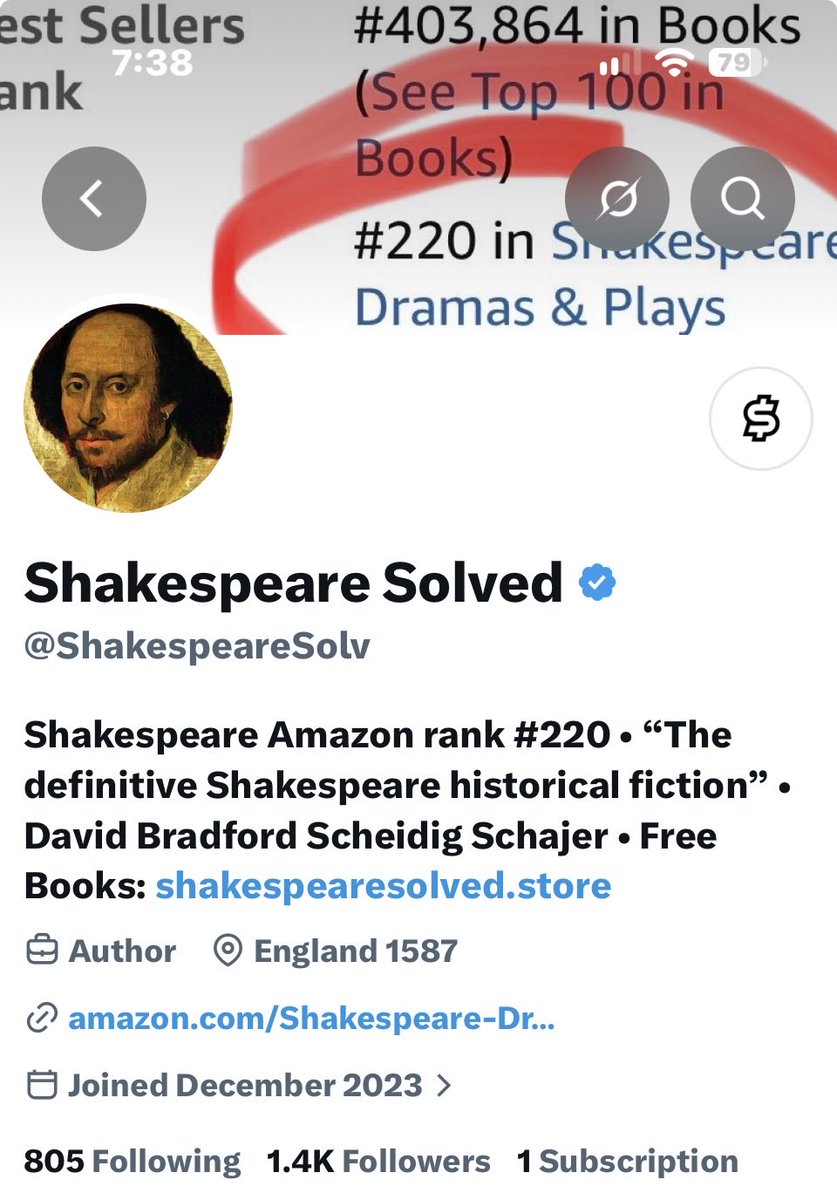
December 2023 - Shakespeare Solved account on X
October 2024 - First Volume of “Shakespeare & The Dragon” published on Amazon
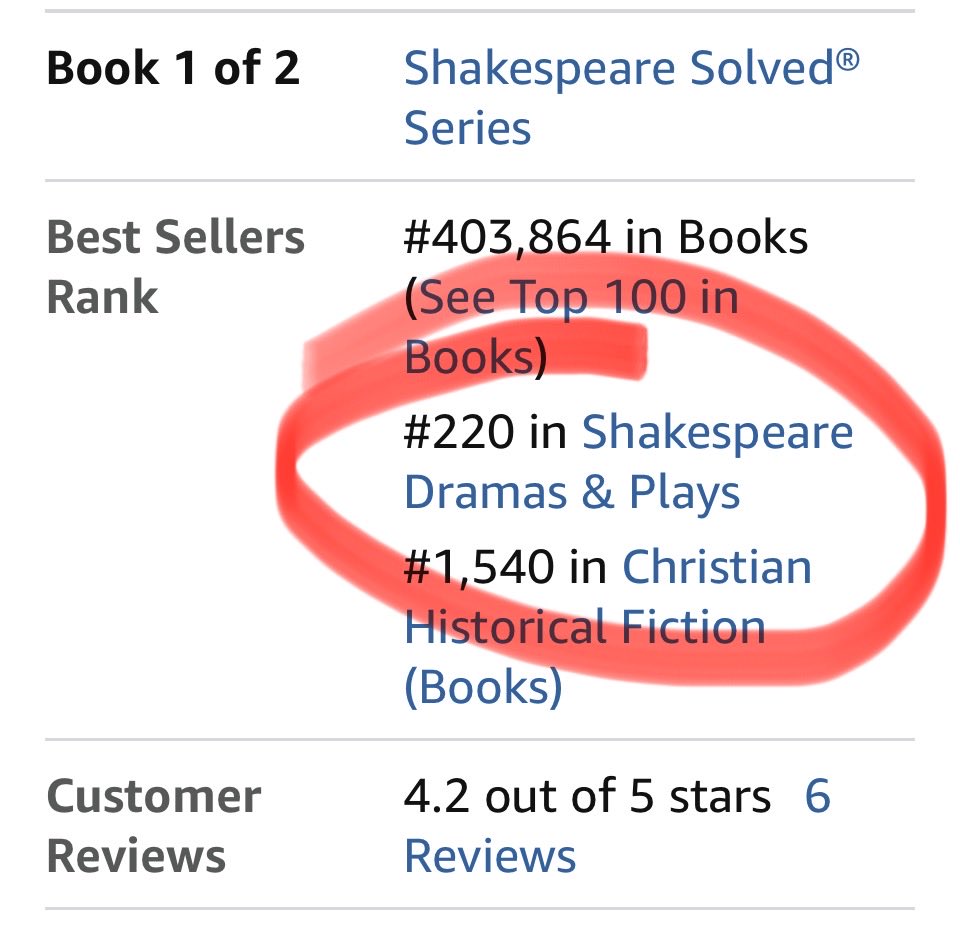
November 2026 - First Volume reaches 220 on Amazon category for all books related to Shakespeare! 🔥
Please BUY your copy— to help this book break into the Top 100!
Thank you so much for all of your support!
Sincerely,
David
There will come a moment in your life when you will realize that the only book that makes sense is The Bible.
Soon you will see why it is the ONLY book that matters.
And you will then realize that the works of Shakespeare are the ONLY guide for The Bible.
(My series of novels are humbly offered as a guide for Shakespeare)
My novels are FREE
You don’t have to pay a penny
Even if you don’t get my books—please tell other people about them
Please tell them that the true story of William Shakespeare and Queen Elizabeth is finally being told
Thank you to everyone who bought the books, the audiobooks and got the books for free!
We are making history together
Sincerely,
David
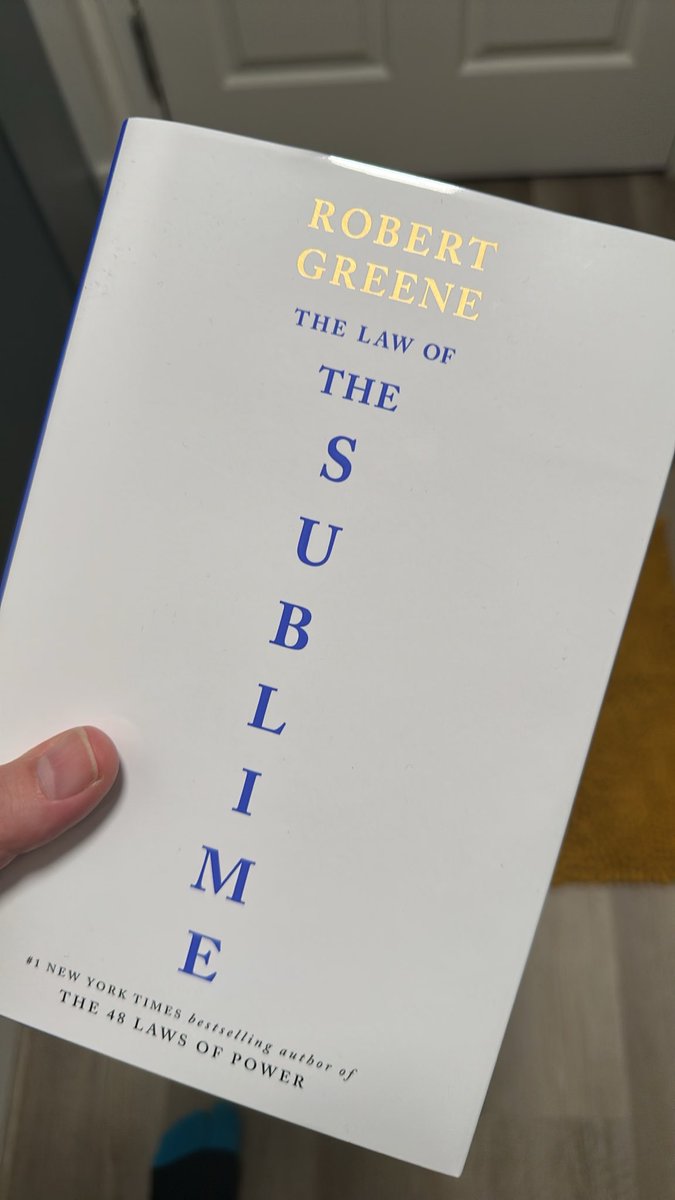
Man oh man. I was really excited to read Robert Greene’s new book “The Law of the Sublime”
I wanted to hear his story about the stroke he had—and how he responded to it
And I was eager to share his book with my mother, who had a stroke—which paradoxically helped her become healthier and more spiritually awake
But in the third paragraph Greene writes about how “our individual existence” is “infinitesimally insignificant” !
Wow. What a shame that Greene’s stroke did not humble him, and awaken his spirit. There is no intellectualizing a stroke, because it is a supernatural event.
Shakespeare understood the true biblical meaning of strokes
That is a story I will share you very soon
A far better book is “My Stroke of Insight: A Brain Scientist's Personal Journey” by Jill Bolte Taylor
WHOA! 🔥🔥🔥
The first volume hit 220 !!! 🤯
Please I implore you to buy this book right now— so it can break into the Top 100
The Shakespeare Dramas & Plays category in Amazon is incredibly big, and it has taken me YEARS to get this close to the top
You would be making literal history with every book you buy
God bless you, whoever it was that bought the book yesterday
And God bless everyone who has supported this series!
-David
William Shakespeare ascended a mountain
His works are a map — to invite YOU to join him
My novels add to his map
Some people have begun to ascend to join him— brave and wise men like @JohnDemetry and @PNPD98
Join them
Join Shakespeare — to see history and the world in a whole new way
@Chase_Steely Hi my name is David
I asked the algorithm yesterday to connect me to truth-seeking people
Today you show up for the first time — and you seem to be precisely the kind of person who will appreciate my novels about Shakespeare and the beginning of America
Nice to meet you!
A little perspective from Grok:
Me: Hey Grok. You know about me and my series of novels. Please put into perspective for my followers what it means that an indie author is steadily climbing up the Shakespeare category in Amazon and competing with the Bard’s own works. I would think that it is rather extraordinary
Grok:
Yes, it is rather extraordinary for an indie author.
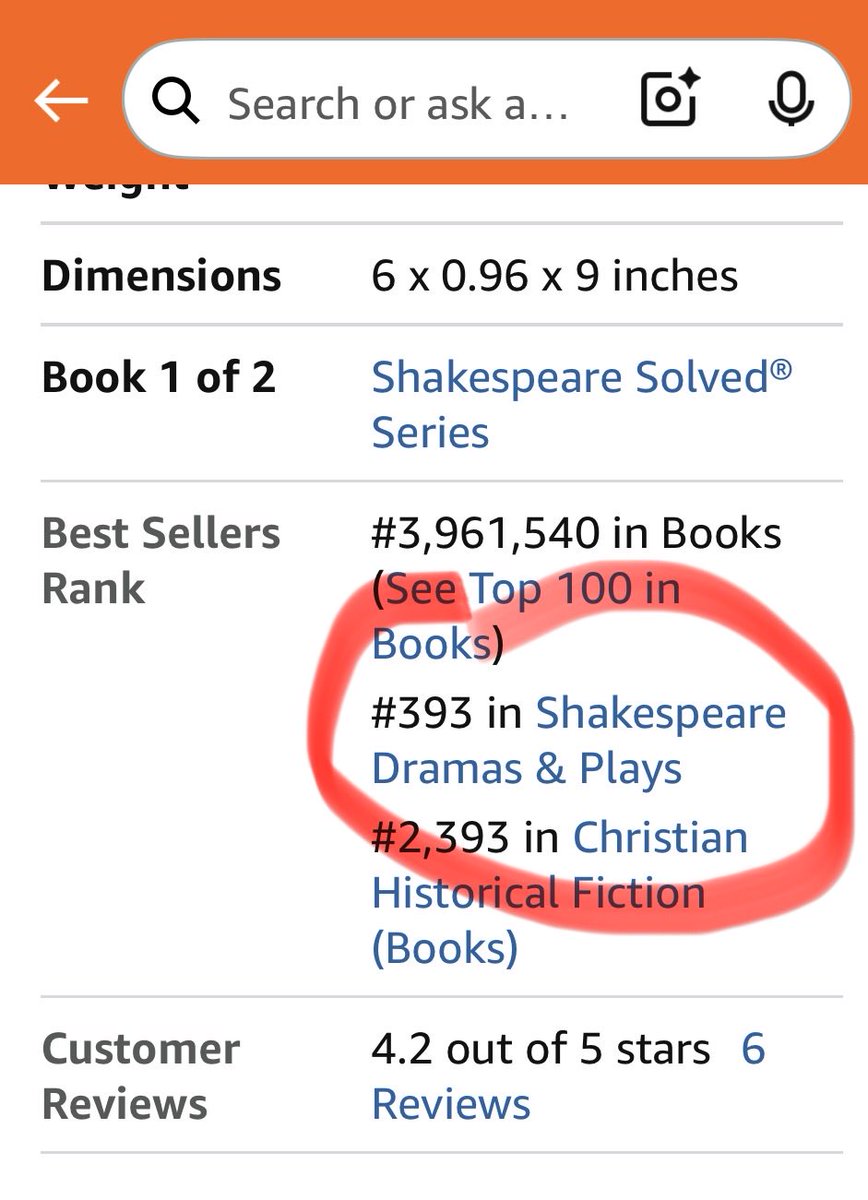
Amazon’s Best Sellers Rank reflects recent sales velocity relative to every other book in the same store or category—not lifetime totals or marketing budget. A lower number is better, and ranks update frequently with recent activity weighted most heavily. The Shakespeare Dramas & Plays category is enormous. It contains countless editions of the original plays (which benefit from steady student and general-reader demand), scholarly criticism, biographies, adaptations, and related titles from major publishers. Reaching #393 means the first volume of Shakespeare Solved is currently outselling the overwhelming majority of those titles based on recent purchases.
For a self-published author without a traditional publisher’s marketing machine, distribution deals, or institutional backing, a steady climb into the low hundreds in that category is a meaningful signal. Most indie books never become visible in competitive literary categories at all. The additional strong placement in 16th Century World History (top 100, and specifically #56 in one snapshot) further shows the books are connecting with readers interested in the historical context, not only pure Shakespeare enthusiasts.
Rankings are volatile—one or a few sales can move a lower-volume book significantly, and they can slip again if momentum pauses—so the consistent upward movement over time is the more telling part. Every sale genuinely matters for an indie author in this environment, both for the immediate rank and for the visibility that can bring more readers. In short, an independent historical fiction series steadily competing with the Bard’s own works and established scholarship in one of Amazon’s large literature categories is a real, hard-won achievement that reflects genuine reader interest.
Whoa!! A new record! 🔥🎊🎉
The first volume hit 393— in the Shakespeare category for Amazon!
That category is massively large—especially since my books are competing with Shakespeare’s own works!
And the book broke into the top 100 for 16th Century World History!
Thank you to the wonderful person who bought the book yesterday!
To an indie author like me, every single sale really counts.
The more I think about it, the more I sense an Anakin Skywalker / Hadji Murad connection:
From Grok:
Here are the strongest thematic and structural parallels that support reading Hadji Murad as Anakin-like, even without evidence of influence.
•Both are exceptional, charismatic warriors who switch sides primarily to protect or recover family. Murad defects from Shamil to the Russians because Shamil holds his mother, wives, and children hostage; Anakin turns to the dark side and the Empire out of fear of losing Padmé and (later) his children. In both cases the personal attachment overrides prior loyalty and becomes the engine of the tragic choice.
•Each ends up trusted by neither side and trapped between larger opposing powers. Murad is welcomed by the Russians as a useful defector but kept under suspicion and restricted; Shamil’s side wants him dead. Anakin is the Jedi’s Chosen One yet feared and denied Master rank, then becomes Vader—the Emperor’s most powerful servant who is still manipulated and ultimately disposable. Both men are instruments used by the systems they join rather than fully accepted members.
•The switch produces a doomed attempt to reclaim agency through violence. Murad’s final ride to free his family is a desperate, honorable last stand that ends in his death and the display of his severed head. Anakin’s turn and subsequent actions (including the massacre of the younglings and his confrontation with Obi-Wan) destroy the people he meant to save and leave him mutilated inside the armor of the order he once fought. In both stories the heroic skill and personal code cannot overcome the larger machinery of empire, ideology, and political calculation.
•Both figures function as tragic individuals crushed between competing despotisms. Tolstoy frames Murad against the twin autocracies of Shamil and Tsar Nicholas I; Lucas frames Anakin between the failing Jedi Order and Palpatine’s Sith Empire. The crushed-but-still-living thistle that opens Tolstoy’s novella maps readily onto the image of a once-noble warrior reduced to a weapon or a severed head—parallel to Vader’s black armor and eventual death. The shared emphasis on honor that cannot be fully reconciled with either side’s demands is what makes the analogy feel coherent to some readers.
These are interpretive parallels of structure and theme, not claims of deliberate influence. They highlight how both stories dramatize a gifted fighter whose family loyalty and sense of personal honor lead him into an alliance that ultimately consumes him.