Following my previous analysis of Solana’s high-speed architecture and its clash with data privacy, I now turn to the most critical legal frontier: Ethereum.
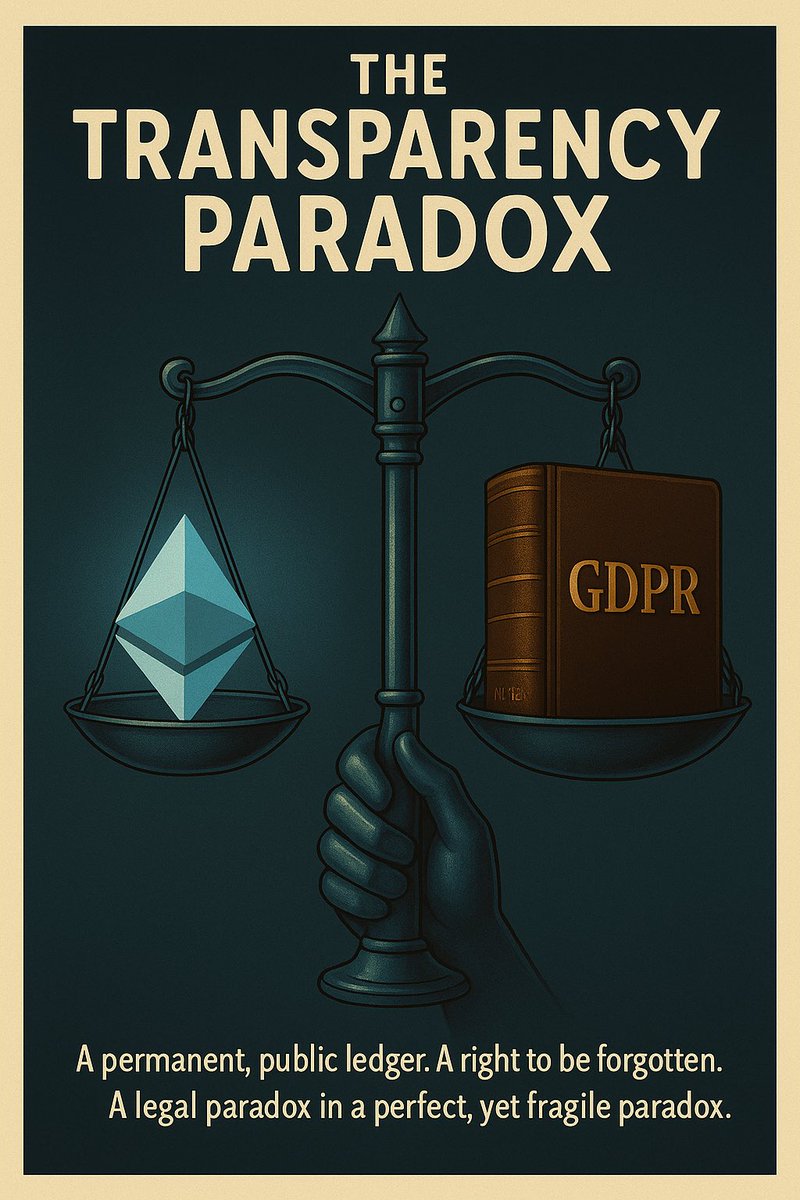
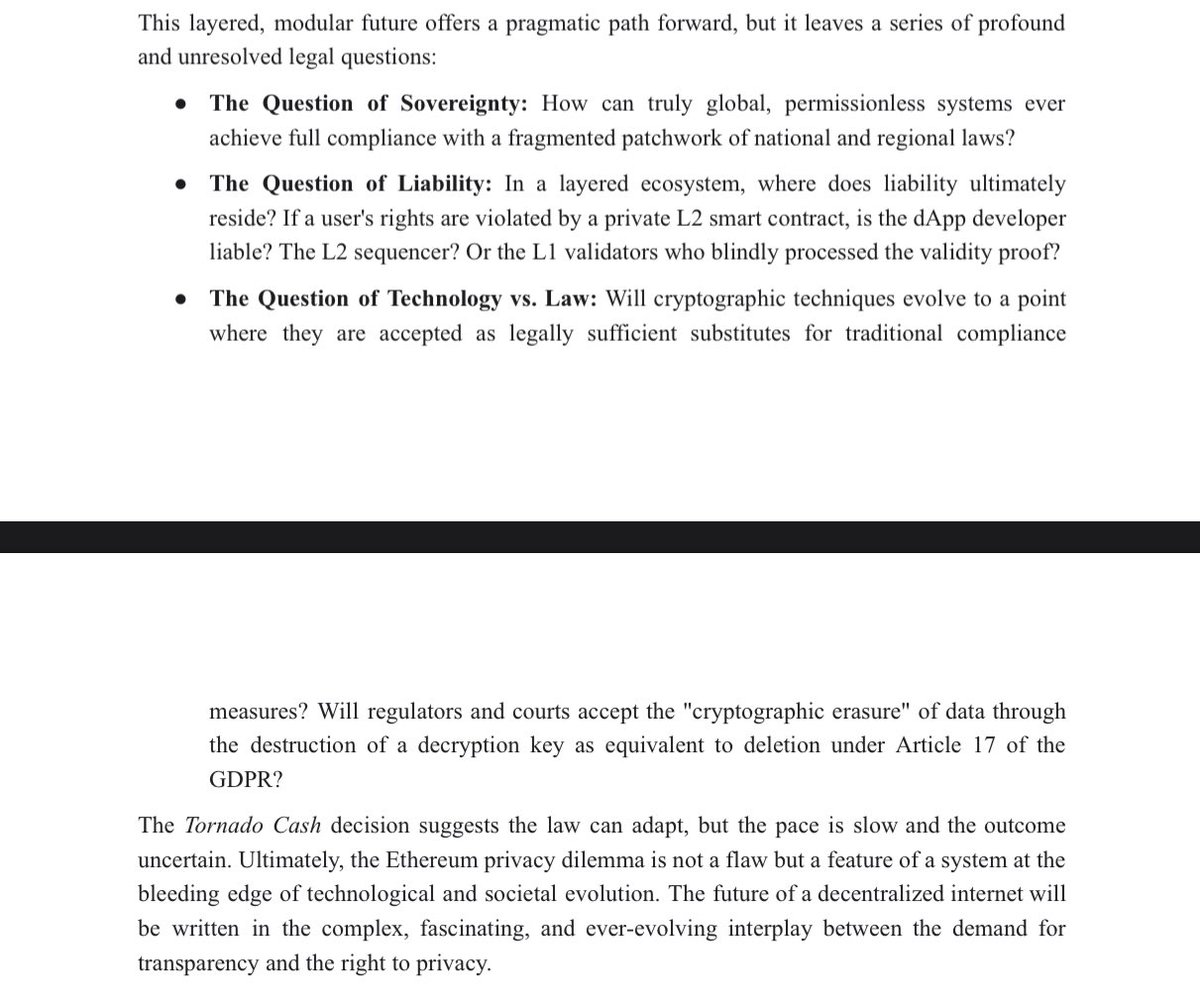
The new paper: “Data Privacy vs. Blockchain Transparency: Ethereum as a Case Study”.
We’ve all heard the mantra:
When is data actually anonymous, and who gets to decide?
At the Ethereum Privacy Stack summit, our Executive Director @MarinaMarkezic joined @web3privacy, Fatemeh Fannizadeh, Ayanfeoluwa Olajide (@ShaperofCulture), @Joan_Arus and Beth McCarthy (@ontologymachine) for "From Tornado Cash to future developers protection". The panel covered from mercenary spyware to the fine line between real anonymity and something that only looks like it.
Since the panel, the EDPB has finalised its blockchain guidelines, and anonymisation is next. We'll be sharing an analysis of the EDPB's anonymisation guidelines and what they mean for builders soon.
My Web3 folks,
I need to speak at a conference soon. I'm torn between 2 topics:
I. Nigeria's 2026 Virtual Asset Regime: Protection or Gatekeeping?
2. Liability for AI Agents On-chain: Who owns the Exposure?
Which would you be interested in listening to more? 🤔
My Web3 folks,
I need to speak at a conference soon. I'm torn between 2 topics:
I. Nigeria's 2026 Virtual Asset Regime: Protection or Gatekeeping?
2. Liability for AI Agents On-chain: Who owns the Exposure?
Which would you be interested in listening to more? 🤔
I sleep with no pillows. Been doing that for years.
Although I must add that for maximum effectiveness, ensure your mattress is very firm and supports your weight well.
Then put the pillow in between your thighs instead, as you sleep almost to your side.
Thank me later.
Sleeping with no pillow is a hack for having better neck & back posture, preventing extra wrinkles on your face, and falling into deep transcendental-like sleep
There is nothing that beats how cozy a pillow feels, but the health + cosmetic benefits are worth the compromise
@BintuParis@CQ_Elzz My contribution to this discussion is that these questions fall mainly within realm of law. So I believe we would find our answers by examining the legal concepts of liability and agency.
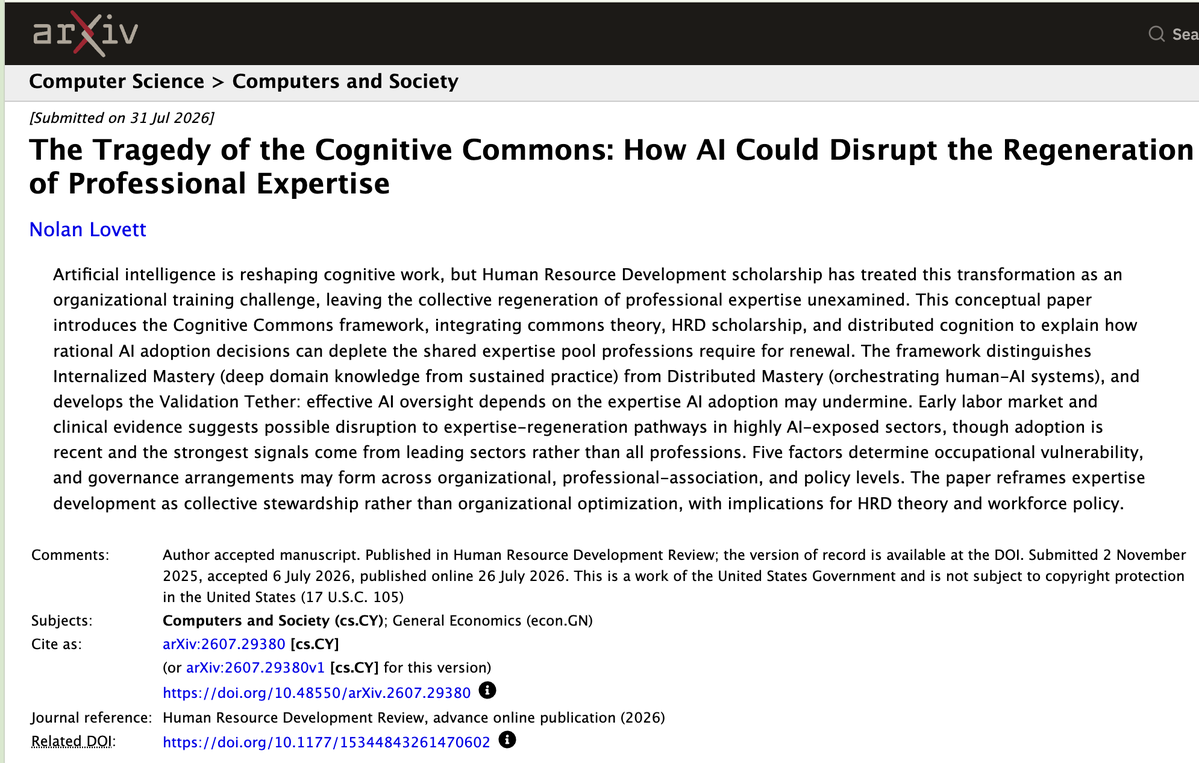
This paper gives a fancy name to a problem you can already feel in your bones
"The Tragedy of the Cognitive Commons." Checking AI output requires deep expertise. Deep expertise comes from doing grunt work for years. And grunt work is the first thing AI eats
So we're building systems that need expert supervision while dismantling the only known process for making experts
The paper calls the shared pool of human expertise the "cognitive commons." Every profession drinks from it. Nobody's refilling it.
By eliminating junior roles, each company is acting totally rationally, and the collective result: a profession that can't catch AI's mistakes anymore because it never learned to do the work in the first place
Who checks AI's homework in 15 years?
actually exists on a spectrum. A protocol may be decentralized at one layer while highly centralized at another. Governance, development, front-end access, sequencing, liquidity, custody etc can each have different control structures.
Therefore, “DeFi” should rarely be treated as
Some 2 weeks ago, I sat under a lecture by a senior Web3 lawyer in Zurich on “Regulation of DeFi and Financial Markets”.
After doing some research spurred by the lecture, it dawned on me that when it comes to regulations, regulators have not understood that
1. Decentralization
I cannot wait to begin to lecture “Blockchain Law/ Law of Decentralized Systems” in Nigerian and even international universities.
It will happen. And I’d be there.
I’m already even drafting a curriculum. 🤭