𝗚𝗧𝗖 𝗧𝗮𝗶𝗽𝗲𝗶 𝟮𝟬𝟮𝟲 — 𝗠𝗮𝗽𝗽𝗶𝗻𝗴 𝘁𝗵𝗲 #𝗔𝗴𝗲𝗻𝘁 𝗘𝗰𝗼��𝗼𝗺𝘆 𝗳𝗿𝗼𝗺 𝗨𝗽𝘀𝘁𝗿𝗲𝗮𝗺 𝘁𝗼 𝗗𝗼𝘄𝗻𝘀𝘁𝗿𝗲𝗮𝗺
Jensen Huang's 6/1 keynote sent one clear signal: #NVIDIA is repositioning from a GPU vendor into the full-stack infrastructure platform for AI factories, agentic AI, physical AI, and AI-native personal computing.
This was less a single product launch than a series of parallel bets on Agent workloads across the cloud, edge, and physical world — a framing also reflected in NVIDIA's official GTC Taipei agenda and GTC 2026 announcements.
𝗨𝗽𝘀𝘁𝗿𝗲𝗮𝗺 · 𝗡𝗩𝗜𝗗𝗜𝗔'𝘀 𝗙𝘂𝗹𝗹-𝗦𝘁𝗮𝗰𝗸 𝗖𝗮𝗽𝗮𝗯𝗶𝗹𝗶𝘁𝘆 𝗣𝗼𝘀𝗶𝘁𝗶𝗼𝗻
• #VeraRubin / Vera CPU · cloud infrastructure
• RTX Spark · personal endpoints
• Isaac GR00T + Cosmos 3 · physical-world intelligence
• Nemotron 3 Ultra · an open-source bid to create the "PyTorch moment" of the Agent era
Strategic shift: from selling GPUs to defining the Agent-compute paradigm — parallel bets across cloud, personal-computing, and physical endpoints.
#𝐄𝐭𝐡𝐞𝐫𝐞𝐮𝐦 𝐆𝐥𝐚𝐦𝐬𝐭��𝐫𝐝𝐚𝐦: 𝐒𝐭𝐚𝐭𝐮𝐬, 𝐒𝐜𝐨𝐩𝐞, 𝐚𝐧𝐝 𝐈𝐦𝐩𝐥𝐢𝐜𝐚𝐭𝐢𝐨𝐧𝐬
Glamsterdam is in late-stage devnet testing (bal-devnet-6), with mainnet activation targeted for Q3 2026 (originally H1).
Core devs have converged on a credible 200M gas-limit floor post-upgrade — roughly 3.3× the current ~60M.
What matters for builders is not the gas limit alone, but the stack of protocol primitives shipping together:
1. #EIP7732 / ePBS — enshrines PBS at the protocol layer, reducing reliance on external relays and builders while reshaping MEV flow.
2. #EIP-7928 / BALs — Block-level Access Lists enable parallel validation, batched prefetching, and parallelized state-root computation.
3. Gas repricing (EIP-7904 / 8037) — aligns state-operation costs with real hardware load, providing the safety envelope for higher gas limits.
4. PeerDAS / blob continuation — extends L2 data availability, complementing L1 execution scaling.
Headline targets in current research: TPS ceilings above 10,000, with smart-contract gas costs projected to fall by ~78–78.6% — all pending testnet validation.
𝐈𝐦𝐩𝐥𝐢𝐜𝐚𝐭𝐢𝐨𝐧𝐬 𝐟𝐨𝐫 𝐭𝐡𝐞 𝐄𝐜𝐨𝐬𝐲𝐬𝐭𝐞𝐦
Applications have long absorbed product compromises to operate under high L1 gas costs — meta-transactions, paymasters, batch settlement, state compression, event-only storage, contract decomposition, and L2-first design.
If L1’s cost surface continues shifting downward, builders may reassess the trade-offs between L1 security, liquidity, composability, and UX.
Categories that could become economically viable on L1 again:
1. On-chain-native social and content
2. Micropayments, subscriptions, and pay-per-use
3. High-frequency on-chain gaming
4. CLOB DEXs and finer-grained market making
5. AI-agent economies (autonomous payments, authorizations, settlement)
6. Identity, reputation, and attestations
7. RWA credentials and batched-proof use cases
This is not a universal “return to L1.” Several constraints remain unchanged:
1. High-frequency UIs still require optimistic updates
2. Finality time is unaffected by lower gas costs
3. Cross-chain and large-value bridges still cannot relax confirmation assumptions
4. Higher gas limits introduce new considerations around node load, RPC centralization, and validator economics
2026’s crypto narrative may be less about another alt cycle, and more about the gradual integration of TradFi assets into onchain infrastructure.
The SEC’s proposed “innovation exemption” could become one of the year’s most important regulatory developments — but structurally, it primarily enables the wrapper model. It does not fundamentally alter ownership registration mechanics.
Three emerging models across tokenized equities:
• Model A — Wrapper-based (xStocks / Ondo)
• Model B — Issuer-native (Bullish / Galaxy)
• Model C — DTCC-mirrored infrastructure
Context matters:
Global equities: ~$110T
Stablecoins: ~$323B
Tokenized Treasuries: ~$14B
BTC Spot ETF AUM: ~$128B
Equity tokenization fundamentally comes down to who controls the shareholder registry. In the $70T US equity market, every shareholder right (voting, dividends, communications) flows from a book maintained by a transfer agent. On-chain rails can't change who controls that book, only how they plug into it.
Three structural models follow (see chart):
To every builder in the agent economy:
The next phase of AI isn't about bigger models.
It's about agents joining the economy — quoting, negotiating, settling, and transacting autonomously. That infrastructure is being built right now. And OKX is building the most complete open stack for it.
Agents don't need a "pay" button. They need a full business cycle:
Quote → Negotiate → Escrow → Settle by milestones → Dispute. On any chain.
OKX delivers end-to-end:
→ OnchainOS: 60+ chains, 500+ DEXs, unified
→ Agentic Wallet: TEE-secured keys, MCP-native, natural language execution
→ APP: open standard, cross-chain, zero gas
The institutional layer is locked in too:
→ BlackRock BUIDL ($2.5B) as on-chain collateral
→ Standard Chartered — first G-SIB custody framework in crypto
→ BitGo — trade on OKX, assets stay off-exchange
→ ICE / NYSE — 120M users, tokenized equities incoming.
Ethereum Foundation, Solana, Uniswap, AWS and leading Web3 ecosystems all building on APP.
OKX has the full stack — and it's open!
When I first saw Bitcoin addresses back in 2011, they were long strings of characters — confusing and far from human-friendly.
As a technical person, I looked past that and began my entrepreneurial journey in the crypto industry.
Fifteen years later, as AI agents become increasingly prevalent, I’ve come to a realization: crypto technology may be far better suited for agents than for humans — even if that wasn’t Satoshi’s original intention. Sometimes it even feels like crypto was designed for the AI era.
In the near future, everyone will have multiple AI agents, and there will be billions of agents globally. These agents will prefer to operate with cryptocurrency wallets rather than traditional bank accounts.
The OKX Agent Payment Protocol (APP) is just the first step. Our vision is to help bring the AI economy to life — and we have many more products coming soon.
We’re proud to team up with @ethereumfndn’s dAI team to offer strategic guidance to AI projects building on Ethereum & X Layer.
We'll provide infrastructure, ecosystem support, and collaborate on initiatives that shape the agentic economy.
Stay tuned for more updates.
Top 4 PMF in next cycle. The regulatory fog is lifting.
Market:
1. US Spot #BTCETFs: $58.1B cumulative net inflows
2. Institutional ownership: 38% — up +50% YTD, Last week alone: $996M net inflow → Strongest single week since Jan 2026
3. Q1 global crypto #ETP inflows: $18.7B, Last 3 weeks: consecutive inflows, still accelerating
4. IBIT: +19% in three weeks
News from #tradfi:
1. NYSE → SEC: Filed proposal to list tokenized securities - Same order book · Same CUSIP · T+1 settlement · Same regulation
2. Invesco ($2.2T AUM): Took over Superstate's $900M on-chain Treasury fund, On-chain structure fully preserved.
3. Morgan Stanley launched MSBT on NYSE Arca
4. First bank-owned asset manager to directly issue a crypto ETP, 0.14% fee · Coinbase custody · BNY back-office
The dominant narrative in RWA has been tokenization — bringing real world assets onchain for faster, cheaper settlement.
That’s a genuine unlock. But the far larger engine of global markets remains almost untouched: leveraged directional trading.
Enter RWA Perps — the cleanest bridge yet between DeFi and Wall Street 🧵👇
https://t.co/CjliaAyTym
A New Chapter: Building the Next Generation of Financial Infrastructure
Our partnership with Intercontinental Exchange marks an important moment for OKX and for the broader evolution of digital asset markets. ICE has built and operated some of the most important financial infrastructure in the world, including the New York Stock Exchange and global derivatives and clearing platforms. Their decision to invest in OKX, and join our board, reflects a shared belief that digital asset technology will play an enduring role in the future of financial markets.
For OKX, this partnership also represents a new chapter in how we approach the United States. In many ways, we view our presence in the U.S. as a blank sheet of paper — an opportunity to build thoughtfully, engage constructively with regulators and institutions, and contribute to the development of market infrastructure that meets the standards of the world’s most sophisticated capital markets.
Financial markets are entering a period of structural transformation. Blockchain technology allows assets to move and settle globally with unprecedented efficiency. Artificial intelligence is reshaping how markets analyze information and manage risk. At the same time, expectations around safety, transparency, and investor protection remain as important as ever. The next generation of financial infrastructure must bring these elements together.
One area where we see tremendous potential is the development of tokenized securities and digital representations of traditional assets. In the future, issuers may be able to bring securities directly to global investors through modern digital infrastructure, while still benefiting from the governance, market structure, and regulatory frameworks that have long defined traditional exchanges. Working alongside ICE and the broader New York Stock Exchange ecosystem gives us a unique opportunity to explore how these models can evolve responsibly.
Our focus is not simply on new technology, but on building durable infrastructure for the global financial system. This includes improving market structure, strengthening risk management and clearing frameworks, expanding institutional access to digital assets, and creating platforms that protect consumers while enabling innovation.
OKX today serves more than 120 million people globally and operates under licensing frameworks in major financial jurisdictions. Over the past decade, we have built high-performance trading systems, onchain technologies, payment systems and security frameworks capable of supporting large-scale global markets. As digital assets continue to mature, we believe collaboration between technology innovators and established financial institutions will be essential.
Our partnership with ICE reflects this principle. Together we will explore how traditional exchange infrastructure and digital asset technology can complement each other to build stronger, more efficient markets.
This investment is not an endpoint — it is the beginning of a deeper collaboration. Our goal is to help shape the next chapter of financial markets, where digital and traditional infrastructure work together to expand access, strengthen trust, and support innovation across the global economy.
https://t.co/HMDZPAWPak
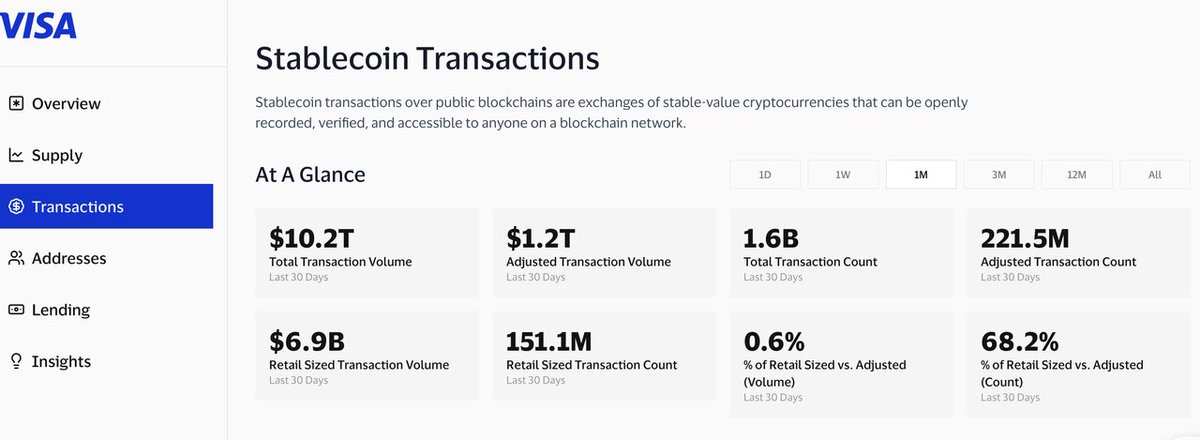
#Stablecoins — Jan ’26
January was a regime check: stablecoin rails stayed hot while supply growth cooled.
First 30 days settled volume > $10T.
USDC did > $8.4T in a month, flipping USDT on volume (first time).
#Moltbot (formerly #Clawdbot) is a fully autonomous, open-source agent you can self-host. Its growing popularity on GitHub is driven by key features: 24/7 operation, a Python/LangChain core, seamless Slack/Telegram integration, persistent memory, and built-in tools for scheduling, messaging, and #workflow automation.
Why agents on-chain matter (3 advantages):
KYC → KYA (Know-Your-Agent)
Verifiable on-chain identity + delegation: bind the agent to a principal, define permission boundaries, and enable auditability/accountability for merchants and protocols.
Agentic payments standardization (stablecoins + x402)
Agents become economic actors via wallets + signatures: pay-per-call, micropayments, and auto-settlement for APIs/data/models/compute.
x402 embeds payment into HTTP (#402 Payment Required)—lower friction, and a path to “kill API keys” via payment/session-based authorization.
Programmable monetization
Usage-based pricing (per request / per token), programmable attribution, and automatic revenue sharing—real-time cashflows to content/data/tool providers.
In the next 12-30 months, AI agents move from “copilots” to always-on autonomous operators—with clearer, repeatable automation workloads.
#Vitalik recently highlighted 3 core AI × crypto vectors:
Agent treasury rails (“AI bank accounts”)
AI can’t open traditional bank accounts. If an agent needs capital to execute tasks (APIs, data, compute), crypto is the most permissionless settlement layer.
#Prediction markets
Agents can trade/forecast as information aggregators, producing higher-signal probabilities and potentially improving market efficiency.
Content provenance
On-chain attestations can help distinguish human-made vs AI-generated content, enabling verifiable authenticity.
https://t.co/DA8ejz79SE
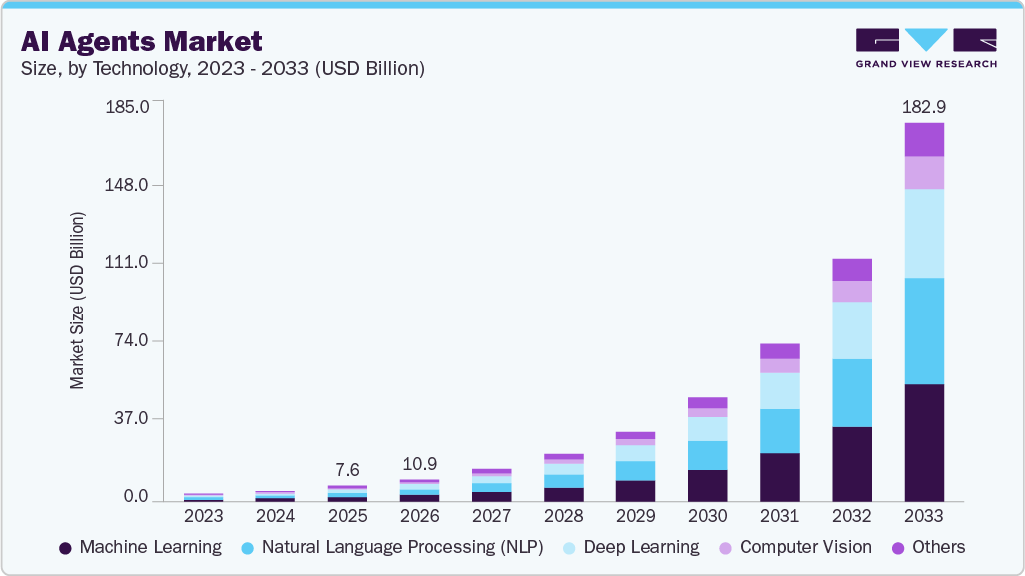
Market sizing from multiple traditional research sources: $5–8B (2024–2025) → $40–50B by 2030 (40–46% CAGR). Growth is concentrated in:
Agent stacks (integration-heavy, multimodal, enterprise)
Autonomous systems in IoT + robotics