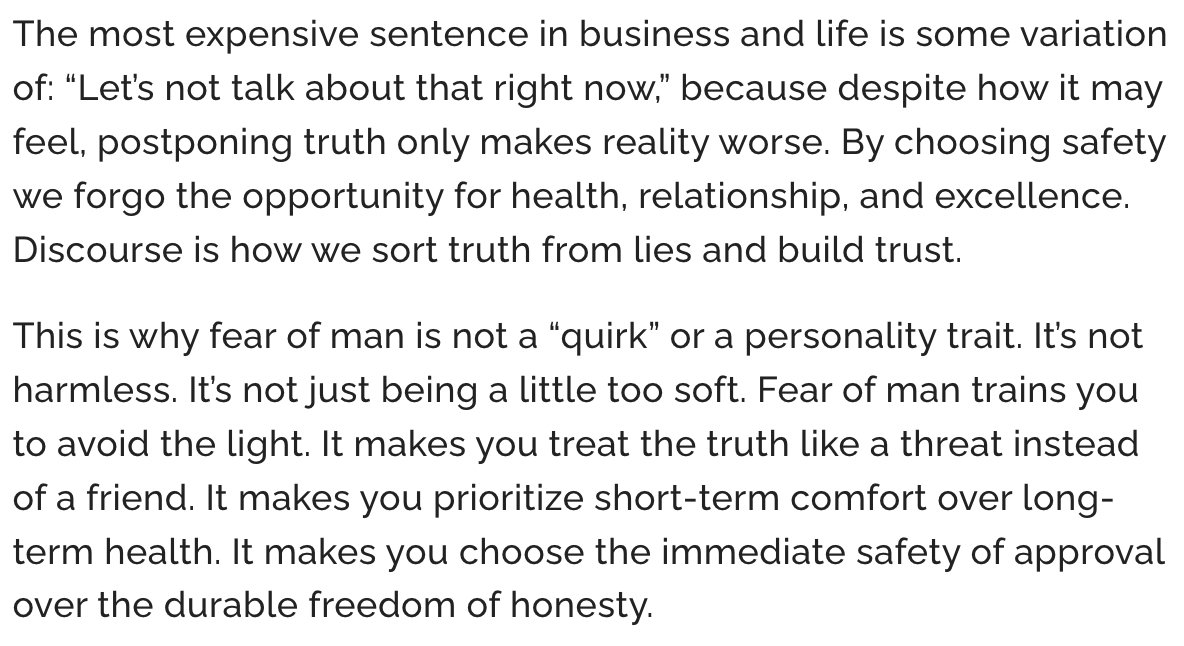
The lies we believe about ourselves are often more destructive than the truths we're hiding from. Nobody corrects them because nobody knows we're carrying them. Or, because we've made the cost of honesty too high for anyone to try.
Elon Musk avait dit un truc qui m'avait marqué sur l'allocation de ressources. En substance : passé un certain niveau de richesse, l'argent n'est plus de la consommation, c'est de l'allocation de capital.
Cette phrase change tout.
L'économie, dans le fond, c'est juste un problème d'allocation. Tu as des ressources finies et des usages infinis. Qui décide où va quoi ?
Imagine une cour de récré. 100 enfants, des paquets de cartes Pokémon distribués au hasard. Tu laisses faire. Très vite, un ordre émerge. Les bons joueurs accumulent les cartes rares, les collectionneurs trient, les négociateurs trouvent des deals. Personne n'a planifié. Et pourtant chaque carte finit dans les mains de celui qui en tire le plus de valeur. Le système maximise le bonheur total de la cour. C'est ça, la main invisible.
Maintenant fais entrer la maîtresse. Elle trouve ça injuste. Léo a 50 cartes, Tom en a 3. Elle confisque, redistribue, impose l'égalité. Trois effets immédiats. Les bons joueurs arrêtent de jouer, à quoi bon. Les mauvais n'ont plus de raison de progresser, ils auront leur part. Les échanges s'effondrent. La cour est égale, et morte. Elle a maximisé l'égalité, elle a détruit le bonheur.
Le problème de la maîtresse, c'est qu'elle ne peut pas avoir l'information que la cour avait collectivement. C'est le problème du calcul économique de Mises, formulé en 1920. L'URSS a essayé de le résoudre pendant 70 ans avec le Gosplan. Résultat : pénuries, queues, effondrement. Pas parce que les Soviétiques étaient bêtes, parce que le problème est mathématiquement insoluble en mode centralisé.
Quand Musk a 200 milliards, il ne les consomme pas, il les alloue. SpaceX, Starlink, Neuralink, xAI. Chaque dollar est un pari sur le futur. Et lui a un track record. PayPal, Tesla, SpaceX. Il a démontré qu'il sait identifier des problèmes immenses et y allouer des ressources avec un rendement spectaculaire.
L'État aussi a un track record. Hôpitaux qui s'effondrent, éducation qui décline, dette qui explose, services publics qui se dégradent malgré des budgets en hausse constante. Le marché identifie les bons allocateurs, la politique identifie les bons communicants.
Le profit n'est pas une finalité, c'est un signal. Il dit : tu as alloué des ressources rares vers un usage que les gens valorisent suffisamment pour payer. Plus le profit est gros, plus la création de valeur est grande. Quand Starlink est rentable, ça veut dire que des millions de gens dans des zones rurales ont enfin internet. Quand un ministère est en déficit, ça veut dire qu'il consomme plus qu'il ne produit. L'un crée, l'autre détruit, et on appelle ça redistribution.
Dans nos sociétés il y a deux catégories d'acteurs. Les entrepreneurs et les bureaucrates. L'entrepreneur prend un risque personnel pour identifier un problème, mobiliser des ressources, créer une solution. S'il se trompe il perd. S'il a raison, ses clients gagnent, ses employés gagnent, ses fournisseurs gagnent, l'État collecte des impôts. Il est la cellule de base du progrès humain.
Le bureaucrate ne prend aucun risque personnel. Son salaire est garanti. Au mieux il maintient une rente existante. Au pire il la détruit par excès de réglementation, mauvaise allocation forcée, incitations perverses qui découragent ceux qui produisent. Mais dans aucun cas il ne crée.
Regarde les 50 dernières années. iPhone, internet civil, SpaceX, Tesla, Google, Amazon, Stripe, mRNA, ChatGPT. Toutes des inventions privées, portées par des entrepreneurs, financées par du capital risque. Pas un seul ministère n'a inventé quoi que ce soit qui ait changé ta vie au quotidien.
La France est devenue le laboratoire mondial de la dérive bureaucratique. 57% du PIB en dépenses publiques, record absolu. Une administration tentaculaire, une fiscalité qui pénalise la création de richesse. Résultat : décrochage face aux États-Unis, à l'Allemagne, à la Suisse. Fuite des cerveaux. Désindustrialisation. Dette qui explose.
Et le pire c'est que la mauvaise allocation s'auto-renforce. Plus l'État prélève, moins les entrepreneurs créent. Moins ils créent, moins il y a de base fiscale. Plus l'État s'endette et taxe. Boucle de rétroaction négative parfaite. La maîtresse pense qu'elle aide, et chaque année la cour produit moins.
Dans nos sociétés, ce sont les entrepreneurs, toujours, qui font avancer la civilisation. Les bureaucrates au mieux maintiennent une rente, au pire la détruisent. Aucune société n'a jamais progressé en taxant ses créateurs pour subventionner ses gestionnaires.
La question n'est jamais qui a combien. C'est qui alloue le mieux la prochaine unité de ressource pour maximiser le futur de l'humanité. La réponse depuis 200 ans n'a jamais changé. Ce ne sont pas les fonctionnaires.
Prices increase May 1. Classic Pass jumps from $1,000 → $1,250 and All-In Pass jumps from $5,000 → $5,500 at midnight on May 1. The event runs September 15–17 in Downtown Columbia, MO with 60+ speakers and 1,200+ attendees.
I love writing and used to do it often. Somewhere along the way, I lost it, retreating to just writing the annual letter every year.
I'm determined to write more, and across a broader variety of topics. If you'd like to follow along, I'm launching a free Substack. Link is below.
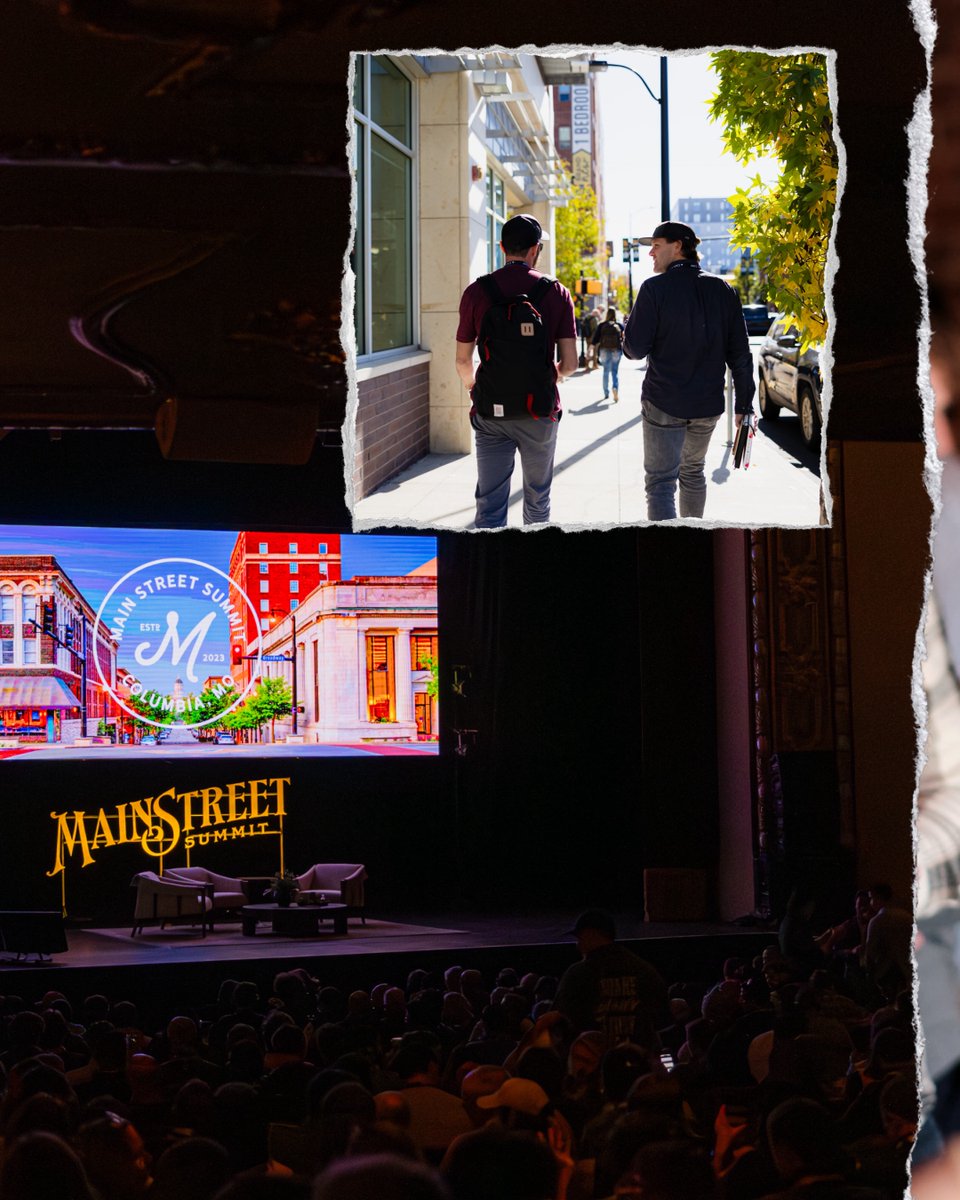
We watched 1,500+ people walk into Main Street Summit. Some came to network. @BrentBeshore challenged them to do something harder.
At every conference, you have a choice in how you show up.
You can use people to get stuff. Or you can use stuff to help people.
The first approach is transactional. You scan the room for who can help you. You lead with "What do you do?" You're looking past people while they're talking, searching for someone more useful.
The second approach is relational. You ask "What should I know about you?" You learn names. You welcome people on the edges who look lost. You stay in conversations that matter, even if it means missing the next session.
Here's what Brent learned after years of operating and investing:
➜ Business is lonely. Running a company can feel like a knife fight. The salvation isn't in collecting more contacts. It's in building real community.
So here's our challenge if you're going to any conference this year:
➜ Don't come home with transactions. Come home with 2-3 real friends. People you actually care about. People who will text you when things get hard in business (and in life).
Because the business wins come from the relationships. Not the other way around.
We opened up registration for Main Street Summit 2026 this week.
Join us this year and make a few new friends: https://t.co/uQZ8EWqO1c
#mainstreetsummit #smb #smallbusiness #conference #columbiamo
Been a CEO. Worked with a lot of CEOs. After 15 years, here's how I think about the role:
What CEOs Are and Aren’t
"The first responsibility of a leader is to define reality. The last is to say thank you. In between, the leader is a servant." — Max De Pree
Most people think of a CEO as the person at the top.
That’s true in the same way it’s true that the windshield is “at the front” of the car. Technically correct. Also, misses the point. The windshield isn’t the engine. It isn’t the wheels. It doesn’t move anything. But it does determine what the driver can see, what they ignore, and what they slam into at 70 miles an hour.
When done well, the CEO job is an arbiter of truth. The CEO stands at the border between the outside world and the inside world, between company mythology and competitive reality. That sounds obvious, but it’s not. I’d argue the norm is delusion, where organizations create realities disconnected from truth, complete with alternate headlines, villains, and heroes, all proclaimed with a shocking level of certainty.
So the CEO’s job starts with a basic question: What’s true? Not what’s comforting. Not what’s politically convenient. Not what our dashboards can measure. What’s true?
And what should we do about it?
But deciding what to do and then doing it, requires a blend of rare attributes. The CEO must be confident enough to pick a direction and humble enough to change it. Optimistic enough to inspire and paranoid enough to prepare. Warm enough to build trust and hard enough to make calls that disappoint people they like and care about.
We need to strip away the mystique. In practice, the CEO allocates three things:
Attention: If you want to understand a CEO, ignore their strategy deck and read their calendar.
Where attention goes, energy flows. Where energy flows, money follows. And where money follows, the organization slowly becomes something different, usually without anyone noticing until it’s obvious.
This is why the CEO’s attention is so expensive. It’s why it’s so easy to waste. There are a thousand “important” meetings that are actually just elaborate ways to avoid the one meeting that matters. There are a thousand “urgent” problems that are actually just the company asking the CEO to temporarily soothe anxiety.
A CEO’s attention is the company’s flashlight. Point it at the right things and companies transform. Point it at the wrong thing long enough and the wrong thing becomes the thing.
People: The CEO builds the team that builds the team.
I’ve learned that a healthy company isn’t built by a heroic CEO. It’s built by a great team operating with clarity, trust, speed, and accountability. The CEO’s role is to create that environment, protect it, and, when necessary, make the painful personnel decisions that preserve it.
This sounds straightforward until you live it. Then you realize you’re not moving boxes on an org chart. You’re messing with people’s dignity, livelihoods, and families. You’re also messing with the morale of everyone who stays. Every hire is a bet. Every promotion is a signal. Every tolerated behavior becomes a de facto policy.
The CEO becomes, whether they like it or not, the embodiment of culture. It’s not what they say they value, but what they practically reward, punish, ignore, and allow.
Money: This is the CEO’s most difficult job because it’s often the one they’re least trained for, that seems the most glamorous, and is extremely impactful over time.
Most CEOs come up through some form of excellence in sales, operations, engineering, or product. Then one day they wake up and realize the biggest decisions they make are capital allocation decisions: reinvest or distribute, grow or consolidate, buy or build, add headcount or automate, bet on the future or play it conservative.
Capital allocation is where strategy stops being a noun and becomes a verb. It is where vision gets an audit. And it’s also where a CEO can quietly ruin a business while looking busy. It’s remarkably easy to confuse action with progress, and reinvestment with wisdom. Oftentimes the best capital allocation decision is painfully boring: Do fewer things, do them better, and keep your powder dry. But, that’s not what gets applause.
In our world, with long-term owners, permanent capital, and no forced exit timetable, this is where the CEO job gets simpler. We don’t need theater. We don’t need growth for growth’s sake. We don’t need to hit a narrative for the next fundraising cycle or quarterly call. We can play offense when the opportunity is real and defense when it isn’t. We can say “not now” without pretending it’s “never.”
This brings me to what might be the most misunderstood part of the CEO role: The CEO is the Chief “No” Officer. Every yes is a no to something else. Every strategy is a pile of exclusions. Every commitment is a tradeoff. The organization will always ask for more: more initiatives, more products, more meetings, more hires, more exceptions, more complexity. Increasing complexity is the default setting of life, and companies are not exempt from natural order.
A CEO has to become comfortable being the person who disappoints people in the short term so the company doesn’t disappoint everyone in the long term. This is where I’ve personally struggled, both as a leader and as an owner. I want to be helpful, agreeable, and liked. I can easily slip into short-term people pleasing at the expense of leading well.
Sometimes I’ve confused my progress anxiety for insight. I’ve wandered into decisions too early because “someone should do something.” I’ve also learned slowly and painfully that a CEO can add enormous value simply by refusing to add noise. Clarity is kindness, but often feels like inaction to busy people.
A lot of CEO work is invisible. It’s pressure management. It’s absorbing emotion without spreading it. It’s knowing what you think and how to say it with grace. It’s carrying the weight of uncertain outcomes while still asking the team to move forward decisively.
This is why, in our portfolio, we care less about a CEO’s charisma and more about their character and judgment. We’ve found that the best CEOs have a rare combination of humility and intensity. They don’t need to be the smartest person in the room, but they do need to be the clearest. They don’t need to have all the answers, but they do need to be willing to make the hard call.
So what do we want from our CEOs?
We want them to be fully themselves, not the corporate watered-down office version. We want them to lead wholeheartedly. We want them to keep one eye on the outside world and one eye on the health of the inside world, and to resist the temptation to trade one for the other. We want them to build a team that tells them the truth, not what they want to hear. We want them to allocate attention, effort, and money with discipline, especially when nobody is watching. And, perhaps most importantly, we want them to make themselves increasingly unnecessary.
That last line sounds offensive until you realize it’s the ultimate compliment. The pinnacle of leadership is to be always useful and never necessary. A great CEO builds an organization that can thrive without their constant presence. They build systems that don’t require heroics. They develop leaders who can lead. They create clarity that outlives their moods. And they ultimately engineer an operation that will outlast their direct involvement.
Continuous improvement will be a core component of a healthy culture. The work should, in fact, be hard. If a CEO believes all the pieces are in place and their work is finished, that same attitude will ripple through the organization. Inconveniently, the market will continue to change. It’s not about looking busy, saving the day, or being personally critical. Rather, the CEO must consistently redefine the organization’s definition of greatness, along with expectations of everyone involved. And if those expectations are not reflected in their own behavior, conflict should be expected. The best CEOs are relentless in their desire to make themselves better first, then to make everyone and everything around them better.
Ultimately, the CEO's job is to seek the truth and tell the truth. Seek and tell the truth about reality. Seek and tell the truth about people. Seek and tell the truth about yourself. Then decide, without perfect information, what the company will and won’t do.
*This is an excerpt from the Permanent Equity 2025 annual letter. Link below.
2025 Annual Letter is live: https://t.co/l5KJR9gXUa
1) Fear of Man
2) Role of CEOs and board members
3) Hard look at AI, PE fees, and selling
4) Health update
5) Experiments in generosity
Main Street Summit signs are going up throughout downtown Columbia, and we couldn't be more excited!
In just two weeks, 1,000+ business owners, operators, and entrepreneurs will converge on The District for the ultimate small business tour de force.
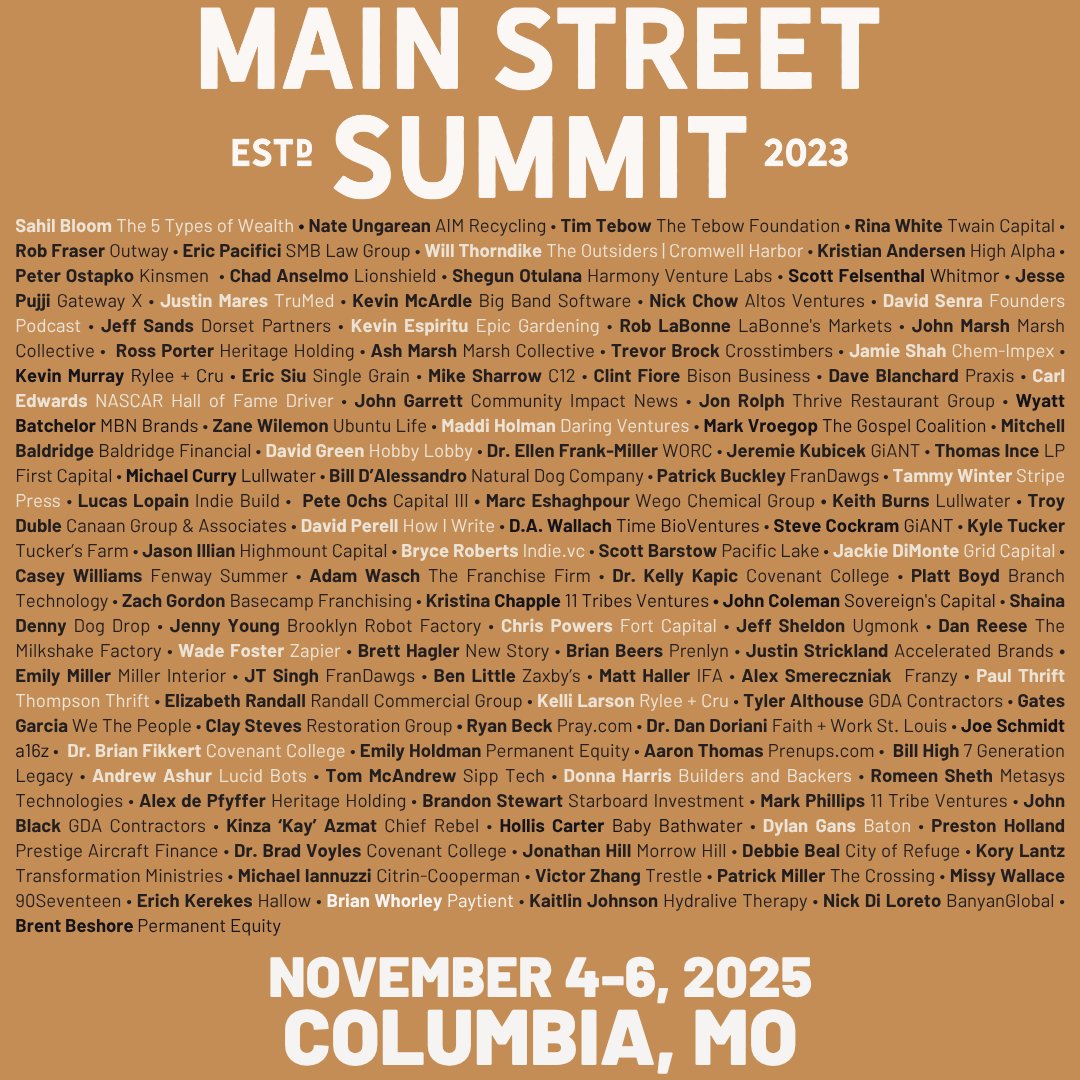
November 4-6, our downtown transforms into a hub of innovation, connection, and growth. From venture startups to manufacturing, construction to faith & work – this is where Main Street means business.
See you at Main Street Summit!
#MainStreetSummit #DowntownCoMo #ColumbiaDowntown #SmallBusiness #Entrepreneurship #ColumbiaMO
You're not meant to build alone. 1,000+ business owners. 100+ speakers. Real conversations about what actually works.
Main Street Summit isn't another corporate conference - it's where small business finds its community.
Nov 4-6. Columbia, Missouri → MainStreetSummit dot com
Carl is a dear friend and a remarkable human. I can't wait to share him with you.
We'll talk a little racing on stage @MainStSummit, but most of our conversation will focus on the search for meaning, what happens when dreams come true, and deep friendship.
When I was getting started, I would have loved to attend something like @MainStSummit.
If you're just starting your career, changing careers, starting a small biz, or would benefit from a little help, reply below with your story.
We'll award 10 scholarship Classic Passes.