The cheapest crypto option can be the most expensive mistake. 👀
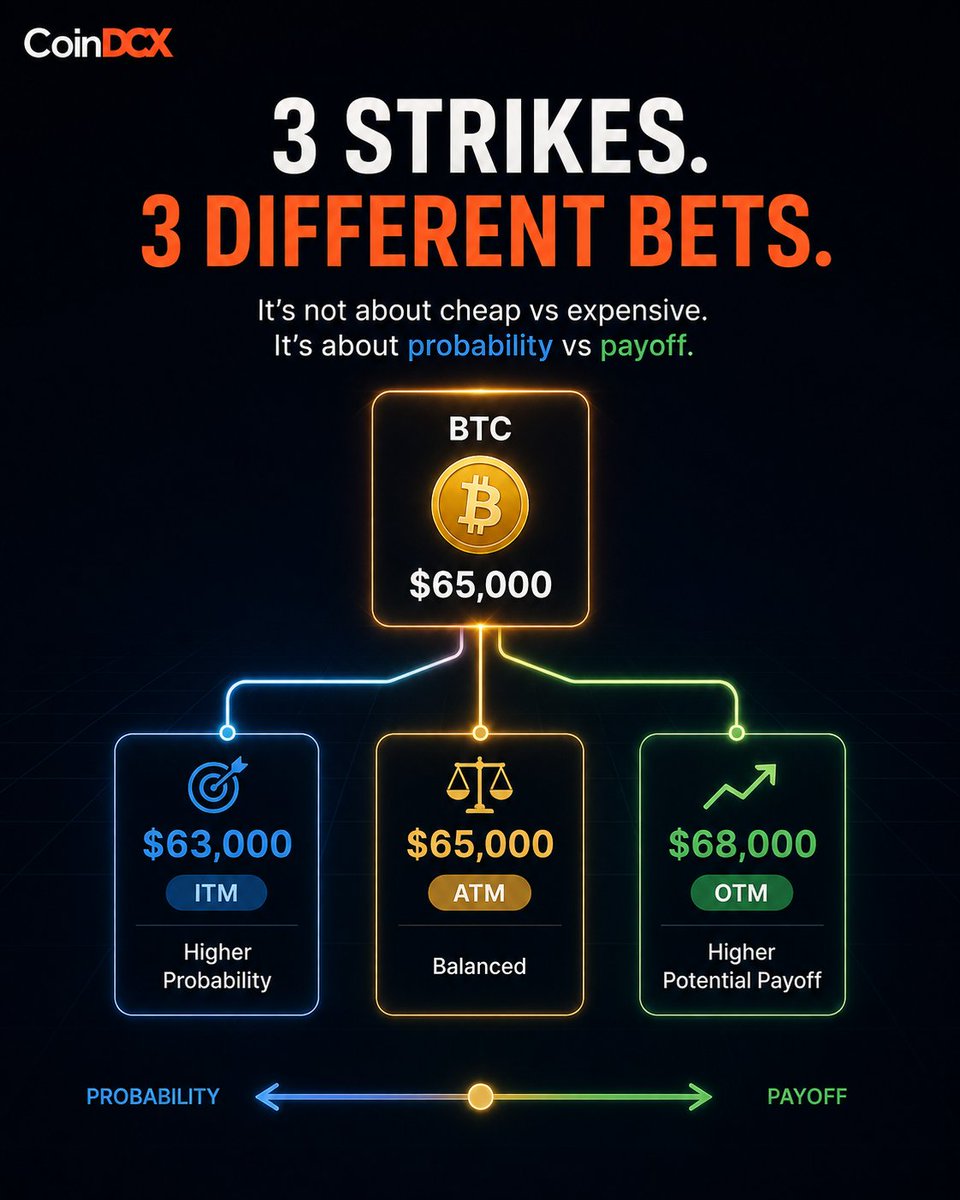
Say BTC is trading at $65K.
You’re bullish and looking at calls:
$63K → ITM
$65K → ATM
$68K → OTM
They’re not just 3 different prices.
They’re 3 different bets on probability vs payoff.
Closer to the current price = generally higher probability of finishing ITM, but usually less explosive upside.
Farther away = generally lower probability, but potentially much higher payoff if your expected move actually happens.
So don’t ask:
“Which strike is cheapest?”
Ask:
“How far do I realistically expect BTC to move?” 🎯
#LearnKaroCryptoKaro
Bullish on BTC? That doesn't automatically mean “buy OTM.”
Before choosing a strike, run this quick checklist:
1️⃣ Where is BTC trading now?
2️⃣ How big is my expected move?
3️⃣ Which strike makes sense for that move?
4️⃣ Am I prioritising probability or potential return?
5️⃣ Does the option premium make sense for the risk?
For example:
BTC = $65K
Expected move = +$3K
Would you choose:
$63K ITM
$65K ATM
or
$68K OTM?
Pick one on CoinDCX and tell me WHY.
Don't justify it because it's cheaper.
Justify it using expected move + probability + payoff. 🎯
That’s how strike selection becomes a strategy instead of a guess.
#LearnKaroCryptoKaro
Let’s make strike selection simple. 🧠
BTC = $65K
Your thesis:
“I expect BTC to move around +$3K.”
Now compare the calls:
🟢 $63K ITM
Higher probability → but you’re paying more for intrinsic value.
🟡 $65K ATM
Middle ground → balanced exposure to the move.
🔴 $68K OTM
Lower probability → but a bigger payoff if BTC makes the move.
That’s the trade-off.
You’re basically choosing:
Higher probability ↔ Higher potential return
And this is where Delta can help as a supporting signal but it shouldn't replace your actual market thesis.
The real question is:
“Is my expected move large enough to justify this strike?”
Not:
“Which option looks cheapest?” 👀
#LearnKaroCryptoKaro
Let’s make strike selection simple. 🧠
BTC = $65K
Your thesis:
“I expect BTC to move around +$3K.”
Now compare the calls:
🟢 $63K ITM
Higher probability → but you’re paying more for intrinsic value.
🟡 $65K ATM
Middle ground → balanced exposure to the move.
🔴 $68K OTM
Lower probability → but a bigger payoff if BTC makes the move.
That’s the trade-off.
You’re basically choosing:
Higher probability ↔ Higher potential return
And this is where Delta can help as a supporting signal but it shouldn't replace your actual market thesis.
The real question is:
“Is my expected move large enough to justify this strike?”
Not:
“Which option looks cheapest?” 👀
#LearnKaroCryptoKaro
The cheapest crypto option can be the most expensive mistake. 👀
Say BTC is trading at $65K.
You’re bullish and looking at calls:
$63K → ITM
$65K → ATM
$68K → OTM
They’re not just 3 different prices.
They’re 3 different bets on probability vs payoff.
Closer to the current price = generally higher probability of finishing ITM, but usually less explosive upside.
Farther away = generally lower probability, but potentially much higher payoff if your expected move actually happens.
So don’t ask:
“Which strike is cheapest?”
Ask:
“How far do I realistically expect BTC to move?” 🎯
#LearnKaroCryptoKaro
The cheapest crypto option can be the most expensive mistake. 👀
Say BTC is trading at $65K.
You’re bullish and looking at calls:
$63K → ITM
$65K → ATM
$68K → OTM
They’re not just 3 different prices.
They’re 3 different bets on probability vs payoff.
Closer to the current price = generally higher probability of finishing ITM, but usually less explosive upside.
Farther away = generally lower probability, but potentially much higher payoff if your expected move actually happens.
So don’t ask:
“Which strike is cheapest?”
Ask:
“How far do I realistically expect BTC to move?” 🎯
#LearnKaroCryptoKaro
If I were building my portfolio from scratch today, I wouldn’t ask:
“Gold or crypto?”
I’d ask:
“What role does each asset play in my portfolio?”
Because one thing markets have taught me again and again:
Being right about an asset isn’t enough if your entire portfolio depends on it.
Crypto can offer massive growth potential, but the volatility can be equally massive.
One week you feel like a genius.
The next week, your portfolio is teaching you patience. 😅
That’s where diversification starts making sense.
Not because you can eliminate risk you can’t.
But because you can avoid putting all your risk in the same basket.
Here’s how I’d think about it:
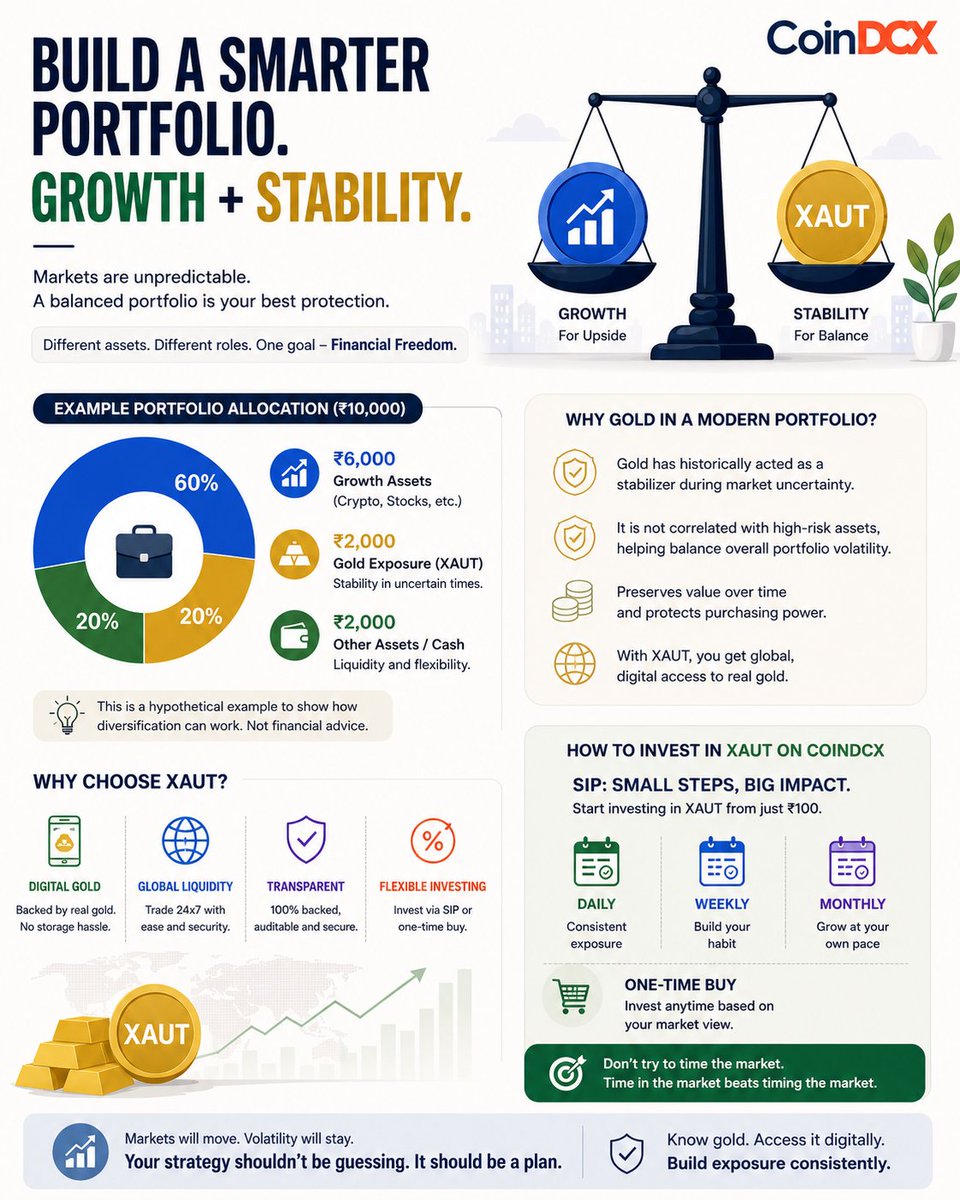
Imagine I had ₹10,000 to allocate.
A simple hypothetical portfolio could be:
₿ ₹6,000 - Growth assets
🪙 ₹2,000 - Gold / XAUT exposure
💰 ₹2,000 - Other assets / cash
The numbers aren't a recommendation. The point is the logic.
Different assets can serve different purposes.
Crypto can be part of the growth side.
Gold can provide a more defensive/stabilizing element during periods of uncertainty.
And instead of treating gold as something that only exists as jewellery sitting in a locker, there’s now a more digital way to build exposure.
That’s where XAUT caught my attention.
XAUT provides digital exposure to gold, and on CoinDCX, you can build that exposure through SIP.
And I actually like the SIP approach because it removes one of the biggest problems investors face:
“When exactly should I buy?”
Instead of constantly trying to predict the perfect entry, you can start with ₹100 and invest:
→ Daily
→ Weekly
→ Monthly
Small, consistent purchases can help you build exposure over time without making every investment decision depend on what the market is doing that particular day.
So my mindset wouldn't be:
❌ “Gold will replace crypto.”
or
❌ “Crypto will replace gold.”
It would be:
“Why not give both a purpose?”
A modern portfolio doesn't necessarily need to pick one winner.
It needs to be built around risk, goals, time horizon and diversification.
For me, that's the interesting part about XAUT.
It's not about buying gold because “gold always goes up.”
It's about having another asset in the toolbox.
Growth needs an engine.
A portfolio also needs balance.
And sometimes, the smartest move isn't finding the next 10x asset.
It's making sure one bad move doesn't wreck everything you've built.
If you're thinking about adding gold exposure to a modern portfolio, XAUT SIP on CoinDCX is worth understanding.
Start small. Stay consistent. Build with a plan.
Don't just own assets. Know why they're in your portfolio.
If you had ₹10,000 to build a diversified portfolio today, how much would you allocate to gold?
$XAUT
#LearnKaroCryptoKaro
If I were building my portfolio from scratch today, I wouldn’t ask:
“Gold or crypto?”
I’d ask:
“What role does each asset play in my portfolio?”
Because one thing markets have taught me again and again:
Being right about an asset isn’t enough if your entire portfolio depends on it.
Crypto can offer massive growth potential, but the volatility can be equally massive.
One week you feel like a genius.
The next week, your portfolio is teaching you patience. 😅
That’s where diversification starts making sense.
Not because you can eliminate risk you can’t.
But because you can avoid putting all your risk in the same basket.
Here’s how I’d think about it:
Imagine I had ₹10,000 to allocate.
A simple hypothetical portfolio could be:
₿ ₹6,000 - Growth assets
🪙 ₹2,000 - Gold / XAUT exposure
💰 ₹2,000 - Other assets / cash
The numbers aren't a recommendation. The point is the logic.
Different assets can serve different purposes.
Crypto can be part of the growth side.
Gold can provide a more defensive/stabilizing element during periods of uncertainty.
And instead of treating gold as something that only exists as jewellery sitting in a locker, there’s now a more digital way to build exposure.
That’s where XAUT caught my attention.
XAUT provides digital exposure to gold, and on CoinDCX, you can build that exposure through SIP.
And I actually like the SIP approach because it removes one of the biggest problems investors face:
“When exactly should I buy?”
Instead of constantly trying to predict the perfect entry, you can start with ₹100 and invest:
→ Daily
→ Weekly
→ Monthly
Small, consistent purchases can help you build exposure over time without making every investment decision depend on what the market is doing that particular day.
So my mindset wouldn't be:
❌ “Gold will replace crypto.”
or
❌ “Crypto will replace gold.”
It would be:
“Why not give both a purpose?”
A modern portfolio doesn't necessarily need to pick one winner.
It needs to be built around risk, goals, time horizon and diversification.
For me, that's the interesting part about XAUT.
It's not about buying gold because “gold always goes up.”
It's about having another asset in the toolbox.
Growth needs an engine.
A portfolio also needs balance.
And sometimes, the smartest move isn't finding the next 10x asset.
It's making sure one bad move doesn't wreck everything you've built.
If you're thinking about adding gold exposure to a modern portfolio, XAUT SIP on CoinDCX is worth understanding.
Start small. Stay consistent. Build with a plan.
Don't just own assets. Know why they're in your portfolio.
If you had ₹10,000 to build a diversified portfolio today, how much would you allocate to gold?
$XAUT
#LearnKaroCryptoKaro
🚨 Imagine your best friend says:
"I'm investing ₹10 lakh into ONE crypto project. Which one should I buy?"
My answer wouldn't be the name of a coin.
It would be:
"Let's research first."
Crypto isn't like buying a lottery ticket. Every investment should answer one simple question:
👉 "Why will this project still matter 5 years from now?"
Here's the beginner-friendly checklist I use before investing.
👇
#Crypto #DYOR
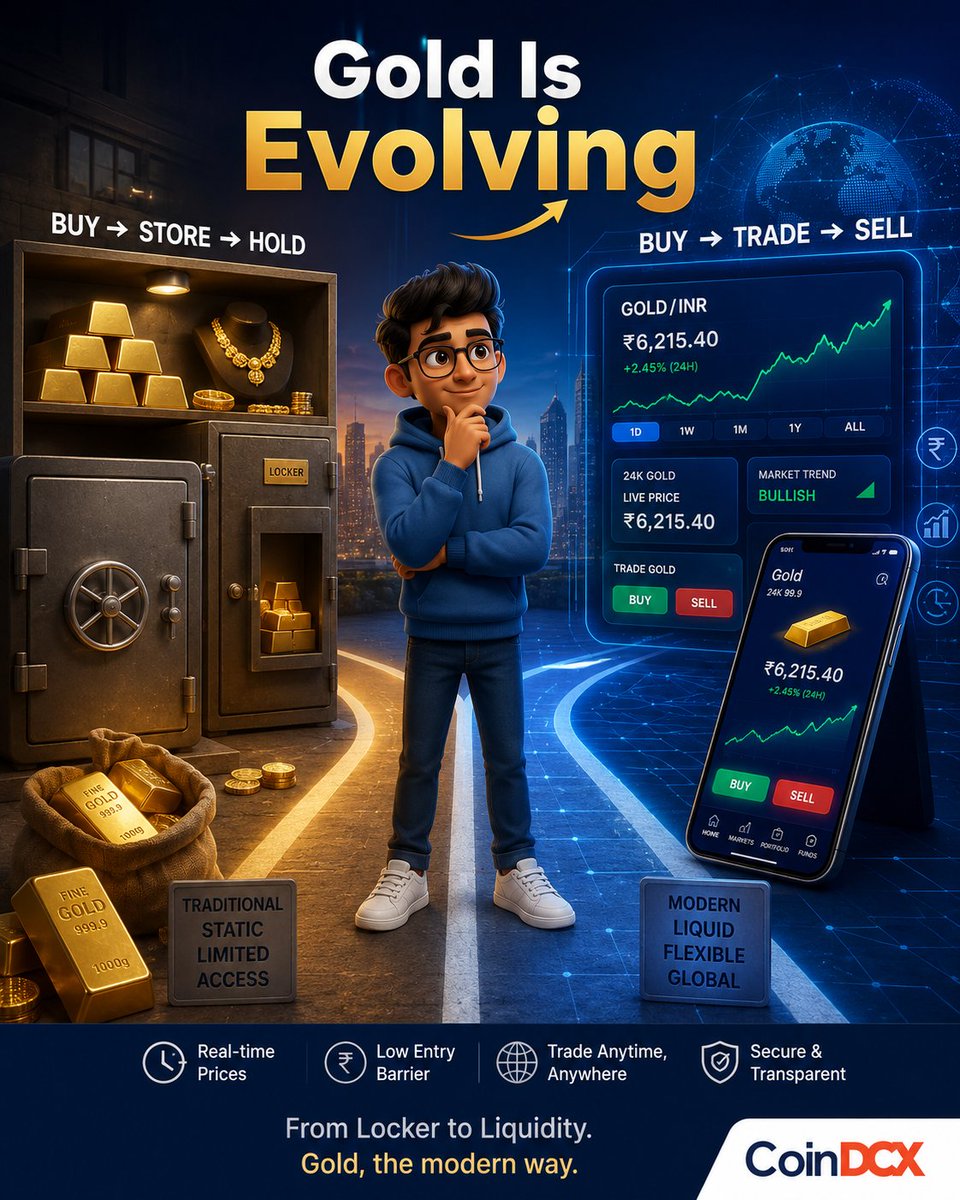
We’ve been buying gold for centuries.
But usually the mindset is:
Buy it → store it → forget about it.
What if gold could fit the way we interact with markets today?
Faster. More flexible. More accessible.
That’s where the idea of digital gold gets interesting.
#LearnKaroCryptoKaro
🧵👇
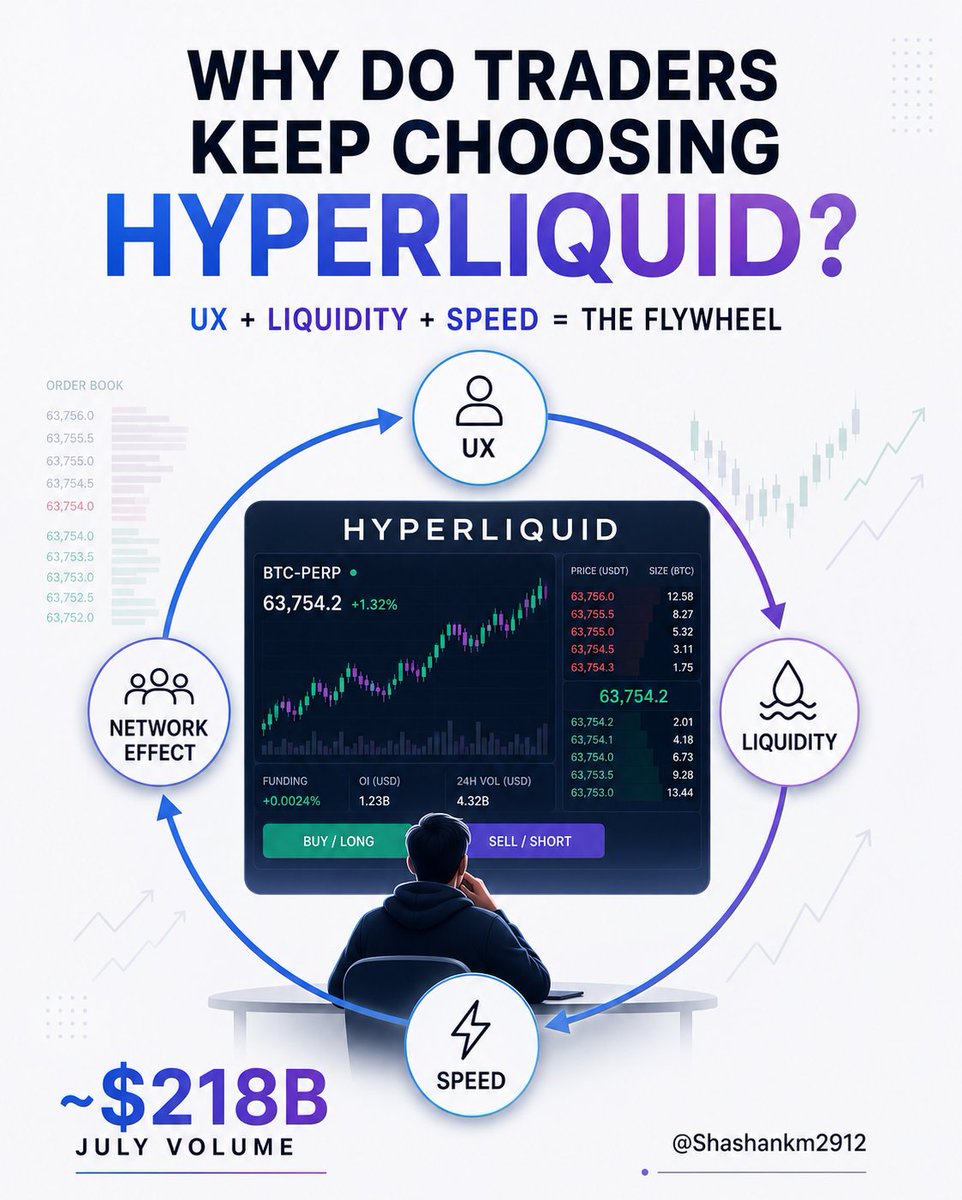
Hyperliquid vs everyone else 👀
July trading volume reportedly hit ~$218B more than the next 7 perp DEXs combined.
But I don't think traders keep choosing Hyperliquid simply because it's already the biggest.
I think it's the flywheel:
1. UX
The trading experience feels familiar.
For an active trader, small things matter: finding a market quickly, checking positions, placing orders and managing them without fighting the interface.
Good UX reduces friction.
2. Liquidity
This is probably the biggest advantage.
More traders create more liquidity.
More liquidity means better execution and less concern about slippage, especially when position sizes get larger.
And better execution attracts even more traders.
3. Speed
Perps aren't a “place an order and forget it” market.
Prices move fast. Liquidations happen fast. Opportunities disappear fast.
So execution speed and a responsive trading experience aren't nice-to-have features they're part of the product.
4. Network effect
This is where everything connects:
More traders
→ more liquidity
→ better execution
→ better experience
→ more traders
Once that loop gets strong enough, competing purely on features becomes difficult.
Community and hype can bring traders through the door.
But I think execution is what makes them stay.
That's why my answer to “Why Hyperliquid?” isn't one feature.
It's the combination of UX + liquidity + speed + network effects.
The real question now:
Can another perp DEX build a better flywheel, or has Hyperliquid already created too much of a liquidity advantage?
Curious what you think.
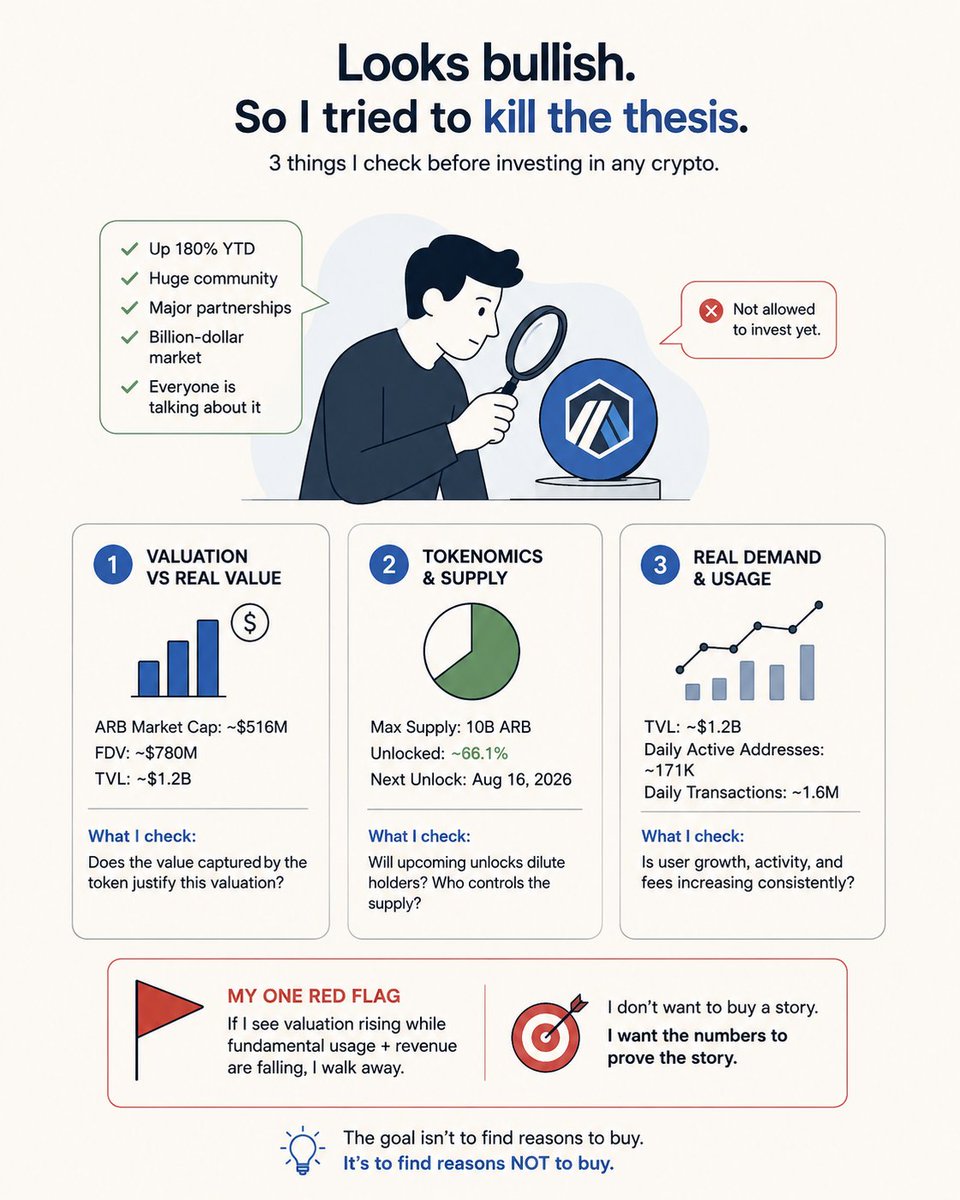
Looks bullish. So I tried to kill the thesis.
Let’s take $ARB as an example.
Arbitrum has ~$1.2B TVL and ~$516M market cap. Sounds attractive.
But before buying, I’d check 3 things:
1️⃣ Valuation vs real value
TVL alone doesn't mean the token is undervalued.
I’d compare ARB’s market cap with the actual fees/revenue the network captures.
Arbitrum generates meaningful activity, but the gap between ecosystem activity and value actually accruing to the token matters.
2️⃣ Token supply
This is where my eyebrows go up.
ARB has a 10B max supply, with ~66.1% currently unlocked.
And another unlock is scheduled for Aug 16.
More supply isn't automatically bearish but if new supply keeps arriving faster than demand grows, holders can face dilution.
3️⃣ Is usage actually growing?
I’d track TVL, active addresses, transactions, DEX/perps volume and fees over time.
Because one good day of activity doesn't prove a lasting investment thesis.
🚩 My ONE instant red flag:
If I see valuation rising while fundamental usage + revenue are falling, I walk away.
I don't want to buy a story.
I want the numbers to eventually prove the story.
That's the 5-minute crypto background check I'd do before putting my money in.
Not financial advice. Just how I’d investigate before buying.
Robinhood’s crypto numbers tell a weird story.
Crypto transaction revenue fell 43.2% in H1 2026.
And yet Robinhood is going deeper into crypto.
That sounds contradictory.
I think it actually reveals where retail investing is heading. 🧵
Robinhood is building around:
• Stocks & options
• Crypto
• Prediction markets
• AI-powered market tools
• Tokenized assets
• Robinhood Chain
• DeFi
• Agentic trading
So I don’t think Robinhood is trying to become “another crypto exchange.”
It’s trying to make crypto part of a much bigger financial experience.
And that distinction matters.
Think about how most people invest today.
Stocks are in one place.
Crypto somewhere else.
Prediction markets somewhere else.
DeFi is still mostly a separate world.
Robinhood’s bet seems to be:
“What if the user never has to care which category an asset belongs to?”
They just open one app and invest.
That’s a much bigger ambition than simply selling Bitcoin.
And the numbers show why this strategy makes sense.
In Q2, Robinhood’s transaction-based revenue jumped 44% YoY to $776M.
Crypto contributed $100M, down 38% YoY.
But equities, options and event contracts helped offset the weakness.
That tells me something important:
Crypto doesn’t have to be Robinhood’s biggest product for crypto to matter.
It can become the infrastructure connecting everything else.
Tokenized stocks are a good example.
If traditional assets can eventually move onchain, then the boundary between “traditional finance” and “crypto” starts becoming less important.
The user may not even think:
“I’m using blockchain.”
They’ll simply think:
“I’m buying an asset.”
And that could be crypto’s biggest mainstreaming moment.
Not millions of people suddenly becoming crypto experts.
But millions of people using onchain infrastructure without caring that it’s onchain.
That’s why I’m more interested in Robinhood’s strategy than its crypto revenue alone.
The real competition may not be:
Robinhood vs Coinbase.
It may be:
Who can build the easiest financial interface for the next generation of investors?
Crypto-native platforms have the technology, culture and liquidity.
Robinhood has something different:
A massive retail-investing distribution layer.
If Robinhood can combine that distribution with onchain rails, tokenization, prediction markets and AI…
the “crypto app” might not look like a crypto app anymore.
It might look like a normal investing app.
And honestly, I think that’s the more interesting future.
My prediction:
The next wave of crypto adoption won’t necessarily come from people choosing crypto over stocks.
It will come from people owning stocks, crypto, prediction contracts and tokenized assets in the same place without thinking about the underlying infrastructure.
Crypto may not become the entire financial system.
It may become the layer quietly running underneath it.
That’s the Robinhood bet I’m watching.
What do you think?