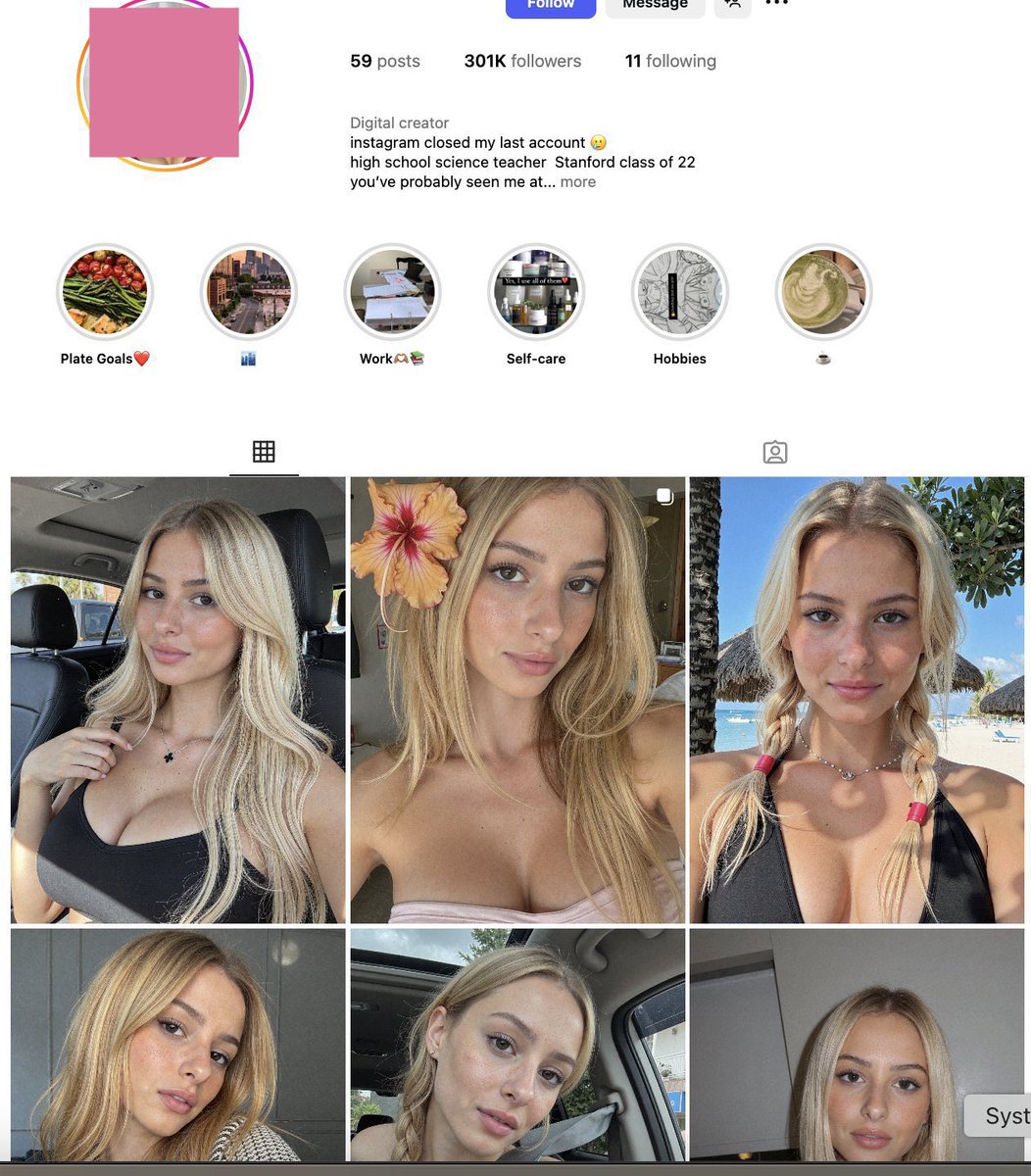
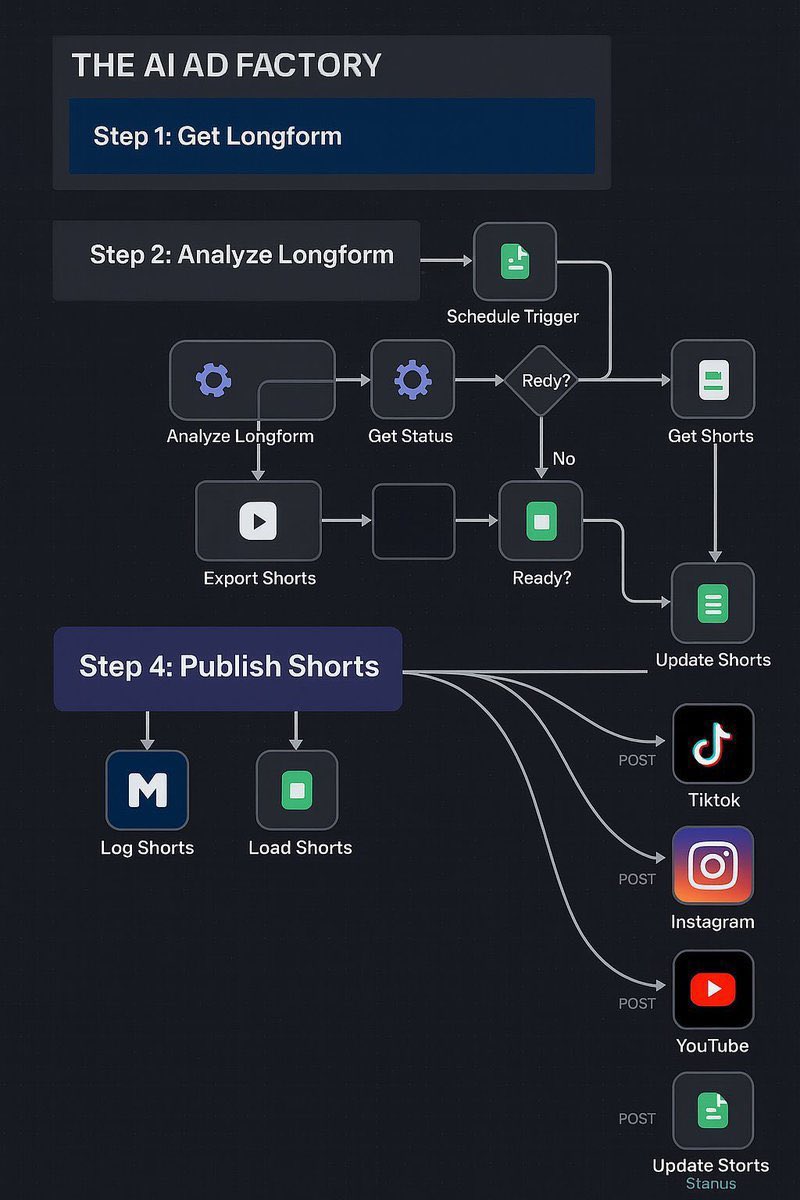
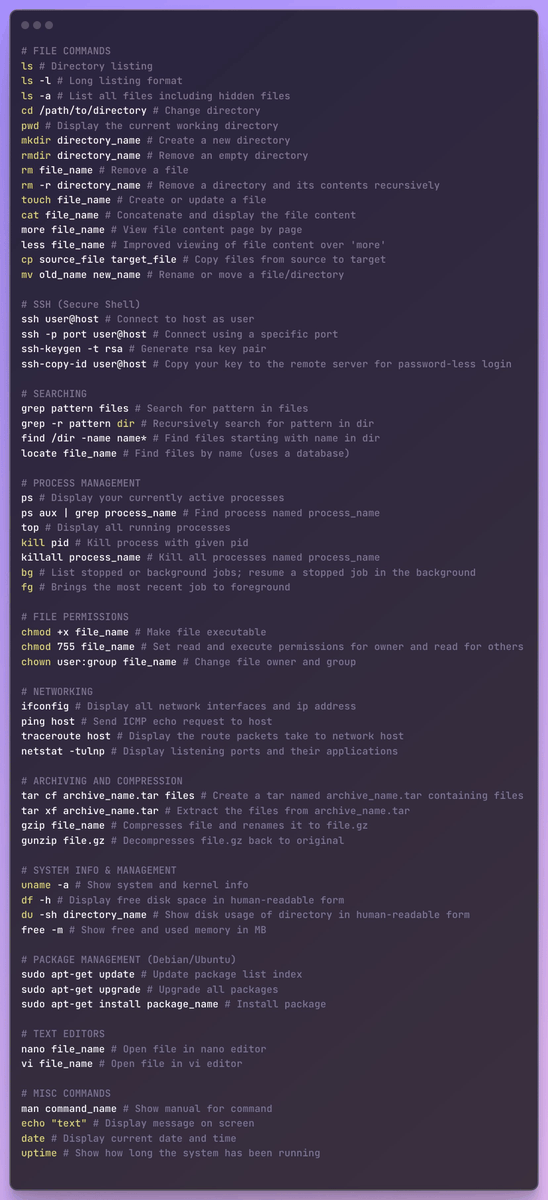
My AI Instagram girl is bringing in $25K a month
Just reached 100K, most of her reels go viral
If you want to try creating an AI influencer yourself, like, retweet, and comment “IG.” FOLLOW Must and I will send you a guide with instructions.
https://t.co/iourbv8a7o
Paid my tuition thanks to AI baby videos.
Took minutes to create—and they’re going viral.
Just look at the views these shorts are getting.
Want to start earning easy money too?
Like, retweet, and comment “ BABY ” (make sure you're following), and I’ll send you.
kids are making millions by using Grok-3
So I created the Ultimate Guide on Grok-3
I'll sell it for $75
But you can get it for FREE for the next 24 hours
Like, RT & comment "Sent" and I'll DM it to you ASAP
(Must be following so I can DM You)
If you want to get rich on X, it isn't going to be through creator revenue or meme coins.
Instead, think about one subject matter that you know more about than anyone else in the world. It can be anything: plumbing, menswear, Indian food, furniture, social apps, whatever.
Post one unexpected insight you picked from your experience in that area. Keep it under 5 sentences. Do this every day for 6 months.
If you stick to it, we will promote your account to others.
By the end, you will be recognized as the world's leading expert in that subject area and you can charge whatever you want for endorsements, your time, or whatever. And no one will be able to take that way from you.
Earns $400 per hour by using chatGPT Prompts
I've created a guide with 24 methods to help you earn $5,000 daily
Normally $199, but today, it is free. (Only For 48 Hours)
So, what are you waiting for?
To get it;
✅Like & Repost♻️
✅Comment 'Send'
✅Follow me so I can DM you.
It's very EASY to earn $200 a day if you have:
- A phone
- Wifi
- ChatGPT
1. Take your phone
2. Read my guide
3. Start making $2-3k per week
Like & Reply “Guide” & I’ll DM you the Step-by-Step GUIDE.
(Must follow to get it) FREE for 24 hrs
Make a new youtube channel
September : Get monetized
And make your first $10k before december.
Charge 100$ but this time Free.
Like,
Repost
and comment "youtube"
I'll send you a training guide to get you started.
(must be following
Want this job but need skills? Grok has you:
### Assess Your Current Skills and Experience
Before diving into preparation, evaluate where you stand against the role's requirements. Review your resume for:
- Hands-on experience with post-training (e.g., RLHF, DPO, fine-tuning). If you have less than 3 years, focus on building a portfolio through personal projects or open-source contributions.
- Proficiency in Python and PyTorch—test yourself with simple model implementations.
- Research or projects in AI reasoning, logic, or cognitive science. If lacking, prioritize reading key papers.
- Relocation readiness to Palo Alto, as the role emphasizes in-office work.
If you're entry-level or switching fields, aim for 6-12 months of dedicated prep. For mid-level candidates, 3-6 months might suffice with focused practice.
### Build a Strong Technical Foundation
Start with core AI/ML concepts before specializing in post-training. This ensures you can handle the role's broad scope, from ideation to deployment.
1. **Master Python and PyTorch:**
- Brush up on Python for data manipulation (NumPy, Pandas) and scripting.
- Learn PyTorch through official tutorials: Build and train neural networks, understand tensors, autograd, and model deployment.
- Resource: PyTorch documentation and free courses on Coursera (e.g., "Deep Learning Specialization" by Andrew Ng).
2. **Understand Model Architectures and Reasoning Basics:**
- Study transformer-based models (e.g., GPT variants) and how they handle reasoning tasks like chain-of-thought prompting.
- Explore cognitive science intersections with AI, such as logical inference and multi-step problem-solving.
- Key readings: Papers like "Chain-of-Thought Prompting Elicits Reasoning in Large Language Models" (Wei et al., 2022) and "Emergent Abilities of Large Language Models" (Wei et al., 2022).
### Deep Dive into Post-Training Techniques
The role centers on post-training optimization for reasoning, so prioritize RLHF (Reinforcement Learning from Human Feedback), DPO (Direct Preference Optimization), fine-tuning, and alignment methods. These sharpen models for coherent, insightful outputs.
1. **Structured Learning Path:**
- **Beginner Level (1-2 months):** Learn basics of supervised fine-tuning (SFT), preference-based alignment, and why post-training is needed (e.g., to fix biases or improve reasoning without retraining from scratch).
- **Intermediate Level (2-3 months):** Dive into RLHF variants (e.g., PPO - Proximal Policy Optimization) and DPO as a simpler alternative to RLHF.
- **Advanced Level (Ongoing):** Innovate with hybrid techniques, like custom prompting or synthetic datasets for reasoning tasks.
2. **Top Resources and Courses:**
- **Courses:**
- "Post-training of LLMs" by https://t.co/kfb3FzoGYR: Covers SFT, DPO, and online RLHF with practical labs.
- "Generative AI with LLMs" on Coursera (includes RLHF hands-on via AWS workshop).
- Hugging Face's "Aligning LLMs with Direct Preference Optimization" workshop: Free, with code examples.
- **Books and Guides:**
- "RLHF Book" by Nathan Lambert: Comprehensive intro to RLHF as part of post-training.
- "Interconnects" newsletter by Nathan Lambert: Curated RLHF resources for beginners and experts.
- **Tutorials and Videos:**
- YouTube: "Fine-tuning LLMs on Human Feedback (RLHF + DPO)" by a data entrepreneur—includes 30 project ideas.
- "How language model post-training is done today" video: Optimistic overview of 2025 open recipes.
- **Repositories and Papers:**
- GitHub: "Awesome-LLM-Post-training" repo—papers, code, benchmarks for LLMs.
- ArXiv survey: "Large Language Models Post-training: Surveying Techniques"—covers RLHF, DPO, and more.
- Substack: "Direct Preference Optimization (DPO)" by Cameron Wolfe—explains alignment for human preferences.
- **Blogs and Overviews:**
- Snorkel AI: "LLM alignment techniques: 4 post-training approaches"—strengths and challenges.
- Ahead of AI: "New LLM Pre-training and Post-training Paradigms" and "LLM Training: RLHF and Its Alternatives."
Practice with open-source tools like Hugging Face Transformers, TRL library for RLHF, and datasets from OpenAI or Anthropic for reasoning benchmarks.
### Gain Hands-On Experience and Build a Portfolio
The ideal candidate has a "portfolio of successful model enhancements." Focus on creative projects to demonstrate ingenuity.
1. **Project Ideas:**
- Fine-tune a model (e.g., Llama or Mistral) using DPO on a reasoning dataset like GSM8K (math problems) to improve multi-step solving.
- Create synthetic datasets for edge-case reasoning (e.g., logical paradoxes) and apply RLHF to align outputs.
- Build a custom prompting framework for adaptive thinking, evaluating with benchmarks like BIG-Bench.
- Experiment with hybrid methods: Combine fine-tuning with data augmentation to fix inconsistencies in model logic.
2. **Tips for Execution:**
- Use Google Colab or a personal GPU setup for experiments.
- Track metrics: Develop custom benchmarks for reasoning (e.g., accuracy on puzzles, coherence scores).
- Contribute to open-source: Fork repos like those in Awesome-LLM-Post-training and add your innovations.
- Document everything: GitHub repos with READMEs explaining your approach, results, and creative breakthroughs.
Aim for 3-5 projects, emphasizing reasoning improvements. This will shine in your "statement of exceptional work" and presentation.
### Prepare for the Interview Process
xAI's process is streamlined: CV review, 15-min phone screen, coding assessment, 2x post-training technical sessions, and a team presentation. Goal: Finish in one week.
1. **General Prep Tips:**
- Use ChatGPT for mock interviews: Simulate questions on post-training challenges.
- Practice the STAR method for behavioral questions (e.g., "Tell me about a creative breakthrough in an AI project").
- Communicate thought processes clearly—explain assumptions, trade-offs, and optimizations.
2. **Phone Screen (15-min):**
- Prepare a concise intro: Highlight post-training experience and why xAI (e.g., aligning with their mission for transformative AI).
- Basic questions: Expect queries on your background and motivation.
3. **Coding Assessment:**
- Language of choice (Python recommended).
- Focus: Algorithms for data processing, model evaluation, or simple RL implementations.
- Practice: LeetCode/HackerRank for medium-level problems. Use a 7-step framework: Listen, example, brute force, optimize, walk-through, code, test.
4. **2x Post-Training Technical Sessions:**
- These test formulating, designing, and solving problems in post-training data (e.g., "Design a dataset to improve logical inference" or "Fix inconsistencies in a model's reasoning via DPO").
- Prep: Practice edge cases, iterative experimentation, and metrics. Similar to OpenAI's technical rounds—focus on ambiguity and innovation.
5. **Meet the Team Presentation:**
- Present past exceptional work (e.g., a project demo) and vision for xAI (e.g., "Pushing reasoning frontiers with novel alignment").
- Keep it 10-15 mins: Structure with problem, approach, results, lessons.
- Practice: Record yourself; ensure it's engaging and collaborative.
6. **Additional Advice:**
- Mock interviews: Use platforms like Pramp or friends for AI-specific practice.
- For AI research roles like this, emphasize publications or breakthroughs without a PhD—focus on impact.
- Network: Connect on LinkedIn/X with xAI employees; attend AI meetups in Palo Alto.
- Rest and mindset: Treat rejections as learning; luck plays a role.
### Final Tips for Success
- Timeline: Dedicate 4-6 hours/day; track progress weekly.
- Community: Join Reddit (r/MachineLearning), Hugging Face forums, or AI Discord groups for feedback.
- Relocation: If not in Palo Alto, highlight openness in your application.
- Stay Updated: Follow xAI on X for insights, though specific interview tips are scarce—prep mirrors OpenAI/Anthropic.
This preparation will position you to innovate in reasoning post-training, aligning with xAI's bold vision. Good luck!