A disturbing incident took place at a lake. The sister of a young Black girl says a man pulled up his dock ladder while her sibling was trying to climb out of the water. The girl cried out that she could not breathe and begged for help, but the man refused, telling her to go around.
According to the sister, two women nearby said “you people shouldn’t be swimming here” while the child was being dragged under by waves from passing boats. Moss and weeds on the dock made it impossible for her to climb out, and she was slipping below the surface gasping for air.
The sister also says that the same man had earlier let white children use the ladder but removed it when her Black sister reached for it. She says she pulled her sibling out herself and believes that if she hadn’t acted, her sister would not have survived.
This reflects a wider pattern. Black people have long been treated with hostility and exclusion around pools, lakes, and other bodies of water. What should be safe spaces for leisure are too often turned into sites of danger and racism.
#PublicSpacesWhileBlack
#SwimmingWhileBlack
#BlackInTheWater
#WhileBlack
If Little Brother’s Curtain Call Tour comes to a city near you—don’t miss it.
“This is a celebration, not a sad day. We’re giving people one more chance to cheer for Little Brother while we’re still here—not when we’re gone.” 👑
“Sometimes fans get upset with the artist, but it’s really the venues you need to talk to,” Pooh said when I asked who deserves the blame.
“If [venues] understood who the people wanted to see, maybe they’d move differently.”
So when people ask why their city didn’t make the tour...
“Some venues passed. Some didn’t respond. And some deals just didn’t make sense. If we’re not in your city, it’s not because we didn’t try.” https://t.co/G3QLLJRIeG
The artist is always the last to get paid:
“We have to make sure everyone else is taken care of before we are. And if there’s nothing left, that’s just what it is. We’re not leaving our homes, at 45 years old, to sit in a 15-passenger van for 12 hours just to come home broke.”
Little Brother tours with 7 people who make the shows happen—Pooh, Phonte, their DJ, a soundman, a merch manager, a backup vocalist, and a road manager.
“If a show loses money, it’s not a label covering it. It’s coming out of mine and Phonte’s pocket. That’s a personal loss.”
“If you want to make $30K from a show, but the venue only holds 250 people—do you know how much you'd have to charge fans for that to work? It’s unrealistic,” Pooh explained.
And those venue costs?
“One spot quoted us $25,000 just to rent the venue. I’m like, you’re not making that just opening your doors on a regular night—so why are we being charged that?” Pooh said.
“Promoters used to know your audience,” Pooh told me. “They knew who you were, who listened to your music, and how to get them in the room. Now it’s venues booking shows blindly and blasting the same email for bluegrass, rap, or rock.”
Back in 2019, the plan was simple: reunite, tour, drop a documentary, and close the @LittleBrotherNC chapter with intention. The pandemic derailed that plan. But five years later, Pooh and Phonte are finally finishing that mission…on their own terms.
This decision is not about burnout.
It’s about a system that no longer works for most artists—especially those who’ve built something real:
“Touring used to be where you knew that’s where your money was coming from. Now, most of us are just hoping to break even.”
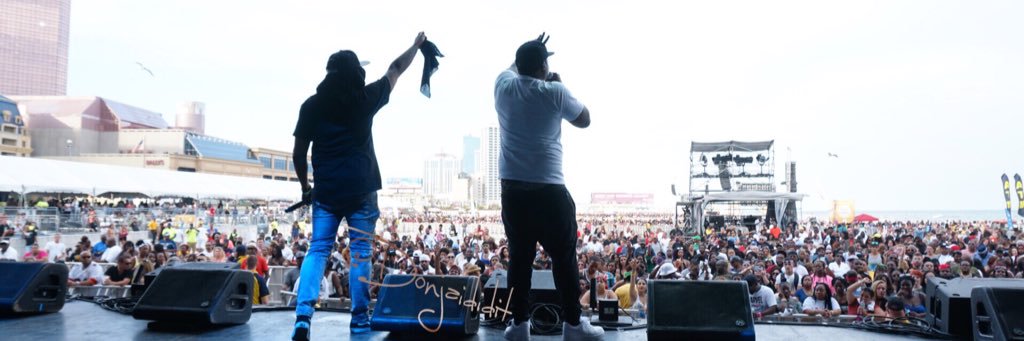
Artists are now expected to do it all—marketing, promo, booking openers—while venues take more than ever: “You start doing the math, and it’s like, this isn’t making financial sense anymore. We’re talking thousands to open [their] doors, then they want 20% of your merch on top.”
That’s why every tour starts with a spreadsheet:
“Every show is a math problem: What’s the venue capacity? What can we charge for tickets? What’s our travel cost? And what does that leave for us?”












![BrianZisook's tweet photo. Artists are now expected to do it all—marketing, promo, booking openers—while venues take more than ever: “You start doing the math, and it’s like, this isn’t making financial sense anymore. We’re talking thousands to open [their] doors, then they want 20% of your merch on top.” https://t.co/ICnPNKLSwZ](https://pbs.twimg.com/media/GogHS_eXQAALTEw.jpg)