🌊 Introducing Driftpay — the payment layer where your money earns while it travels.
Send $500 SOL to a contractor.
Your funds park in the highest-yield DeFi protocol during the window.
Contractor gets $500. You keep the yield.
No idle capital. Ever.
Powered by real-time @birdeye_data API:
→ /defi/token_security to filter rug risk
→ /defi/token_trending to rank live yield
→ OHLCV volatility scoring to weight by TTL
The router picks the safest, highest-yield protocol automatically — Raydium, Kamino, or MarginFi — based on how long the payment needs to settle.
Building this for @birdeye_data's BIP Sprint 1 🏗️
Code dropping on GitHub: https://t.co/9VtylEIuFa
here's the demo: https://t.co/2pYrVLtLY0
#BirdeyeAPI #Solana #DeFi #BuildInPublic
🏀 NEW TO STREETBALL RIVALS? START WITH 300 FREE GEMS! 💎
Hit the court, build your squad, upgrade your players, and prove you’ve got game. 🔥
🎁 New players get 300 FREE GEMS when they register for the first time!
💬 Join the community:
Streetball Rivals Discord(https://t.co/33LsEnsLoF)
Build your squad. Own the streets. 🏀🔥
#StreetballRivals #Streetball #Basketball #MobileGaming
Building a little app called FakeCart.
The idea came from how easy it is to buy stuff online now.
You see something cool, add to cart, and 30 seconds later you own it.
But a lot of the time, “I want this” really just means “I want this right now.”
So FakeCart lets you do a fake checkout first.
Add the thing, “buy” it, get the little satisfaction hit, then come back a few days later and ask:
do I still want this?
That’s basically the whole idea.
Not trying to build another budgeting app. More like a cooling-off button for shopping.
Building it in public and sharing what works, what doesn’t, and whether people actually use it.
Would you try this?
Building a little app called FakeCart.
The idea came from how easy it is to buy stuff online now.
You see something cool, add to cart, and 30 seconds later you own it.
But a lot of the time, “I want this” really just means “I want this right now.”
So FakeCart lets you do a fake checkout first.
Add the thing, “buy” it, get the little satisfaction hit, then come back a few days later and ask:
do I still want this?
That’s basically the whole idea.
Not trying to build another budgeting app. More like a cooling-off button for shopping.
Building it in public and sharing what works, what doesn’t, and whether people actually use it.
Would you try this?
Building a streetball mobile game like a startup, not just a game project.
Right now, the priority is finding product-market fit in the core gameplay loop: can we make a 3–5 minute match feel good enough that players immediately want another one?
We’re iterating on movement, shot timing, defensive logic, matchmaking flow, progression, and retention hooks—while trying to keep the controls simple enough for mobile.
The goal isn’t to ship the most features.
It’s to find the smallest version of streetball that feels genuinely addictive, then build from there.
#BuildInPublic #Startup #GameDev #MobileGaming
I want dribbling in my streetball game to feel less like “moving a joystick” and more like sizing up a defender.
This week I rebuilt the movement system around 3 things:
tighter lateral movement
quicker hesitation → drive transitions
more momentum when changing direction
It’s still rough, but it already feels much more like streetball.
Next I’m testing two directions:
A. faster, arcade-like handles
B. heavier, more physical 1v1 movement
Which one would you rather play?
Google just dropped a free 120 minutes workshop on complete Graph Engineering.
How to go from a single prompt all the way to agent teams, loops, and self-building graphs:
• 10:16 - Build your first AI agent.
• 41:05 - Master prompt engineering.
• 54:45 - Turn agents into graphs.
• 1:20:10 - Run loops inside graphs.
• 1:43:33 - Build a graph that improves itself.
Prompts -> Agents -> Loops -> Graphs -> Self-Improving Systems
Most people ship one agent and call it done and Google is already teaching everything that comes after.
This free course beats most $500 agent engineering programs.
Watch it today, bookmark it, and then read how to run 300 agents from one prompt below ↓
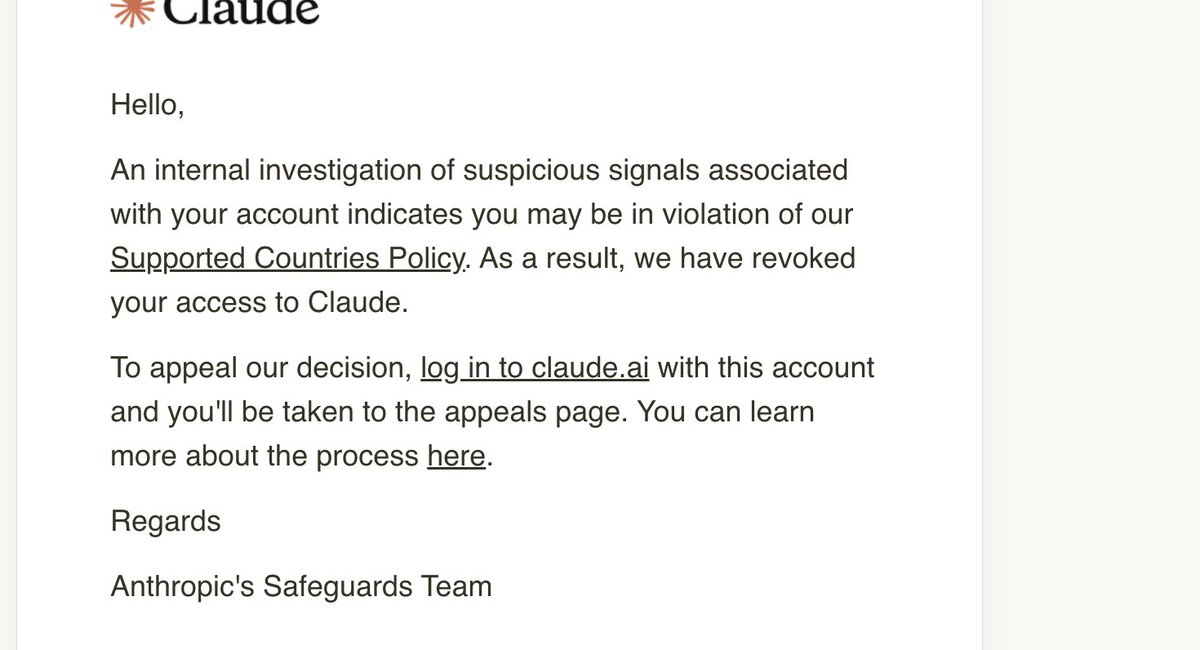
@AnthropicAI@claudeai please help me investigate with this account: [email protected]
I only used this account few times, but somehow it got blocked, could you tell me why it got blocked
Why is Rust different than many/most programming languages? Alice Ryhl works on Google's Android Rust team, is a Rust language team advisor, and is a core maintainer of Tokio (the most widely-used async runtime in Rust) Timestamps:
00:00 Intro
04:09 Tokio: an overview
05:11 What Alice likes about Rust
12:48 Rust for TypeScript engineers
13:51 Moving from C++ to Rust
14:34 Memory safety
18:12 Garbage collection tradeoffs
21:46 Ownership, references, and borrowing
26:59 Unsafe in Rust
31:21 Crates and Cargo
35:55 Language design and RFCs
43:02 Building new features
46:30 Editions vs. versions
49:47 Getting paid to work on Rust
51:27 Contributing to Rust
53:03 Rust in the Linux kernel
55:45 AI use cases for Rust
1:01:35 Learning Rust
1:03:54 Book recommendation
Brought to you by:
• @AntithesisHQ – verify your system’s correctness without human review or traditional integration tests – and avoid bugs or outages. https://t.co/AKYm4cbVCU
• @sentry – application monitoring software considered “not bad” by millions of developers https://t.co/uoolyqTjhe
Three things worth knowing about Rust:
1. Rust was designed to turn implicit failures into compile errors.
Where other languages allow you to forget something, Rust makes an omission into a compilation error for things like null checks, uninitialized variables, or error propagation with the ‘?’ character. If you mess something up, it’s almost certain your program will not compile. If it does, at the very least you should see a lint warning.
2. Refactoring in Rust is safe and easy, thanks to the compiler.
Alice: “I change a return type or struct field, then just fix the compiler errors until the compiler stops shouting. And then once I’ve done that, I’ve updated every place I need to update.” Rust’s focus on correctness makes refactoring it more straightforward than dynamically-typed languages and Java-style typed ones are to refactor.
3. “Editions” allow Rust to make breaking changes without ‘breaking’ anyone’s code.
Rust editions (2015, 2018, 2021, 2024) can be mixed freely across crates. A library on the 2021 edition works seamlessly with a binary on the 2024 edition. This is how Rust evolves syntax (like adding async/await as keywords) without forcing an ecosystem-wide migration.
Thanks a lot, Alice for this great discussion! And for your work on Rust.