#NaijaFarmerTips
Mosquitos are currently in active service this season due to the weather.
Malaria medicine is expensive, to get original seff na hardwork. Insecticides nko?
Don't even go there.
How do we solve this mosquito issues without breaking the bank or spending too much?
In farming communities, you don't have to break the bank to protect yourself from mosquitoes.
Steps
- You need coconut oil and a handful of Cloves
- Pour the cloves in the Coconut oil and leave it for at least 3 days.
- On the 3rd day, shake very well
- When you want to sit out with your family, you can rub the oil all over your exposed body areas or if you think mosquitoes are in your room.
- No mosquito will dare come near you!
Tested and Trusted.
Share with Retweet so more people can this.
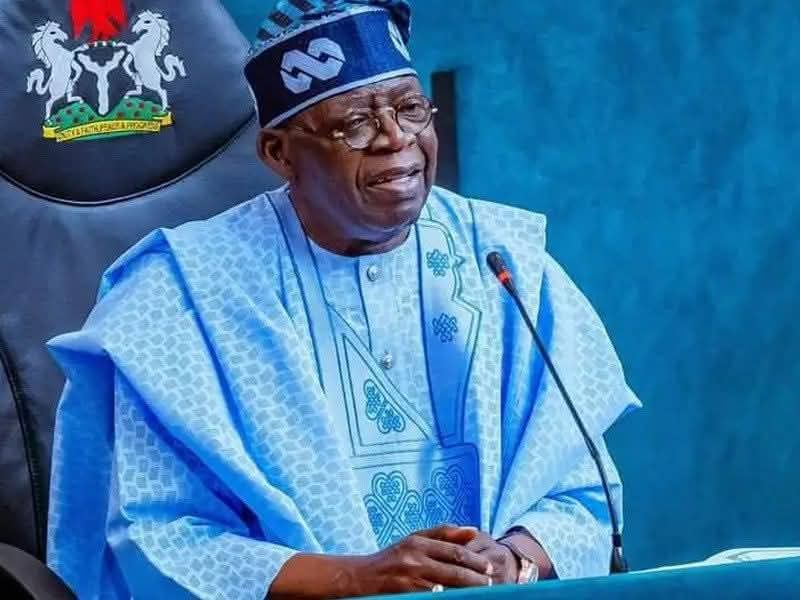
LIKE TINUBU OR NOT- LEADERS MUST BE STRONG-WILLED TO MAKE HARD DECISIONS.
Leadership is not popularity.
Leadership is pressure.
When Asiwaju Bola Ahmed Tinubu said on May 29, 2023, “Subsidy is gone,” he knew what was coming.
Fuel prices jumped overnight.
Protests followed.
Approval ratings dipped from day one.
But here’s the uncomfortable truth:
Nigeria was spending trillions annually on fuel subsidy — more than capital budgets combined in some years.
Hard decision #1: Removing fuel subsidy.
It put him at odds with labour unions, parts of the North where fuel dependency is politically sensitive, and even members of his own coalition.
Yet he didn’t reverse it unlike President Jonathan.
Hard decision #2: Floating the naira.
The Central Bank reforms and exchange rate unification ended the multiple-rate regime that benefited powerful interests.
That move affected:
• Import-dependent elites
• Currency speculators
• Politically connected businesses
Inflation rose.
The backlash was real.
But it disrupted a system that had become a rent-seeking machine.
Hard decision #3: Reworking the power structure.
Tinubu has historically supported restructuring and state policing — ideas that make some Northern political blocs uncomfortable.
Yet he continues pushing decentralization conversations, even when it risks political capital.
He doesn't care.
Hard decision #4: Confronting entrenched financial interests.
The recapitalization directive for banks signaled consolidation pressure on financial institutions.
The reforms at the Central Bank of Nigeria after the tenure of Godwin Emefiele showed willingness to confront internal monetary power structures.
That is not a small fight.
Hard decision #5: Tax and revenue reform agenda.
He has backed efforts to widen the tax net and improve revenue collection — something governors resist quietly because it forces fiscal discipline.
This is something the Nórth has always been against from independence.
But Tinubu yet got it done.
Strong-willed leaders understand one thing:
- Negotiation where possible.
- Force where necessary.
Remember:
As Lagos governor (1999–2007), when the federal government withheld local government funds, Tinubu sued the Federal Government of Nigeria — and won in the Supreme Court.
He fought legally.
Not emotionally.
That’s pattern politics:
• Build alliances (like the 2013 coalition that formed the All Progressives Congress)
• Negotiate internally
• But when the line is drawn — stand firm.
You may dislike the pain of reforms.
You may question execution.
You may argue about timing.
But history shows one thing:
Weak leaders preserve comfort.
Strong leaders disturb systems.
The real debate is not whether the policies hurt.
The real debate is whether Nigeria can survive without tough, sometimes unpopular decisions.
Power is not for the faint-hearted.
And reform is never romantic.
Ugoji Maximillian Teacher of systems. Translator of power. Builder of Elite mindset. Speaker, Author and Entrepreneur.