Esta clase de Stanford de Robert Sapolsky cambió mi forma de pensar.
1 hora sobre el mayor error mental que cometes cada día sin darte cuenta.
Te lo explico con 5 ideas, pero merece la pena verla entera 🧵:
BREAKING: The SEC is set to release its so-called "innovation exemption" for tokenized stocks which will pave the path for trading digital versions of securities, per Bloomberg.
Details include:
1. In a "surprise move," the SEC is leaning toward allowing the trading of tokenized assets
2. These tokenized assets would be tradeable on decentralized crypto platforms
3. The move could "reshape the landscape of the American stock market"
4. This would also be one of the US' biggest shifts into crypto infrastructure yet
Tokenized assets are rapidly expanding.
The Arbitrum Security Council has taken emergency action to freeze the 30,766 ETH being held in the address on Arbitrum One that is connected to the KelpDAO exploit. The Security Council acted with input from law enforcement as to the exploiter’s identity, and, at all times, weighed its commitment to the security and integrity of the Arbitrum community without impacting any Arbitrum users or applications.
After significant technical diligence and deliberation, the Security Council identified and executed a technical approach to move funds to safety without affecting any other chain state or Arbitrum users.
As of April 20 11:26pm ET the funds have been successfully transferred to an intermediary frozen wallet. They are no longer accessible to the address that originally held the funds, and can only be moved by further action by Arbitrum governance, which will be coordinated with relevant parties.
Update on rsETH incident:
According to our analysis, rsETH on Ethereum mainnet is fully backed.
Out of an abundance of caution, rsETH remains frozen across Aave V3 and V4 and exposure to the incident is capped.
WETH reserves also remain frozen across affected markets including Ethereum, Arbitrum, Base, Mantle, and Linea.
Aave is actively validating information and assessing potential resolutions.
tokenがなくなったのでローカルでopenclawとollamaのqwen3.5:35b-a3b-coding-nvfp4を試してみた。ollamaがメモリを30GB近く消費。同時にcomfyUIで画像を作ってる環境でも動かしてみたけどちゃんと動いてた。しかしパワーが足りないなちょっと遅い。メモリよりもパワーが必要だ。mac M4 pro 64GB環境
53 banking associations just wrote themselves a $6.6 trillion protection bill.
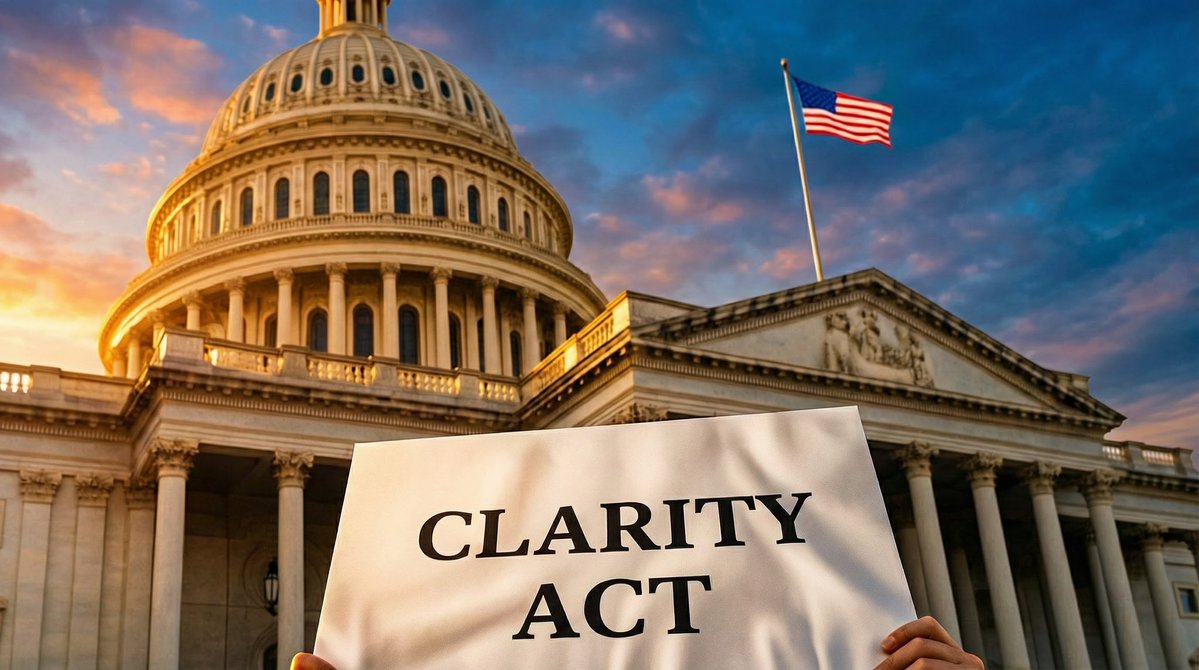
They called it the CLARITY Act.
Here is what they do not want you to understand.
Banks pay depositors 0.1% interest. Stablecoin issuers hold Treasury bills earning 4.5%. If stablecoins could pass that yield to users, banks lose the deposit war. They cannot compete. The math is fatal.
So they made competition illegal.
The Kansas City Fed calculated what happens if stablecoins pay competitive rates. Banks lose 25.9% of deposits. $1.5 trillion in lending capacity vanishes. The entire community banking model collapses.
Their solution was not innovation. Their solution was legislation.
The CLARITY Act everyone is celebrating contains Section 404 prohibiting yield payments through any mechanism. Not just from issuers. From exchanges. From affiliates. From partners. Every single pathway to competitive returns, closed by statute.
Brian Armstrong reviewed the 278-page draft for 48 hours. He withdrew Coinbase support at 11pm. The markup was postponed by morning. He saw what Wall Street analysts missed entirely.
This is not crypto regulation.
This is Dodd-Frank for digital assets. Incumbents writing rules that crush competitors. Regulatory capture so brazen they published the lobbying letters on their own websites.
The American Bankers Association. 52 state banking associations. The Community Bankers Council. All coordinating to eliminate an industry they cannot beat in open markets.
Meanwhile China made e-CNY interest-bearing on December 29.
America is banning stablecoin yield while Beijing is paying it.
The crypto industry spent years begging for regulatory clarity.
They got it.
Clarity that $6.6 trillion in deposits will be protected at any cost. Clarity that banks write the rules. Clarity that if you cannot win in markets, you win in Congress.
This is the largest regulatory capture event in American financial history.
And it is being sold as innovation policy.
Excited to partner with @SharpLink and bring DeFi yield to public markets for the first time in history.
Institutions can now purchase ETH and make it productive onchain, all within a qualified custodian. This is a watershed moment for ETH and I expect lots more corporate treasuries to follow suit.
A great start to 2026!
2026 marks the beginning of Ethereum’s "productive era" and a major step function in its adoption curve.
This $170M deployment on @LineaBuild brings DeFi yield to public markets within a qualified custodian.
This is what institutional-grade productivity looks like.