Stop destroying our past:📜
Chimamanda Ngozi Adichie reflects on early Igbo history using materials from Yale archives, challenging long-held misconceptions about pre-colonial Igbo society and highlighting its depth and complexity.
Speaking at the International Igbo Conference, she urges the protection and documentation of Igbo heritage from within.
She emphasized that cultural identity is stronger than political identity, urging unity among Igbo-speaking people and the importance of reclaiming and documenting our own history.
@ChimamandaReal 🖤👏
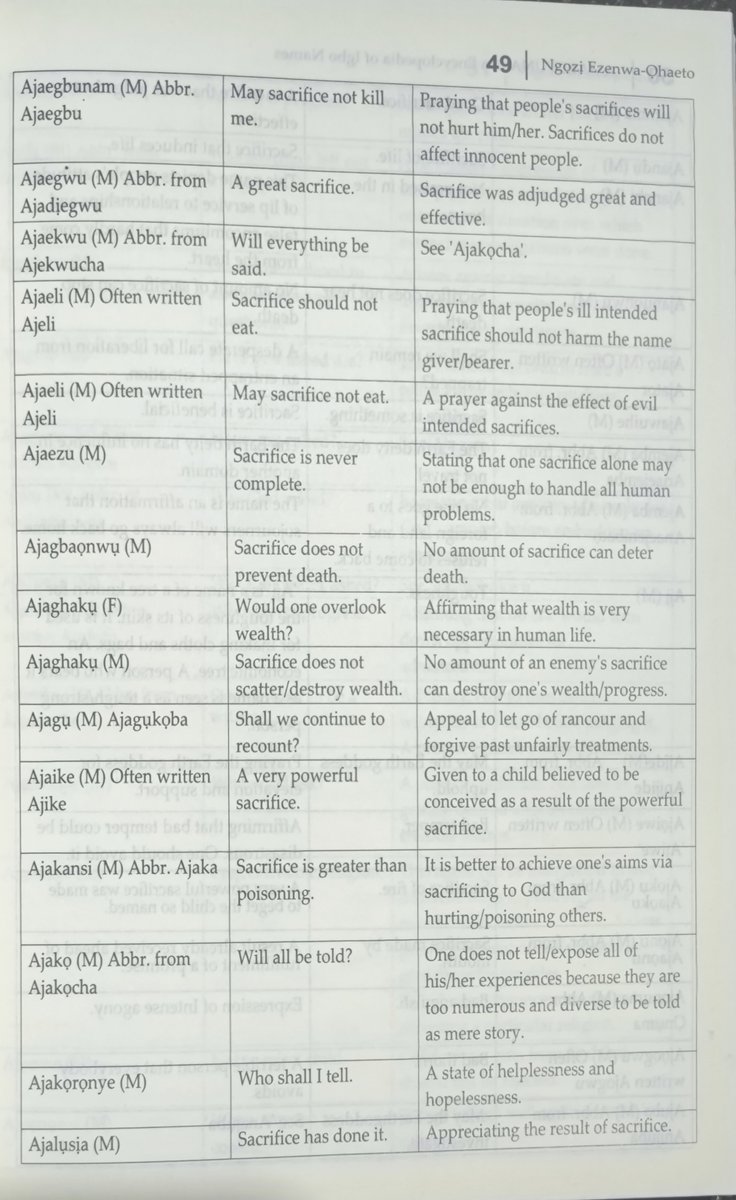
Ngozi Ezenwa-Ohaeto's 433-page encyclopedia of Igbo Names is titled, Afamefuna. As the book explains on page 33, 'Afamefuna (Afam)' is a male name that means 'May I not lose my name'. 'It is a prayer for a lasting linage which is often assured by having male children.'
I have a habit of asking people - at a first meeting - the meaning and ancestry of their names. That habit has enriched my education greatly, although I have also suffered some blowback: a Somali lady once rebuked me, thinking that I was trying to identify her clan in order to pigeonhole and discriminate against her.🤷
Books like Afamefuna might reduce my rudeness some, though I find that my curiosity brings insight. Years ago, I asked my friend, Amulo, about his unique name. Turns out it was short for Amulonaiweagwusia (We're all smiles now, right? But I'm still angry with you). Turns out that at the birth of her firstborn son his mum had been irritated by the celebration of the same neighbours who had mocked her throughout her years of barrenness.
So, she gave him a name that would rebuke those neighours every time they called him.
By the way, 'Amulo' is not in the encyclopedia. Neither is that memorable name, Uwachommadu (The world needs a real person), about which I have written previously. But in the last two pages of the book the author lists some names whose meaning she is still seeking for future edition. Cultural preservation is always a communal project.
I find that the ancestors packed a long more baggage into the names they gave their children. Modern couples are more likely to pick a name for how it sounds. I reckon corporate-sounding names will find more takers today. For the ancestors, names were often short stories and histories, entrancing nuggets for writers to sink their imaginations into.
The schism in naming styles and religious beliefs between past and present generations of Igbo families means that large tranches of Igbo names have slipped and are slipping into oblivion. There are not likely to be many Ogbenyeanus (A pauper should not marry me) in Gen Zee and Gen Alpha. There is probably less variety in Igbo names today than at any time in history. This validates Prof. Ezenwa-Ohaeto's book. Afamefuna should make namings a more thoughtful exercise, with a lot more choices for new parents.
I could say a lot more on the philosophy, sociology and gendering of names, or open up some of those short stories and histories concatenated into some deeper Igbo names but, no... don't get me started on names tonight!
Your secret is in your language, your intelligence is in your culture.
Nwa afọ, study etymology and you will hate your current self after deciphering and decoding all the lies you have been consuming.
"Igbo" is not just a word, it's a code.
People who are spiritually observant know when you have some type of animosity towards them. We notice everything, subliminal disrespects, changed tone, body language. We can even sense negative vibes through text or reading the room without engaging in conversation. The only way it misses us if we deliberately ignore it.
Many think spirituality is:
1. Attending overnight prayers.
2. Posting Bible verses.
3. Tithing publicly.
4. Broadcasting charity.
Real spirituality is:
1. Paying debts.
2. Keeping promises.
3. Living clean when no one is watching.
4. Having good intentions.
Have you all noticed the family that makes it successful are family that has Unity, that has one voice.
It shows unity brings peace and peace brings progress.
And that is what is lacking in 80% of families in Ala Igbo and general.
This was purposely programmed.