“If you know the enemy and know yourself, you need not fear the result of a hundred battles. If you know yourself but not the enemy, for every victory gained you will also suffer a defeat. If you know neither the enemy nor yourself, you will succumb in every battle”
- Sun Tzu, Head of Prime Brokerage, Robinhood
Regarding an out of cycle alteration to GPIF’s asset allocation, nothing is imminent.
Nevertheless, markets are forward looking: the fact so many people are discussing Katayama’s “off the cuff” (they were not off the cuff) remarks on GPIF matters.
And GPIF has a habit of adjusting portfolio allocations before they are officially announced - as you would, too, if your AUM were that big.
Anyway.
On June 6, 2025 $/¥ was ~ 144.50.
Japan’s Pension Pivot Could Rewire Global Markets
Finance Minister Satsuki Katayama said today that Japan wants households and pension funds, including the Government Pension Investment Fund, to invest more in Japanese financial assets.
This was not a binding order or an announced sale of foreign holdings. It was a policy signal. The yen had weakened toward 163 per dollar, the 10 year JGB yield had climbed near 2.9%, and investors were questioning how Japan could finance fiscal needs while the Bank of Japan reduced bond purchases and normalized rates.
GPIF manages about ¥294 trillion and holds close to half of its portfolio in foreign bonds and equities. That structure was built during the Abenomics era, when Japan moved capital abroad to improve returns and diversification.
Japan now faces the reverse problem. A weak yen is raising import costs in an economy with fragile real wages, weak demand, low potential growth, and demographic pressure. The BOJ is also reducing the support that kept government borrowing costs suppressed for years.
The Carry Trade Connection
GPIF is not a leveraged carry trader, but its foreign allocation affects the same currency channel. If pension funds reduce foreign purchases, increase currency hedges, or bring capital home, the yen receives a structural bid.
A stronger yen can force investors who borrowed yen to fund global positions to buy it back. That can trigger deleveraging across technology stocks, credit, crypto, emerging markets, and sometimes Treasuries.
The real systemic risk comes from pension repatriation combining with direct currency intervention, faster BOJ tightening, crowded yen shorts, and weak global liquidity.
What It Solves And What It Risks
More domestic demand could stabilize JGB auctions, replace part of the shrinking BOJ bid, strengthen the yen, and support Japanese equities. If capital is directed toward productive companies, infrastructure, automation, and energy security, it could also support growth.
But pension demand does not erase Japan’s debt. It only changes who holds it. If retirement assets are pushed into JGBs mainly to suppress borrowing costs, the policy starts to resemble financial repression.
It also creates risk for pensioners. Japan has an aging and shrinking population, weak trend growth, and concentrated domestic risks. Foreign diversification protects beneficiaries from those same problems.
What Happens Next
A gradual shift is realistic. GPIF can redirect new contributions, reinvest maturities at home, increase currency hedging, or move within existing allocation bands.
A sudden forced repatriation is harder because GPIF has its own governance structure and a mandate to invest for beneficiaries, not to manage the yen or finance the government.
The most likely outcome is a modest domestic tilt that supports the yen and JGBs at the margin. The dangerous scenario begins if Japan moves from signaling to coordinated action. A formal GPIF allocation change, direct intervention, faster BOJ hikes, and participation by insurers and other pension funds could trigger a sharp yen rally and a broader carry trade unwind.
Japan wants a stronger yen, stable bond markets, lower fiscal stress, and more domestic growth. This may buy time, but it cannot replace fiscal reform, productivity gains, or demographic solutions. 🍄
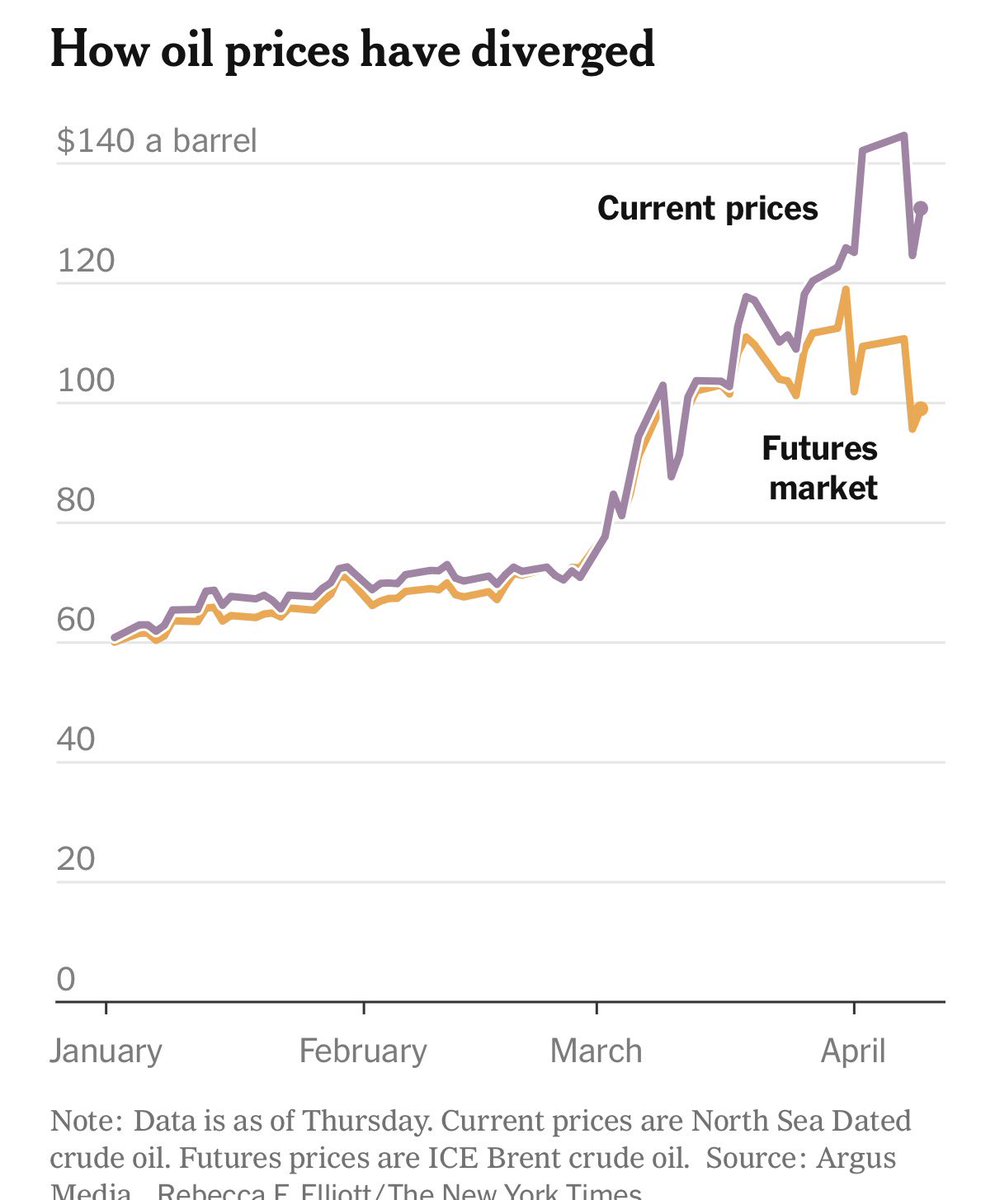
From the @nytimes:
“The futures and spot prices are rarely exactly the same, but the gap between them has grown unusually big in the past few weeks, so much so that oil executives and analysts say futures prices no longer accurately reflect the extent of the supply shock that the world is experiencing.”
#economy #oil #energy #markets
My statement on the final rule on leverage ratio capital relief. I think we should give further attention to removal of Treasury securities and reserves from leverage ratio calcluations, since we force banks to hold these through liquidity requirements. https://t.co/umglzUrFzw
As you wade through the expert precious metals* commentary of late, keep in mind the final paragraph of Alex Tabarrok’s timeless column from thirteen years ago:
“A bet is a tax on bullshit”.
*same goes for every issue, it seems
RENTECH Saturday Morning project: October lessons?
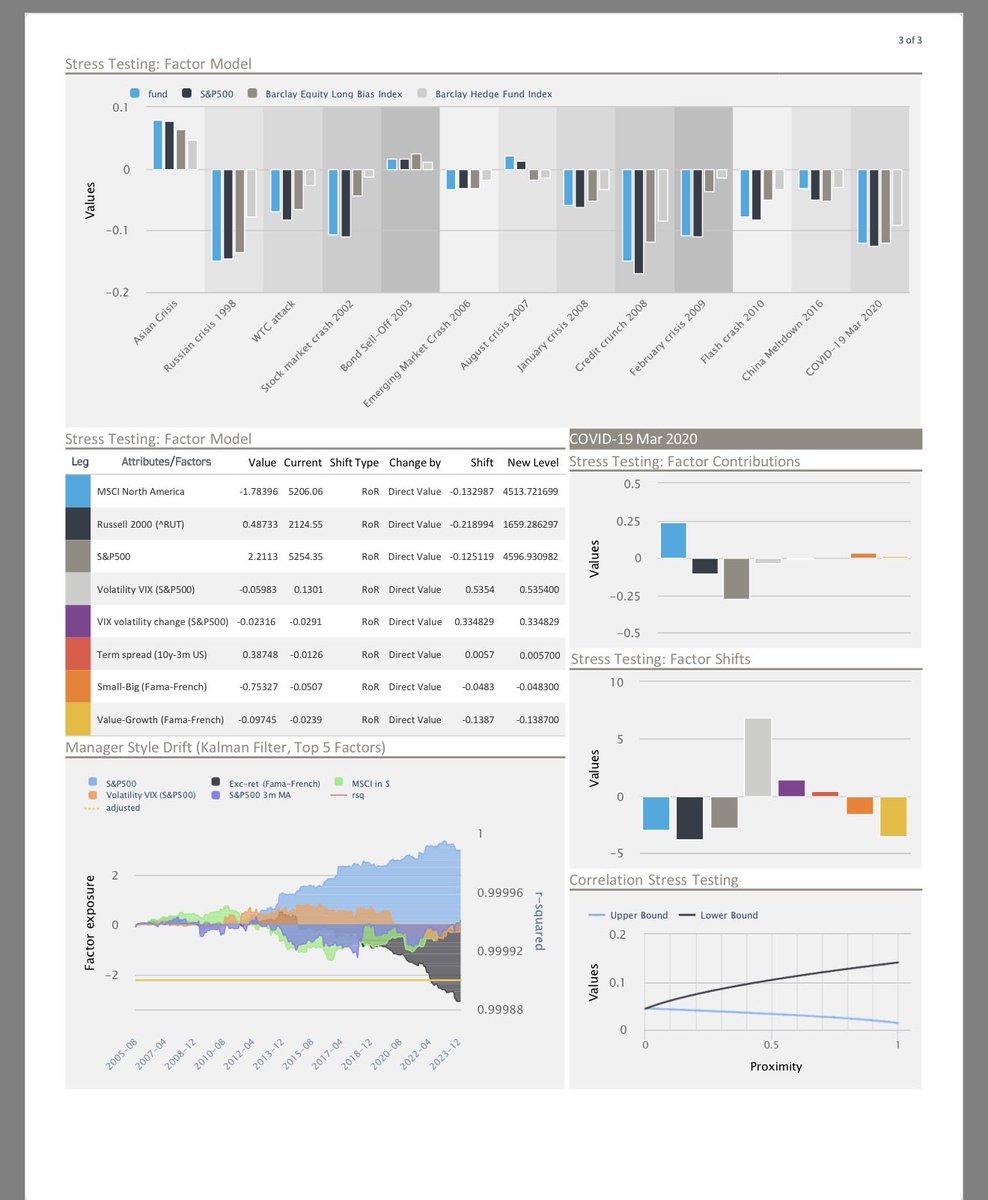
RIEF *ALLEGEDLY* just posted a -15% drawdown in two weeks (Oct 2025). For context, this is the firm that’s basically *the* gold standard in quant investing. My thought project this early morning is to piece together what happened…because if RenTech’s models break, that tells us something IMPORTANT about markets right now.
*I found these attachments on the internet someone loaded up… could be made up or wrong. Let’s assume they are right…
RIEF runs ~$20B, supposedly factor neutral, market neutral-ish, with 2.5x leverage. The strategy is automated statistical arbitrage across thousands of long/short positions. Beta target of 0.4 or lower. These guys don’t blow up. So what changed?
Here’s where it gets interesting. In Feb 2023, they modified their strategy. Old target: net $100 long per $100 equity. New target: “NOT be greater than $100 net long… but with NO OBJECTIVE that it not be less.”
Wait….they removed the floor? That’s a massive shift. It allows them to go net short or significantly reduce market exposure.
Looking at their factor exposure analysis (stress testing docs), something jumps out: they’re NOT actually factor neutral. The “Manager Style Drift” chart shows S&P 500 exposure went from ~0 to 3+ sigma starting around 2020. That’s… not neutral.
During COVID-19 (Mar 2020), they had:
- +2.21 S&P 500 exposure
- -1.78 MSCI North America
- Negative VIX exposure
- Small cap and value growth tilts
These exposures are contradictory and suggest hidden factor bets that maybe even *they* didn’t fully recognize in their risk model. OR…. Models now take them on in short term alpha trades.
The correlation stress testing chart (bottom right in the docs) is particularly revealing. It shows correlations increase dramatically during stress periods meaning their hedges fail precisely when needed most. Classic quant nightmare. OR they are specifically taking on tilts.
So here’s my working theory on October 2025:
After Feb 2023, they likely used their new flexibility to reduce net long exposure (or even go short). If you follow LIQUIDATION NATION it has been a factor bloodbath and historical moves… they could be:
1. Underexposed to upside on longs
1. Getting squeezed on shorts
1. Watching “neutral” factors suddenly correlate
With 2.5x leverage, even a -6% strategy loss becomes -15%.
Alt #2: This was a crowded trade unwind. If other quant funds were positioned similarly, forced liquidations could cascade. Market microstructure breaks down, liquidity evaporates, execution slippage compounds losses.
Alt #3: They are running lower leverage and taking on FACTOR TIMING (how I think about the world.. maybe I am cope lol).
Alt #4: Some option trade went haywire
What’s fascinating… is their models apparently didn’t see this coming. These are arguably the most sophisticated predictive models in finance, built by some of the smartest people in the world, with 30+ years of data and refinement.
Yet something in October 2025’s market structure was fundamentally different from their training data.
Questions I’m still thinking about:
- Was this a regime change moment where historical factor relationships broke?
- Did their factor definitions drift from market reality?
- Was the Feb 2023 strategy change a mistake in hindsight?
- Or was this just an unlucky tail event that any model would miss?
The humbling thing: if RenTech’s models battle tested through multiple crashes, with the deepest talent pool in quant….can get caught like this, what does that say about model risk more broadly?
I’m not trying to criticize…genuinely trying to learn. When the best models fail, there’s usually a deep lesson about markets, risk, or regime change embedded in there.
Would love to hear thoughts from other quant folks. What am I missing?
Major Australian pension fund trimming US dollar exposure on weakening outlook | Reuters
Probably nothing 🫣
But N.B.:
* the distinction between $ view (adjusted hedge)
* and underlying $ asset view (unchanged)
And 1/2 https://t.co/scXthrawhe