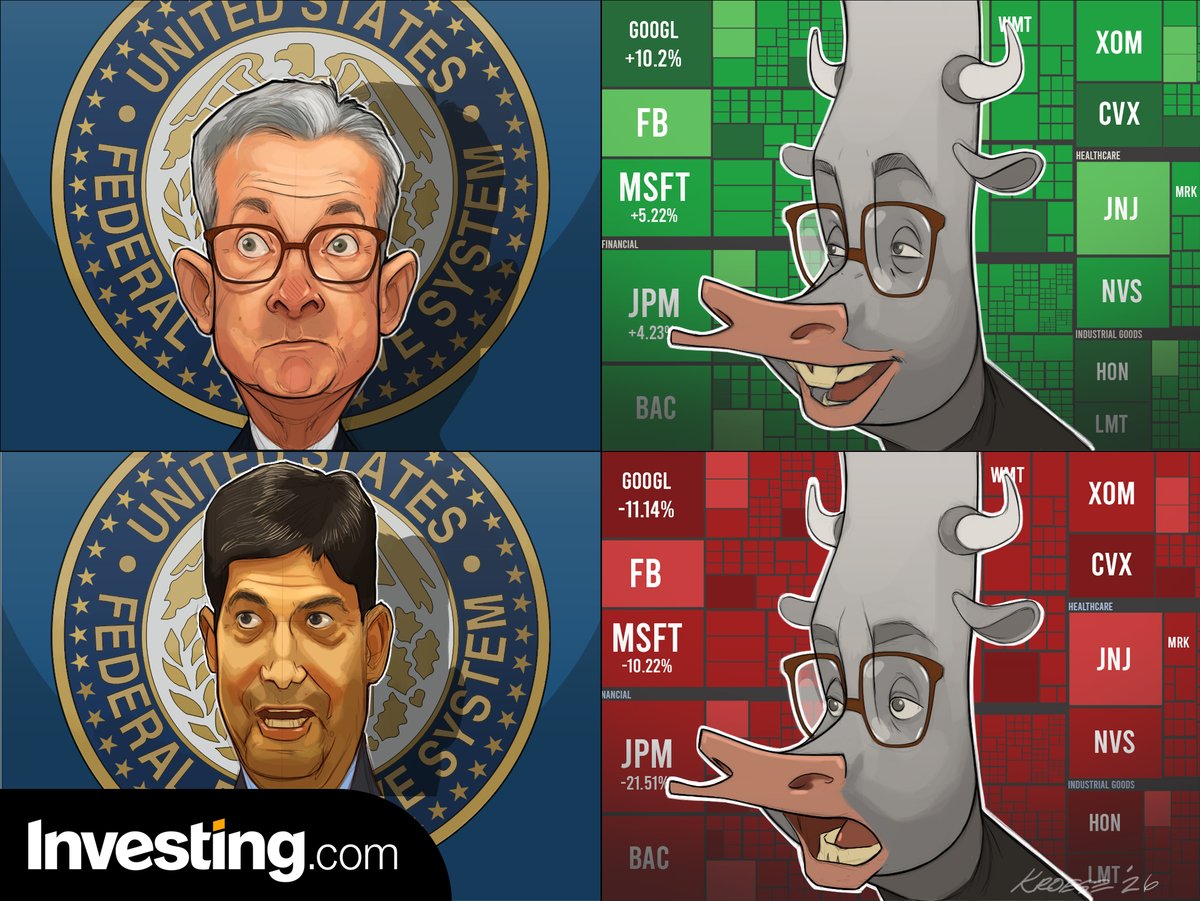
No one thinks $SPY can crash 5%-10% from here.
But, it will if Kevin Warsh is HAWKISH at FOMC.
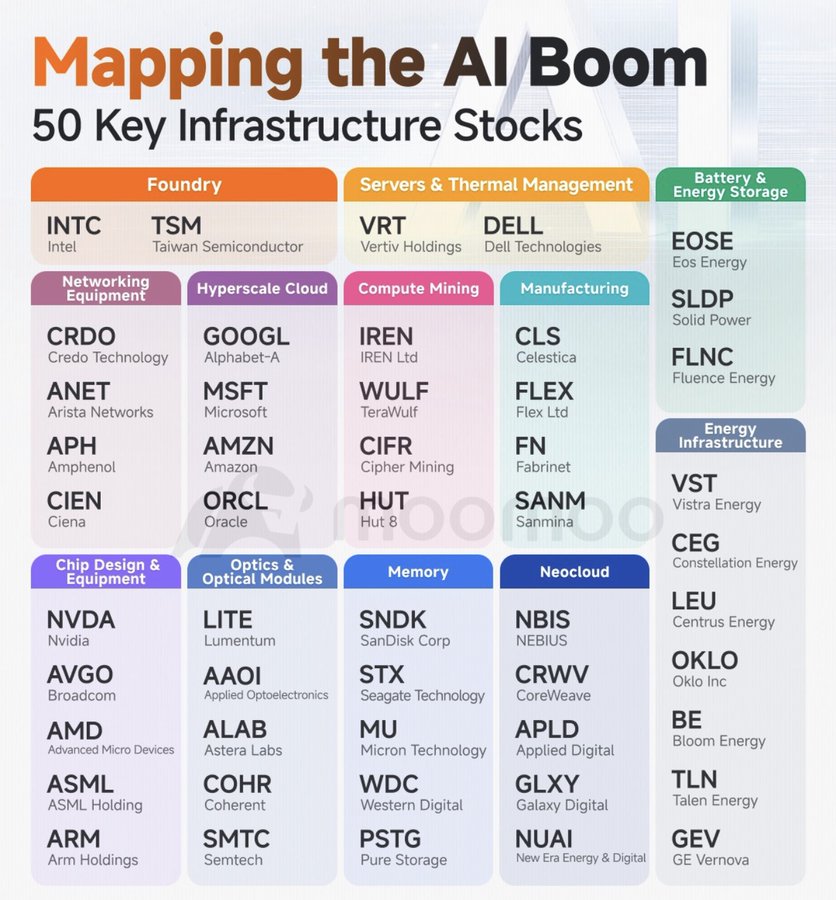
These 16 stocks will be on sale ONE LAST TIME:
$DRAM — Buy Zone: $40-$45
Memory bottleneck powering every AI training cluster. Potential 10x.
$MU — Buy Zone: $700-$800
HBM memory leader. AI compute cannot scale without it.
$NVDA — Buy Zone: $165-$175
AI infrastructure king. Owns the GPU layer. Potential 10x.
$SPCX — Buy Zone: $135-$145
Pure-play SpaceX exposure. Benefits from entire space economy.
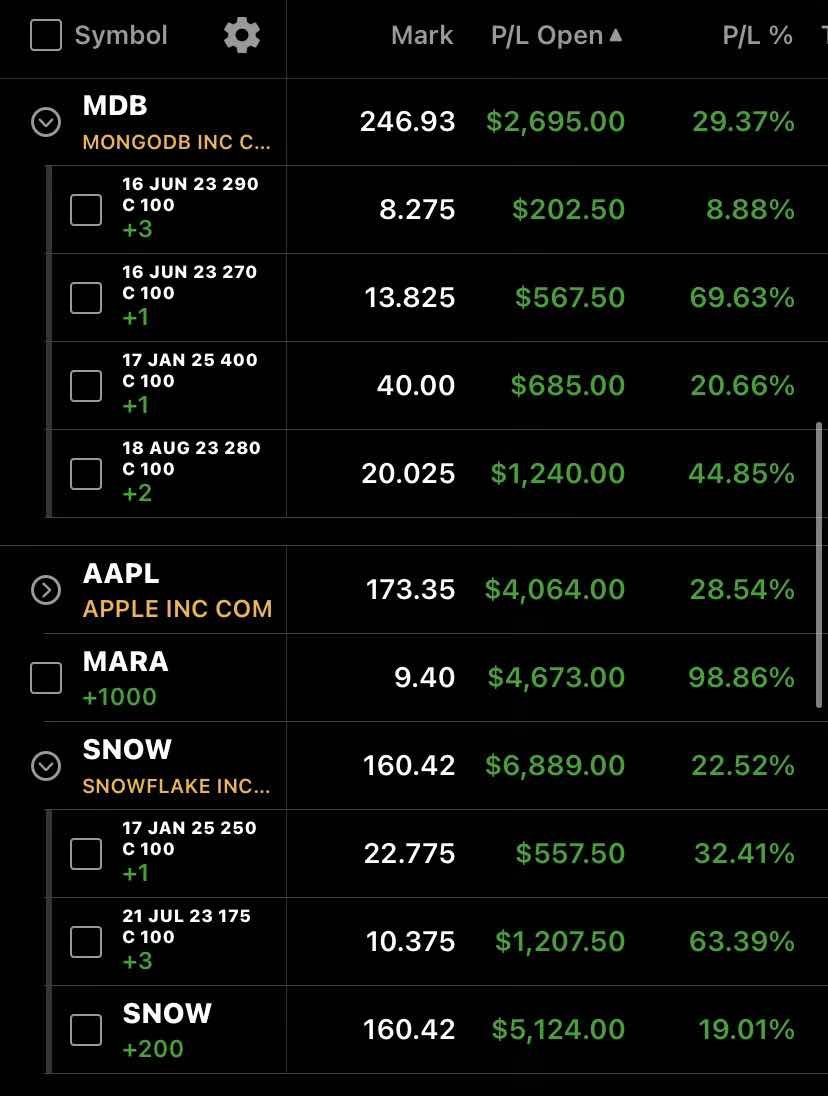
$SNOW — Buy Zone: $160-$170
Enterprise AI runs on organized, accessible data.
$QCOM — Buy Zone: $150-$160
Edge AI adoption across billions of devices.
$ORCL — Buy Zone: $130-$140
Cloud infrastructure and AI data center expansion.
$NBIS — Buy Zone: $190-$200
AI cloud capacity shortage drives explosive demand.
$TE — Buy Zone: $6-$6.50
Critical connectors inside every AI data center.
$IONQ — Buy Zone: $35-$40
Quantum computing could become next AI acceleration layer.
$ASTS — Buy Zone: $60-$70
Space-based connectivity powered by AI and satellites.
$META — Buy Zone: $480-$520
Massive AI capex and billions of users.
$MSFT — Buy Zone: $350-$370
AI software, cloud, enterprise dominance combined.
$LITE — Buy Zone: $600-$650
Optics move AI data between GPUs. Essential.
$BE — Buy Zone: $220-$230
Reliable power infrastructure for AI expansion.
$ARM — Buy Zone: $220-$240
CPU architecture behind future AI devices.
$AMD — Buy Zone: $400-$420
Second AI compute platform gaining market share.
$VRT — Buy Zone: $220-$240
Cooling and power backbone of AI infrastructure.
If Kevin Warsh sparks a hawkish selloff, I'm buying memory, power, cooling, optics, compute, and space.
🚀RESHARE post and reply 1 comment, I'll DM you my $SPY levels so we know exactly where to buy:
$MU $DRAM $SNDK $WDC demand far exceeds supply until end of 2028:
The window of greatest cycle risk is 2028–2029, here's why:
1. New fabs all come online in the same window
Micron's first Idaho fab is scheduled to begin DRAM output in 2027, with a second Idaho fab and a New York fab following after that. Samsung, SK Hynix, and Micron are all building simultaneously which historically creates synchronized supply gluts when multiple fabs ramp at once.
2. The "Dramurai" are deliberately holding back now, but discipline breaks Samsung and SK Hynix have both signaled caution on aggressive capacity expansion, prioritizing long-term profitability over market share. That discipline is rational today but once peers start adding wafers, competitive pressure to not get left behind kicks in, and the classic boom-bust dynamic returns.
3. HBM generational transitions will produce supply shocks.
Each new HBM generation (HBM4E expected late 2027, HBM5 in 2028–2029) concentrates more wafer capacity in lower-bit-yield processes, which has historically produced commodity DRAM supply shocks rather than relief. As HBM transitions mature, wafers freed up from prior-gen HBM production flood the commodity DRAM market.
4. AI capex cycle could peak or plateau around 2027–2028 estimates that combined CSP capex will exceed $600 billion in 2026 — a 40% year-over-year increase. That pace of growth cannot compound forever. If hyperscaler spending even moderates (not crashes, just slows), the demand growth rate drops while supply additions are still ramping — a classic setup for oversupply.
5. Customers over-ordering to secure allocation
Some customers have already secured supply allocations through 2027, with multi-year agreements becoming standard. This behavior inflates apparent demand. When real consumption data catches up to booked supply, cancellations historically hit the entire memory stack simultaneously — as we saw in 2022–2023.
6. China wildcard
Samsung's massive China investments are a real risk factor. Samsung invested 67.5% more year-over-year in its Xi'an memory plant in 2025. If geopolitical dynamics shift or export restrictions ease/tighten unevenly, Chinese DRAM (CXMT) flooding the commodity market becomes a destabilizing catalyst exactly when Western fab capacity is also coming online
THIS IS GOING TO BE MASSIVE⚡️
$NVDA started to form a bottom on Friday but we need to see better signs of buying if Semis are going to run back into ATH. $MU and other semis are doing the heavy lifting but we need to see the large names Nvidia and $AVGO find buyers
Lock in👇
2 years ago, I called out $ASTS at $2. Its up 6500% so far at $130.
My target at least $200+ when $SPCX IPOs.
Right now, $ORCL is the most obvious play. Its earnings is on June 10 then $MU on June 24.
This year, I explained these would 10x-20x:
$INTC — $AAPL chip deal + foundry turnaround tripled the stock in months (Trump)
$DELL — Pentagon contract + AI server orders created a multi-catalyst monster (Trump)
$MU — HBM memory sold out through 2026, AI supercycle just getting started (Trump)
$NOW — Enterprise AI agents replacing entire IT workflows, 22% revenue growth accelerating (Trump)
$PLTR — Government + commercial AI contracts exploding, revenue up 56% in 2025 (Trump call)
$TE — nuclear power is the only answer to AI's insatiable electricity demand (Leopold call)
♻️ RESHARE this post and write 1 comment, I'll DM you my exact 1000% play for $ORCL
Trump says regular people will be rich.
$SNOW earnings 900% winner calls
$DELL earnings 1600% winner (tomorrow)
$ORCL earnings June 10
$MU earnings June 24
Remember, Trump said to buy $MU just like $DELL $INTC.
🚨 Anthropic just showed a 27-minute workshop on how to actually do prompts for Claude.
Taught by the people who built it.
Free. No registration. No paywall.
I've seen $300 courses that don't cover what they teach in the first 8 minutes.
Watch it and bookmark it now.
🚨 THIS IS NOT GOOD
SpaceX, OpenAI, and Anthropic are about to go public at the same time.
That means the market will need to absorb over $200 BILLION in new supply.
And money doesn’t appear out of nowhere.
Funds will sell what already pumped:
– NVIDIA
– SK HYNIX
– Micron
– Intel
If AI leaders dump, the S&P 500 dumps with them.
We saw the SAME setup after COVID:
Hype IPOs → liquidity drain → market drop.
This AI trade is even more crowded now.
Watch these IPOs closely.
That’s where the forced selling may begin.
I’ve been in finance for more than 15 years.
When I EXIT the markets completely, I’ll say it here publicly, like I always do.
Turn notifications on. If you’re not following yet, you’ll understand why that was a mistake later.
The largest IPO in history is $SPCX on June 12th valued at $1.75 trillion.
Elon Musk says by 2030 regular people will be ultra-wealthy.
Here's 20 companies directly linked to SPACEX:
1. $ASTS — Satellite-to-phone tech becomes backbone of Starlink's global mobile dead-zone elimination
2. $IONQ — Quantum computing powers SpaceX orbital AI compute satellites launching in 2028
3. $RDDT — Real-time data feeds Grok's truth-seeking AI engine via X integration
4. $RKLB — Rocket Lab fills small-payload launch demand SpaceX's Falcon can't efficiently serve
5. $LUNR — Lunar lander tech directly supports SpaceX's Moon base buildout timeline
6. $ACHR — Air mobility networks integrate with Starlink low-latency connectivity infrastructure
7. $LLAP — Terran Orbital builds small sats riding SpaceX rideshare missions at scale
8. $VIAV — Optical networking components critical for Starlink ground station infrastructure upgrades
9. $AEVA — LiDAR sensors enable autonomous Starship landing and booster catch precision systems
10. $SPIR — Space data analytics layer monetizing SpaceX's growing orbital satellite constellation
11. $KTOS — Defense tech partner powering Starshield national security satellite network contracts
12. $BWXT — Nuclear propulsion R&D aligns with SpaceX's Mars mission power requirements
13. $ARQQ — Quantum encryption secures Starshield government communications on classified orbital networks
14. $LAZR — Luminar LiDAR enables SpaceX autonomous vehicle docking and precision landing systems
15. $OUST — Sensor fusion tech supports SpaceX's booster catch and reusability automation stack
16. $MTSI — RF semiconductors power Starlink user terminal phased-array antenna signal processing
17. $GILT — Gilat Satellite ground infrastructure scales alongside Starlink enterprise fixed-site deployments
18. $SATL — Satellogic high-resolution imaging complements SpaceX orbital AI compute satellite constellation data
19. $TWST — Synthetic biology tools accelerate SpaceX's long-term Mars colonization life support research
20. $POET — Optical interposer chips slash data center power costs inside COLOSSUS AI cluster
Remember, the total market for space economy can be $200 trillion in less than 10 years thats 100x from IPO.
♻️RESHARE this post and make 1 comment. I'll tell you which one is my #1 favorite and I own this one already.
Happy Sunday!
Here Are My #Top5ThingsToKnowThisWeek:
1. Trump-Xi Summit
2. U.S. Inflation Data
3. U.S. Retail Sales
4. Warsh Nomination Vote
5. $CSCO $AMAT $BABA Earnings
May The Trading Gods Be With You 🙏
$DIA $SPY $QQQ $IWM $VIX
POET spiked from $1 to $16 so far in 2 years.
But, no one is focused on LWLG at $12 right now.
4 insane reasons why this can break $100+ quickly:
1. They own the material that makes light move faster.
Lightwave Logic's Perkinamine EO polymers can modulate data at speeds lithium niobate and indium phosphide physically can't match. When the industry hits the wall on 1.6T and pushes to 3.2T, LWLG's polymer becomes the only viable path forward. First-mover in a market with no real competition.
2. 4 Fortune 500 companies are already in Stage 3 design-wins.
Stage 3 means they're past proof-of-concept. These are real qualification cycles with real hyperscaler suppliers. When one of these names goes public, this stock doesn't go up 20% it goes up 300% overnight.
3. The business model is pure royalties.
LWLG doesn't manufacture anything. They license the polymer IP and collect royalties every time a chip gets made with it. Zero capex. Near 100% gross margin at scale. Think ARM Holdings but for the photonic layer of AI infrastructure.
4. $70M cash, no debt, and a Tower Semiconductor partnership.
For a pre-revenue company, the balance sheet is bulletproof through 2027+. And Tower Semi doesn't partner with companies that aren't on a production roadmap. That partnership is the quiet signal most people are sleeping on.
But, there is 1 problem and that is Stage 3 design-wins sound exciting until you realize a handful of unnamed customers control the entire destiny of this company.
If one slows their qualification cycle, pivots to a competitor, or gets absorbed in a merger, LWLG has nothing to fall back on. The concentration risk is extreme for this company still.