At the Shift Project we are recruiting one full-time postdoctoral fellow. Folks interested in labor standards violation, industrial relations, labor economics, sociology of work, + please apply to join our crew! Fall 2026 start. Apps due February 13, 2026. https://t.co/81ndwyY2m0
8/8 The bottom line: irregular and unpredictable schedules are widely undermining the well-being of fast food workers in Los Angeles, and extending Fair Workweek protections to these workers could go a long way in addressing this problem.
1/8 Los Angeles has recently taken steps to guarantee retail workers more stable work schedules, but fast food workers remain unprotected. A new Shift brief explores how these workers are faring—and what could be done to improve their schedules. https://t.co/bCHYn0rfm3
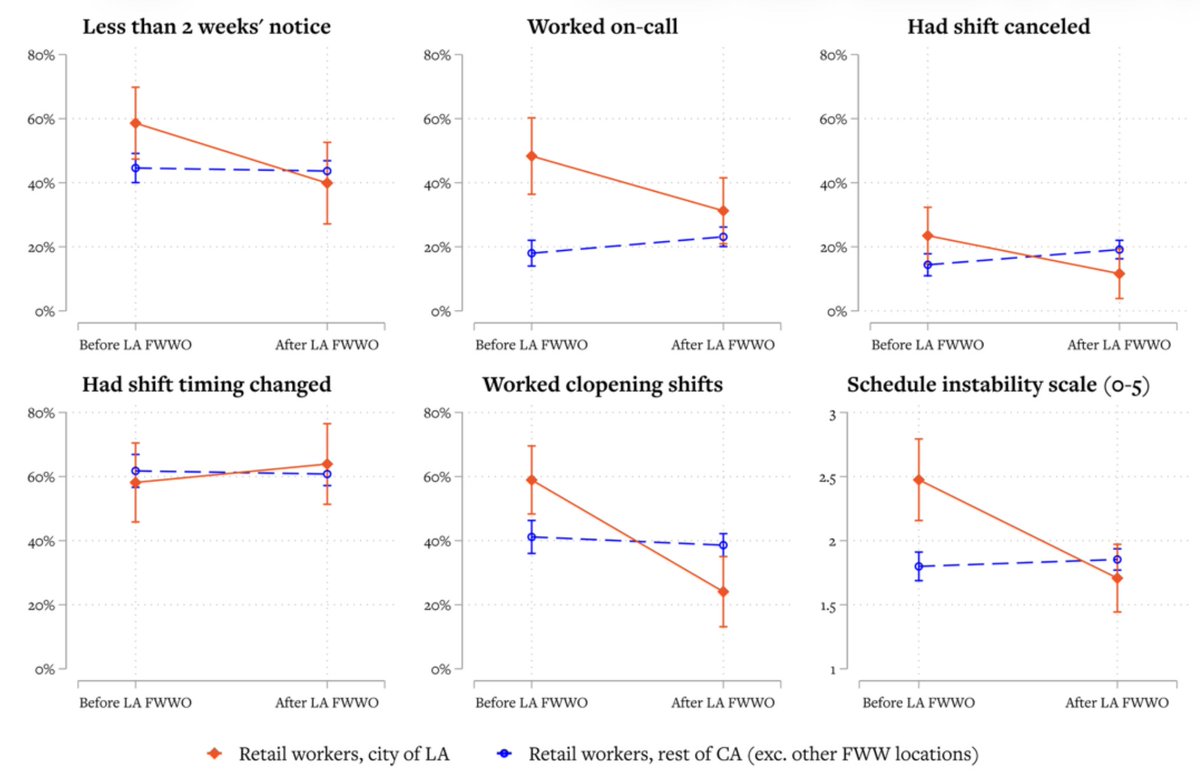
7/8 Are Fair Workweek policies a promising way to improve the quality of workers’ schedules? Our data say yes. We find that Los Angeles’ FWWO for retail workers has reduced exposure to “just-in-time” scheduling practices, like short notice of work schedules and on-call shifts.
New @SF_Journal article by @JoshuaChoper using @Shift_HKS data: mothers in the US service sector have more stable schedules on average, but this advantage disappears under female managers, especially those without children. Check it out! https://t.co/9vpk2XKtB6
These findings are largely consistent with "queen bee" theories of women in management, and build upon this body of research to consider how gender and parenthood interact within manager-employee relations to produce inequality.
Now available online @SF_Journal, my new article uses @Shift_HKS data to show that while mothers in the US service sector secure more stable schedules on average, this advantage disappears under female managers, and particularly those without children. https://t.co/EtZRx4jZM3
At the Shift Project we are hiring 1 to 3 pre-doctoral fellows (= full time paid RA). Folks interested in labor policy, work scheduling, PSL, firms, survey methods, + please apply to join our crew! Fall 2026 start. Apps due January 15th, 2026. https://t.co/pXFAKv9c9e
1/5 - Current policy debate often assumes workers who lose Medicaid coverage can get employer-sponsored insurance (ESI). A new Shift Project article in JAMA Health Forum shows why this may not be the case for hourly service-sector workers: https://t.co/tDpy433zlT
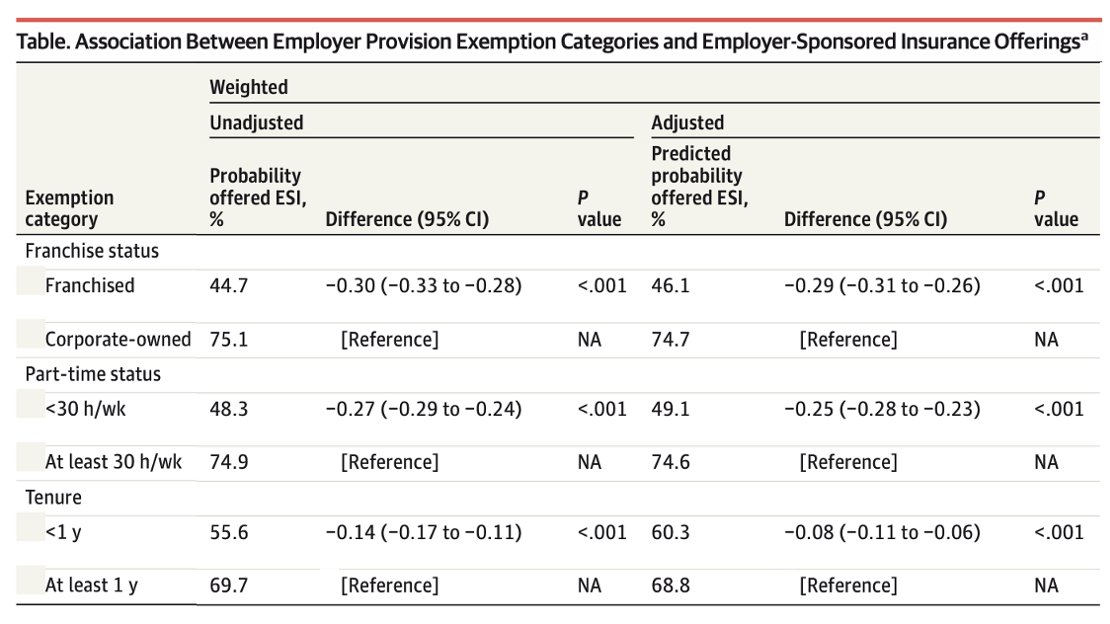
4/5 -Falling into an exemption category is associated with a lower likelihood of being offered ESI. Workers are nearly 30, 25 & 8 percentage points less likely to be offered ESI if at a franchised firm, work part time, and have been at a firm for less than one year, respectively.
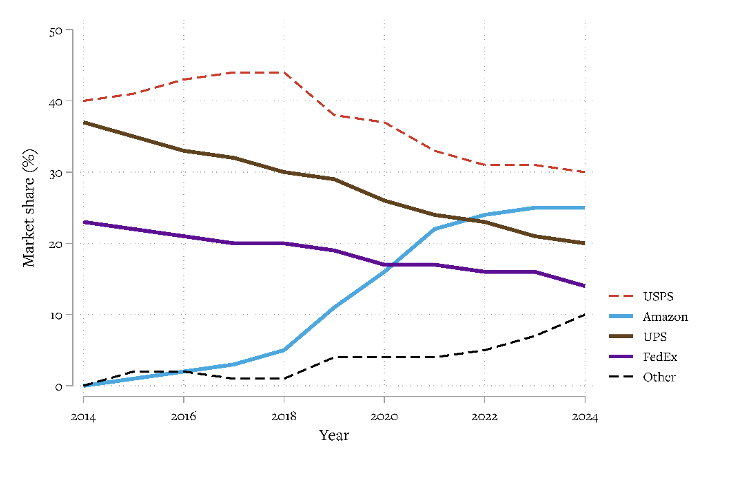
7/7 Amazon’s fissured employment model may have helped it overtake UPS and FedEx in market share, but it has very troubling implications for workers – and, given its size and influence, how Amazon treats its workers has effects that reach well beyond its own workforce.
1/7 Over the past decade, Amazon’s market power has soared. But how do Amazon workers fare relative to their counterparts at UPS & FedEx? A new Shift Project brief offers an inside look into work at one of the world’s biggest companies. https://t.co/DCp6PJEJ9V
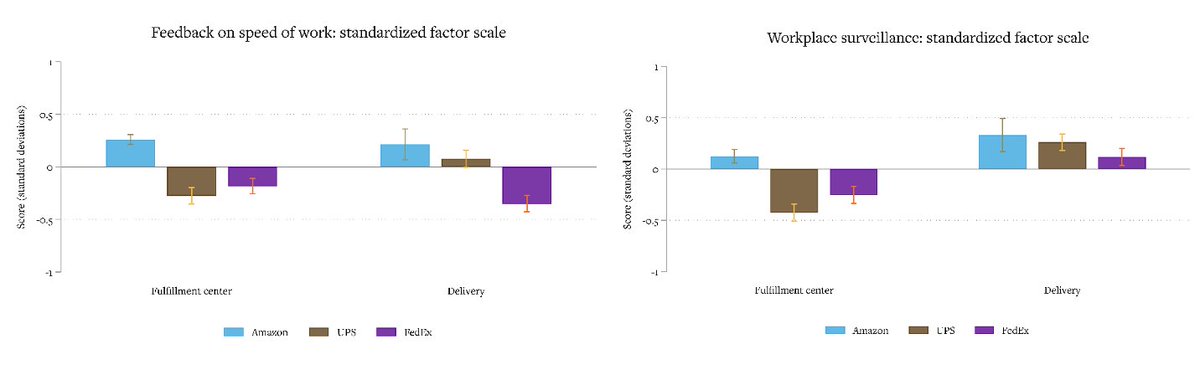
6/7 But one shared experience among Amazon’s warehouse workers and delivery drivers? Being exposed to a high degree of surveillance and speed tracking on the job. Simply put, as one Amazon worker told us: “They know everything.”