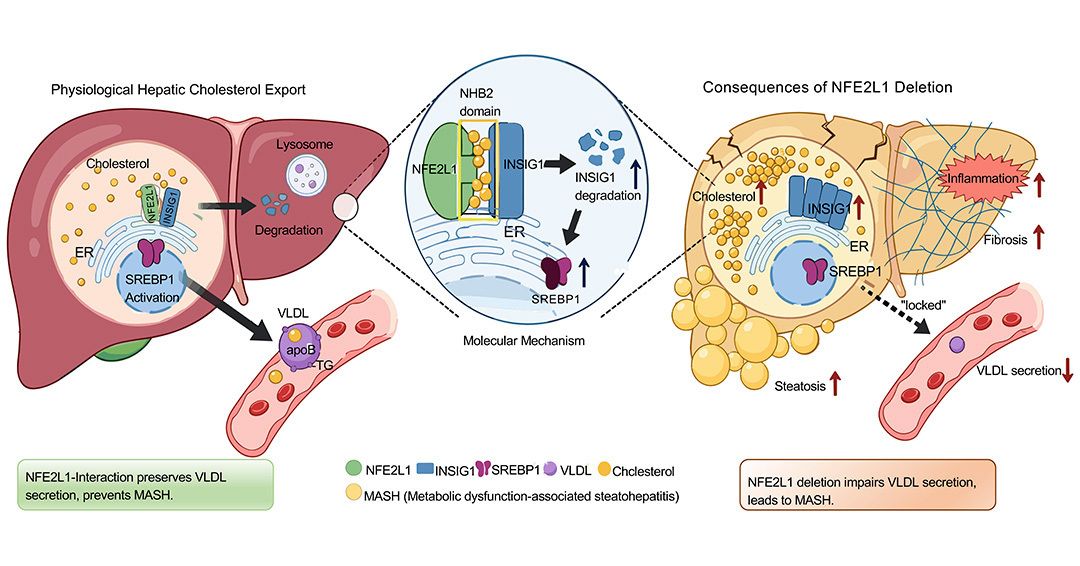
Excited to share our paper on how NFE2L1 senses cholesterol overload in the ER and controls VLDL secretion to protect the liver from MASH. Thanks to @jclinicalinvest for the highlights and Dr. Zang and Dr. Li for the great commentary.
https://t.co/PJrpunCJdn
#MASH#LiverDisease
Sunday Spotlight💫 : Targeting hepatic cholesterol sensing to tackle metabolic dysfunction–associated steatohepatitis: https://t.co/wdNCQidwX1
Mengwei Zang and Yu Li @UTSA provide a commentary on Deng et al. https://t.co/UCCAqyhSr1
#MASH#LiverDisease
A highlight💫 from earlier this week: How does the ER cope with cholesterol overload?
https://t.co/rpTOQGH7on
Here, Gökhan S. Hotamışlıgil & team @harvardmed identify the NFE2L1/INSIG1 axis that regulates an ER-nuclear transcription factor important to lipid biosynthesis and VLDL secretion. The protein partnership helps prevent cholesterol buildup and liver damage, revealing a potential target for treating fatty liver disease and related metabolic disorders.
The image shows COS7 cells expressing NFE2L1 N term deletion construct; labeled for HA (NFE2L1, red), the ER marker KDEL (blue), and Hoechst nuclear dye.
#MASH #LiverDisease
Congratulations to Dr. Renata Goncalves @RenataG81952725@gshlab for being recognized by Boston Area Nutrition Obesity Research Center Outstanding Manuscript Award @BostonAreaNORC for her studies on discovering a CoQ metabolism defect leading to reverse electron transport and site-specific ROS production in mitochondria as a mechanism disrupting hepatic metabolism 🧿👏
https://t.co/K46thGNkqb
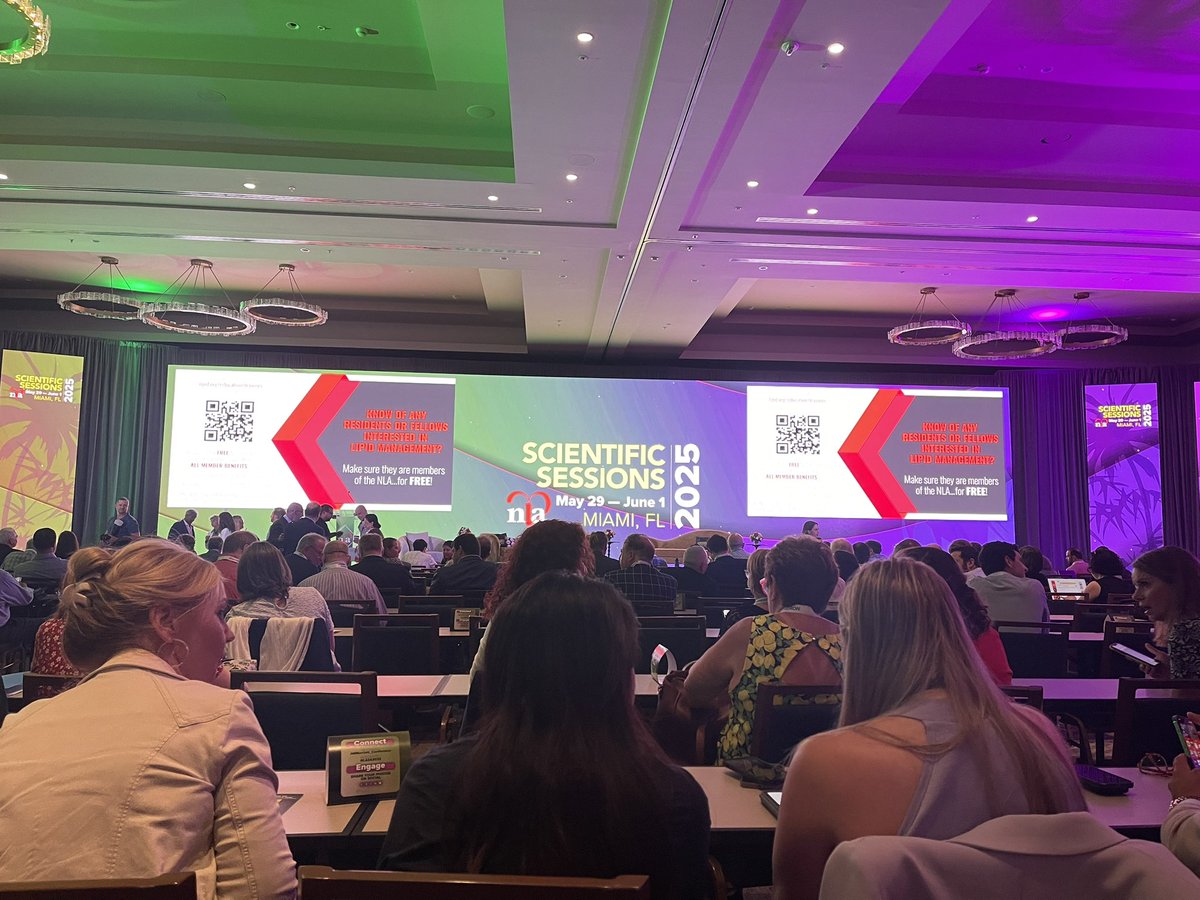
Thrilled by #NLASessions ! Foundation of Lipidology course brilliantly bridged basic science to clinical practice. 🔑 takeaways: real-world LLT challenges and novel therapeutic targets. Thank you to the organizers & faculty! Excited to apply these perspectives to my research!
Excited to share our latest paper led by Renata Goncalves @RenataG81952725: CoQ imbalance drives reverse electron transport to disrupt liver metabolism.
https://t.co/svgsVGKCfd
We uncover how altered CoQ redox balance triggers RET and rewires hepatic metabolism to offer critical insights into a decades old question. Meticulously mapping each one of the 11 sites of the mitochondrial electron transport chain in the liver showed site IQ as the sole source of excess mitochondrial ROS, produced via reverse electron transport. This defect is driven by CoQ imbalance in obesity, disrupts glucose metabolism.
These findings may have implications for many diseases and open up new treatment possibilities where broad antioxidants have failed to generate therapeutic benefit. Our findings may also offer a potential mechanism and solution for the increased diabetes risk seen in a small fraction of statin users.
Huge congratulations to Renata Goncalves @RenataG81952725 for leading this work and for her immense dedication and patience to bring it to a conclusion. Congratulations to all contributors from the @hotamisligil lab and our amazing collaborators Isabel Graupera @igraupe and Shawn Burgess @Isotopomer
Curious? The 93-page-long peer review file is full of useful information and insightful discussions.