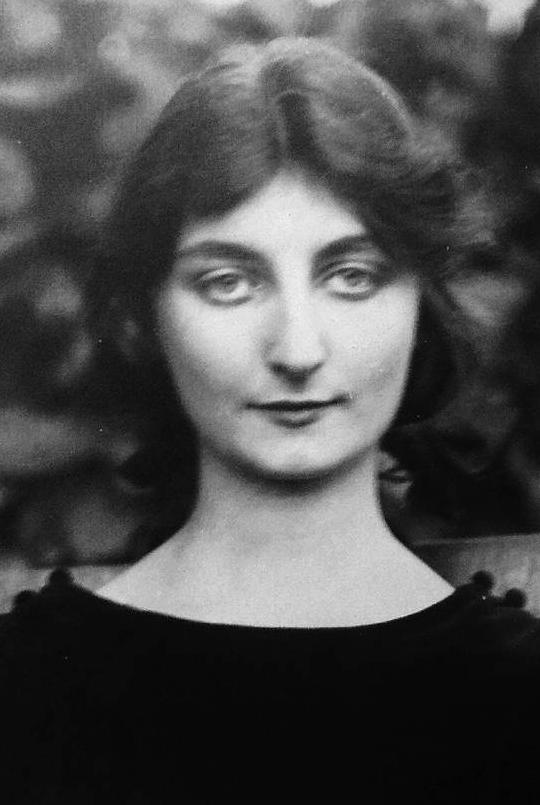
Laura Ashley (Yes, that Laura Ashley), born in 1925, evacuated to Wales on the outbreak of the Second World War.
Aged 13, left school, secretarial college, then to London aged 16 to work for the Ministry of Health.
Aged 17, joined the Women’s Royal Naval Service, HMS Dryad
Laura Ashley was posted to France after the DDay Landings, where she worked as a teleprinter operator.
She married her husband Bernard Ashley in 1949.
The rest is history!!
Remembering Rifleman James Backhouse 2nd Battalion The Rifles, killed in an explosion whilst on foot patrol near FOB Wishtan in Sangin, Helmand Province, Afghanistan on the 10th July 2009 aged 20. James was caught in the first of two blasts which left 5 soldiers dead #Afghanistan
Their Name Liveth Evermore
Flight Engineer Janice Harrington, one of 5 female Flight Engineers in the Air Transport Auxiliary
Killed alongside Mosquito ac Captain, First Officer Dora Lang
2 Mar 1944
Both cared for by @CWGC and are buried in All Saints Cemetery, Maidenhead
#ArmedForcesWeek2026
Remembering Warrant Officer 2 Michael Williams, 2nd Battalion The Parachute Regiment, killed during a firefight with Taliban forces in the upper Sangin valley, Helmand Province, Afghanistan on 24th June 2008 aged 40. Michael was from Cardiff. #Afghanistan
24 June 1944 | Two prisoners escaped from the #Auschwitz II-Birkenau: Mala Zimetbaum (camp no. 19880) born on January 26, 1918 in Brzesko, a female Polish Jew who was deported to the camp in a transport from Mechelen in occupied Belgium and the Polish political prisoner Edward Galiński (camp no. 531), born on October 15, 1923, who was deported to the camp in the first transport of Poles to Auschwitz on June 14, 1940.
Edward Galiński and Mala Zimetbaum had a relative freedom of moving around the camp premises while performing their duties. They met at the turn of 1943 and 1944 and fell in love. Initially, Galiński had been planning the escape together with his friend Wiesław Kielar. Dressed in the SS uniform, he was supposed to be escorting his mate to work. They had even secretly obtained the uniform and a gun from the former ironworks Kommandoführer SS-Rottenführer Edward Lubusch. However, having met Mala Zimetbaum he wanted her to escape from the camp with him. Kielar finally decided not to join them, but he provided the couple with his assistance.
Galiński was waiting for Mala in the place agreed upon beforehand, dressed in the SS uniform. She came dressed in work overalls, carrying a washbasin on her head. In this way, they intended to simulate the escorting of a prisoner from the fitters’ Kommando to the workplace outside the camp. Using a fake SS pass stolen by Mala, they managed to go beyond the large guard chain. They headed toward Slovakia, where her relatives lived. On July 7, they were arrested by a border guard patrol and then transported to Auschwitz and incarcerated in the cells of Block 11. Both of them, despite long investigation and torture, did not reveal the names of the people who assisted them in preparing the escape.
Edward Galiński was hanged in the men’s camp in Birkenau on September 15, 1944, while Mala Zimetbaum slashed her wrists before execution. She was then taken to one of the crematoria and probably shot there.
Online exhibition about the escape of Mala and Edek:
https://t.co/5AQmEtDdNp
Online lesson about the escapes from Auschwitz:
https://t.co/vGNy4XrazU
Suzanne Spaak, a Belgian socialite living in occupied Paris, used her wealth and influence to save hundreds of Jews by organising their escape from the Nazis.
She was arrested and executed in 1944, just days before the liberation of Paris.
Please remember her:
🕯️
24 June 1942 | Janina Nowak escaped from the Kommando consisting of 200 Polish women working near the Soła river drying hay. After she was reported missing, the SS men started the pursuit, which was, however, unsuccessful. Other female prisoners from the Kommando were led back to the camp. Late in the evening, they had their hair cut up to that point, as non-Jewish prisoners, they did not have to have their heads shaved.
On the next day, the entire Kommando was transformed into a penal company and sent to the SS farm called Budy, at the distance of about 6 km from the main camp. They were accommodated in a former school building and a wooden barracks, which together with a small kitchen and latrines were surrounded by barbed wire fencing. The women had to work in extremely harsh conditions cleaning nearby ponds, cutting bulrush, and digging drainage ditches. After a few days, the camp authorities sent another 200 female prisoners to the penal company-Slovakian and French Jews together with several German women to work as Kapos.
After escaping Auschwitz, Janina Nowak managed to reach Łódz. She evaded the authorities until March 1943 when she was arrested. On 8 May 1943, Nowak was brought to Auschwitz once again, where she received a new prisoner number – 31592. In 1943, she was transferred to KL Ravensbrück where she was liberated at the end of April 1945.
Their Name Liveth Forevermore
Second Officer Irene Arkless
‘Hoping to do my bit, for our dear old country’
3 Jan 1943, her Oxford V3888 crashed onto a house outside Cambridge, engine failure on take-off.
Buried Carlisle (Stanwix) Cemetery @CWGC#ArmedForcesWeek2026
Did you learn something new from this thread?
If so, please consider showing your support and 'Follow' my X page @DrHelenFry for more unique WW2 content like this.
I have plenty more history to share!
(end).
Reimann talked about being present when the Russians were being transported from Korosten, outside Lvov:
'They were driven like cattle from the trucks to the drinking troughs and bludgeoned to keep their ranks. There were troughs at the stations; they rushed to them and drank like beasts; after that they were given just a bit of something to eat. Then they were again driven into the wagons. There were sixty or seventy men in one cattle truck! ... [At the stations] children came up and brought them pumpkins to eat. They threw the pumpkins in, and then all you heard was a terrific din like the roaring of wild animals in the trucks. They were probably killing each other. That finished me.'
Elfeldt and Meyer spoke about the shooting of whole innocent Russian families. Elfeldt called it ‘an outrageous business!’
(continued...ending)
Rothkirch asked, ‘Only in Germany, or where?’
Von Choltitz replied, ‘No – everywhere. I presumed he meant Poland. 36,000 Jews from Sebastopol were shot.’
General von Thoma spoke about atrocities perpetrated by the SS and mass executions at Minsk. He confessed to Crüwell that he would not have believed it if he had not seen the executions himself, and added, ‘No one can accuse me of having been in any way responsible for it ... Orders were actually given that all Jews were [to be cleared out of] the occupied territories – that is the great idea, but, of course, there are so many in the east that you don’t know where to start.’
(continued)
Kittel explained that although the orders were given by Germans, the slaughter was executed by the Latvians. He continued: ‘The Jews were brought in and then robbed. There was a terrific bitterness against the Jews at Dvinsk, and the [local] people simply gave vent to their rage.’
In the common room, after a German radio broadcast about Nazi barbarism in Russia, General Broich admitted to von Choltitz and Rothkirch: ‘We shot women as if they had been cattle.’ Broich explained how he had seen a large quarry where ten thousand men, women and children were shot the previous day.
He commented: ‘We drove out on purpose to see it. The most bestial thing I ever saw.’ Von Choltitz said: ‘One day after Sebastopol had fallen – whilst I was on my way back to Berlin – I flew back with the Chief of Staff, the CO of the airfield was coming up to me, when we heard shots. I asked whether a firing practice was on. He answered, “Good Lord, I’m not supposed to tell, but they’ve been shooting Jews here for days now.”’ Von Choltitz told the other generals, ‘The Führer gave orders, shouting at me furiously, that a report be sent him every day in which at least a thousand Jews were shot.’
(continued)
FELBERT: How was it done?
KITTEL: They faced the trench and then twenty Latvians came up behind and simply fired once through the back of their heads ... I went away and said: ‘I’m going to do something about this.’ I got into my car and went to this Security Service man and said: ‘Once and for all, I forbid these executions outside, where people can look on. If you shoot people in the wood or somewhere where no one can see, that’s your own affair. But I absolutely forbid another day’s shooting there. We draw our drinking water from deep springs; we’re getting nothing but corpse water there.’
FELBERT: What did they do to the children?
KITTEL (very excited): They seized three-year-old children by their hair, held them up and shot them with a pistol and then threw them in. I saw that for myself.
(continued)
The conversation continued:
FELBERT: Were they loaded into trains?
KITTEL: If only they had been loaded into trains! The things I’ve experienced! For instance in Latvia, near Dvinsk, there were mass executions of Jews carried out by the SS or Security Service. There were about fifteen Security Service men and perhaps sixty Latvians who are known to be the most brutal people in the world ... Three hundred men had been driven out of Dvinsk; they dug a trench – men and women dug a communal grave and then marched home. The next day along they came again – men, women and children – they were counted off and stripped naked; the executioners first laid all the clothes in one pile. Then twenty women had to take up their position, naked, on the edge of the trench. They were shot and fell down into it.
(continued)
Cavendish Bentinck at the Foreign Office received a copy of the above transcript. In response, he wrote to Norman Crockatt (the head of MI9) with a specific request:
'I notice that Generals Neuffer and Bassenge are disquieted at the prospect of the Russians reaching places where the Germans carried out large scale liquidation of Jews, Poles and Russians. We [at Foreign Office] should be grateful if you would try to find out from your guests by the various means at your disposal exactly where these places are. We can then give the Russians some spots to carry out exhumations, and shall perhaps hear less about Katyn, which has begun to pall.'
In a different conversation, General Felbert asked Kittel whether he knew of places where Jews had been taken to be executed. Kittel answered: ‘Yes.’
Felbert asked whether it was carried out systematically. Kittel again replied: ‘Yes.’ Felbert said: ‘Women and children?’ Kittel replied: ‘Everyone.’
(continued)
After hearing the BBC Midnight news in German on 19 December 1943, the same two generals were recorded, speculating on the number of Jews killed so far:
BASSENGE: They dished up the mass executions of Jews in Poland. They estimate here that altogether five million Jews – Polish, Bulgarian, Dutch, Danish and Norwegian – have been massacred.
NEUFFER: Really? Not counting the German ones?
BASSENGE: Including the German Jews, during the whole time. They furnished evidence that an enormous number from camp so-and-so between such-and-such a date, fifteen thousand here, eighteen thousand there, twelve thousand there, six thousand and so on – I must say that if 10 per cent of it is correct, then one ought to –
NEUFFER: I should have thought about three million.
BASSENGE: You know, it really is a disgrace.
(continued)
On 10 July 1943, Neuffer was overheard saying to Bassenge:
'What will they say when they find our graves in Poland? The OGPU [Russian Intelligence] can’t have done anything worse than that. I myself have seen a convoy at Ludowice, near Minsk. I must say it was frightful, a horrible sight. There were lorries full of men, women and children – quite small children. It is ghastly, this picture. The women, the little children who were, of course, absolutely unsuspecting – frightful! Of course, I didn’t watch while they were being murdered ... The German Jews were also sent to the Minsk district and were gradually killed off ...'
(continued)
The generals realised that as the Allies advanced through Nazi-occupied territories, it was only a matter of time before they would reach the areas where mass atrocities had been committed.
In April 1943, a conversation was recorded between General von Thoma and Crüwell. Von Thoma said: ‘The Poles have been making enquiries about the murdering of the 8,000 officers in Russia. That business will cause a lot more unpleasantness, but that is of no consequence in this war. I expect the Russians will open up the graves of the Jews in Sebastopol and Odessa some time!’
(continued)
The flip side of the farcical life and political power-struggles of the generals housed at Trent Park during World War Two had a deeply dark and disturbing aspect. The bugged conversations provided further evidence of the systematic extermination of Europe’s Jews and killing of Russians and Poles.
The unguarded conversations of the generals revealed to the intelligence services that Germany’s military commanders not only knew about the war crimes committed, but some were complicit in it. The transcripts are significant because they dispel the long-held view that the Wehrmacht (German army) played no part in the Holocaust. For decades, the German army’s reputation had remained intact.
Shockingly, Hitler’s generals did not only boast about the number of people killed, but often spoke in chilling and graphic detail.
(continued)