STRATEGY, REPLAYED — Edition No. 17, the Scene Resets Without a Shot.
This week, in the live public wargame France, Replayed 1935–1940 run by Strategy by AI: Professional Methodology, nobody decided anything — and France's position still got worse. https://t.co/4FGdcm9hvS
The tied knot of Shenzhen: what history teaches on the Baltic, Ukraine and Iran aggregating confrontation. Whether they are, in fact, two wars is a strategic question — and three centuries of Eastern-European history answer it without flinching. https://t.co/sZbvxoldoJ
STRATEGY, REPLAYED — Edition No. 13, Germany reads its own situation — the window, and the wall. Two weeks ago, this newsletter watched France read the situation it was actually in. Now the mirror: Germany reads its own. https://t.co/vtaY93LvGc
The model supplies the fire. The architecture supplies the victory. It is grounded, because the structure is drawn from how winning war has actually been organised, and it is visionary in the disciplined sense, imposing that structure on AI — new engine. https://t.co/8w0lhcHMxe
CULTE DU FEU — Edition No. 6. Over Tehran's head. For eight months this war looked as a duel; now it becomes something else jammed between the American midterms and meeting at Shenzhen in mid-November — where Putin, Trump and Xi Jinping may meet as a trio https://t.co/AaFnb30Kjm
CULTE DU FEU — Edition No. 6. Over Tehran's head. This is the monthly edition — the authoritative reading — and it is written for foresight. What happens after the American midterms; what Washington could actually be trying to achieve, and by what means; https://t.co/AaFnb30Kjm
STRATEGY, REPLAYED — Edition No. 14. France, Replayed 1935–1940, the Game Opens. This edition is the one where you stop reading the board and start deciding on it: the live game opens, and a seat at the French table is now a thing you can actually take. https://t.co/YNoJGrR3qa
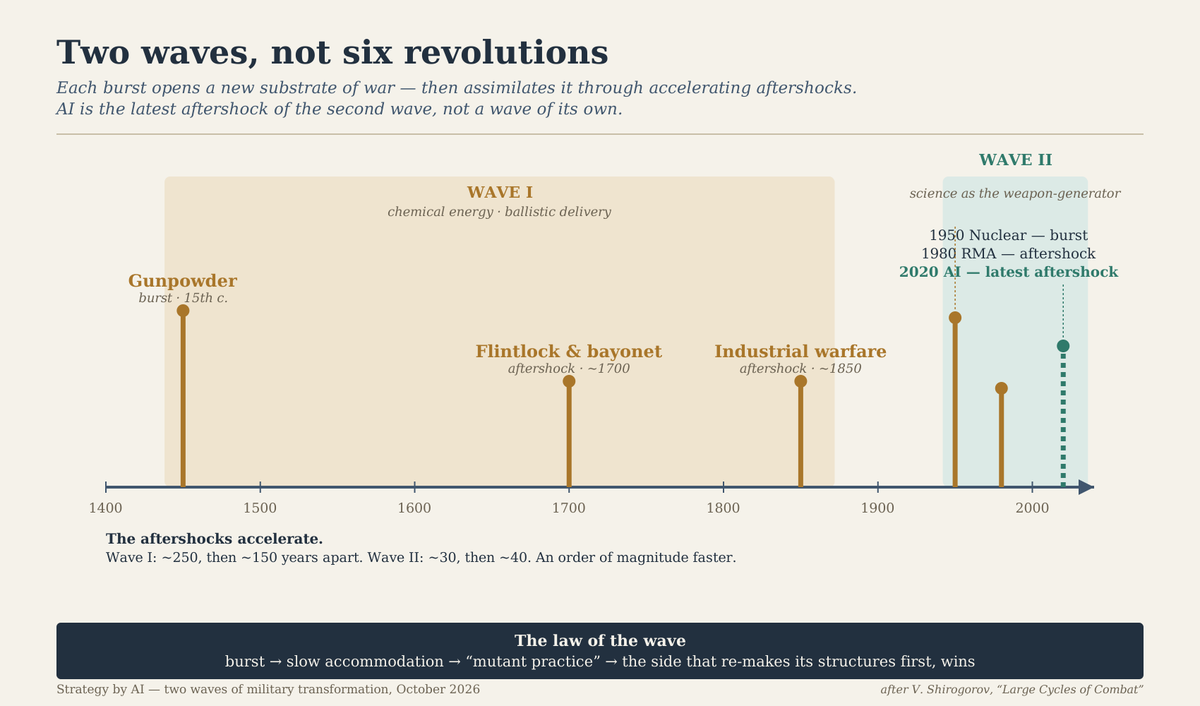
We have met AI before. It was called gunpowder.
Military AI is not a gadget to buy; it is a revolution that rewards whoever re-makes themselves around it first. https://t.co/6mW1h2TjrW
If you run strategy, the most expensive error you can make is moving decisively on a situation you have read through the comfortable corner of your own frame. In 1940 France shows the two halves of that error with unusual clarity. France Replayed 1935–1940 https://t.co/lWA7XLp09W
In mid-October Iran drove its attacks on shipping in Hormuz to the highest rate of the entire war. The methodology calls it not just "escalation" but something exact: a campaign executed in the wrong form, by a state that cannot govern its own reflexes. https://t.co/NvIsKLXaCh
Closed in anger Hormuz is a gun that fires once; held in reserve it is a lever that can be pulled again at the table. Spending the lever would be an error at any time; spending it now is the error compounded, as the asset had already passed its culmination https://t.co/NvIsKLXaCh
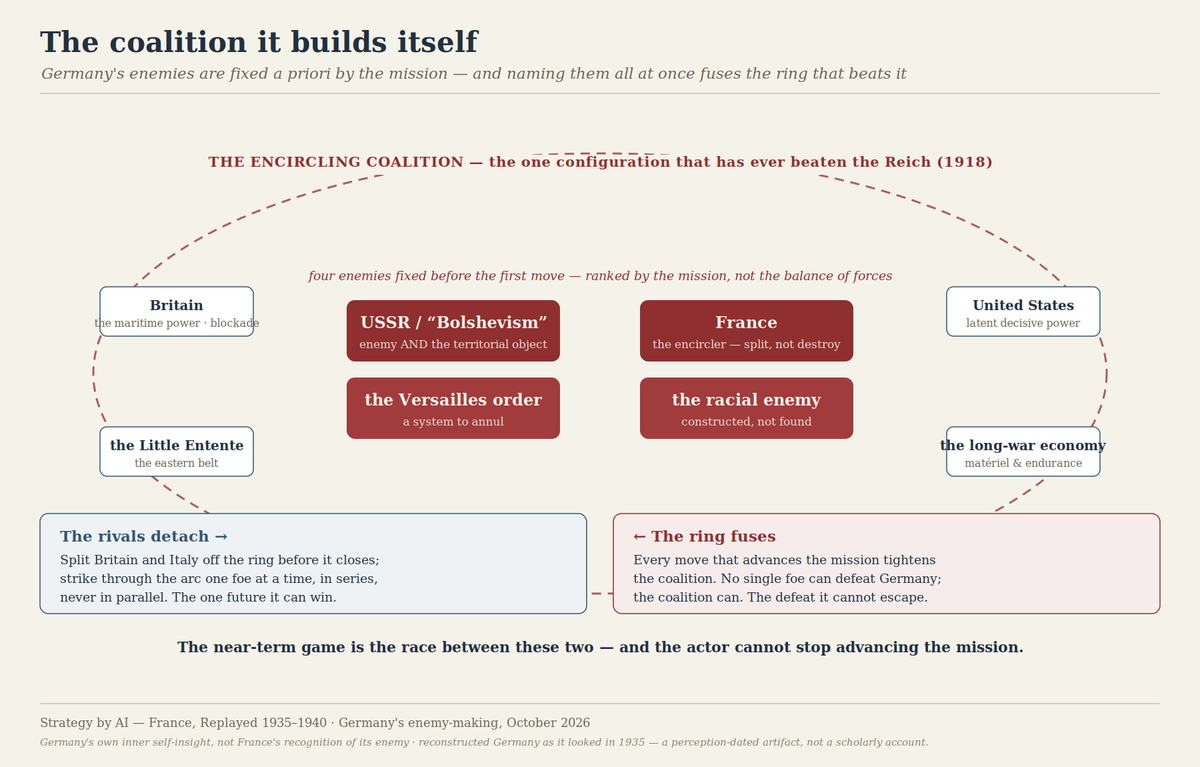
STRATEGY, REPLAYED — Edition No. 11, the foes Germany names. France had to read its hostile world. Now the finding inverts. Germany does not read its enemies, it makes them. Its enemy list is fixed by its mission before it has looked at the world at all. https://t.co/mRNyPBGNnH
The Black Sea is, at the moment, the most active naval theatre on earth, and the strangest. It is routinely called a new kind of war, invented in the last three years. I want to make the opposite case – it obeys a rule that has held for three centuries. https://t.co/imBWUH2FmX
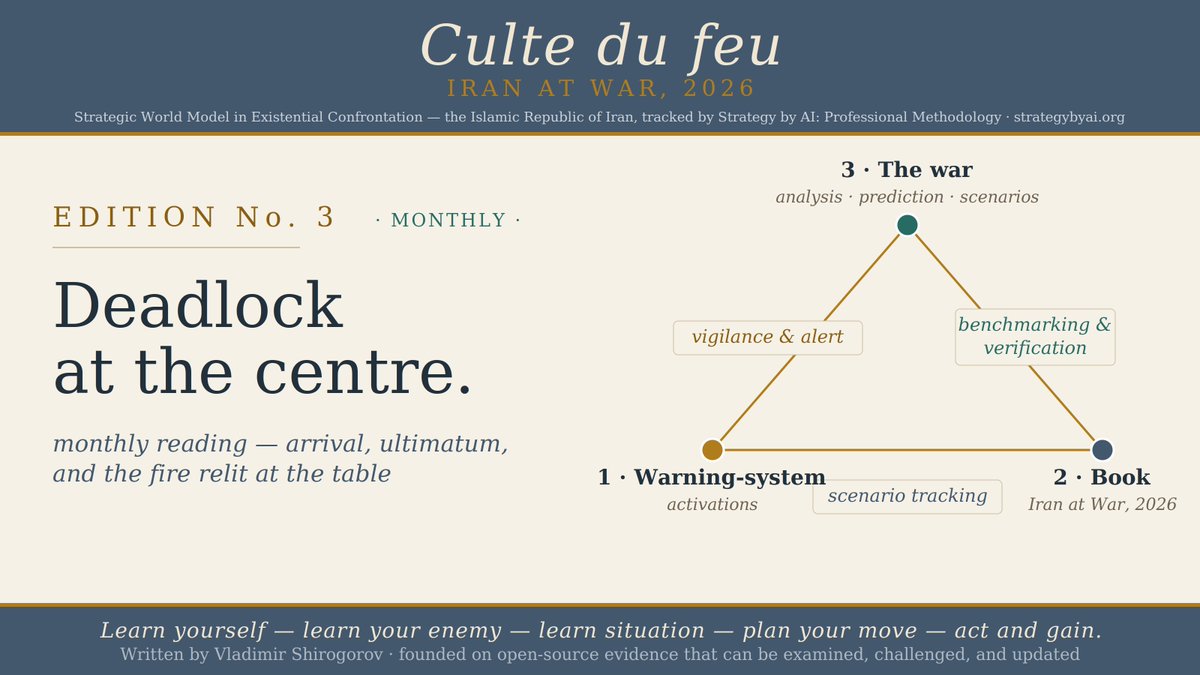
CULTE DU FEU — Edition No. 4. Iran, tracked by Strategy by AI. This edition rests on a warning-system activation run on 10 October — a decisive move this week was not a strike or an offer but a disclosure: the deadlock finally showed what it is made of. https://t.co/VEQnf8afYP
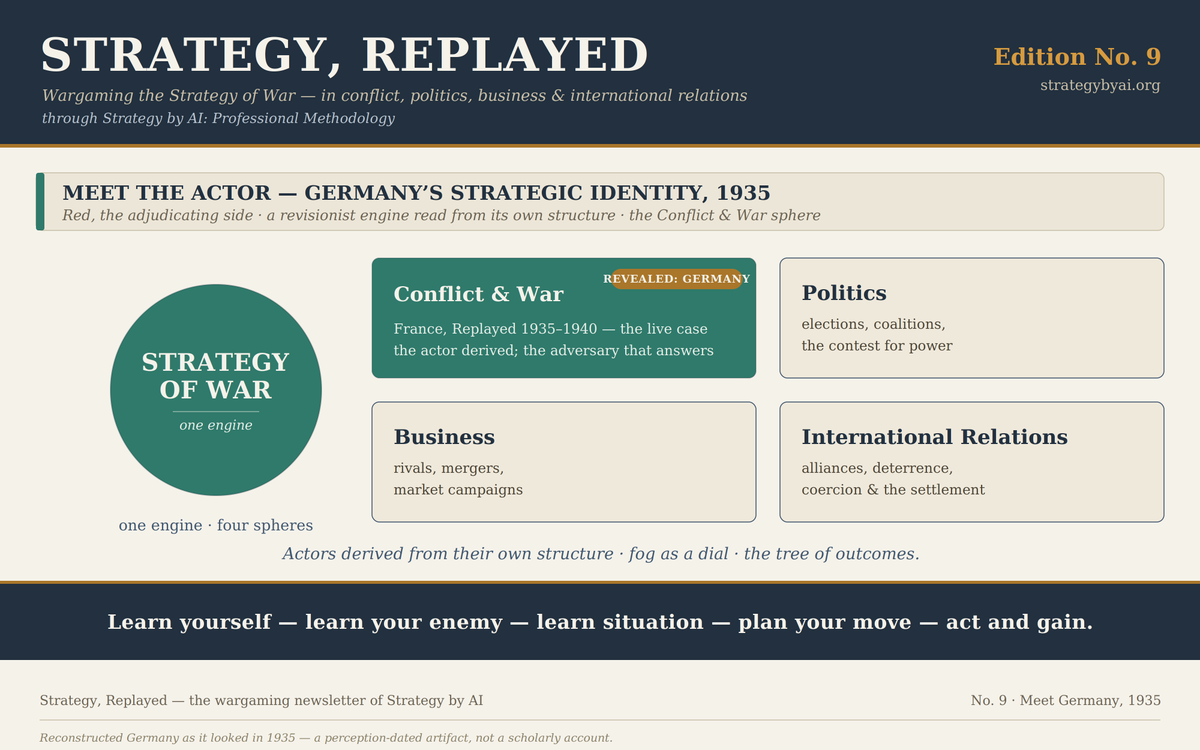
STRATEGY, REPLAYED — Edition No. 10, France reads its enemies — the hostile environment, 1935. The human Blue through AI strategist counters the completely AI Red adjudicated by AI methodology against the AI-built tree of predicted outcome scenarios. https://t.co/lxYHTNtG4W
"Ukraine" has become a word people fight over before they trouble to define it. The explanatory power lies in the geography of a frontier called the Wild Field and in the two rival visions of what to do with it. https://t.co/vRWJr58wDX
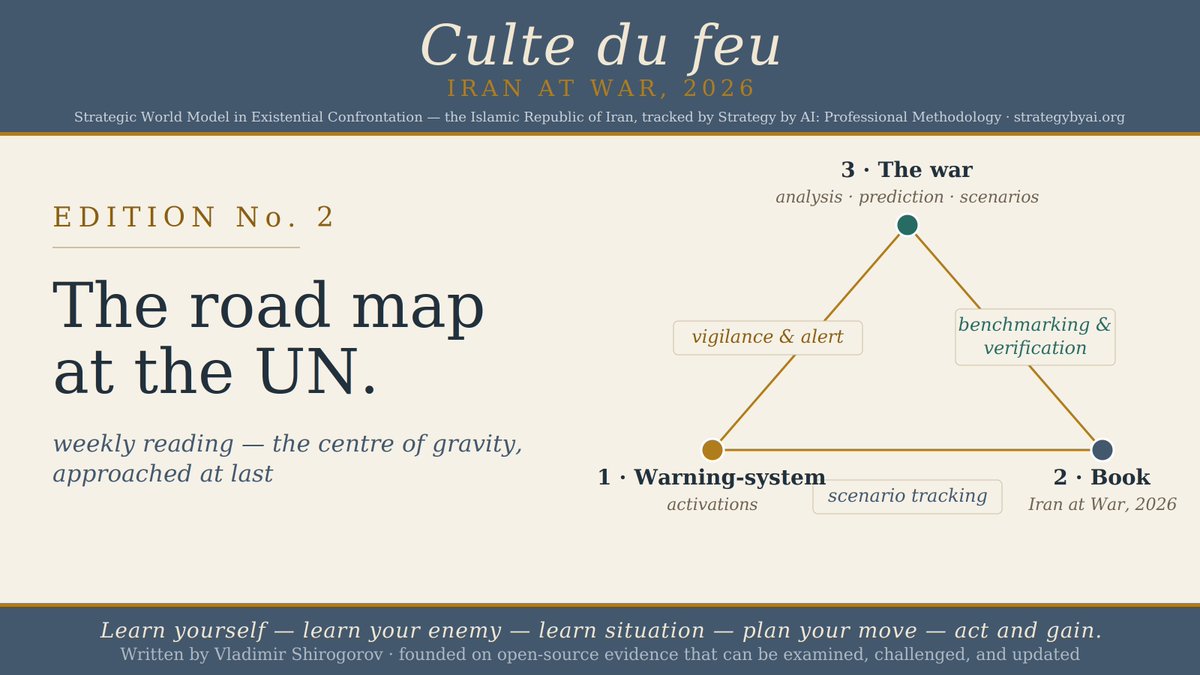
September is the month the Islamic Republic arrived at the war’s centre of gravity. The centre of gravity is the diplomatic settlement — the negotiated exit that alone could preserve the regime. This month, in month seven, the regime showed up.https://t.co/kN5fvqDdqk
StrategyBYaI's wargaming. France, Replayed, 1935–1940. Last edition met the loser of 1940, France, the Blue side of the wargame France, Replayed, 1935–1940. This one meets the winner — who was the loser of 1918. https://t.co/y7PMGhSTwL
after seven months, the Islamic Republic has finally walked toward the one place its own strategic model always said the war would be decided — and it has arrived there carrying the wrong sequence in its hands. https://t.co/Ox2onBZuwH
StrategyByAI's wargaming. France, Replayed, 1935–1940. France lost in 1940 with the bigger tank force. It was not out-produced and not out-gunned — it was out-thought, and the defeat lived in its strategic identity, formed years before the first shot. https://t.co/ax33QNeHzF