Everyone treats Singapore incorporation like it's some elite move.
It's paperwork. Here's the whole thing:
1. Pick a structure. Almost always a Private Limited (Pte Ltd). Shields your personal assets from company liability.
2. One local resident director. This is the part that trips people up. You don't live there, you appoint a nominee. Standard practice, fully legal.
3. Registered address in Singapore. A real one, not a mailbox.
4. Minimum paid-up capital: 1 SGD. Not a typo.
5. File with ACRA. Approval often lands in 1 to 3 days.
The catch nobody mentions upfront: banking. Incorporation is fast, opening the corporate account is where the real vetting happens. Budget weeks, not days.
17% corporate tax, territorial system, 90+ tax treaties.
The structure is the easy part. Setting it up so it actually holds is the work.
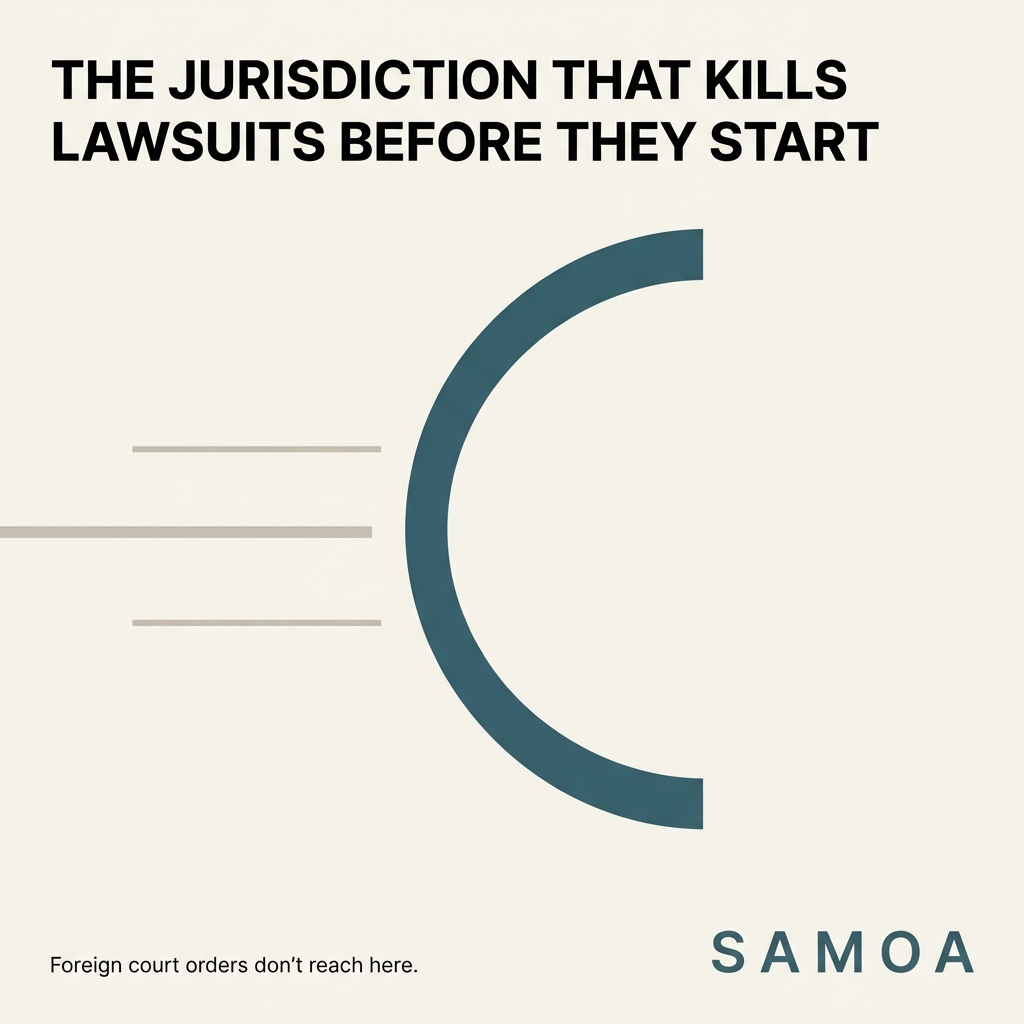
Samoa is the offshore jurisdiction almost nobody shortlists. Mistake.
Everyone defaults to BVI or Cayman and pays for the name.
Here's the Samoa International Company, plain version:
1. Formation in 1-2 days. One shareholder, one director. Both can be you.
2. Zero tax on income earned outside Samoa. No filing, no audit requirement.
3. No public register. Directors and shareholders stay off searchable records.
4. The part I'd actually flag: Samoa lets a company re-domicile in fast. If your current jurisdiction turns hostile, you move the structure there without dissolving it.
That last one is the asset protection feature. A creditor chasing you across a re-domiciliation is chasing a moving target.
Correction, it's the second last one too. The privacy and the mobility work together.
This is for legal structuring. If you're hiding income from your home tax office, wrong post.
Samoa costs less than BVI and does the same job quieter.
The Marshall Islands is the offshore jurisdiction almost nobody shortlists.
Which is odd, because the structure itself is one of the cleaner ones available.
What you get with a Marshall Islands IBC:
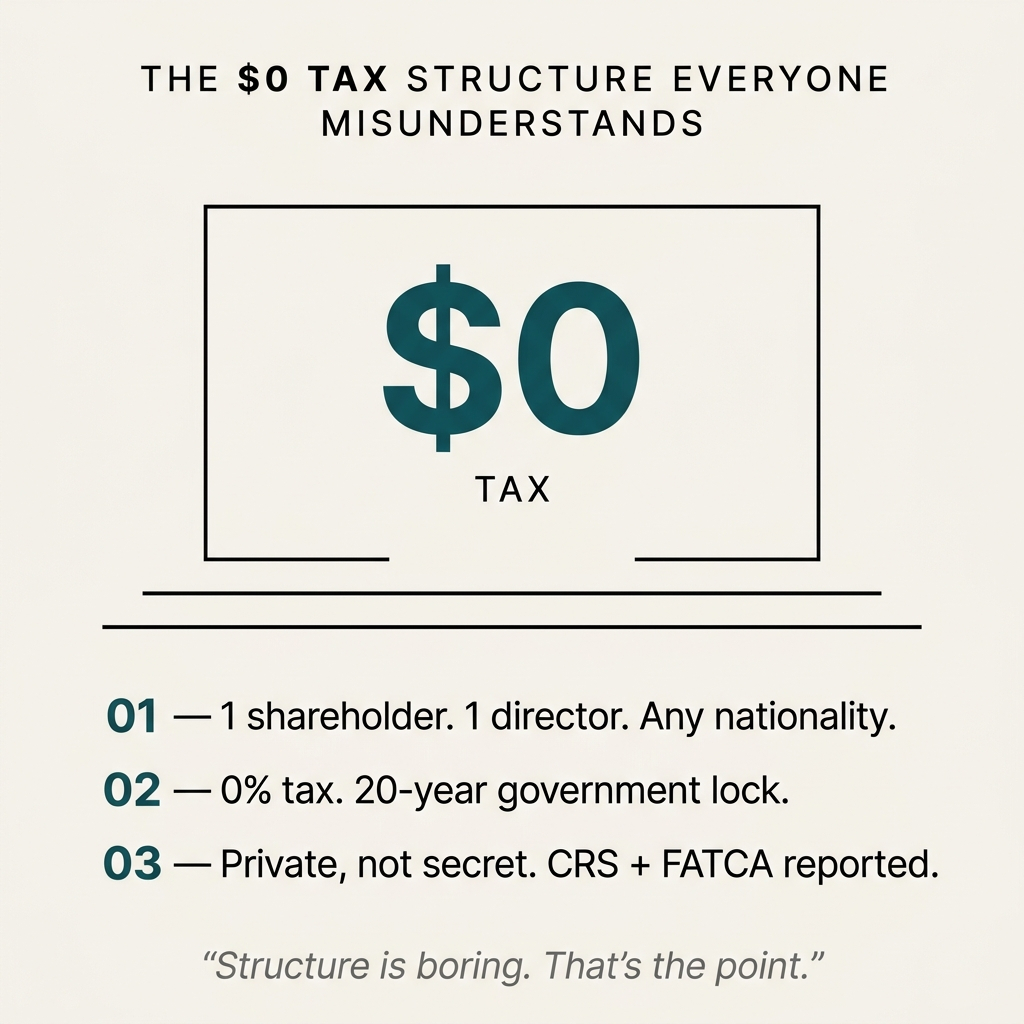
1. Zero tax on foreign-sourced income. No corporate tax, no withholding tax for non-resident entities.
2. No public register. Directors and shareholders stay off public record.
3. One person can hold every role. Sole director, sole shareholder, done.
4. No annual reporting or audit requirements for non-resident companies.
5. Formation in 1 to 2 days. Faster than BVI in most cases, and cheaper to maintain.
The catch. Banks know the flag. Opening an account takes more documentation than a Hong Kong or Singapore entity would need.
Actually, that's less a Marshall Islands problem and more a 2024 banking problem. Every zero-tax jurisdiction faces it now.
It also runs the third largest shipping registry on earth. Not relevant to your holding company. Just why the corporate law is so developed for a nation of 40,000 people.
If your income is foreign-sourced and you don't need local banking, it belongs on the comparison list.
Most people never put it there.
There's a Malaysian island where trading companies pay 3% tax.
Labuan. Federal territory off Borneo, and one of the more underrated formation jurisdictions in Asia-Pacific.
Here's the structure, stripped down:
1. Trading income taxed at 3% of audited profit
2. Holding companies with pure investment income can sit at 0%
3. 100% foreign ownership, no local partner needed
4. One director, one shareholder minimum
The part people skip is substance. Since 2019 you need real presence, office and staff depending on activity. Skip that and the 3% rate turns into Malaysia's standard 24%.
Actually the bigger draw for a lot of clients isn't the tax at all. It's the work visa. A Labuan company can sponsor a two-year renewable visa for you and your family, living in mainland Malaysia.
Treaty access exists but several countries carved Labuan out of their agreements with Malaysia. Check yours before you build on it.
Good structure for the right setup. Wrong one if you can't back it with substance.
Offshore asset protection sounds shady until you see the mechanics.
It's three moves. That's it.
1. Separate ownership from control. A Cook Islands or Nevis trust holds the assets. You direct them. A US judgment can't reach what you don't legally own.
2. Put the structure in a jurisdiction that ignores foreign court orders. Nevis makes a creditor post a bond just to file. Cook Islands has a one year statute of limitations on fraudulent transfer claims. Two years in some cases, depends how the claim is framed.
3. Bank somewhere else entirely. Structure in one country, account in another. One subpoena stops working.
The part people get wrong: this only works if you build it before there's a claim. After a lawsuit is filed, moving assets is fraudulent conveyance and the whole thing collapses.
Everything you own sitting under one court system is a choice. Most just never made it consciously.
Hong Kong gets written off as "not offshore anymore." Wrong.
It runs a territorial tax system. Profits earned outside Hong Kong pay 0% there. Profits earned inside pay 16.5%, and the first chunk only 8.25%.
That territorial piece is the whole reason to form there.
What formation actually takes:
1. One director, one shareholder. Can be the same person. No residency requirement.
2. A company secretary based in Hong Kong. Not optional.
3. A registered address there. A service provides both.
4. Incorporation itself, about a week.
The part that trips people up is banking. Hong Kong banks want substance, a real business story, sometimes a visit in person. Plan the account before the company, actually. Most who come to us do it backwards.
One more thing. The offshore profits claim isn't automatic. You file for it and the tax department reviews it. Keep your invoices and contracts clean from day one, that review gets easier.
Used right, a Hong Kong company is a gateway structure into Asia with a legal 0% rate on foreign income.
Used lazy, it's a company with no bank account.
A US court judgment is close to worthless in the Cook Islands.
That single fact is why the jurisdiction exists in asset protection at all.
Here's how a Cook Islands LLC actually works:
1. Cook Islands courts don't recognize foreign judgments. A creditor who wins in New York starts over from zero in Rarotonga.
2. Starting over means flying in, hiring local counsel, and proving fraudulent transfer beyond reasonable doubt. Criminal standard, civil case.
3. The clock is short. Miss the statutory window and the claim is dead before it's filed.
4. The charging order is the sole remedy against the LLC. No seizure of assets, no forced distributions.
Most creditors run the math on that and settle.
Pair the LLC with a Cook Islands trust and the structure holds even under duress, since the trustee sits outside the reach of the order compelling you.
Formation takes days. The protection is the point, not the paperwork.
St. Vincent gets skipped for the BVI. Usually a cost mistake.
The structure there is an LLC under the 2008 Act. Simple setup, and it does more than people expect.
What you get:
1. No local corporate tax on foreign income. Your offshore earnings stay outside the local tax net.
2. No public register of members or managers. Your name stays off searchable records.
3. Formation in 1-2 business days. One member is enough, can be you, can be another company.
4. No annual reporting or audit requirement for the LLC itself.
The part that matters for Asset Protection: a foreign judgment doesn't automatically reach your St. Vincent LLC. A creditor has to start over in local courts. Expensive, slow, and most don't.
Formation cost runs roughly a third of comparable Caribbean jurisdictions.
Not the right base for everything. If you need banking prestige or treaty access, look elsewhere. If you need a clean holding structure that stays private, this is one of the cheaper walls you can build.
Entrepreneurs shortlist BVI and Nevis. St. Lucia rarely makes the list.
Odd, because the setup is one of the simpler ones in the Caribbean.
Here's what a St. Lucia IBC actually looks like:
1. One shareholder, one director. Same person works. You can be both.
2. No minimum capital. None.
3. Foreign-sourced income sits outside the local tax net. Your company earns abroad, St. Lucia doesn't touch it.
4. English common law base. Your contracts read the way you expect them to.
5. Formation runs a few business days once documents clear.
The part people trip on is the 2019 changes. St. Lucia rewrote its IBC rules and half the internet still quotes the old regime. The territorial system is what applies now, not the old exemption certificates.
If you're building an international structure and skipped St. Lucia because you never heard it mentioned, that's the only reason it wasn't on your list.
Entrepreneurs asking about Panama keep ending up in Puerto Rico instead.
Strange at first. It's a US territory. Feels like the opposite of offshore.
That's the point.
Under Act 60, a Puerto Rico export services company pays 4% corporate tax. Not a loophole. Written US law.
Three things pull US founders there:
1. No expatriation. You keep your passport, your banking, your Delaware habits.
2. 4% on export service income. Consulting, software, marketing, most remote work qualifies.
3. Dividends from that company to a bona fide PR resident, 0%.
The catch is real though. 183 days on the island, closer connection test, actual presence. Skip that part and the IRS treats you like you never left. Which, legally, you didn't.
We structure this for clients who want the tax position without the compliance mistakes. The formation is the easy half.
Residency planning is where it holds or breaks.
A creditor who wants to sue your Nevis LLC has to pay first.
Cash bond, posted with the Nevis court, before the case even starts. Around $100,000.
Most lawsuits die right there.
Here's what makes Nevis different from other jurisdictions:
1. Foreign judgments don't count. A US court ruling means nothing in Nevis. The creditor has to refile the whole case locally, with Nevis lawyers.
2. Charging order is the only remedy. Even if they win, they can't take your membership interest or force a payout. They wait for distributions that may never come.
3. One year statute of limitations on fraudulent transfer claims. Short window, high burden of proof.
4. No public register of members or managers.
Formation takes a few days. One member is enough, and you can be that member and the manager.
I'd still pair it with a Nevis trust for larger holdings. The LLC alone protects the structure, the trust protects the ownership.
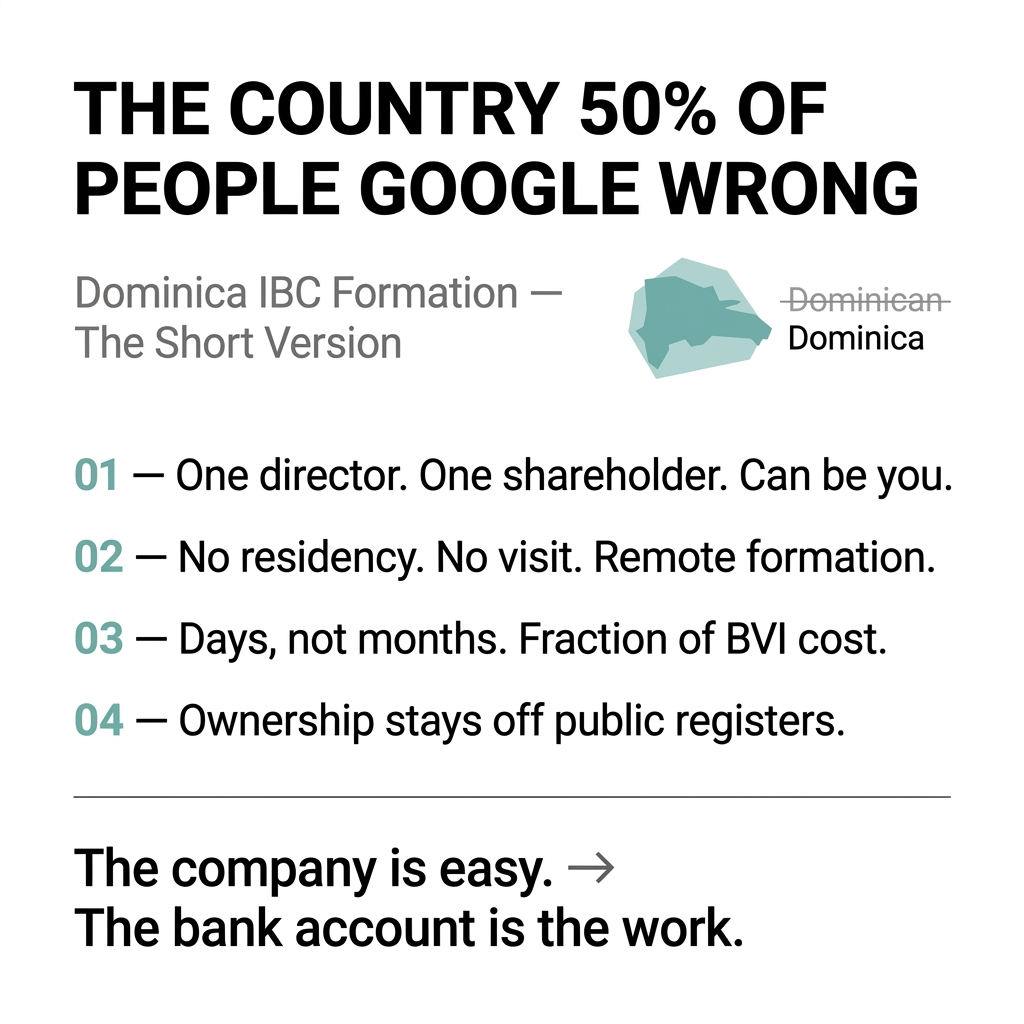
Dominica gets confused with the Dominican Republic. Costs people real money.
Different country. Different rules. Dominica is the small Caribbean island with one of the simpler IBC setups available.
Here's what forming there actually looks like:
1. One shareholder, one director. Same person works. You don't need a local.
2. No public register of who owns the company. Your name stays off the record.
3. Zero tax on income earned outside Dominica. The structure only makes sense if your business is international.
4. Formation runs a few days once documents clear. The slow part is the bank account, not the company.
One thing that gets skipped: an IBC there can't do business with Dominica residents. Form it for offshore activity or don't form it.
And if the plan is hiding income from your home tax office, this isn't the tool. Report it where you live.
Forming a Cayman company is easier than opening its bank account.
Here's the part nobody explains upfront.
The formation itself:
1. You register an Exempted Company. That's the structure built for business conducted outside the islands.
2. One shareholder, one director. Same person works. You don't need to live there or fly there.
3. No corporate tax, no capital gains tax, no filing of accounts with the registry.
4. Registration takes 3 to 5 business days once your due diligence documents clear.
That last part is where it slows down. Passport, proof of address, source of funds. The registered agent has to verify all of it.
Then the bank account. That's the real project. Cayman banks want business plans, expected transaction volumes, sometimes a personal visit.
Actually, plenty of Cayman companies bank elsewhere entirely. Singapore, Switzerland. The company and the account don't have to sit in the same place.
The structure is the easy part. Plan the banking first.
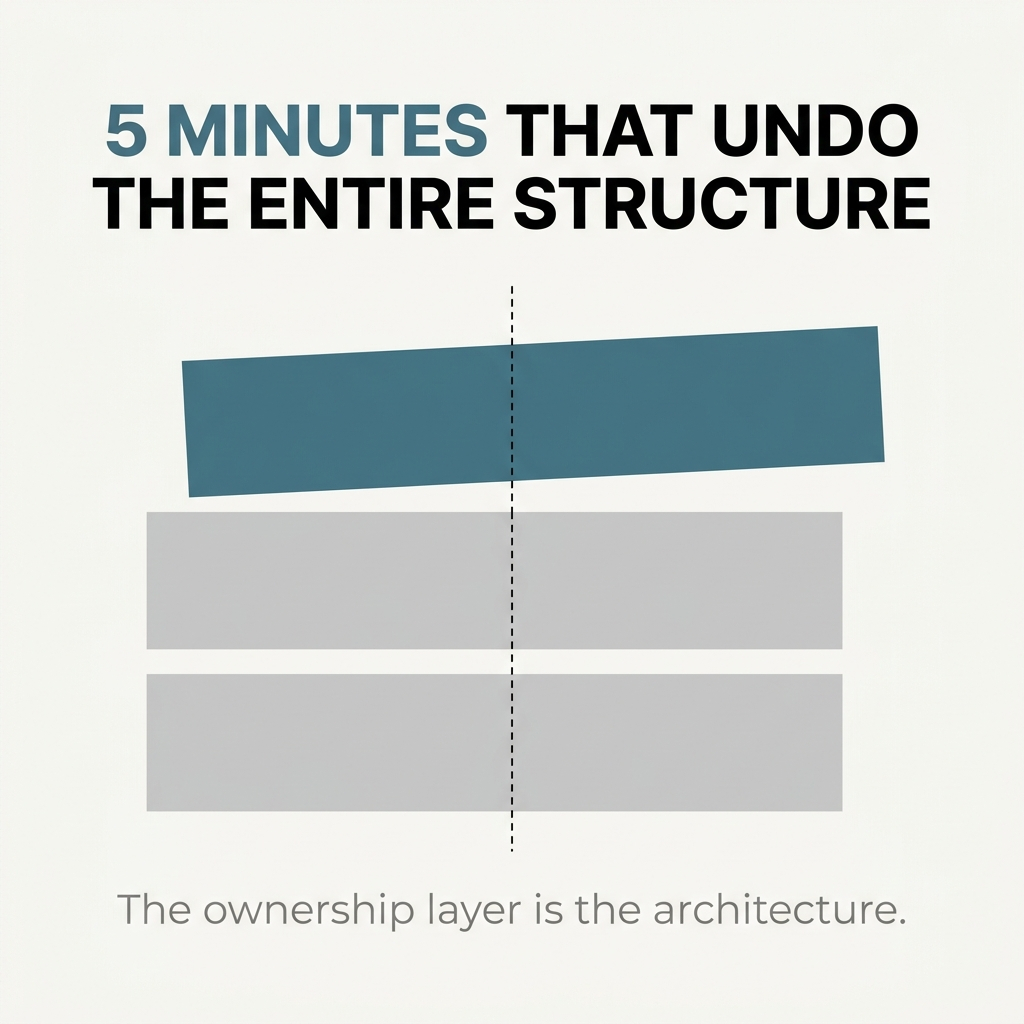
Founders pick the BVI over an afternoon. Then fill in the beneficial owner details in five minutes. That five minutes decides whether the structure protects you or exposes you.
Here's what that section actually does.
1. Your registered agent files it to the BOSS system. It's not a formality, it's a record regulators can pull.
2. Get it wrong, even by accident, and the company can be flagged. Penalties land on the company, then on you.
3. Nominee director listed but you sign everything anyway? The register says one thing, your bank file says another. That mismatch is what opens structures up, not the jurisdiction.
The BVI part is easy. 21 days to incorporate, sometimes less.
The ownership declaration is the part that has to match reality. Court, bank, tax office, they all check against it.
Read the form slower than you read the brochure.
A Bahamas company hides nothing from your home country.
The tax office you're trying to leave behind still gets the report. Owners set up the structure believing the opposite. Then a letter arrives and the story changes.
Here's what actually happens.
The Bahamas signed on to CRS. Your bank there reports account data back home automatically. Every year. No letter required from you, it just goes.
So what's the point of a Bahamas IBC then.
1. 0% corporate tax, no income tax, no capital gains tax at the company level
2. Asset protection. A creditor suing you at home has to fight in Nassau courts, different rules, different odds
3. Formation in about a week, one shareholder, one director, both can be you
The structure works when you declare it. You report the company, pay what your home country says you owe on it, and the protection part still stands. The legal shield doesn't depend on secrecy. It never did, actually. It depends on the structure being in a jurisdiction where your problems can't easily follow.
The people who get the letter and panic are the ones who skipped that part.
Build it to survive a compliance review, not to avoid one.
Antigua gets skipped by people forming offshore companies. Their loss.
The IBC there is one of the simpler structures I explain to non-residents.
What it actually looks like:
1. One director, one shareholder. Same person works. You don't need to live there or ever visit.
2. No corporate tax on income earned outside Antigua. Foreign-sourced only, that part matters.
3. No public register of who owns it. Your name stays off the record.
4. Formation runs about 2-3 days once documents clear. The bank account takes longer, always does.
The catch people miss: an Antigua IBC can't do business inside Antigua. It's built for holding assets or running international operations, not local trade.
Most clients pair it with an account in a separate jurisdiction. Structure in one place, banking in another.
That separation is the whole point of doing this properly.
Anguilla gets skipped for BVI. That's usually a mistake.
Same common law framework. Zero corporate tax. And the registry runs faster, ACORN files IBCs same day, sometimes within hours.
Here's how we set one up:
1. Pick the structure. IBC for most cases. LLC if you want member protection instead of shares.
2. Name check through the registry. Takes minutes.
3. Appoint a registered agent on the island. Required, no way around it.
4. File incorporation docs. One director minimum, can be you, can live anywhere.
5. Open the bank account. This is the step people underestimate. The company takes a day. Banking takes weeks if your paperwork is sloppy.
No public register of directors or shareholders. No annual reporting on income.
We usually pair it with an offshore account in a second jurisdiction. One structure, two layers.
Not for tax evasion. For legal structuring. Different things.
The UK is one of the easiest places to form a company as a non-resident. Almost nobody looking offshore starts there.
They start with the flashy jurisdictions. Then find out banking is a nightmare.
Here's what forming a UK company actually requires:
1. No residency. You can be anywhere. No UK director needed, no UK shareholder needed.
2. A registered office address in the UK. That's the one physical requirement. Service providers handle this.
3. £1 minimum share capital. One pound.
4. Formation takes 24 to 48 hours through Companies House. Faster than opening a gym membership in some countries.
The hard part is the bank account. Always has been.
Traditional UK banks want you in a branch, in person. Non-residents get filtered out fast. This is where structures die, not at formation.
The workaround is EMIs and international banking outside the UK. A UK company with an account in a second jurisdiction. That combination is what we build most often, actually. The company is the easy half.
One thing worth knowing: UK companies pay 25% corporation tax on profits. It's not a zero-tax setup. It's a reputable structure with real banking access and treaty coverage across 130+ countries.
If your goal is credibility with clients and payment processors, it does the job.
If your goal is paying nothing, this isn't your jurisdiction.
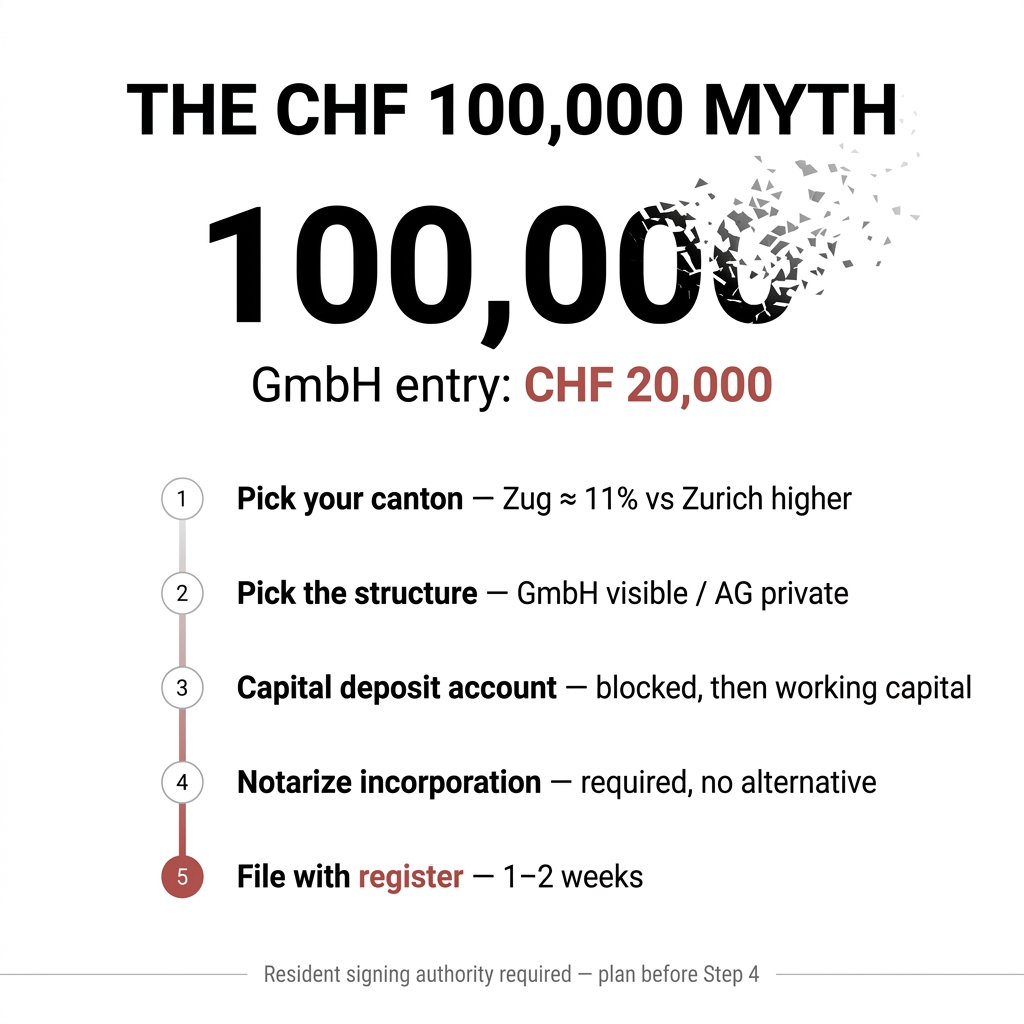
Forming a Swiss company takes 5 steps. One stalls almost everyone.
We set these up for clients regularly. The paperwork is the easy part.
Here is the sequence:
1. Pick the structure. GmbH needs CHF 20,000 capital, AG needs CHF 100,000 with 50,000 paid in. Clients pick AG for the image and regret the cost. Start with what the business actually needs.
2. Open the capital deposit account. This is the step that stalls people. Swiss banks want to know who you are, where the money comes from, and why Switzerland. Budget weeks, not days.
3. Notarize the deed of incorporation. In person or by proxy.
4. Register with the commercial registry of your canton. Canton choice matters more than founders think, tax rates vary a lot between them. Zug and Schwyz for a reason.
5. Register for VAT if you cross CHF 100,000 turnover.
One correction to step 1. You also need a Swiss resident director or authorized signatory. Non-residents forget this and lose a month fixing it.
The structure protects nothing if the substance behind it is thin. Build that first.