@In_Sane_Saint I feel quantitative easing during COVID increased cash flow in every market. But then, to correct the hyperinflation created by this, there was an increase in repo rates globally, and of course there were multiple supply-side shocks that decreased cash flow
All these things can be true simultaneously:
1. The students prima facie had a good intent.
2. CJP was always a political movement.
3. Everyone at Jantar Mantar was not political.
4. The use of pellet guns as reported is ridiculous.
5. But the march towards the parliament was equally ridiculous.
6. The FIRs in many cases are justified.
7. The students crying about FIRs for just attending are equally justified.
Everyone selectively picks their own points and keeps extrapolating the entire truth around that already chosen position.
Messi is at the bottom of the screen. There was an entire column of players when Messi hit the ball. Martinez was the 2nd from top.
Messi’s cross landed exactly on top of Martinez, he took the header and scored the goal. Such precision, in that tense situation, in injury time, makes Messi the greatest.
There's a form of architecture so difficult that no country has seriously attempted it...
...Except Ancient India!
Let me tell you about "Rock-cut architecture," the difficulties involved, and how India did the impossible...over and over again.
Thread:
It is clear in document after document and decade after decade that 'His Majesty's Forces' - the Royal Navy and the British Army participated in most of the pivotal battles won by the English in India in the 18th Century.
The present post shows document excerpts relating to 1778 when 'His Majesty's ships' were instrumental in capturing Pondicherry and granting help to Fort St George at Madras therafter.
A few examples:
Campaign of Suvarnadurg and Vijaydurg in 1755-6 – Royal Navy and the British Army
Retaking Calcutta – Royal Navy under Admiral Watson
Plassey – Naval support by Royal Navy and contingent of British army with Clive.
Surat – 1759.
Buxar – Commanded by Hector Munro, from the British Army.
And several battles – supported by Indian sepoys and the rajas who put their own interests first – helped the British conquer India bit by bit.
Sanskrit Rock! A project by Trilok Music & me, to present ancient Sanskrit hymns in modern music
This one is the Tandav Stotram, composed by Raavan in honour of Lord Shiva
The rendition is modern, but the devotion is as deep as the resonance of the universe
Hope you like it!
THE GREAT NICOBAR PROJECT🔥🔥
The Port must be Bulit The Nation must be rise 🇮🇳🔥🔥
Great Nicobar Island project, valued at around ₹81,000 crore, reflects India’s bold vision to emerge as a dominant global maritime force. Positioned strategically along key international shipping lanes, the initiative features a transshipment port, an international airport, and a planned modern township. This is likely to enhance India’s trade capacity, streamline logistics, and strengthen its military footprint across the Indo-Pacific region. capacity, streamline logistics, and strengthen its military footprint across the Indo-Pacific region. 🌊
“Do whatever you (Chinese agents) want, but the port will be built there” 💪🏻 🔥🔥
Jai Hind 🇮🇳
#GreatNicobarProject #IndiaGrowthStory #IndoPacificStrategy #MaritimePower
VC- to the respective owner 🫶🏻🌸
No one is denying that ancient Indians, including in the South; ate meat.
But equating general meat consumption with a cultural acceptance of cow-meat in Kerala is simply ahistorical.
Let me take you through primary sources that you are fond of.
1) PATTANAM—THE ACTUAL ARCHAEOLOGICAL RECORD FROM KERALA
The largest archaeological excavation in Kerala (Pattanam) gives zero evidence of beef consumption among local populations.
P. J. Cherian, Director of Kerala Council for Historical Research (KCHR), confirms in the excavation report:
“The faunal remains indicate goat, buffalo, sheep, pig, marine fish—but no evidence of cattle slaughter for meat consumption.”
— Cherian, P. J., “Pattanam Excavations: Interim Report”, KCHR, 2007–2015.
This is an archaeological primary source, not someone’s Twitter fantasy.
2) SANGAM DOES NOT REPRESENT KERALA
Tamil Sangam texts (Purananuru, Akananuru) describe Tamilakam, not Kerala.
Even within Tamilakam, the references to cow slaughter are:
A) rare
B) tied to bandits, outcasts, and funerary rituals
C) condemned in other contemporary texts
But here is the key point:
None of these Sangam references apply to Chera-Kerala society.
Kerala’s own early literature and inscriptions do not show a beef-eating culture.
3) CHERA INSCRIPTIONS & DONATION RECORDS SHOW COW VENERATION
Chera-period temple inscriptions repeatedly show:
A) donation of cows
B) fines for harming cattle
C) royal protection of cow-herds
D) cows gifted for temple lamps (deepas)
Thiruvalla Copper Plates (9th c.)
Record the grant of cows to temples for perpetual lamps.
Not a single line about cow slaughter.
Jewish Copper Plates of Bhaskara Ravi Varman (10th c.)
Grant trading privileges; but in the same period, temple inscriptions forbid harming temple cattle.
These are primary epigraphic sources.
4) FOREIGN TRAVELERS IN KERALA CONFIRM COW VENERATION
Duarte Barbosa (1516)
In his Livro das Coisas da Índia (primary source), describing Kerala:
“The people of Malabar revere the cow greatly and do not eat its flesh.”
Al-Biruni (11th c.)
Describes:
“They hold the cow sacred; its slaughter is forbidden.”
(Al-Biruni’s India, ed. Sachau, Vol. I)
These are first-hand records, not reinterpretations.
5) FORCED BEEF-EATING UNDER TIPU SULTAN (PRIMARY SOURCE)
The earliest documented record of cow-meat being imposed on Hindus of Kerala is from Tipu Sultan.
Asiatic Researches, Vol. 5 (1799), p. 33
Eyewitness account:
“They were compelled to eat beef… and to be circumcised, to prove their conversion.”
SO:
A) Ancient Keralites ate fish, goat, boar, poultry, etc.
B) They did NOT have a cultural tradition of beef consumption.
C) Cow-veneration in Kerala is attested in
a) inscriptions
b) archaeological reports
c) foreign traveller accounts
d) temple records
e) Widespread beef consumption appears only after Tipu’s forced campaigns in the late 18th century.
So yes. non-veg eating existed.
But cow-meat was not part of Kerala’s Hindu culture and entered only through force, not tradition.
Did you know? The Mandyam Iyengar Brahmins of Karnataka do not celebrate Deepavali (Naraka Chaturdashi) a solemn remembrance of their ancestors who were brutally massacred by Tyrant Tippu in Melkote.
History records that, Tipu deceitfully released around 800 Mandyam Iyengars from prison under the pretext of celebrating Deepavali only to have them mercilessly slaughtered soon after.
That pain and remembrance continue to echo through generations in Melkote, where Deepavali remains a day of mourning, not celebration.
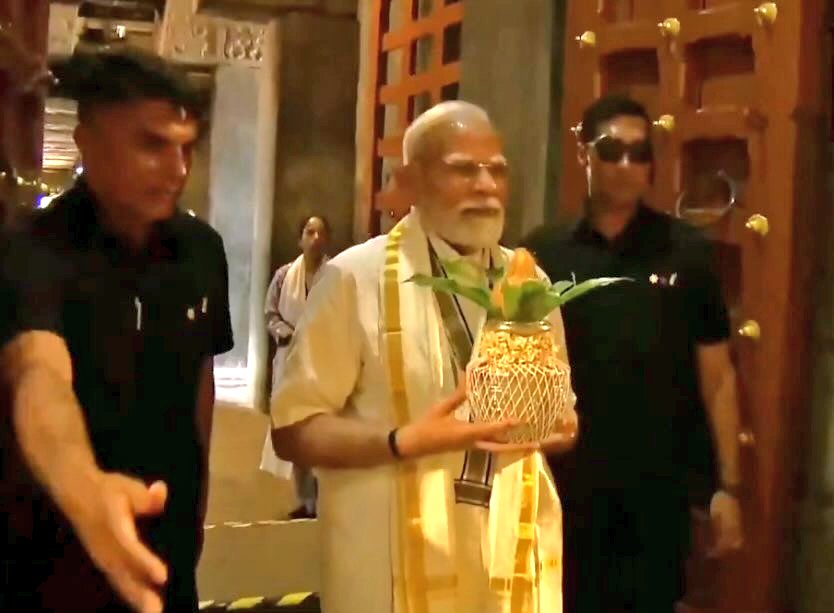
BIG NEWS 🚨 PM Modi brings Ganga water from Kashi to Gangaikonda Cholapuram temple in Tamil Nadu.
HISTORIC MOMENT !!
The ritual marks 1,000 years of Chola emperor Rajendra I’s legendary Ganga campaign.
PM Modi’s move revives the ancient tradition of pouring sacred water into the temple well.
A grand tribute to India’s unity, culture, and glorious maritime history.
Will someone broadcast this outside the BCCI HQs in India?
Grieving father of an Indian Navy officer killed during the Pahalgam terror attack in Kashmir.
Is India Versus Pakistan cricket match in Asia Cup more important than standing against terrorism?
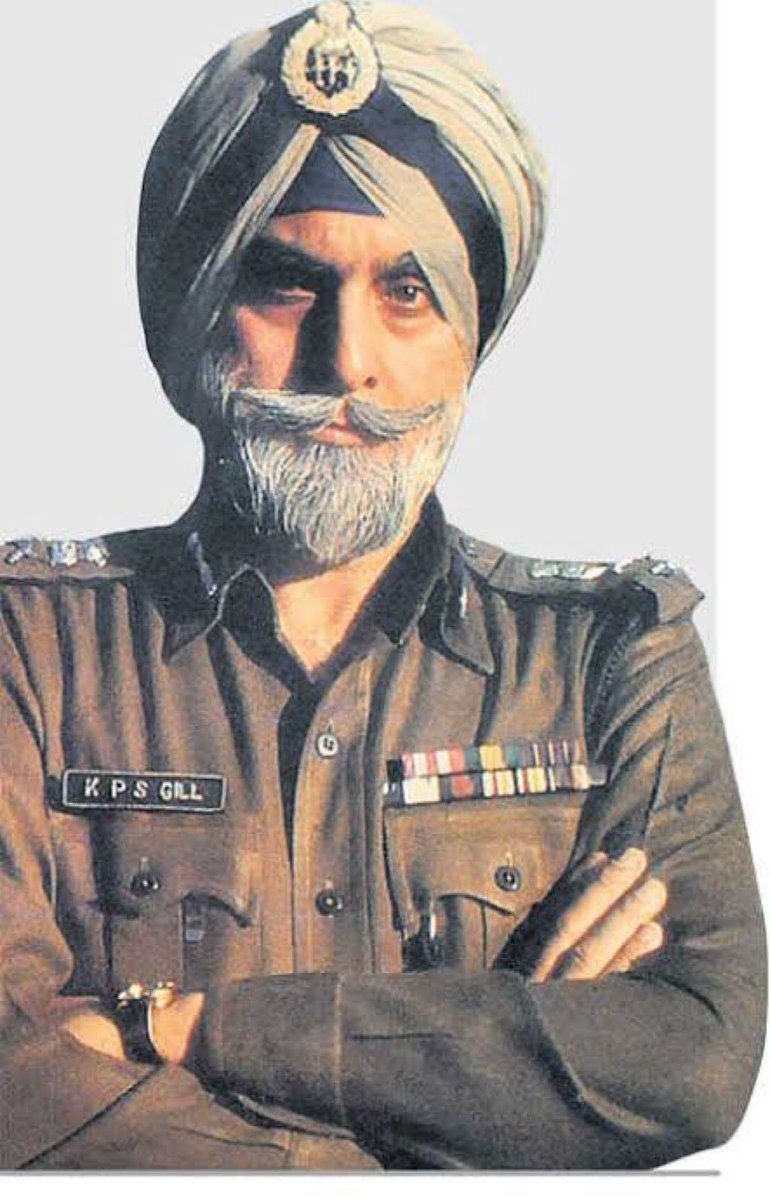
Naman to Shri KPSGill on GuruPurnima. The DharamYudh he led against Khalistani Jihadis wasn’t just the most successful example of fighting counterterrorism anywhere in world —but given the constraints Punjab was fighting under, also the most HUMANE.
A truly GREAT scholar-warrior.