I am BATMAN. I am the Jedi. Love Tech, Star wars, DC, Food, Guitar, Tennis, Books. Ruthlessly working to change the world for good. (Tweets are my own!)
India is the absolute first to achieve this and every Indian should be extremely proud of how clever this is.
Let me explain what you are even looking at.
That video shows a freight train carrying shipping containers stacked two high, one box on top of another, running under live overhead electric wires.
Sounds simple. But it is not. No other country in the world has pulled this off. India is the only one.
Here is why it is so hard.
When you stack two containers on a wagon, the train becomes very tall. Around 7 metres. Normal electric train wires in India sit much lower, around 5.5 metres. So the two cannot share the same track. The train would smash straight into the wire.
That leaves you with a choice. Go electric and stack only one container. Or stack two containers and pull the train with a diesel engine.
The US, China, Canada and Australia all run double-stack trains. But they mostly do it with diesel, or on routes that were never electrified in the first place. Nobody bothered raising electric wires that high on old tracks.
India did both electric and double-stack together. That is the world first.
The reason India could do this is a decision from the early 2000s.
So, Indian Railways had a basic problem. Goods trains and passenger trains shared the same tracks. Passenger trains always get priority.
So freight trains crawled at 25 to 30 km/h. For a growing economy, moving goods that slowly is a major problem.
So we built separate tracks only for freight. No passenger trains allowed. These are the Dedicated Freight Corridors.
The government approved the project around 2006 and set up a company called DFCCIL to build two corridors.
The Western one runs from near Delhi to the port near Mumbai, around 1,500 km. The Eastern one runs from Punjab down to West Bengal, around 1,875 km.
Because they were building from zero, the engineers were not stuck with old bridges, old tunnels or old wire heights. They could decide the clearances themselves.
So they made a deliberate call to build the whole corridor tall enough for two stacked containers. And electrify it.
Then they had to solve two hard problems.
First, the wire. On a normal Indian line the wire hangs around 5.5 metres. On the freight corridor they raised it to about 7.5 metres. This is called high-rise OHE.
No railway in the world had run a regular freight wire that high before.
Second, the engine. If the wire is way up high, a normal loco cannot reach it. The arm on the roof that touches the wire, called the pantograph, would be too short.
So India needed a new locomotive. A taller reach. And enough power to drag thousands of tonnes.
This is why we built a new loco called the WAG-12.
It is a beast.
12,000 horsepower. Double the power of the old WAG-9 it replaced. It can haul trains over 6,000 tonnes, and up to 15,000 tonnes in some setups, at 100 km/h. That is roughly three times the old freight speed.
The WAG-12 has its own backstory. In November 2015, Indian Railways signed a deal worth about ₹19,604 crore, around 3.4 billion dollars, with the French company Alstom.
They built a new factory in Madhepura, Bihar. Indian Railways holds 26 percent, Alstom holds 74 percent. It was the largest foreign investment ever in Indian Railways.
Over time the factory reached close to 90 percent local manufacturing. So most of each loco is now made in India.
So, the government approved an infrastructure decision in the mid 2000s, then it got built over almost two decades by DFCCIL, Indian Railways and RDSO. The locomotive came through the Alstom joint venture.
The first double-stack train ran under high-rise wires in June 2020, from Palanpur and Botad in Gujarat. The corridor sections were opened in stages after that.
And finally, why only India can do this.
Three things stack up together.
One, broad gauge.
India runs on a wider track than most of the world, 1,676 mm. A wider track gives a bigger loading box. So India can run plain flat wagons with two containers on top. Many countries need special low well-cars to manage height, and those still do not fix the wire problem.
Two, the fresh corridor.
India built new track with no height limits baked in. Old networks in Europe and the US are full of low tunnels and bridges never meant for 7 metre trains. Rebuilding all of that is close to impossible and crazy expensive.
Three, the system.
The tall wire, the high-reach pantograph and the powerful WAG-12 were all designed to work together as one package. You cannot copy just one piece. You need the whole thing.
Put those three together and other railways simply cannot recreate it without rebuilding from scratch.
But the part I keep thinking about is that India approved this in 2006 and ran the first train in 2020.
Fourteen years. :)
Our Nathu La server, unveiled today, took years of hard work by our Nagpur R&D team, led by Mangesh Sadafale.
It is going into production in Zoho data centers around the world and will save energy and money.
We are also working hard to make our entire software stack much more compute and memory efficient.
R&D to the max!
I fact-checked India's 2014 vs 2026 infrastructure numbers, added some more important parameters that were missed and an extremely important data point, the target.
Because some of this growth would have happened anyway. The question is whether India beat, met, or missed its own or global benchmarks.
So, I have compiled 48 parameters in total and every number is from PIB, IBEF, the Economic Survey and ministry dashboards.
Wherever the government did not set explicit targets, I benchmarked it against China.
Some targets beaten. Some missed. Every data point is verified.
Full data below.
I greatly admire Singapore’s former Prime Minister Lee Kuan Yew, who transformed his small island nation into one of the world’s economic powerhouses. He understood that liberty and order are flip sides of the same coin, and that liberty without order is anarchy and order without liberty is tyranny. I wanted to pay tribute to him while in Singapore, but he expressly disavowed any interest in a statue or monument. So I paid my respects by visiting a spot that he cherished, the National Orchid Garden, to admire the hybrid variety named after him. What a magnificent memorial for one of the great men of the past century. 🇺🇸🤝🇸🇬
A French engineer who lives quietly in Paris has spent 30 years writing software that the entire internet now runs on without knowing his name.
He wrote the code that streams every YouTube video, every Netflix show, every TikTok clip. He wrote the code that runs the virtual servers underneath AWS, Google Cloud, and Microsoft Azure. He calculated more digits of pi than anyone in history. He has no Twitter. He has no marketing. He just keeps shipping.
His name is Fabrice Bellard.
Here is the story, because almost nobody outside the systems programming world knows what one man has built.
Fabrice was born in 1972 in Grenoble, France. He studied at École Polytechnique, the top French engineering school. He never went to Silicon Valley. He never built a startup empire. He just wrote code.
In 2000 he started a project called FFmpeg, an open-source multimedia framework for encoding, decoding, and streaming video. He was 28. The project did one thing nobody else had done well. It handled every video and audio format that existed, in one library, on every operating system. He led it himself for years.
Today FFmpeg is the invisible engine of the internet. YouTube uses it. Netflix uses it. VLC uses it. Chrome and Firefox use parts of it. Every Android phone, every iPhone, every smart TV, every video editing tool you have ever touched runs FFmpeg somewhere underneath. If you have watched a video on a screen in the last 20 years, Fabrice's code processed it.
He was not done.
In 2003 he started QEMU, a machine emulator and virtualizer. He wrote it solo until version 0.7.1 in 2005. QEMU lets you run any operating system on any other operating system. It became the foundation of modern virtualization. KVM, the Linux kernel hypervisor, runs on top of QEMU. Every major cloud provider, AWS, Google Cloud, Microsoft Azure, IBM Cloud, runs virtual machines on infrastructure built around it. The Quick Emulator is the most cited piece of cloud infrastructure code on Earth.
He kept going.
In 2001 he won the International Obfuscated C Code Contest with a small C compiler that grew into TCC, the Tiny C Compiler. TCC can compile and boot a Linux kernel from source in under 15 seconds. In 2004 he calculated the most digits of pi ever computed at the time, using a personal desktop computer and an algorithm he derived himself called Bellard's formula. In 2011 he wrote a complete PC emulator in pure JavaScript that runs Linux in your browser, a project called JSLinux that engineers still cannot believe is real.
In 2019 he released QuickJS, a small but complete JavaScript engine that fits where V8 cannot. In 2021 he released NNCP, a neural network based lossless data compressor that immediately took the lead on the Large Text Compression Benchmark.
Then he turned his attention to large language models. He built TextSynth Server, a web server with a REST API for running LLMs locally. He released ts_zip and ts_sms, compression utilities that use language models to compress text and short messages at ratios traditional algorithms cannot reach. He released TSAC, a very low bitrate audio compression system. In December 2025 he released Micro QuickJS, a new JavaScript engine for microcontrollers, separate from QuickJS, designed for environments with almost no memory.
Fabrice co-founded a telecom company called Amarisoft in 2012, where he serves as CTO. Amarisoft builds 4G and 5G base station software used by carriers and labs around the world. He has been running it for over a decade while continuing to ship personal projects from his own home page at bellard dot org
He has no Twitter. He has no Instagram. He gives almost no interviews. His personal website is a flat list of projects with no styling, no fonts, no marketing copy. Just titles and links.
A quiet French engineer who never moved to Silicon Valley wrote the code that quietly runs the internet.
He is still shipping.
Singapore has for years been a supremely realistic state. When the world goes woolly headed and woke, or idealistic SG takes firm action ignoring external sensibilities with societal stability uppermost.
To maintain harmony in a diverse, compact country, the state takes decisive measures - in housing (prevent ghettoisation), education (acknowledging race and emphasising equal treatment) and of course in law enforcement where prosecution is strict and no external pressure works (as seen in drug cases).
This action is in keeping with that tradition.
Mad respect for Singapore for doing the right thing. India needs to learn from it.
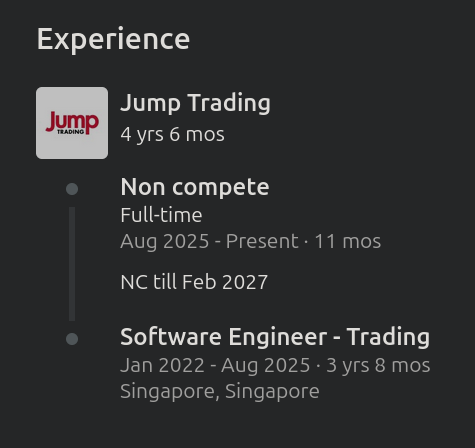
When you leave an HFT, they put you on a non-compete for 1 or even 2 years! This is the biggest gift from HFTs to open source world.
Aman Gupta is being paid by Jump Trading (to sit at home) just added multi-token prediction to llama.cpp which speeds up local LLM models by 2x
2/ in #Singapore, don't expect your full deposit back. The inspections are the most rigorous I've seen in any major city. Walk in assuming a chunk is already gone, and you'll be pleasantly surprised if it isn't. They expect you to hand back the apt better than when you moved in
Closing up the loop on yday's thread, 1/ the notorious end-of-lease walkthrough in #Singapore. It took 2.5 hours, the agent inspected every single detail. already had the curtains, ACs, and the entire apt deep-cleaned beforehand. they still deducted ~25% of the deposit.
Super proud of my son @arjunsawhney_
He was the fastest Indian at Hyrox, New York.
Around 50,000 athletes participated in the HYROX New York event held across two weeks at Pier 76 in New York City.
2010, New Delhi, I was driving home late one night around 1 AM after a family gathering.
I stopped at a red traffic light in Green Park. There were no other vehicles around, just our car.
Suddenly, a BMW pulled up behind us and started honking aggressively, demanding that we drive through the red light.
I pointed to the signal and stayed put.
The driver got out, dressed in a suit, hurled abuses at me, and ordered me to move. When I refused, and picked up my phone, he banged on my window. Eventually he backed off, got back in his car, and sped away by cutting across in front of me. I drove off when the signal turned green.
This is the reality of India, even today: owning a big car, a big house, or having formal education is no guarantee of basic civility, class, or moral character.
This was just one of many road rage incidents in New Delhi/NCR, I experienced before I finally decided to pack my bags and leave the country.
A truly civilized society is one where people follow the law even when no one is watching, and do what is right without needing supervision.
When I moved to Singapore, this is exactly what I saw, people naturally did the right thing. The same held true when I later moved to Europe.
Regarding the recent dancing incident at the airport, many people defended it by saying, “The authorities didn’t have a problem, so why do you?” That’s exactly where they miss the point.
You never know who is sitting on the same flight, someone mourning the loss of a loved one, a person who just received a cancer diagnosis, a parent who lost a child, or someone who just lost their job. When you show such insensitivity in shared public spaces and don’t care about other people’s emotional state, that’s where a society fails.
People often abuse me for raising these issues and quickly brush them aside by saying, “Every country has problems.”
That’s true, every country does have its issues.
But the scale is vastly different. Other countries have 99% civility and 1% assholes. In India, it feels like 99% assholes and 1% civility.
Yes, I agree that no country is perfect, but the proportions make all the difference.
To those who defend such behavior and treat every public place like their personal living room: fuck off.
I purchased Hyundai Creta King with my hard-earned money, and for a middle-class family, a car is an emotion, not just a vehicle. I entrusted my car to the service center at Shree Krishna Hyundai Jhunjhunu for minor issues. However, upon picking it up, I was completely exhausted and shocked to see its awful condition: bird droppings all over the exterior, windows left open, and the interior completely covered in mud and sand. The ventilated seat pores and interior leather are choked with dust. I have attached a video of the vehicle showing this unacceptable state.
@HyundaiIndia@Hyundai_Global #shreekrishnahyundai #TarunGarg #JoséMuñoz
I am a CBSE Class 12 student.
After receiving unexpectedly low marks in Physics, we applied for photocopies of my answer sheets through the CBSE reevaluation process.
Today we received the copies.
And I am shattered because the Physics answer sheet uploaded by CBSE is not mine
It’s been said a million times already, but the docking scene in Interstellar (2014) still absolutely rules. Hans Zimmer’s score, McConaughey trying to manually match rotation while everything is seconds from exploding… pure adrenaline filmmaking.
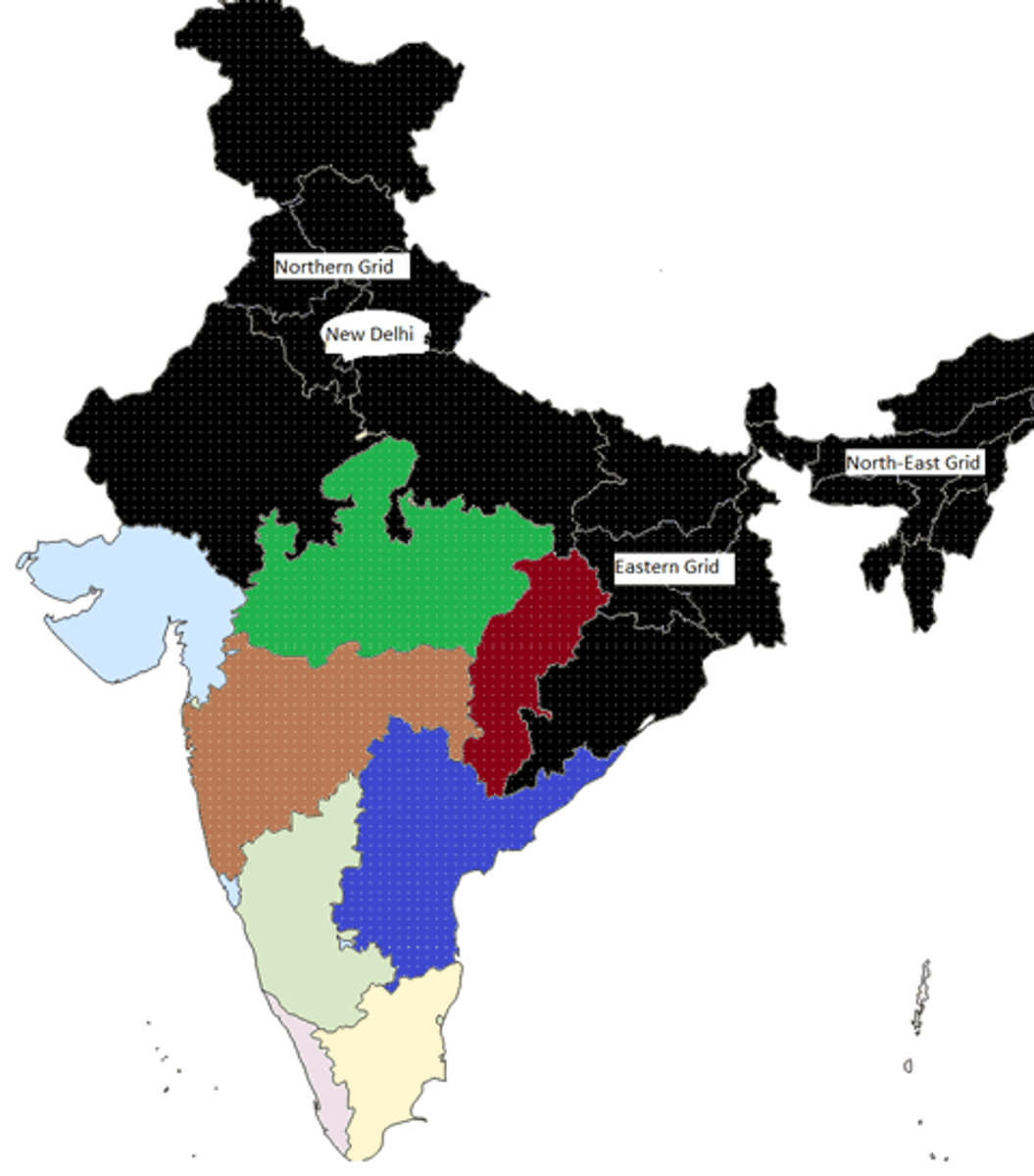
India's peak power demand reached 271 GW this week. Most youngsters are not realising how this country is providing power for such a demand!
Not sure how many remember. In July 2012, ~ 62 crore people went without power for 13.5 hours!
Peak demand in 2012 was 135 GW only.
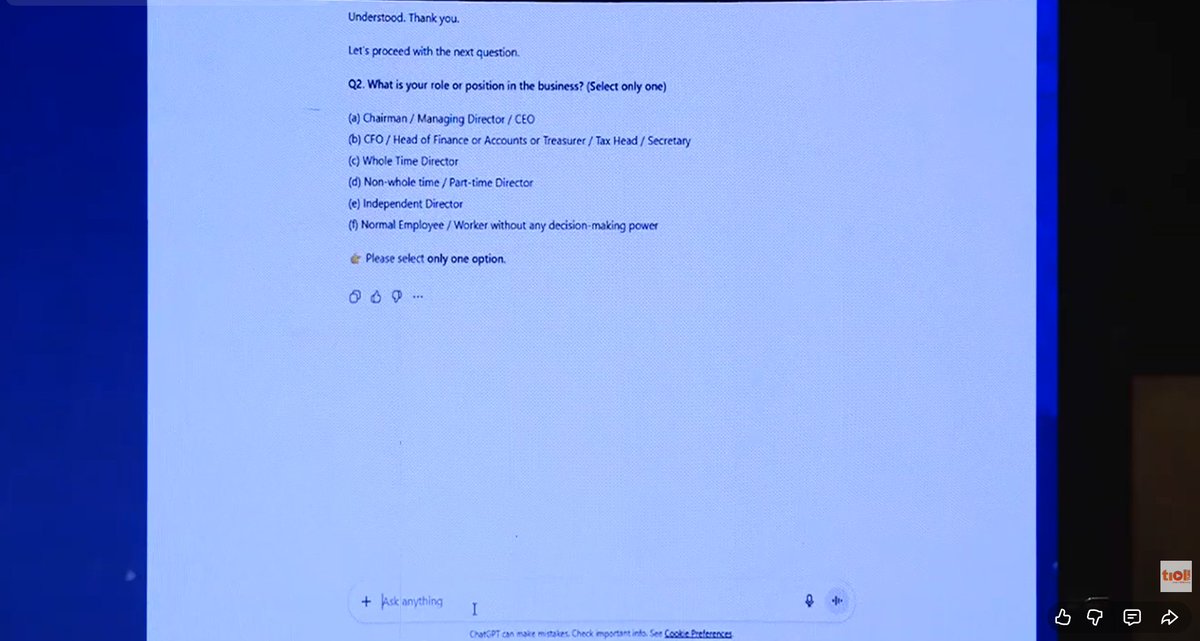
Earlier this month, I demonstrated a real-world GenAI use case before senior tax officials and industry leaders — a CustomGPT that helps users navigate arrest and bail issues under GST, in plain native language i.e. English, Hindi, Gujarati, Marathi, Bengali, Tamil, Punjabi and other Indian languages.
https://t.co/f4lYU7uQc1...
It asks the right questions and provides clear, accurate information (not legal advice) that even many overlook. Practically, ZERO hallucination, as its highly trained and fine tuned.
I’ve now open-sourced it, free of cost - for a limited period, for those who need it most — MSMEs, traders, shopkeepers, solo entrepreneurs, and startups - even employees who may be questioned on GST related issues.
One particularly humbling feedback from a senior participant stayed with me:
“Was among the most interesting session. AI was asked a query: Can I be arrested by GST Department for my violation exceeding Rs. 5 crores? We were astonished with the quality and content of results on answer. At the end of nearly 10 minutes session, there was hardly any question that was not imagined and answered. I realised to my dismay, it would have cost upward of a lakh to comprehensively cover this issue in a session lasting over one hour and still I would have come back without raising many relevant questions (not knowing what all to ask).”
Other use cases that are built and under fine-tuning can be seen at https://t.co/TKrSfb0UHp.
Currently, for 90+ million ChatGPT free users in India, we have a light trained model to suit lower token burning and model's cognitive ability. For 6+ million ChatGPT Go / Plus / Pro users in India, this CustomGPT is highly trained and works on highly cognitive ChatGPT 4o model.
📷 Try it. Challenge it. Improve it.
Because AI should empower — not intimidate.
#GenAI #LegalTech #AIforGood #GST