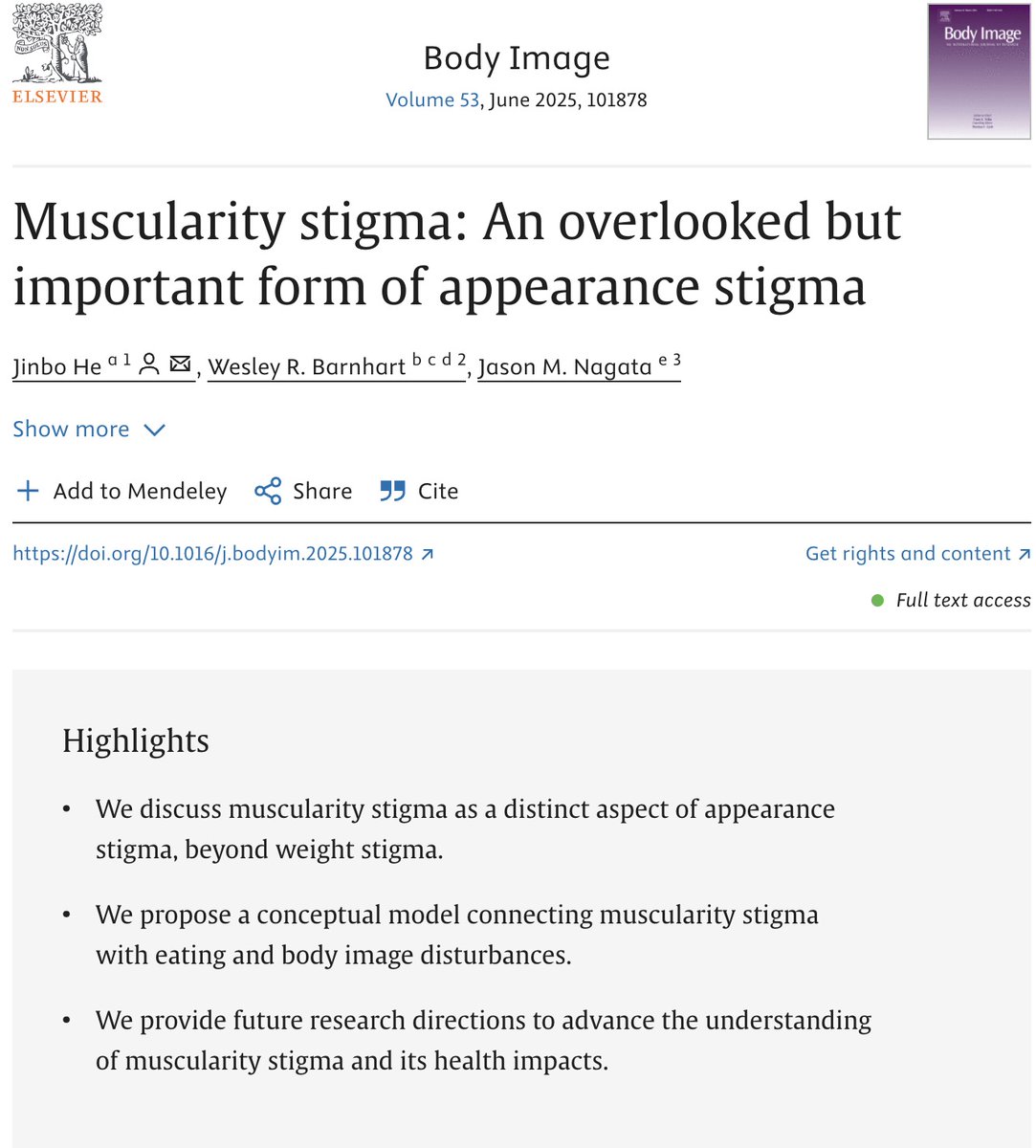
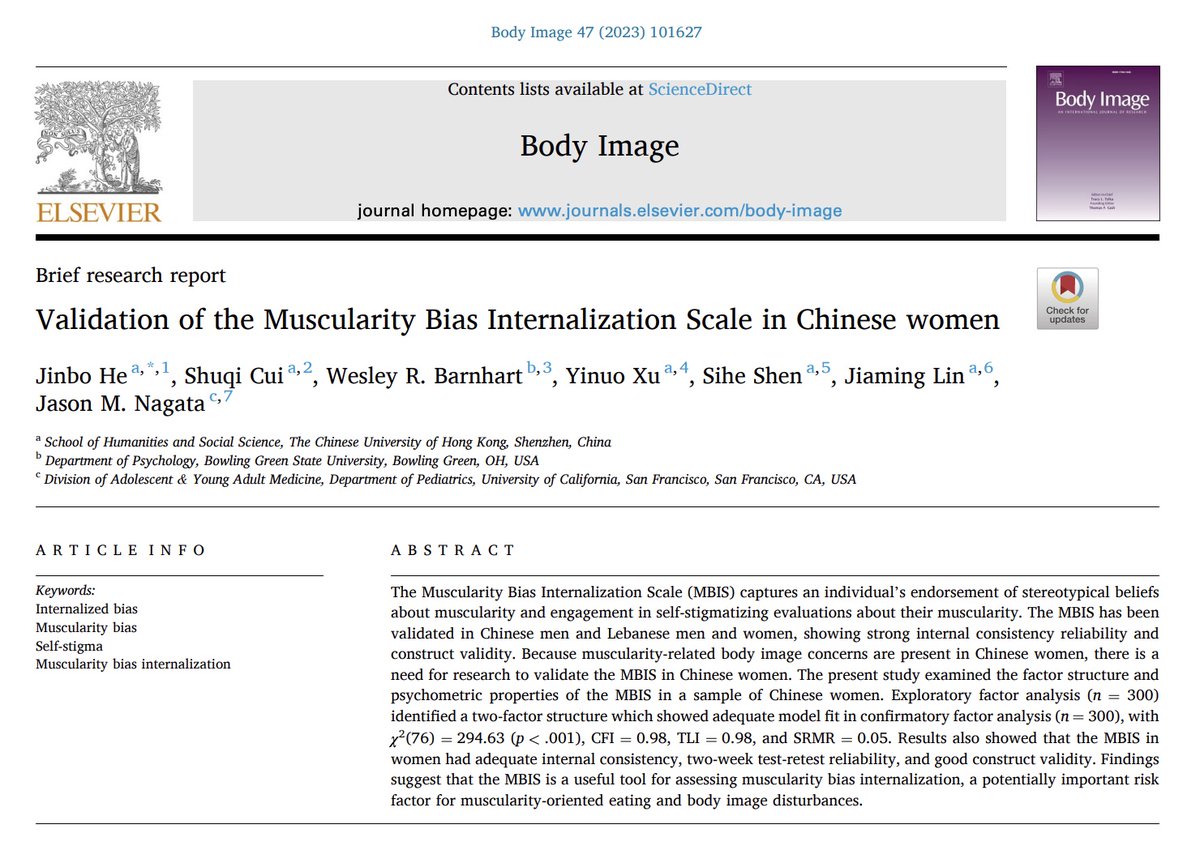
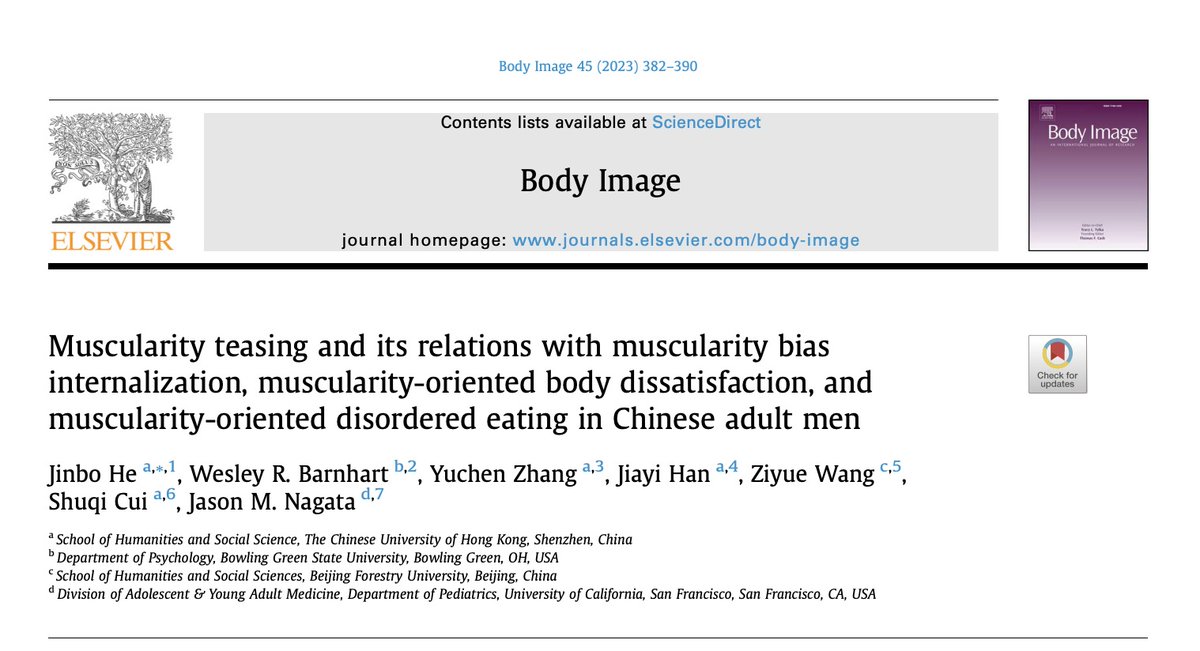
Thrilled to see this paper online! (https://t.co/uTzns6v84S). We discuss muscularity stigma as an important form of appearance stigma, introduce a conceptual model, provide future research directions, and call for more research on muscularity stigma
@WesleyRBarnhar1@jasonmnagata
📢Our new study on appearance-related teasing revealed that both teasing victimization and perpetration are longitudinally related to eating disorder psychopathology and psychological distress! @jasonmnagata@WesleyRBarnhar1@RuthSWeissman@chuntaylor
https://t.co/UOcBJCxRwx
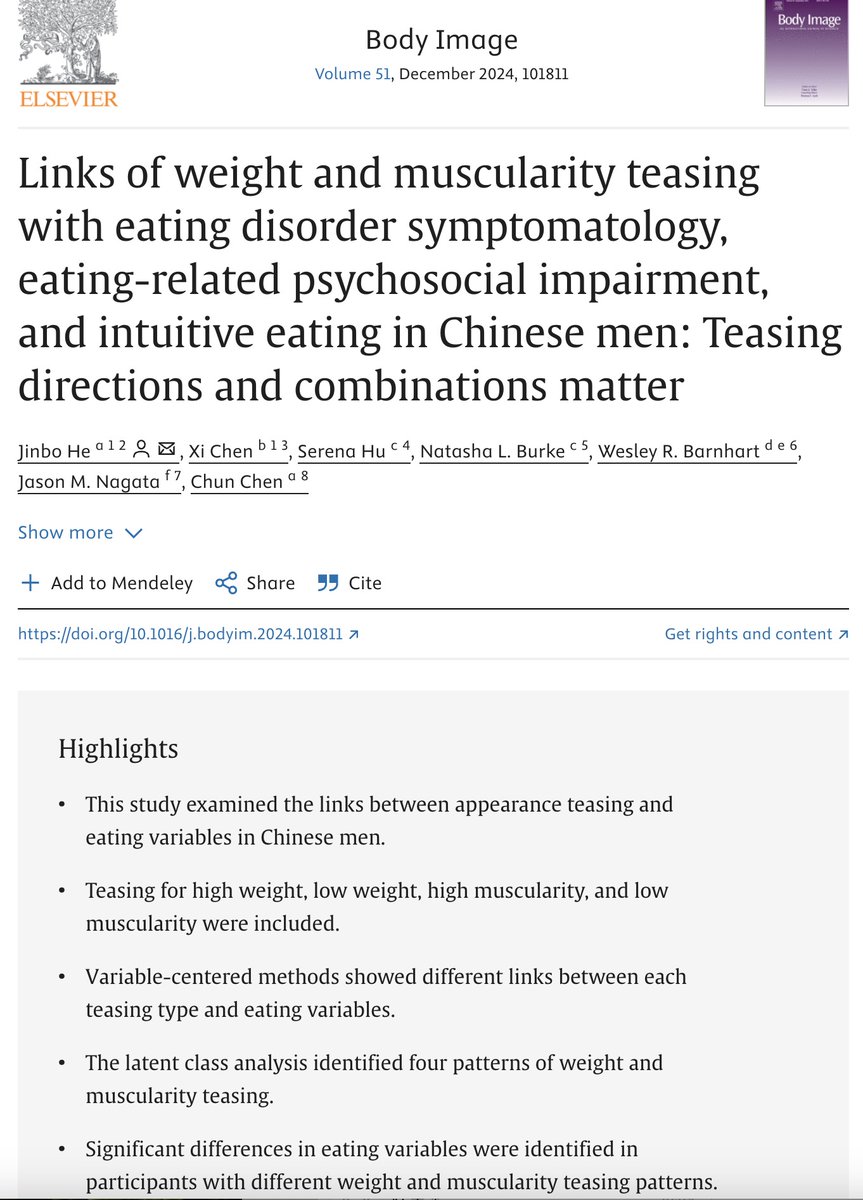
Thrilled to see our new paper about weight and muscularity stigma online (https://t.co/oxzYbnYoht). We showed the importance of considering teasing directions and combinations in the field. @WesleyRBarnhar1@jasonmnagata @DrNatashaBurke @chuntaylor@xc2591
@IntJEatDisord study reports "pronounced heterogeneity in the presentation of #EatingDisorder psychopathology, emotion regulation, and interpersonal problems across Chinese adolescent boys and girls longitudinally and intra-individually.
@Jinbo_He_
https://t.co/Y9EVLOwL3l
Just published online. Traditionally, screening for probable eating disorders is mainly based on cut-off scores. We introduce an alternative DCM approach. More future research is needed to assess its performance. @jihongzgamma@jasonmnagata@WesleyRBarnhar1@ShuqiCui
It's my very first time at #ICED2024 and presented my work! Many thanks to my supervisor @Jinbo_He_! And here is our SCI Cream lab's official website: https://t.co/NCCFyiIlwa
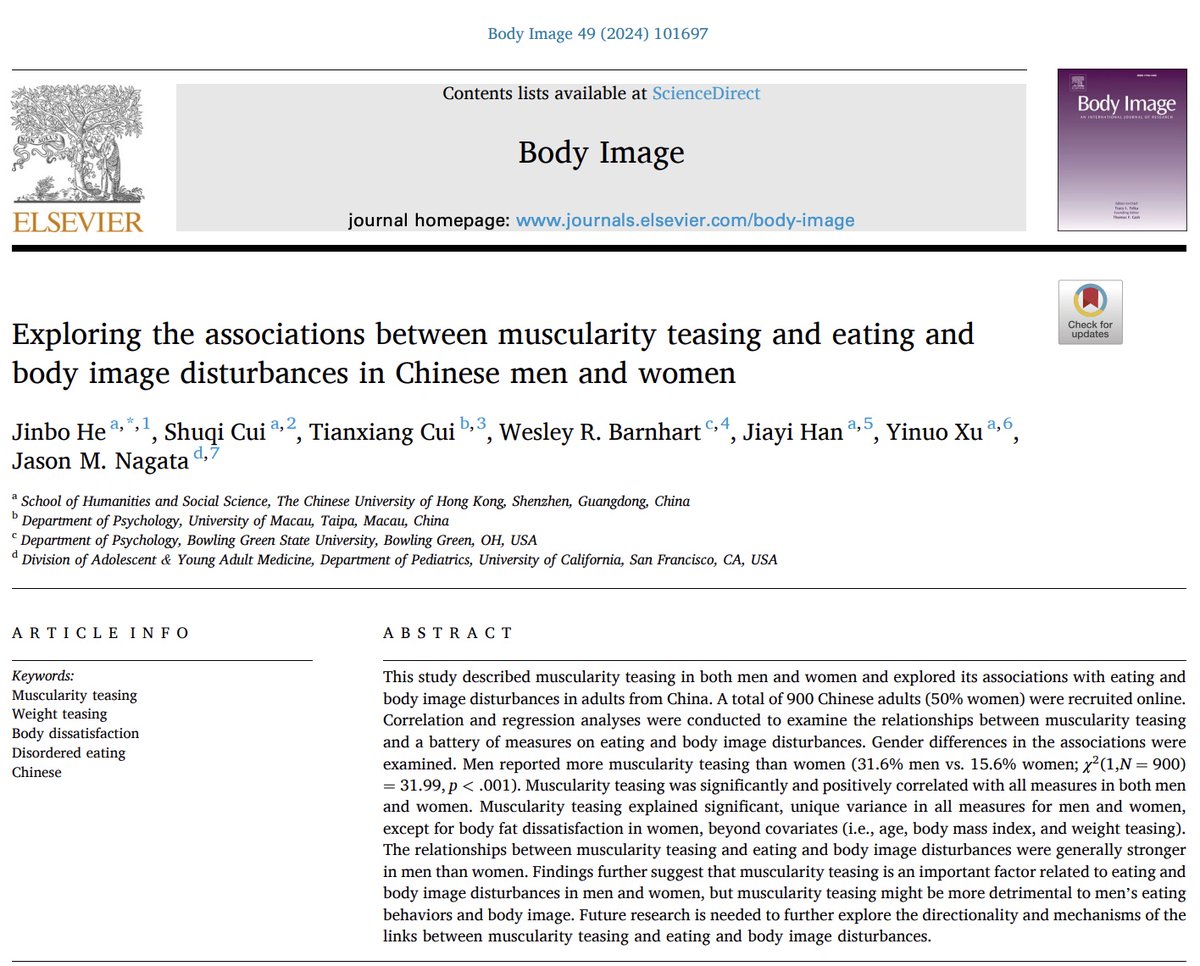
📢Thrilled to share our new paper which shows muscularity teasing was correlated with all measures in both men and women and the relationships were generally stronger in men than women. @WesleyRBarnhar1@jasonmnagata@ShuqiCui@TianxiangCui
https://t.co/TTUYuZniwa
📢Just published at Health Psychology Review. Our new review paper summarizes findings on the relations of body dissatisfaction with suicidal ideation, suicide attempts, and non-suicidal self-injury. @TianxiangCui@JianwenSonggggg@ShuqiCui
https://t.co/tModZ3Rsvt
📢Our new research reveals that screen use while eating, a ubiquitous phenomenon, is related to lower intuitive eating and higher disordered eating.@jasonmnagata@WesleyRBarnhar1@kyletganson @IntJEatDisord
Link: https://t.co/N8uxGs7OOC