GenAI, Analytics, IoT, Digital Twins & 5G with Big 4. #IIC
Author of 4 Books. Robotics, #DTM @Toastmasters
Founder AnDOUC (ex-BIWA).
Former Prog Chair @IoTSWC
2026 #NobelPrize laureate Henri Kagan discovered a new way of manipulating chemical reactions, allowing a greater excess of one of the mirror images to be created than was previously assumed possible. His discovery has been revolutionary for chemists who develop reactions for the manufacture of pharmaceuticals, flavours, scents and new materials.
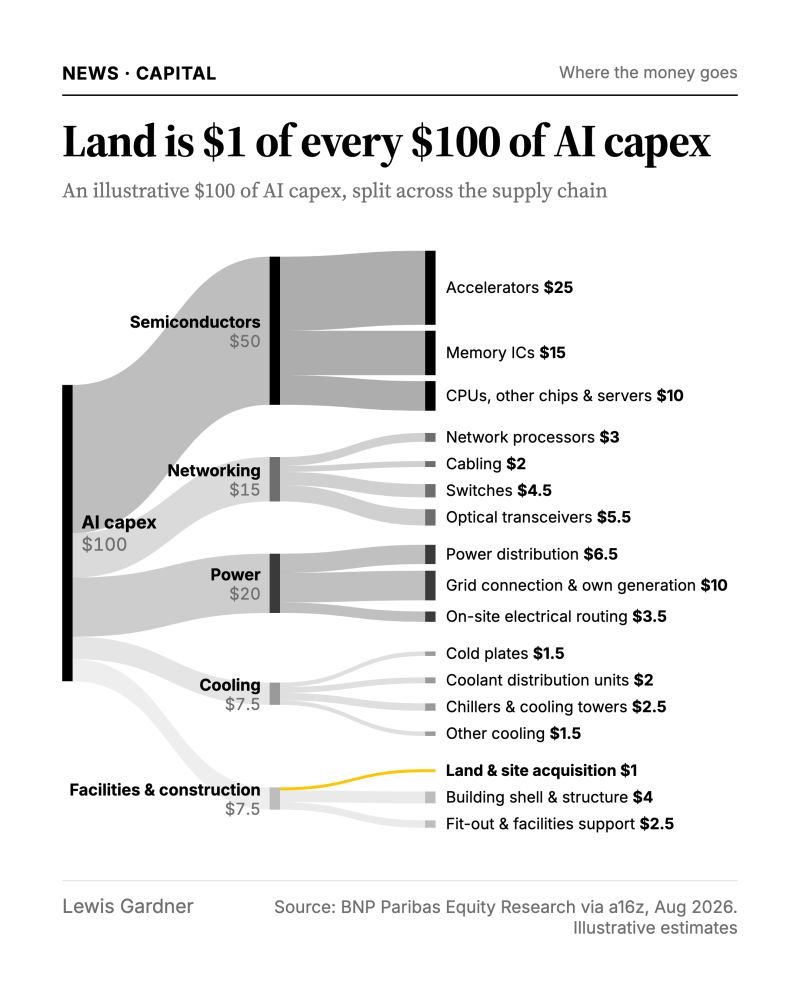
AI is driving the biggest infrastructure build-out in history, with @Google alone forecasting $200B of capex in 2026E. What are the real constraints on a system at this scale?
Amin Vahdat is the chief in charge of Google's buildout. As SVP AI Infrastructure (AI^2), he role spans @GoogleDeepMind, @googlecloud, and the TPU/accelerator hardware roadmap, planning chips 2-5 years out and overseeing a data center buildout of epic proportions.
Takeaways:
— Why "goodput" per watt is the north star metric and designing around failures: At the 100,000-accelerator scale, something fails multiple times an hour, capacity has to double every six months, and as much of that comes from software and model optimization as from silicon. Hardware is a multiplier that lifts everyone above it
— Why Google split TPU into two chips (8I for inference, 8T for training), and the calculus for when a workload is big and durable enough to specialize for
— The "bitter lesson of chips," and why the TPU architecture hasn't fundamentally changed since v1
— How DeepMind and the hardware team co-design: delaying a tape-out by two weeks for the right model optimization, and using Gemini to design chips for future Geminis
— Long-horizon agents as a new workload shape: no human in the loop to rate-limit requests, and CPU, networking and storage demand going "through the roof" alongside accelerators
— Optical circuit switching: mirrors redirecting light to swap a failed TPU rack in milliseconds, without touching a fibe
— Why Google prefers grid-connected over behind-the-meter power
— Why 7- and 8-year-old TPUs are still at 100% utilization
— Open standards, and why IP won the internet as the narrow waist of the hourglass
— Orbital data centers: 1.4x the solar power, near-100% sunlight in sun-synchronous orbit, free-space optics between satellites, and "no fundamental showstoppers"
— The 2036 rack: multiple megawatts, wheeled in, plug in water, power and fiber
Timestamps:
0:00 – Introduction
1:47 – What makes a data center an AI data center
5:30 – Goodput, not FLOPS: holding yourself accountable when something fails every hour
11:52 – Doubling token capacity every six months, and where the gains actually come from
15:32 – The TPU bet: from a contrarian call in 2013 to splitting 8i and 8t
23:30 – The case for and against co-design
26:11 – Shoulder to shoulder with DeepMind: intercepting chips mid-flight
34:16 – Long-horizon agents change the shape of the data center
37:50 – Optical circuit switching and the state of networking
42:35 – Power is the binding constraint: utilities, gigawatts, and sizing a data center
49:23 – Training vs. serving clusters, seven-year-old TPUs, and open standards
58:29 – Orbital data centers and the supercomputer of 2036
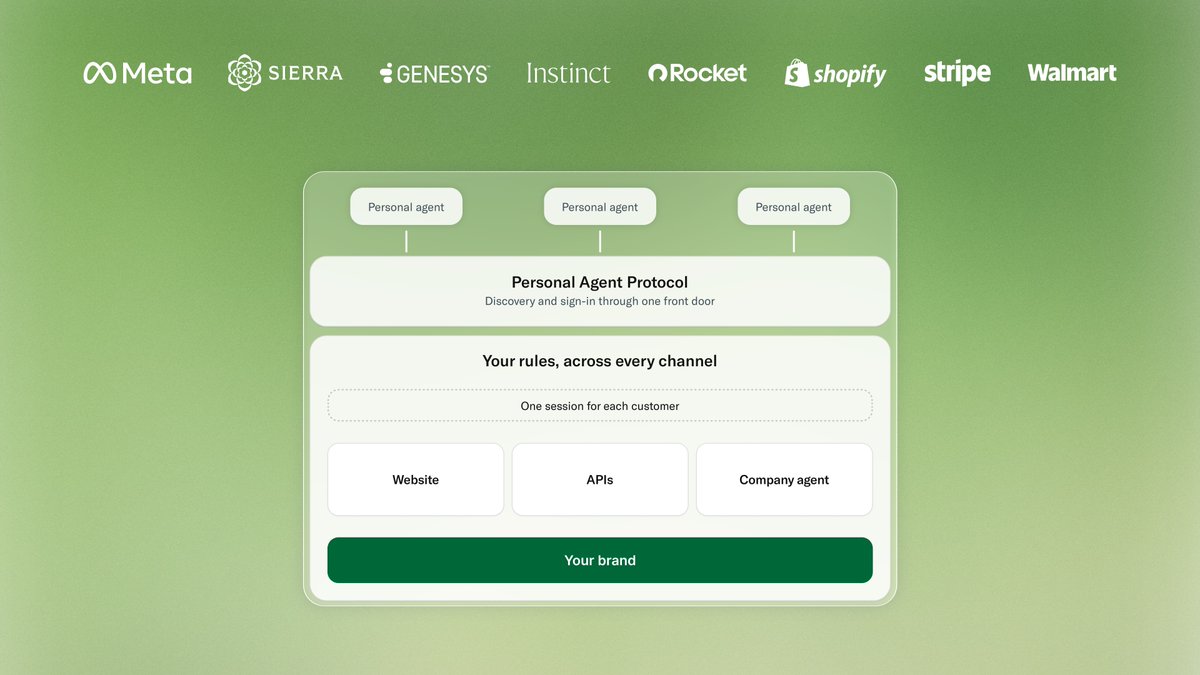
Today we’re announcing Personal Agent Protocol — an open standard @Meta and @SierraPlatform are developing along with industry partners at @Genesys, @instinct, @RocketOTD, @Shopify, @stripe, and @Walmart. It will help define how personal agents interact with businesses and is open for anyone to implement. You can read more here - and if anyone is interested in joining let me know! https://t.co/Yb90VEHMnn
CoreWeave Forge launched at #FullyConnected26 and it's live now.
You run the agent, observe what happened, curate the traces that matter, improve the model or the harness, evaluate whether the fix landed, then run again.
Forge puts every step in one connected environment, so a failure you flag in Agent Lens becomes training data for serverless RL and a test your next version has to pass.
Open to the models, frameworks, and clouds you already use.
Free to start, with a 30 day Pro trial on every new account. https://t.co/xZwpj7nP01
We’re expanding our Cyber Verification Program to give security professionals broader access to our most capable models.
Through this program, verified security professionals can access Claude Mythos 5.1, Opus 5.5, and Sonnet 5.5 with safeguards designed for defensive work.
We’re also opening up new tiers to allow for authorized offensive work, like penetration testing and red-teaming.
https://t.co/blaJtvxhJh
crusoe started with containers, became a cloud, and is now building containers again
og Crusoe used stranded gas for bitcoin miners then 425+ modular datacenters later, it sold the mining business, built Crusoe Cloud, and started developing gigawatt-scale AI campuses
now it has Crusoe Spark - prefabricated GPU datacenters deployed where power is available
founding culture really ripples through a neocloud, and it's especially obvious with crusoe
most neoclouds started with GPUs and worked outward toward datacenters + power. crusoe started with power, construction, and modular infrastructure and worked inward toward GPUs + cloud
transitioning from bitcoin to AI changed the workload, kept the instinct - find the power, then bring compute to it
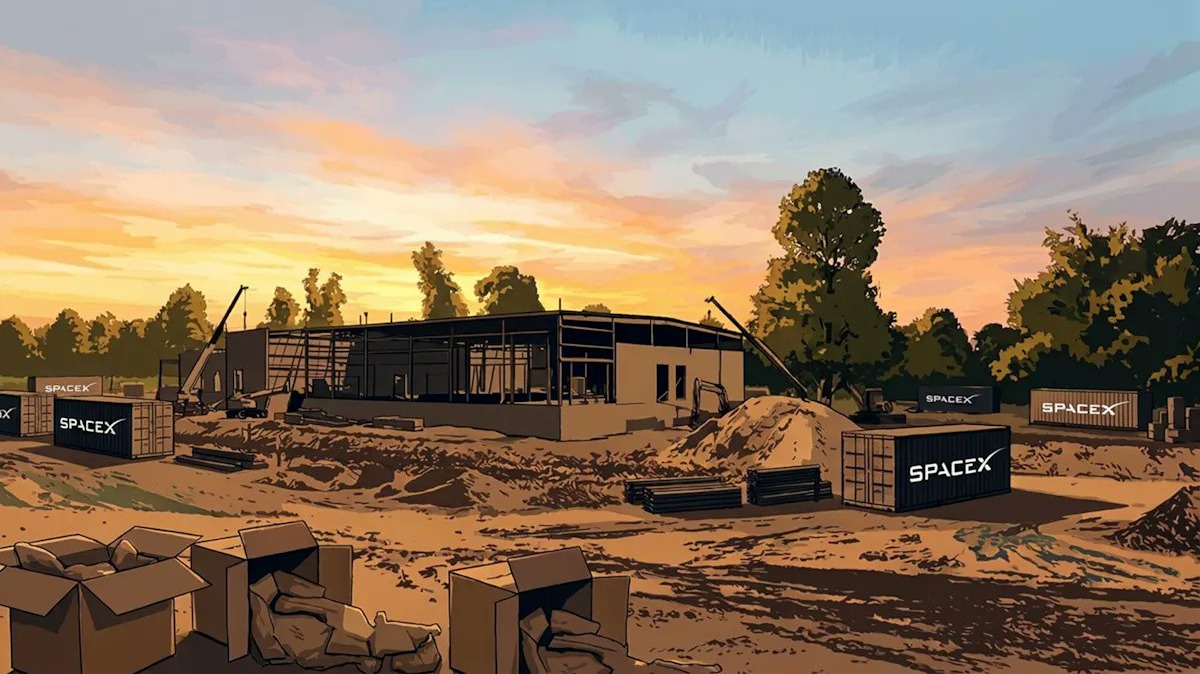
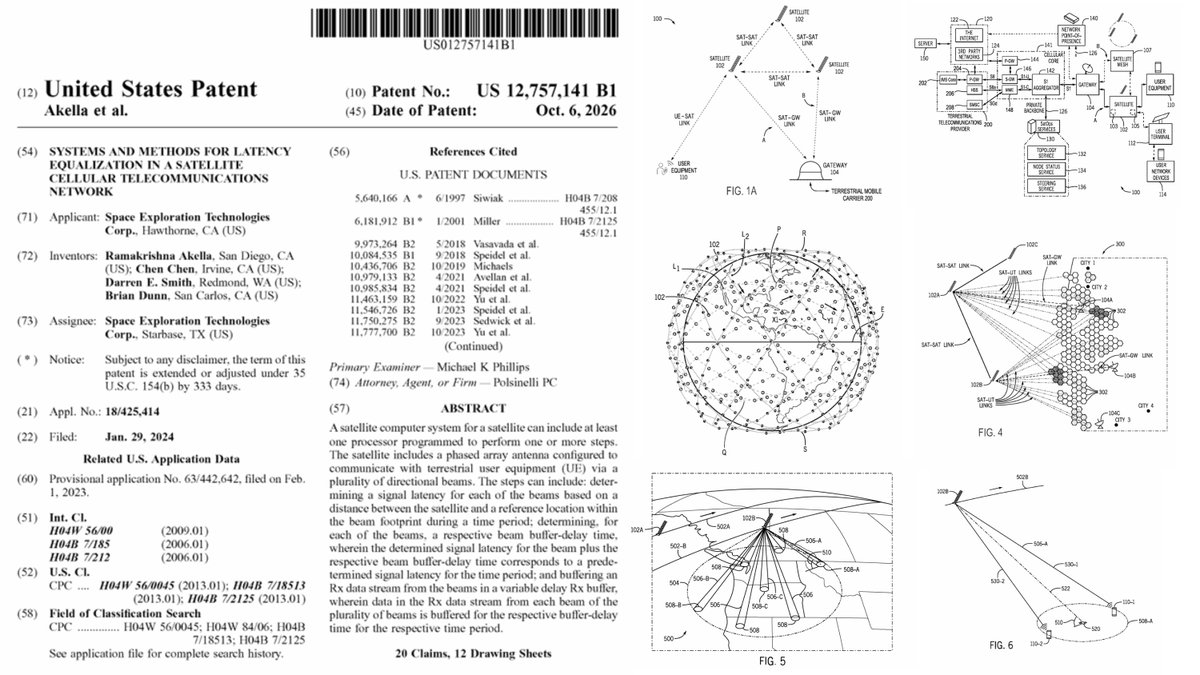
SPACEX: Today, SpaceX was granted patent US 12,757,141 B1.
A Starlink satellite talks to phones on the ground through many narrow beams at once. A phone near the middle of a beam is closer to the satellite than a phone at the edge, so its signal arrives a little sooner. Cellular networks expect those arrivals to line up. If they do not, calls and data can slip out of step.
This patent is how SpaceX fixes this. For each short slice of time, the satellite measures how long the signal takes on every beam, using the distance from the satellite to a reference point inside that beam’s footprint. It then holds the faster beams in a buffer just long enough that every beam matches the slowest one. The phone sees one steady delay instead of a mix.
The patent covers the satellite computer and the phased-array antenna that do this, plus the link from the satellite through a gateway into a normal mobile carrier’s network.
In reinforcement learning, inference is part of the training loop. Every checkpoint used to mean a redeploy, and the trainer waited.
CoreWeave RL Rollouts load the new weights into a live deployment without touching in flight requests, about 15x faster than a redeploy cycle.
@nvidia and @youdotcom used it to post train Nemotron 3.5 Lightning for web search and lifted BrowseComp accuracy from 36.97% to 45.45% while cutting tool calls by 30.24%.
Full breakdown here: https://t.co/cTcqSRGeCB
Today we’re announcing Personal Agent Protocol — an open standard @Meta and @SierraPlatform are developing along with industry partners at @Genesys, @instinct, @RocketOTD, @Shopify, @stripe, and @Walmart. It will help define how personal agents interact with businesses and is open for anyone to implement. You can read more here - and if anyone is interested in joining let me know! https://t.co/Yb90VEHMnn
AI data centers are catalyzing the largest investment we’ve ever seen in energy infrastructure. “Across the meter” energy solutions enable the grid and local rate payers to benefit from those investments with more available energy and ultimately lower cost energy. Everyone wins!