Progression of a SpiceJet Share
Rs 90-Waah..Keventer ka milkshake (Vanilla)
Rs 70- Mc Donald ka basic burger
Rs 50- Chole Kulcha ki ek plate
Rs 30- Samosa with Chole
Rs 15- Tapri wali Chai
Rs 10- Centerfresh
#fineinvesting#canitgolower#spicejet
Thinking about Nepal and praying for the folks. Such a gorgeous nation but landlocked that has been seeing upheavals over the last couple of decades. Still recall the devastating earthquake that led to loss of many lives including a few friends. And, now the floods.
#nepal
We quit our jobs.
There were six of us — Shiv Nadar, Arjun Malhotra, Yogesh Vaidya, Subhash Arora, D.S. Puri and me.
It was 1976. Startups were not really a thing in India. Venture capital did not exist. Banks were not exactly lining up to lend money to six young men with an idea and no collateral.
And computers? Most people had barely heard of them.
But we believed the microprocessor was going to change the world.
So we took the plunge.
Between the six of us, we managed to put together ₹1.87 lakh. We borrowed, pooled our savings and, in one case, even sold a car.
Our first office was a small barsati in Golf Links, Delhi.
We called ourselves Microcomp. We wanted to build an Indian computer.
There was just one problem.
We didn��t have a manufacturing licence.
That eventually led us to UP Electronics Corporation. They had the licence. We had the technology. And that partnership gave birth to Hindustan Computers Limited — HCL.
But perhaps the most audacious part of the story was what happened next.
We started selling a computer that was still being designed.
We had a brochure and a mock-up of the machine. That was it.
Our sales teams went across India, knocking on doors and convincing businesses to buy into a technology they had never used before.
The first orders came from IIT Kharagpur and IIT Madras.
Then came the harder part — convincing businesses.
In Coimbatore, we were up against DCM DP, a much bigger and more established name. I still remember sitting in the reception area of Premier Mills while the DCM team made its pitch.
We went in second.
And we won.
That one order gave us five more. Then ten.
That was HCL in those early years: not having the biggest balance sheet, the biggest brand or the easiest path — but finding a way.
We were restless.
We looked for gaps. We hired people who had what we called a “cowboy” spirit. We believed that technology had to be made useful and accessible, not intimidating.
And we kept moving.
From building India’s early indigenous computers to taking our business to Singapore when HCL was just four years old. From a small room in Delhi to a global technology company.
When I look back at 50 years, I think about six people sitting together in 1976, wondering if this crazy idea could actually work.
I think about a barsati.
A brochure for a computer that did not yet exist.
And the courage to knock on the next door.
That, to me, is the real HCL story.
50 years later, the technology has changed beyond anything we could have imagined.
But the spirit remains the same:
Dream big. Take the risk. And above all, Just Aspire.
Happy 50th, HCL.
What a journey it has been.
#AjaiChowdhry #JustAspire #HCL #50yearsofHCL #Nostalgic #Founders
Once, a woman grabbed Nehru Ji's collar right after he stepped out of Parliament. She yelled,
"The country is free now, and you became the Prime Minister, but what did we get?"
Nehru Ji smiled warmly and replied,
"You have the complete freedom to grab a Prime Minister's collar."
"If someone asked a question like this to the ones in power today, they would be labelled a traitor and thrown into jail."
Today's PM cannot face the citizens' voice, and he knows it very well.
The most alarming thing about this graph is not just the amount of change, but the smooth consistency of the curve. If this were a startup I'd be really confident about their future growth. Unfortunately it is instead the planet we live on.
newly surfaced video appears to show the broad peak avalanche that involved renowned mountaineer nims purja and an international team of 10 climbers while they were moving between camps 2 and 3.
filmed from below, the continuous handheld footage captures a massive wall of snow breaking loose high on the mountain before an expanding powder cloud surges down the couloir and engulfs the lower slopes.
the avalanche unfolds over roughly 40 seconds — revealing the sheer scale of the slide from the ground.
the footage has been circulating within the climbing community and is being shared as showing the broad peak avalanche.
Sachin Tendulkar has finally spoken on the student protests, and I had to read his note twice: once as a fan and once as an editor. The fan was disappointed, but the editor realised that this was a textbook specimen of the kind of writing that George Orwell warned about in his essay “Politics and the English Language”.
The essay was written in 1946, but it might well have been written yesterday about this very statement. Orwell’s point was that when people want to hide something, they stop using plain words and reach instead for the passive voice, for fog, for phrases that sound like they mean something while meaning nothing at all.
Consider the line, where students are disappointed that “their hard work hasn’t been rewarded”. Rewarded by whom, and denied by whom? There was a paper leak, which means somebody leaked it, some institution failed to prevent it, and an official presides over that institution. Yet none of them appears in the statement, and neither does the leak itself. A crime with identifiable custodians has been turned into something that simply happened to lakhs of children through nobody's fault.
Then comes the list of those who must set things right: parents, teachers, friends, relatives, schools and administrators. If you read that list again slowly, you will notice it covers everyone in India except the people the students are actually protesting against, which is to say the NTA, the education ministry and the government. When everyone is responsible, nobody is, and that is not an accident of drafting. It was engineered to deflect blame.
There is also a quiet sentence buried in the middle. “A society which prioritises outcomes over effort will seek shortcuts over meritocracy” is a line about those who take shortcuts, meaning the cheat. So a note on protests around paper leaks ends up gently lecturing the leaked-upon about honesty. His father’s lovely lesson—that failure is okay but cheating is not—is again aimed squarely at individuals, while the scandal and protests right now are about institutions that failed them.
The rest of the statement is what Orwell called ready-made strips of words, glued together. Full of dreams and energy, fuel to our success, safeguard their aspirations. Nobody can disagree with any of it, which is precisely the point, for this is prose engineered so that no one in power will find a single sentence to object to.
What an actual position would have looked like is a single sentence in the active voice: The government must find and punish those who leaked the paper, and fix the system that allowed it. He wrote 160+ words to avoid writing that one.
Here’s Orwell’s full essay for those interested:
https://t.co/VlPoJdOcDG
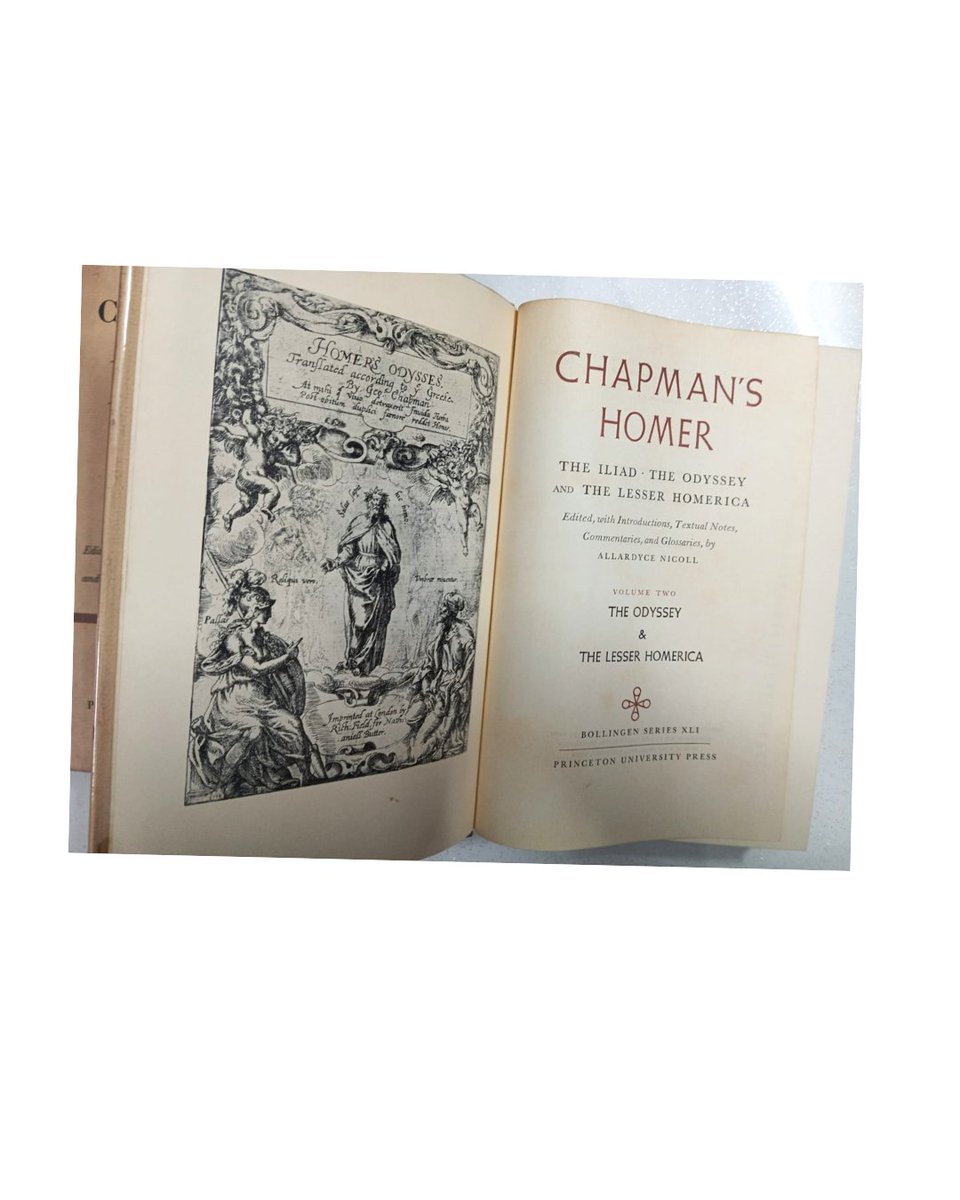
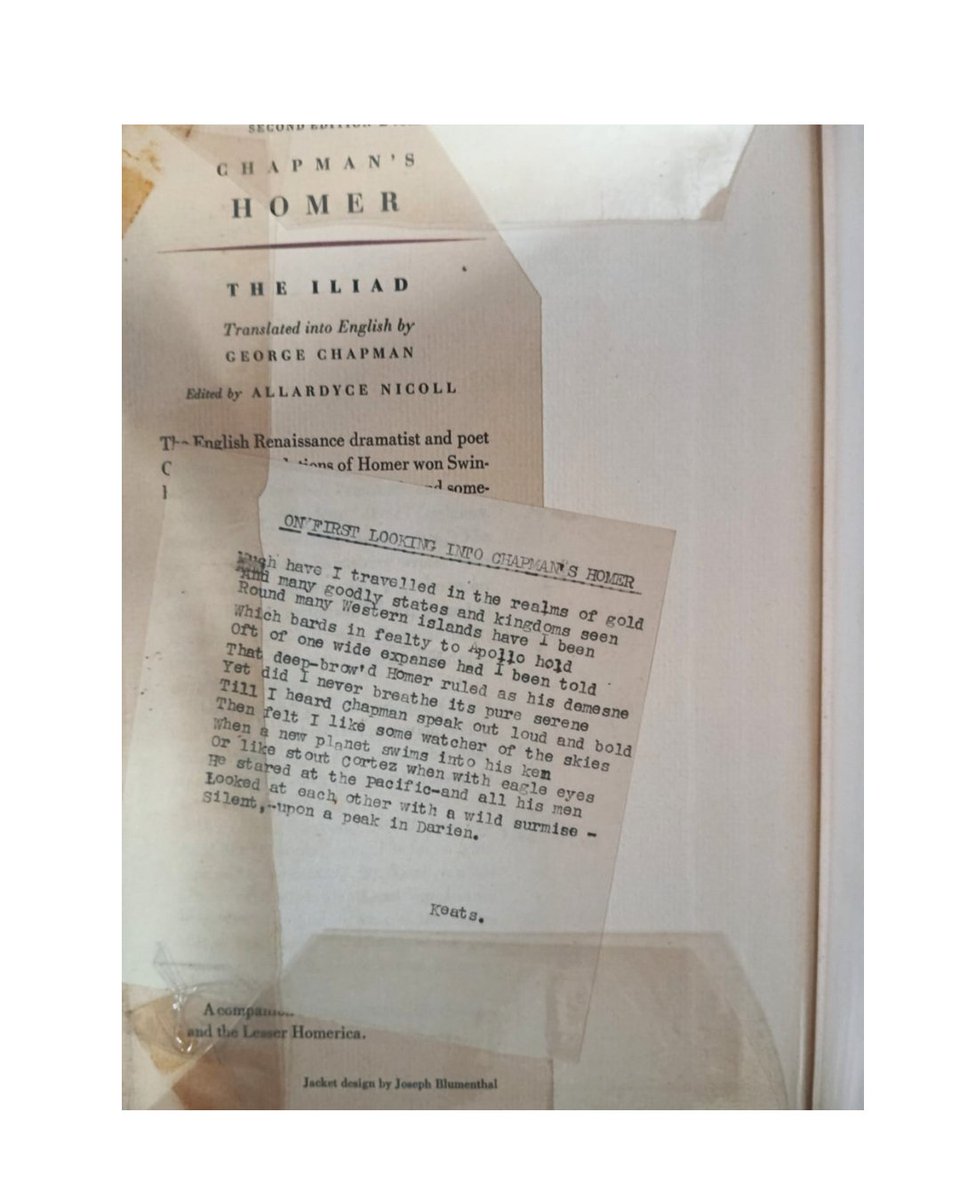
It was George Chapman’s vibrant, energetic Elizabethan translation of Homer that famously kept John Keats awake all night in October 1816, inspiring him to immediately pen his immortal sonnet, "On First Looking into Chapman's Homer"
#odyssey#homer#keats