@eflump@dominic_sensei For a while, American Sign Language was used in a lot of contact situations, especially academic conferences- although definitely only by some people. Nowadays, International Sign is increasingly used, in non-academic and academic contexts. https://t.co/9r2U9FLCTz
Job position open: Assistant Professor in the Linguistics of Signed Languages @UT_Linguistics@UTAustin (my alma mater) https://t.co/5w0GgwJRjG One of my dream places to work, to research and to teach! Austin is one of most beautiful cities in the world. @SignLangLingSoc
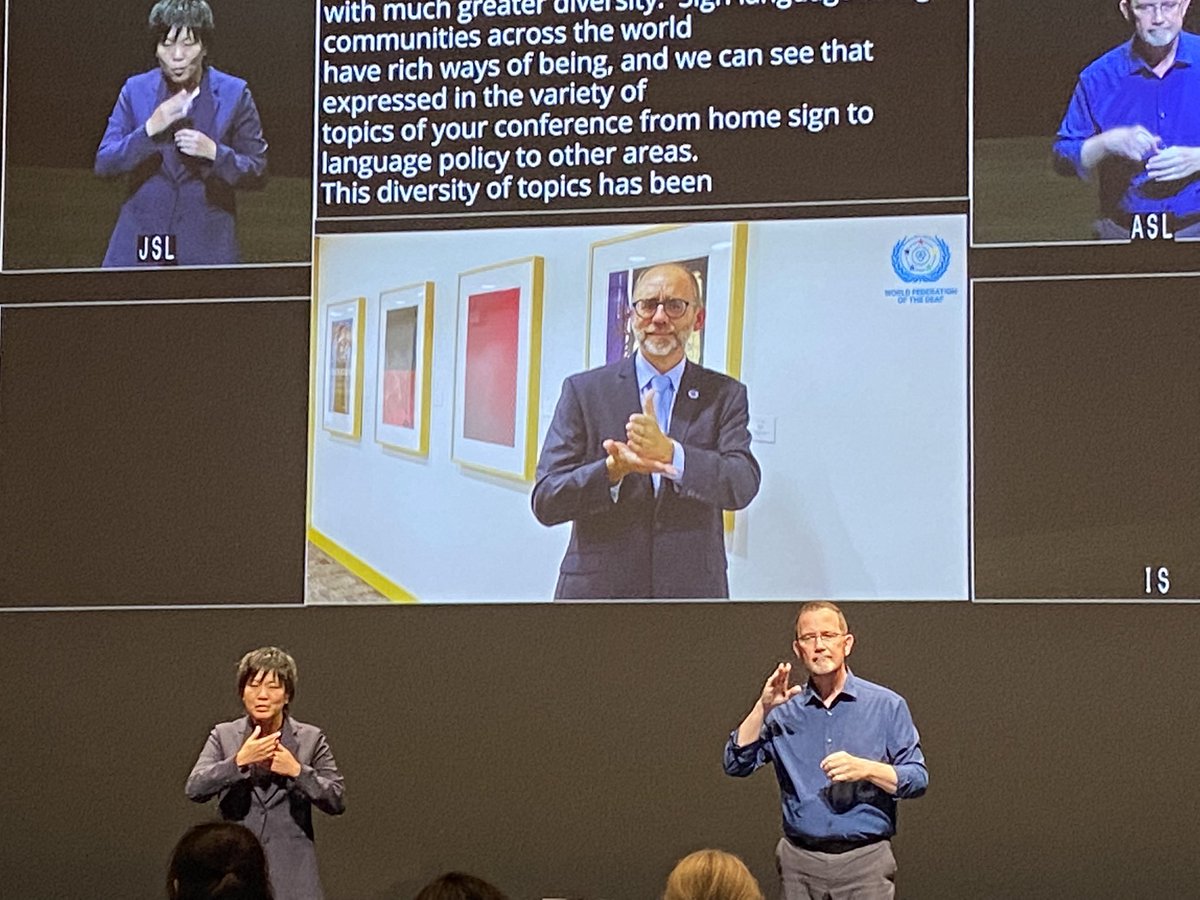
The @WFDeaf_org video message eloquently describes the importance of inalienable linguistic #HumanRights for deaf citizens in the world - in terms of expression of #freedom, #justice and #dignity. We need to ensure that these basic rights can be exercised without any constraints.
We're putting together the research section of the Sign Language Studies Fall 2022 issue! If you know of any sign language-related dissertations or theses that were completed and successfully defended in the past year (late spring 2021-on)
The safety of conference participants must remain on the highest priority. Let us work together that the Code of Conduct will be implemented and enforced at #tislr15 and at further sign language conferences/workshops/symposia. https://t.co/wImr24hfL8
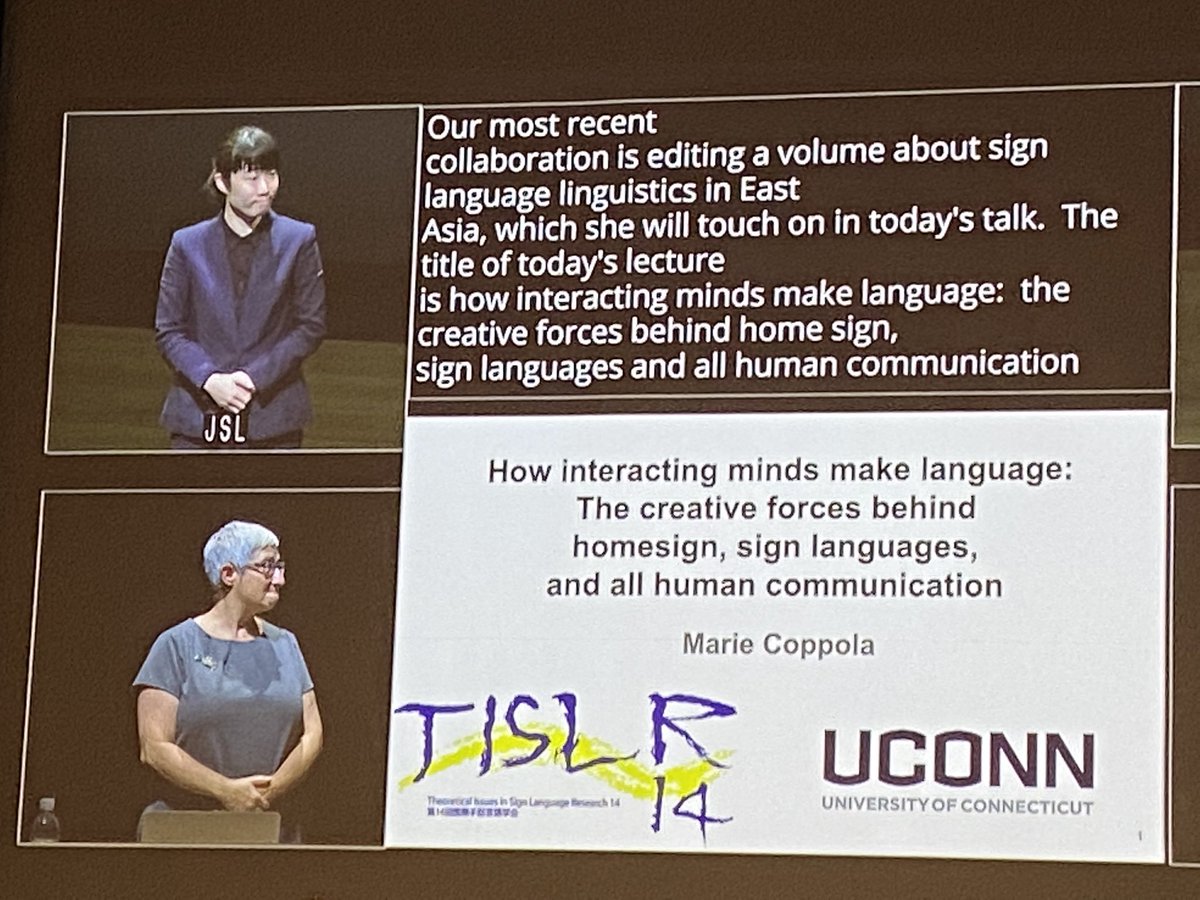
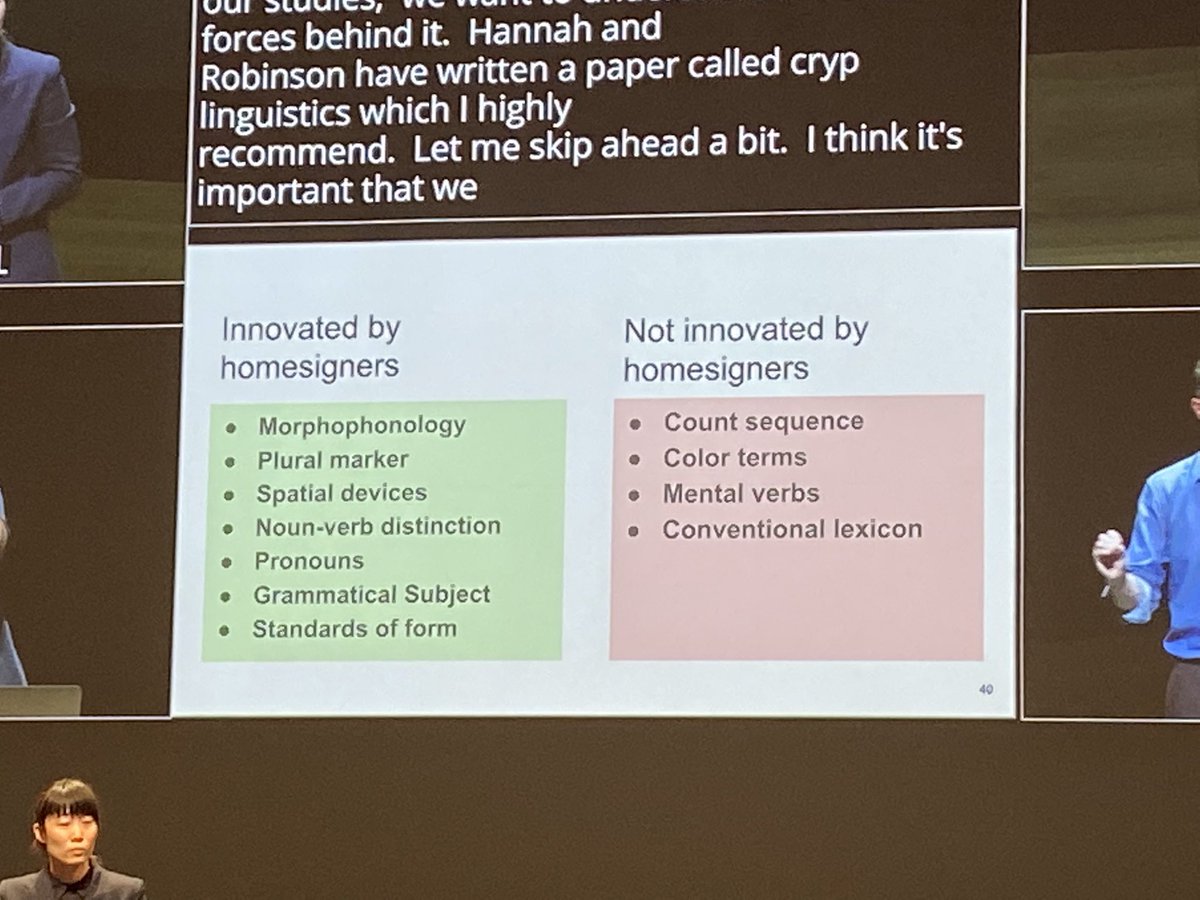
2nd Invited #TISLR14 Keynote by the incomparable Marie Coppola (ASL): “How interacting minds make language: The creative forces behind homesign, sign languages, and all human communication”
Back from lunch! Next #TISLR14 presentation by Laura Horton (English), Jenny Singleton (ASL), and Amy Lederberg “Interruptions or Open Participation? Turn Overlaps in ASL Classrooms”
Next up at #TISLR14: “Not just any sign: Searching for negative polarity items in DGS” Cornelia Loos (English) & Marc Schulder. Promises many food references
Post-break #TISLR14 Presentation “Characteristics of subject relativization with SELF in German Sign Language: a corpus-based study” by Okan Kubus (IS)